@yieldbasis Could you please explain the migration rate for staked-WBTC?
The UI shows that 1 legacy staked-WBTC is converted into only 0.9681 new staked-WBTC instead of 1:1. This looks like a significant loss of value. Could you explain why this happens and what causes the difference?
Claude Security is now in public beta for Claude Enterprise customers.
Claude scans your codebase for vulnerabilities, validates each finding to cut false positives, and suggests patches you can review and approve.
@alliekmiller Really interesting that people are already running multiple specialized agents with roles and personalities. Feels like we’re moving from “AI tools” to actual AI ecosystems inside workflows.
Curious how long before agent coordination becomes the main challenge.
Cool project from @thealepalombo
https://t.co/Pmp3hr0Kh3
Not everything is exactly as shown on the map, but it gives a useful overview of crypto tax regimes around the world.
Helpful starting point. Nice work.
I think AI agents will change how we use the internet much faster than most expect.
They search faster.
They verify faster.
They compare sources in seconds.
Humans scroll.
Agents execute.
Websites will have to optimize for agents, not just users.
Browsers will have to evolve.
The UI layer is about to change.
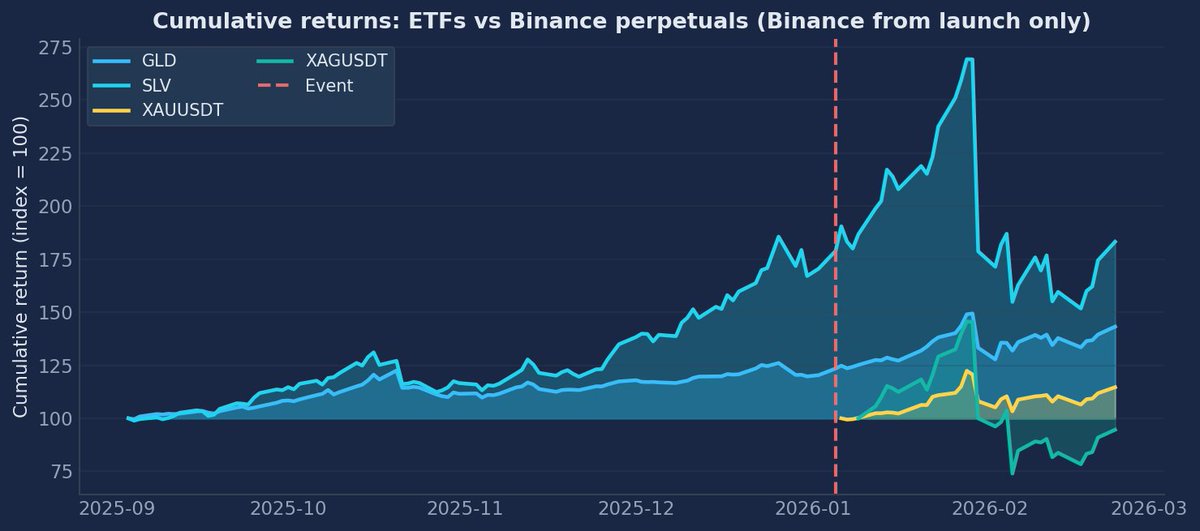
TL;DR: Binance listing gold/silver perpetuals didn’t leave the ETF market unchanged. Volatility and volume went up (I controlled for macro). The two venues are tightly linked. One market, two doors. 🏁
When Binance listed gold and silver perpetuals ($XAUUSDT, $XAGUSDT), I asked: did the old market—the big gold/silver ETFs (GLD, SLV)—change? Short answer: yes. 🧵
Why care? Market-makers, arbitrageurs, and regulators: same exposure, two venues, one price. New derivatives on a new venue can shift how the incumbent market behaves—same idea as Bitcoin futures and spot.