We trained a humanoid with 22-DoF dexterous hands to assemble model cars, operate syringes, sort poker cards, fold/roll shirts, all learned primarily from 20,000+ hours of egocentric human video with no robot in the loop.
Humans are the most scalable embodiment on the planet. We discovered a near-perfect log-linear scaling law (R² = 0.998) between human video volume and action prediction loss, and this loss directly predicts real-robot success rate.
Humanoid robots will be the end game, because they are the practical form factor with minimal embodiment gap from humans. Call it the Bitter Lesson of robot hardware: the kinematic similarity lets us simply retarget human finger motion onto dexterous robot hand joints. No learned embeddings, no fancy transfer algorithms needed. Relative wrist motion + retargeted 22-DoF finger actions serve as a unified action space that carries through from pre-training to robot execution.
Our recipe is called "EgoScale":
- Pre-train GR00T N1.5 on 20K hours of human video, mid-train with only 4 hours (!) of robot play data with Sharpa hands. 54% gains over training from scratch across 5 highly dexterous tasks.
- Most surprising result: a *single* teleop demo is sufficient to learn a never-before-seen task. Our recipe enables extreme data efficiency.
- Although we pre-train in 22-DoF hand joint space, the policy transfers to a Unitree G1 with 7-DoF tri-finger hands. 30%+ gains over training on G1 data alone.
The scalable path to robot dexterity was never more robots. It was always us.
Deep dives in thread:
Our latest research on Physical Activity, Flood Experience, Eco-anxiety, and the Well-being of children and adolescents' after Daniel storm has just been published with Springer Nature in Scientific Reports.
https://t.co/d2l51P3W1V
The future of AI, though, will likely go far beyond chat.
👉 So if the present is conversation, the future might be collaboration: AI moving from being just a tool we query to becoming a partner in co-creating solutions, decisions, and even new ways of living.
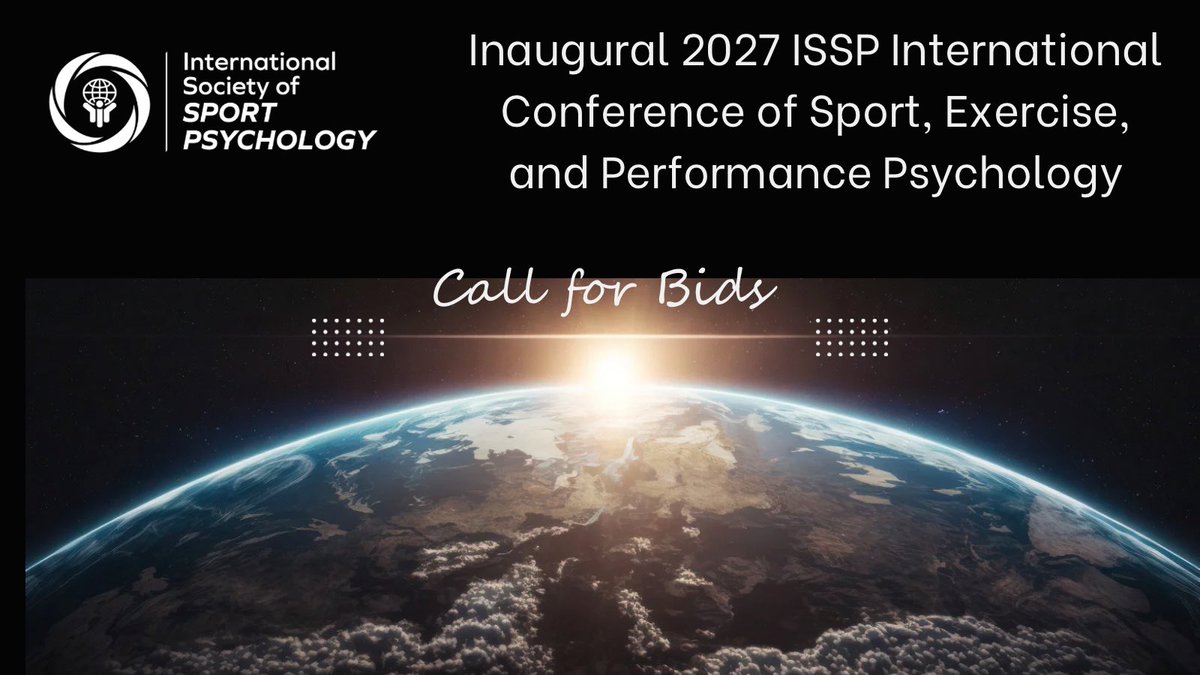
CALL FOR BIDS: Inaugural 2027 ISSP International Conference of Sport, Exercise, and Performance Psychology
Submit the completed application form to the ISSP Site & Relations Committee by January 15, 2025
Check for more information: https://t.co/lj09OEKP4a
The switch to the high fat diet suppressed immunity and made mice more susceptible to bacterial infection. It
reduced the number and undermined the function of certain T cells that help the body to detect and memorize pathogens; further tests showed that the lack of fibre impaired the gut microbiome, which usually supports these T cells. “I was surprised that changing
the diet for just three days was enough time
to see these dramatic effects on adaptive
immune-system cells."
In early 2025, SEPP will publish a special issue on Methodological Advances. Will be an absolute gem! The first few articles (epub ahead of print) are now available. Will highlight new articles as they become available. https://t.co/YQ7JxipQ2q
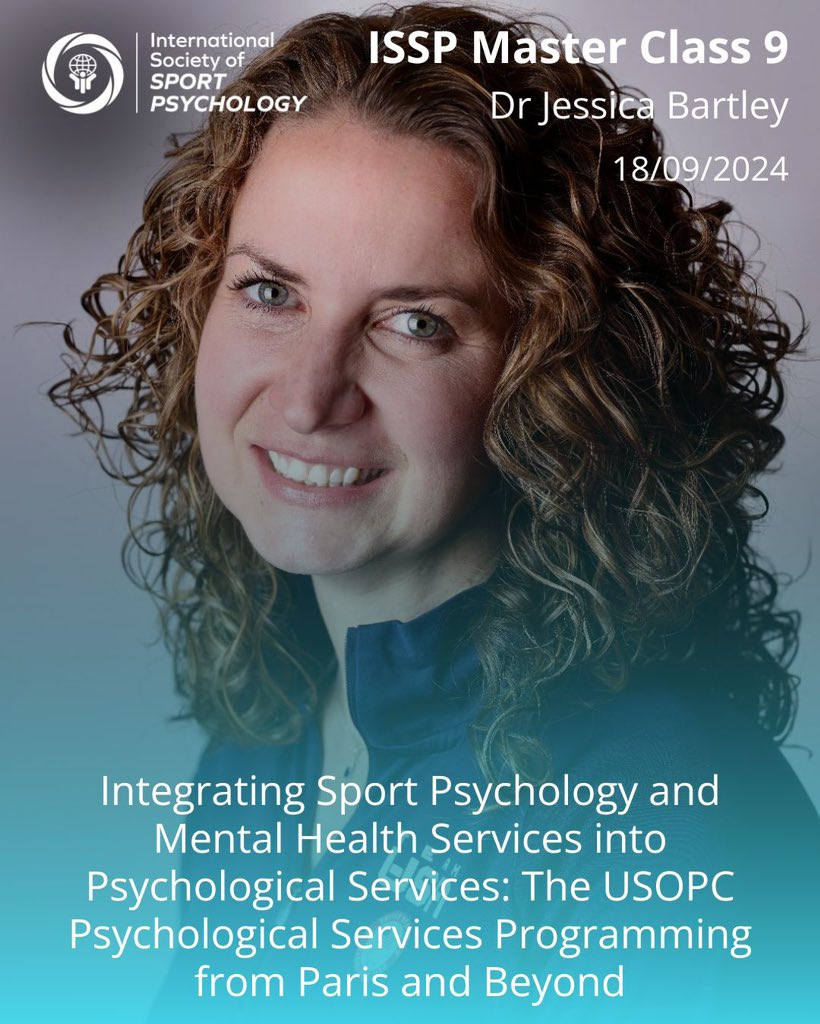
Dr. Bartley will outline USOPC’s integration of Mental Health Services spanning various theoretical orientations and innovative performance psychology consultations delivered across training centers, online, and on the road.
Date: 18/09/2024
Subscription: https://t.co/hysFmct1F4
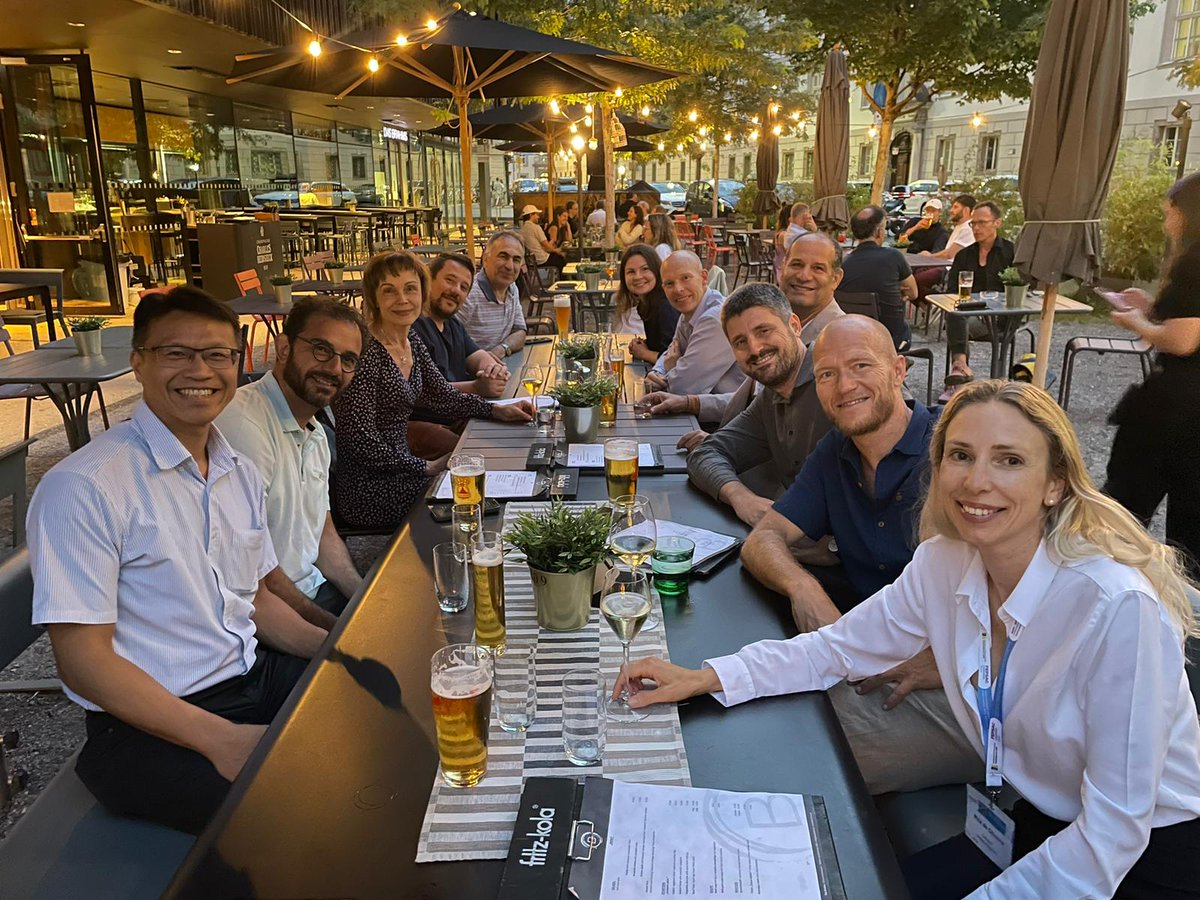
The traditional FEPSAC - ISSP dinner during the European Congress is on! Happy to share with our colleagues in @ISSPonline, specially when they pay the drinks 😉 #FEPSAC2024
Exercise may be the single most potent medical intervention ever known. Its benefits in prevention outstrip any known drugs: 50% reduction in the risk of cardiovascular disease, 50% reduction in the risk of many cancers, positive effects on mental health, pulmonary health, GI health, bone health, muscle function. You name it. Exercise helps. In fact, the ability to exercise over long distances was likely key to our evolution as a species because the availability of densely caloric foods due to persistence hunting allowed our energy-avid brains to enlarge. And yet, we have had very little insight into the molecular basis of these magical effects...until now!
Published in yesterday's Nature and featured on the cover was work from our consortium that represents the culmination of a couple of decades of pitching ideas to the NIH, forming a consortium, planning experiments, executing those experiments, and analyzing data at unprecedented scale, all aimed at enhancing our understanding of the molecular transducers of exercise.
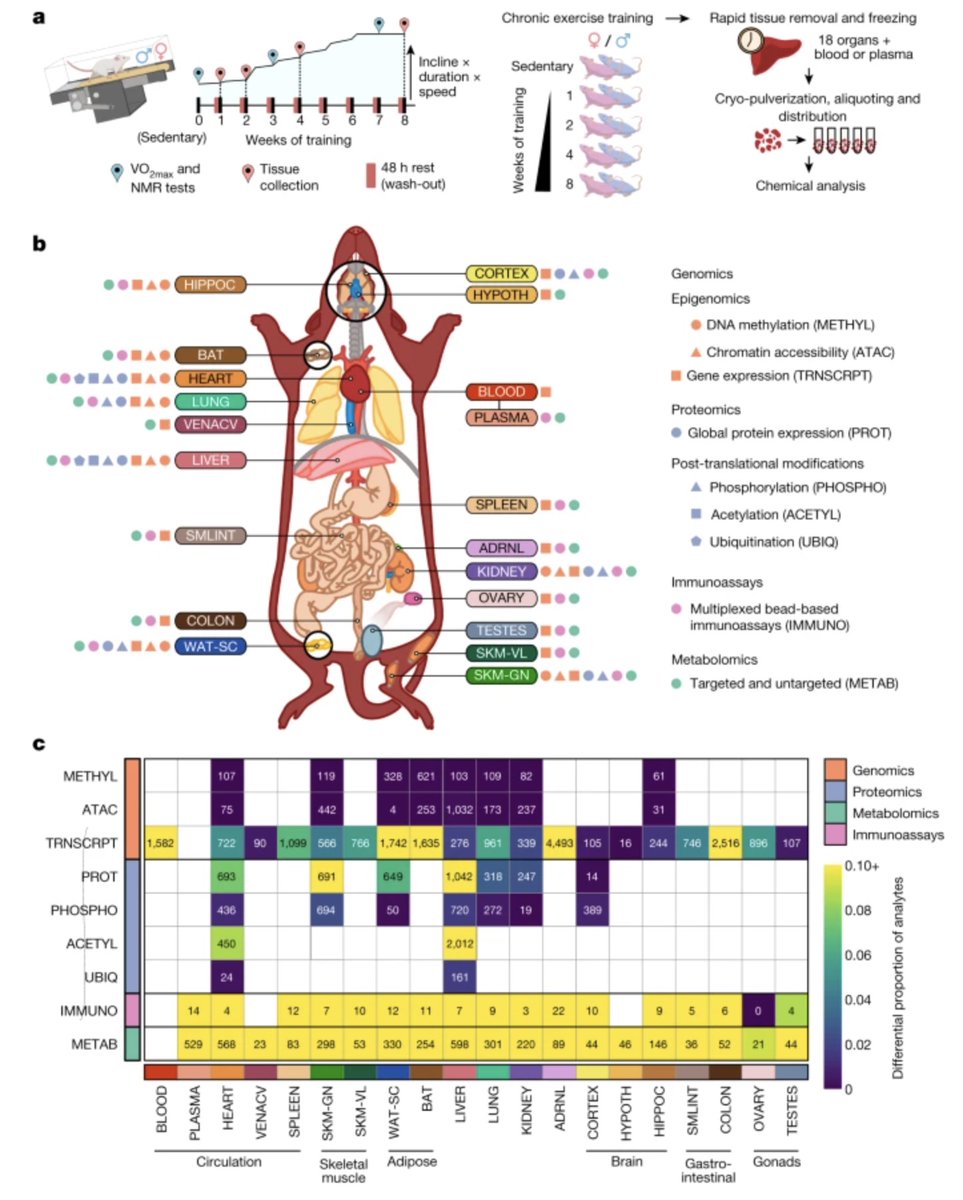
It was a major effort from so many in our consortium (playfully named MoTrPAC) and is the first landmark paper of many more to come. This first paper focused on the multi-tissue, multi-omics of treadmill exercise in rats. Specifically, we report the effects of eight weeks of treadmill running on the transcriptome, the epigenome, the proteome, the metabolome, the lipidome and the immunome of a broad range of tissues (in fact, 9,466 assays across 19 tissues, 25 molecular platforms, and 4 training time points).
The result is the most comprehensive molecular map of exercise ever created. At Stanford, my colleague @MWheelerMD and I co-lead the bioinformatics center and it was our team's duty and privilege to ingest the data, QC the data, help analyze the data, and make the data available to the world. Various tools available at our data hub allow you to explore the data, visualize it, and download it for your own use.
Have fun! And stay tuned for human data that will be coming.
So many people to thank who made this possible (see the paper for details). Special shout out to the primary analysts and authors: David Amar, Nicole Gay, & Pierre Jean Baltran.
Paper: https://t.co/0nhXdfhxx0
Data hub: https://t.co/NxTHsVdfRp
The ISSP has been at the forefront in providing a comprehensive scientific review of pressing topics facing our communities, sharing the best scientific and applied practices, and inspiring sport psychology professionals to envision a more equitable future.
ISSP Position Stand:
Athlete mental health, though long present within research and practice, has recently become a central topic area within the sport and exercise psychology field. Get access here the last ISSP Position Stand:
https://t.co/XgX7tdJ7re
The Complexities of Working with Professional Teams
Dr. Gloria Balague
April 3rd, 2024 - 12:00 UTC (New York 8:00, Rio Janeiro, 9:00, London 13:00; Beijing 20:00, Seoul 21:00)
Language: English (zoom translated captions)
Register: https://t.co/hysFmcstPw