I’m always intrigued when people and organizations from around the world come to Japan in search of the “secret sauce” for football development. They arrive in large numbers, touring National Training Centers, visiting JFA offices, attending J.League matches, meeting with clubs, and walking through headquarters, yet they still leave with only half the story.
Why certain countries consistently produce top players and strong national teams remains one of football’s great mysteries. Grassroots football is especially misunderstood; it’s often treated as an obligation rather than the tremendous opportunity it truly is. What separates most footballing nations isn’t the coaching, the curriculum, the elite structures, or even the facilities. It’s the culture.
In Japan, culture is the engine that drives football development. And Japanese sports culture, across all sports, values three things above all else: discipline, repetition, and a deep commitment to mastering the basics. These values aren’t occasional, they are embedded in daily life.
Japan also fully accepts early specialization in sports and year-round training. Kids train 52 weeks a year, and the culture accepts the collateral damage that can come with it, including burnout and injuries. Families understand that when their six-year-old joins a football team, they will likely train at least four times a week, for 2–3 hours per session, plus half a day on weekends. This level of commitment is considered normal.
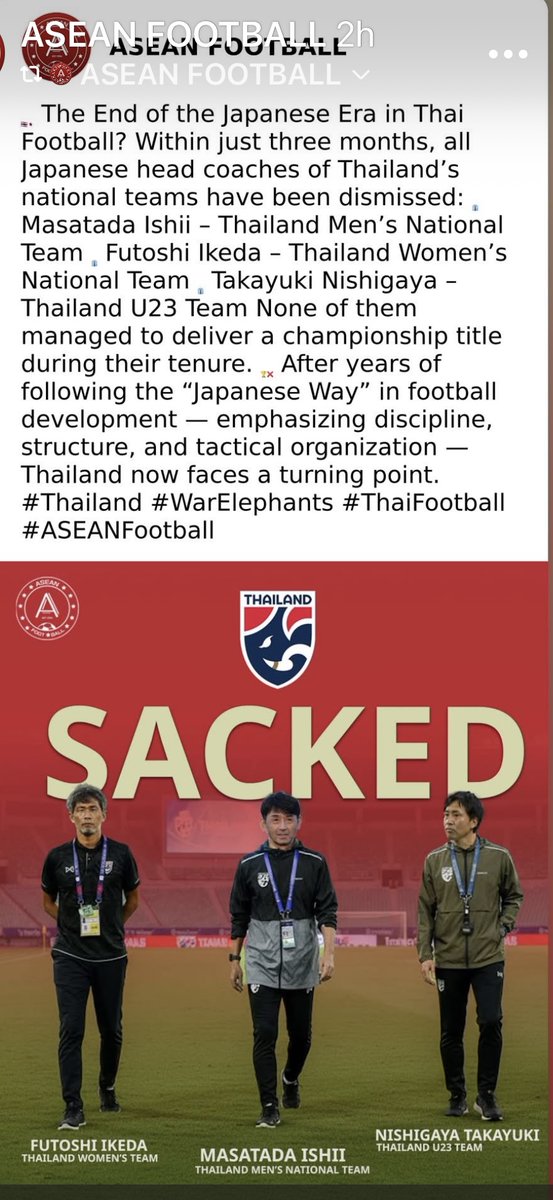
Recently, Thailand believed they had figured out Japan’s secret. They hired a group of Japanese coaches for their national teams, hoping to replicate Japan’s success with a Thai twist. But soon people started asking: What exactly is the “Japan Way”? And the more closely you examine it, the clearer it becomes that what works in one country cannot simply be exported to another.
To me, the so-called “Japan Way” is much closer to the Football Starts at Home way, a culture built from the ground up through early, simple, consistent engagement with the ball, beginning in the home between parents and children and continued at their club level. That’s the foundation Japan benefits from, even if many visitors never see it.
SkyRoof SDR satellite software
https://t.co/PAnH1YzCmY
#amsat
SkyRoof is a Windows application for Hams and satellite enthusiasts by Alex Shovkoplyas VE3NEA.
The main features of SkyRoof a...
🎈 Live video from the edge of space!
Our stratospheric balloon reached 37 km, transmitting a real-time DVB-S2 8PSK signal.
Tracked, received, decoded, and chased by the amazing ham radio & open source community.
#StratoLab#DVB#HamRadio#BalloonLaunch#AmateurRadio#SSTV#DVBs2