Where Does CCD Fit When Customers Pay Entirely in Stablecoins?
Even when a customer pays 100% in stablecoins, the underlying network still relies on CCD to execute and process transactions.
Through sponsored transactions, @Concordium removes the need for customers to hold CCD, shifting the responsibility for network fees to businesses and payment providers.
Why CCD Still Matters
Even in a stablecoin payment flow:
• On-chain transactions require network fees paid in the native token, CCD.
• Customers don't need to acquire or hold CCD to pay with stablecoins.
• The protocol separates the asset used for payment from the asset used to cover network execution fees.
How Sponsored Transactions Work
Instead of requiring every customer to hold CCD just to make a payment:
1️⃣ The customer authorizes the payment in stablecoins.
2️⃣ A sponsor, such as the merchant, payment processor, or application, covers the network fee in CCD.
3️⃣ The transaction is processed without requiring the customer to manage gas fees.
4️⃣ The result: a smoother checkout experience with no need for customers to hold CCD.
Why Businesses May Need CCD
Businesses accepting stablecoins may still need a CCD balance for several reasons:
• Fee Sponsorship: Covering network fees on behalf of customers.
• Operational Reliability: Maintaining the ability to process transactions without interruptions.
• Treasury & Automation: Supporting automated settlements, payouts, and other on-chain operations.
Stablecoins carry the value of commerce, while CCD powers the infrastructure that makes those transactions possible.
With Concordium's sponsored transactions, customers can enjoy a seamless stablecoin payment experience without holding CCD, while businesses manage the underlying network costs.
Different roles. One connected payment ecosystem.
That's how Concordium makes stablecoin payments more accessible without removing the importance of its native token, CCD.
Verify & Pay: One Tap. One Confirmation.
What if buying age-restricted products online, like a bottle of wine, could be as simple as one tap without compromising your privacy?
Traditional online checkouts often require uploading ID documents, waiting for third-party verification, and completing identity checks separately from payment.
Concordium brings verification and payment together in one seamless experience.
Here's how it works:
🔹 ZKP Eligibility: Prove you meet the required age threshold using Zero-Knowledge Proofs, without revealing your name, date of birth, or identity documents.
🔹 Stablecoin Pay: Complete your purchase with an on-chain stablecoin payment within the same checkout flow.
🔹 Zero Friction: No unnecessary steps, repeated checks, or complicated redirects. Just one tap and one confirmation.
Why does this matter?
✅ Smoother Checkout: Fewer steps create a faster, more convenient purchasing experience.
✅ Privacy by Design: Merchants receive cryptographic proof of eligibility without needing to collect or store unnecessary personal information.
✅ Integrated Verification & Settlement: Eligibility checks and payment work together, helping reduce delays and unnecessary friction.
The bigger picture is simple: compliance-readiness shouldn't come at the expense of user experience, and convenience shouldn't come at the expense of privacy.
With @Concordium, verify and pay in one seamless flow.
One tap. Verified eligibility. Instant payment.
Stablecoins Shouldn't Depend on Smart Contracts. They Should Be Built Into the Blockchain.
As stablecoins become a core part of digital payments, security, efficiency, and compliance-readiness cannot be afterthoughts.
This is where @Concordium Protocol-Level Tokens (PLTs) make a difference.
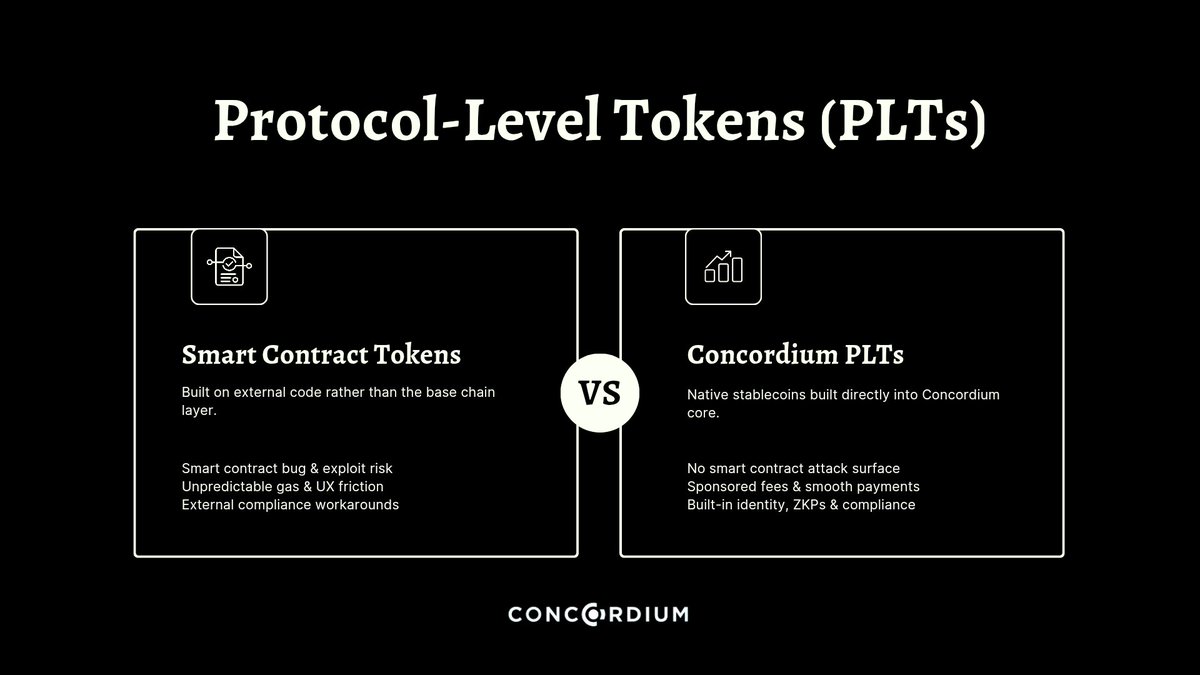
Unlike traditional tokens built on smart contracts, PLTs are integrated directly into the blockchain’s base layer, providing native token functionality with fewer dependencies.
Why Do PLTs Matter?
🔹 1. Native Infrastructure, Reduced Risk
Traditional smart contract-based tokens can introduce vulnerabilities, unpredictable gas costs, and additional complexity. PLTs support native minting, burning, and transfers at the protocol level, reducing reliance on custom token contracts.
🔹 2. Seamless Stablecoin Payments
With sponsored transactions, businesses can cover network fees on behalf of users. This allows users to transact directly in stablecoins without needing to hold the native $CCD token for gas.
🔹 3. Designed for Institutional Adoption
Businesses need more than efficient payments. They need privacy, accountability, and compliance-readiness.
Concordium combines PLTs with protocol-level identity and Zero-Knowledge Proofs (ZKPs), enabling features such as allowlists, denylists, and automated Verify & Pay flows while protecting sensitive user information.
The future of PayFi and autonomous agent payments requires more than simply adding stablecoins to existing infrastructure.
It requires payment systems where security, identity, privacy, and compliance-readiness are built into the foundation.
That's what Concordium is working toward.
🔗 Explore Protocol-Level Tokens: https://t.co/vAfOzV9VI3
The Agentic Economy Needs Privacy-Preserving Identity
The internet is approaching a fundamental shift: moving from a human-driven economy to the Agentic Economy, where AI agents negotiate, make purchases, and execute transactions on behalf of individuals and businesses.
But this evolution raises an important question:
How can we verify that an AI agent is authorized to act on someone's behalf without exposing sensitive personal or corporate data?
This is where Privacy-Preserving Identity and Zero-Knowledge Proofs (ZKPs) become essential to building trust in the autonomous era.
Why Do AI Agents Need Verifiable Identity?
🔹 Proof of Authorization: Verify that an agent is backed by a legitimate human or registered business without unnecessarily revealing their identity.
🔹 Compliance-Readiness Without Data Exposure: Prove requirements such as age, residency, or financial eligibility through ZKPs without sharing passports or sensitive financial documents.
🔹 Corporate Privacy: Allow enterprise agents to demonstrate financial qualifications or business authorization without exposing confidential company information.
How Do Privacy-Preserving Credentials Enable Agentic Commerce?
- Private Negotiations: Agents can prove financial eligibility without revealing sensitive buyer information.
- Compliance-Readiness & Reusable KYC: Verifiable Credentials (VCs) enable selective disclosure of required attributes, reducing repetitive verification across platforms.
- Fraud Prevention: Identity-bound cryptographic proofs make it harder for malicious agents to impersonate legitimate users or businesses.
- Cross-Platform Privacy: Independent verification helps prevent unnecessary tracking of users across different agents and merchants.
Where Does Concordium Fit In?
@Concordium brings identity and privacy together at the blockchain protocol level. Through its identity infrastructure and Zero-Knowledge Proof capabilities, Concordium supports verifiable identity while protecting sensitive personal information.
This approach provides an important foundation for connecting AI agents to verified humans and businesses, strengthening trust and compliance-readiness in the emerging Agentic Economy.
The future of digital commerce needs more than autonomous agents. It needs verifiable identity, privacy, and accountability.
From Privacy-First Identity to Accountable AI Agents: Why Concordium’s L1 Architecture Matters
When @Concordium first launched its Mainnet, embedding identity verification directly into the Layer-1 protocol was an unconventional decision.
While many blockchain networks treated identity and compliance as optional additions, Concordium built on a different foundation:
Privacy is not anonymity. True digital trust requires verifiable accountability without exposing personal data.
Today, that foundation is becoming increasingly relevant as two major shifts reshape the digital landscape.
1️⃣ Privacy-First Age Verification
As global regulations around child safety and age-restricted services continue to evolve, platforms face a growing challenge: how can users prove their eligibility without exposing sensitive personal information?
Traditional approaches often require uploading government IDs, selfies, or personal documents, creating unnecessary privacy risks and data security liabilities.
Concordium offers a different approach through Zero-Knowledge Proofs (ZKPs).
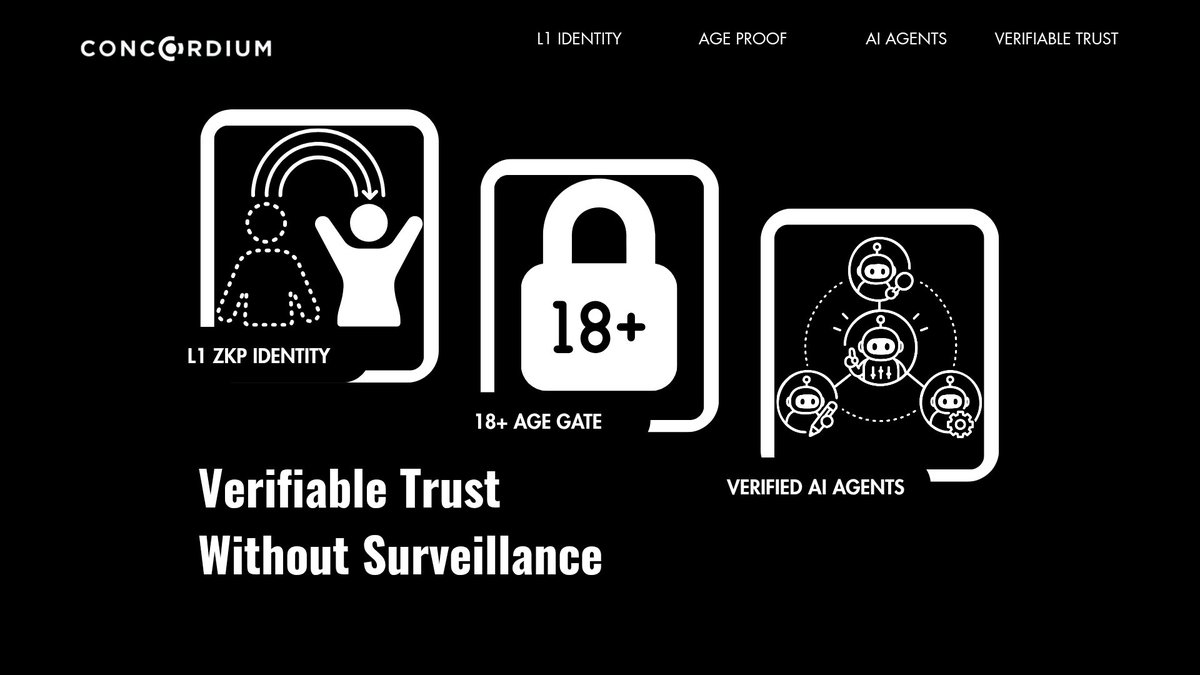
Users can cryptographically prove they meet an age requirement, such as 18+ or 21+, without revealing their exact date of birth or repeatedly sharing identity documents with every service.
The goal is simple: prove eligibility, not expose identity.
2️⃣ Bringing Accountability to Autonomous AI Agents
AI is moving beyond conversations into autonomous agents capable of managing workflows, interacting with services, and executing transactions on behalf of individuals and businesses.
But greater autonomy introduces a critical question:
Who is accountable for an AI agent's actions?
Through @Concordium Agent Registry, AI agents can be linked to verified human or business owners, establishing a foundation for verifiable ownership and accountability.
Combined with privacy-preserving verification, this infrastructure supports a future where agents can demonstrate relevant verification or authorization without unnecessarily exposing their owners' private information.
This is an important step toward building trust in an increasingly autonomous digital economy.
The Bigger Picture
Whether the question is:
🔹 Is this user eligible to access an age-restricted service?
🔹 Is this AI agent backed by a verified human or business?
🔹 Does this agent have the authority to perform a specific action?
The internet needs more than powerful technology. It needs verifiable trust, privacy, and accountability.
By embedding identity at the Layer-1 level and extending its capabilities through ZKPs and the Agent Registry, @Concordium is building infrastructure where privacy, compliance-readiness, and autonomous innovation can work together.
The future isn't just about proving what technology can do.
It's about proving who stands behind it.
How does Concordium solve the ultimate Web3 dilemma?
Most blockchains force users to choose between complete anonymity (and regulatory uncertainty) or sacrificing their privacy.
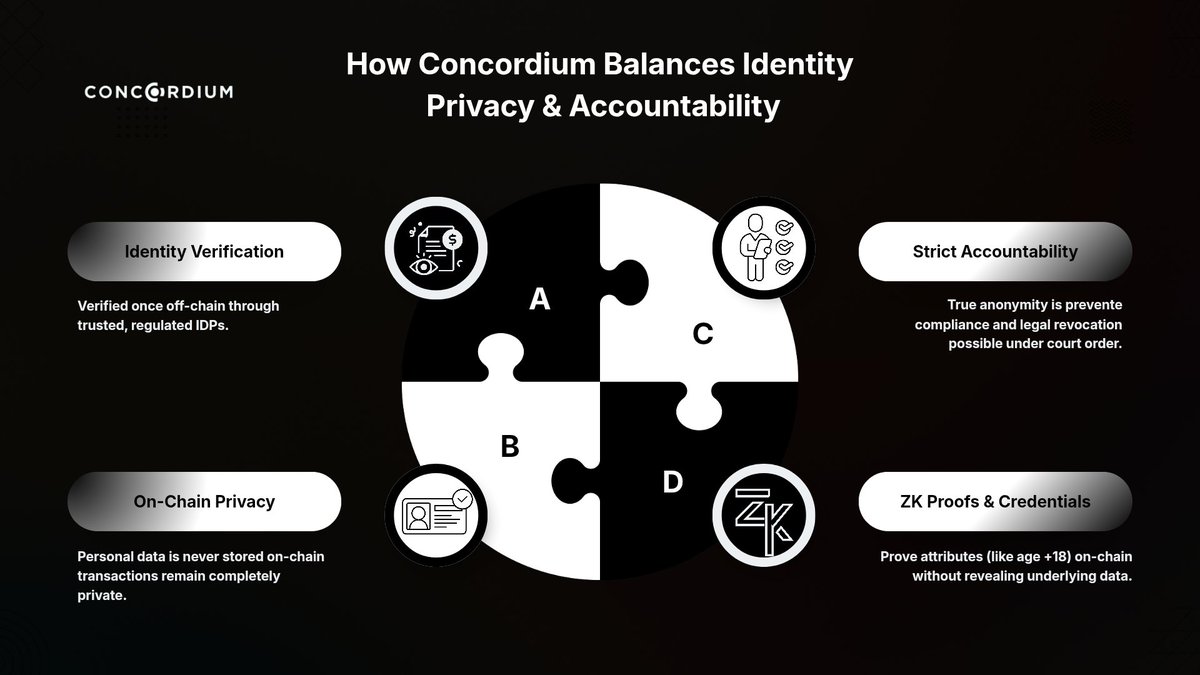
@Concordium takes a different approach. It integrates privacy, identity verification, and regulatory compliance directly into the protocol layer.
Here's how it works:
🔹 Identity Verification
Users verify their real-world identity once, off-chain, through trusted and regulated Identity Providers (IDPs). No personal information is stored on the public blockchain.
🔹 On-Chain Privacy
Transactions and everyday blockchain activities remain private and protected, without publicly exposing users' identities.
🔹 Accountability Without Mass Surveillance
Concordium prevents absolute criminal anonymity. Under strict legal procedures and court orders, identity disclosure can be authorized when necessary, balancing accountability with individual privacy.
🔹 Zero-Knowledge Proofs & Credentials
Through cryptographic credentials and Zero-Knowledge Proofs (ZKPs), users can prove specific attributes such as being over 18 or holding a valid license to dApps and AI agents without revealing their underlying personal data.
The Bigger Picture?
Real-world trust + Cryptographic privacy + Regulatory compliance = A safer path to mass Web3 adoption.
Concordium isn't asking us to choose between privacy and accountability. It's showing us how both can coexist
The Future of Web3 Needs Concordium!
I'm genuinely excited about what @Concordium is building.
While many blockchain projects focus on speed and scalability, Concordium is addressing one of the most important challenges in Web3: digital identity and trust.
Built-in identity verification.
Privacy through Zero-Knowledge Proofs.
Regulatory compliance without sacrificing privacy.
A stronger foundation for the next generation of Web3 applications.
What makes Concordium stand out is its commitment to making privacy, security, and accountability work together.
I believe trusted digital identity will play a major role in blockchain adoption, and Concordium is taking an important step toward that future.
Excited to be part of the Concordium ecosystem!
Privacy Is Not the Opposite of Accountability
Protecting your personal data doesn't mean escaping accountability. It means having control over what you share, who sees it, and when.
There's a common misconception online: "If you have nothing to hide, you have nothing to fear."
But locking your front door doesn't mean you're hiding something wrong.
It means you value your safety and understand that some boundaries deserve protection.
Accountability should be defined by your actions and integrity, not by how much personal information you're willing to expose to corporations, data brokers, or hackers.
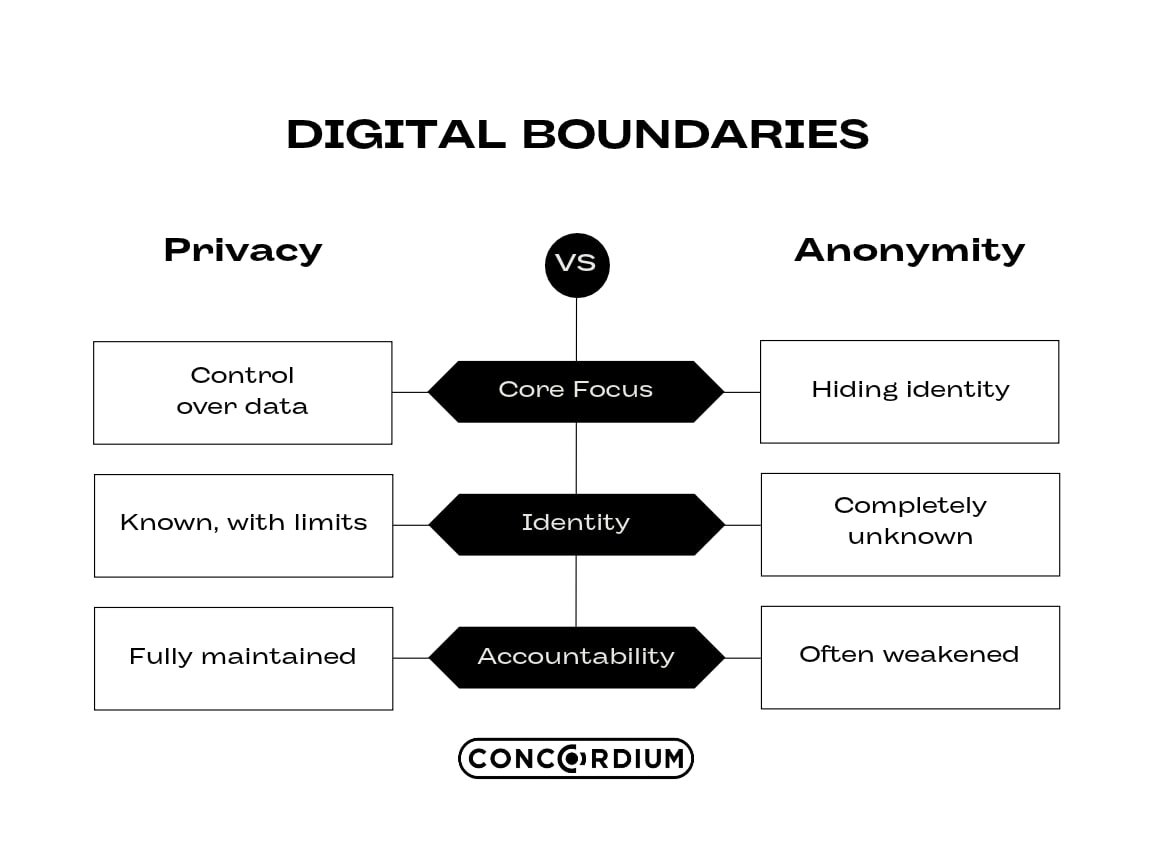
To understand why, we need to distinguish between two concepts often mistaken for one another:
1. Privacy: Control Without Exposure
Privacy gives you control over who accesses your personal information and how it's used.
Your bank may need to verify your identity, but that doesn't mean it needs unrestricted access to your personal life.
You can remain identifiable, verifiable, and fully accountable without exposing every detail about yourself.
2. Anonymity: Identity Without Disclosure
Anonymity allows people to act or communicate without revealing who they are.
It's essential for protecting whistleblowers, journalists, and freedom of expression. However, when identity cannot be linked to actions, establishing accountability can become more challenging.
The Bigger Picture: Privacy + Accountability
The future of digital identity shouldn't force people to choose between protecting their personal information and proving who they are.
This is where @Concordium stands out.
Through protocol-level identity and Zero-Knowledge Proofs (ZKPs), Concordium enables privacy-preserving verification, helping establish trust and accountability without requiring unnecessary exposure of personal data.
You shouldn't have to sacrifice your privacy to prove your legitimacy.
Because true digital freedom isn't about choosing between privacy and accountability.
It's about having both.
What if you could prove who you are without revealing your identity?
That's one of the biggest challenges in Web3 today.
Most platforms still ask users to share sensitive personal information just to prove simple facts, such as their age or eligibility.
@Concordium is changing this through its built-in identity layer.
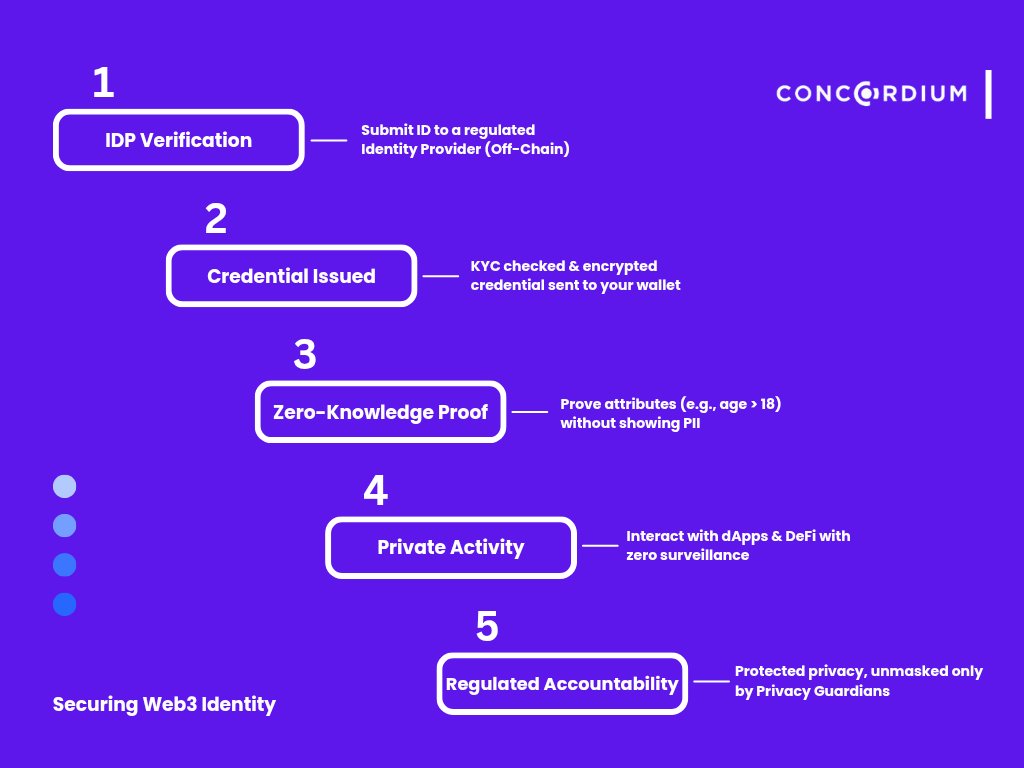
Here's how it works:
🔹 Privacy First: Your personal identity data stays private.
🔹 Zero-Knowledge Proofs: Prove specific information, such as being over 18, without revealing your actual birthdate.
🔹 Trusted Verification: Approved Identity Providers verify your real-world identity and issue trusted credentials.
🔹 On-Chain Accountability:
Applications can verify your credentials without needing access to your private documents.
But Concordium goes beyond protecting personal information.
Its protocol-level identity creates a foundation where privacy and accountability can work together.
This is especially important as AI agents and autonomous payments become part of the Web3 ecosystem.
Because the future isn't just about making transactions faster.
It's about knowing that trust, identity, and accountability are built into the infrastructure.
Privacy shouldn't mean sacrificing trust.
That's what makes Concordium different
Myth vs. Fact:
Zero-Knowledge Proofs Don't Automatically Guarantee Truth.
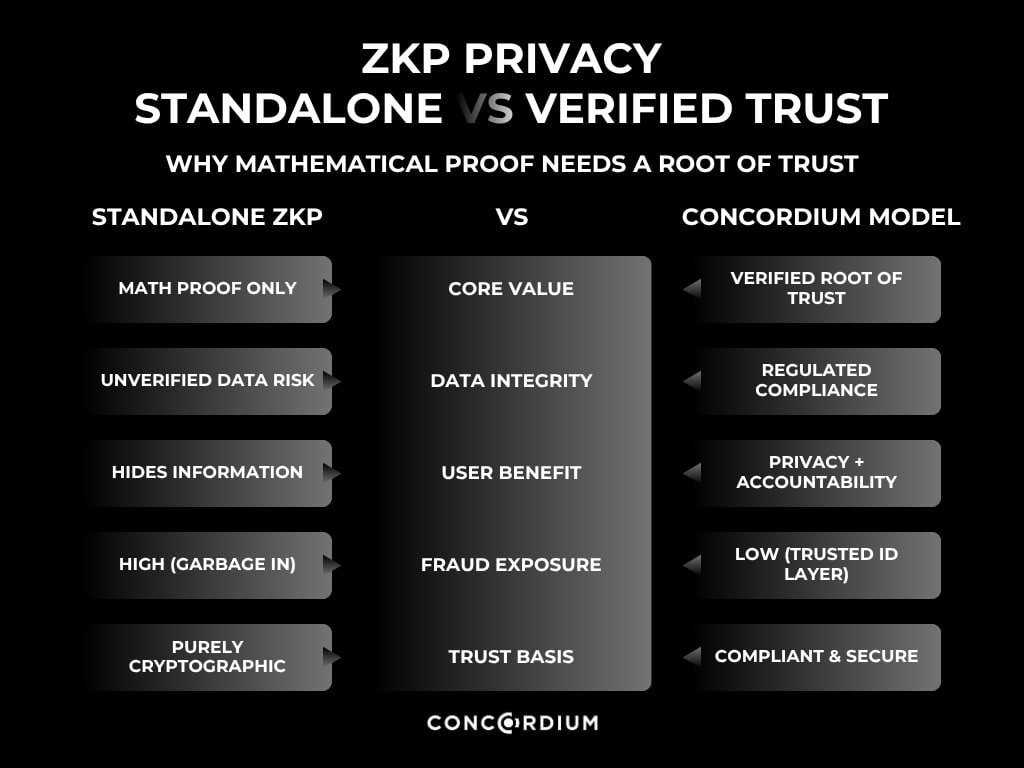
One of the biggest misconceptions in Web3 is treating Zero-Knowledge Proofs (ZKPs) as a magic truth serum.
The Myth:
If a statement comes with a ZKP, the underlying information must be an absolute real-world fact.
The Fact:
ZKPs prove mathematical validity, not the truth or origin of the underlying data.
Cryptography verifies the proof, not the real-world accuracy of the information behind it.
In other words: Garbage in, valid proof out.
How Concordium Addresses This:
Privacy alone isn't enough. Trust also requires knowing that information comes from a reliable source.
Concordium bridges this gap by combining:
🔹 Zero-Knowledge Proofs: Enabling privacy-preserving verification.
🔹 Protocol-Level Identity: Connecting digital identities to verified credentials through regulated Identity Providers.
The result? You don't have to choose between privacy and compliance.
With @Concordium , you can build verifiable trust while preserving your digital sovereignty.
@ourcryptotalk@Concordium Execution is easy; accountability is the real bottleneck for the agentic economy. Bridging verified real-world identity with ZKP privacy gives $CCD
a massive edge for institutional adoption
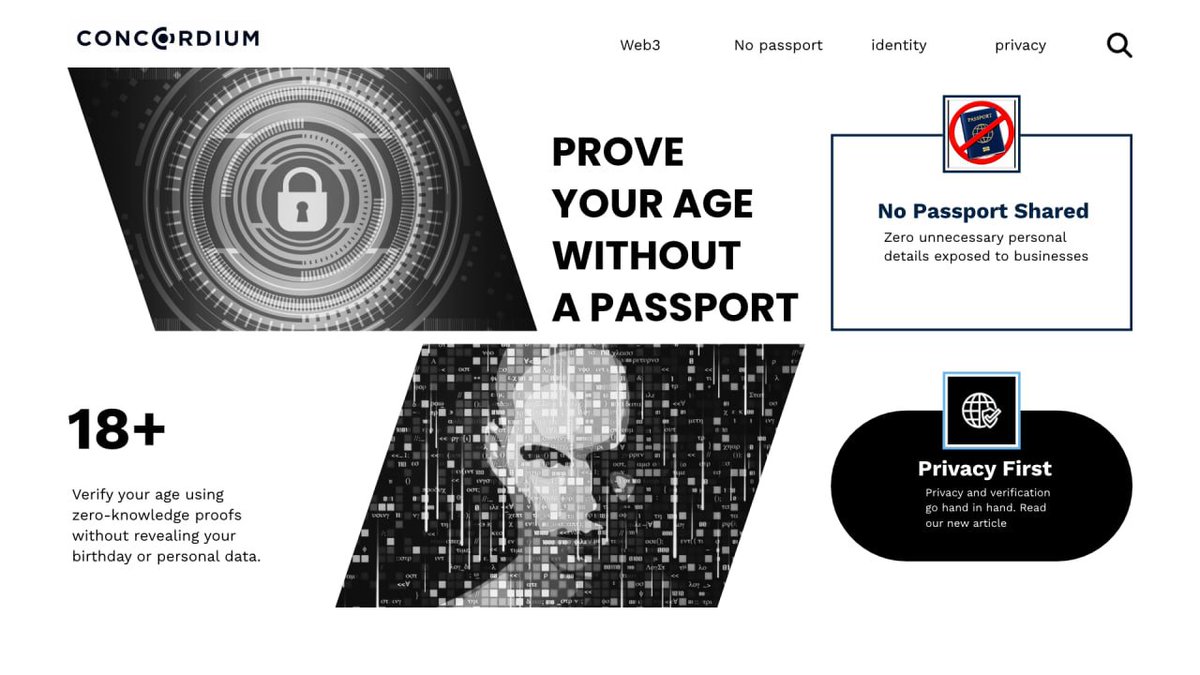
How do you prove you're over 18 online without revealing your passport?
New age-verification laws are putting online platforms under pressure, with massive fines for non-compliance.
But collecting sensitive IDs creates another risk: data leaks and privacy breaches.
@Concordium offers a smarter solution through Zero-Knowledge Proofs (ZKPs).
Here's how it works:
🔹 Verify Once: A regulated provider verifies your ID and securely establishes your date of birth.
🔹 Reveal Nothing: When a platform asks if you're over 18, cryptographic proof confirms YES without exposing your birthdate, passport, or personal documents.
🔹 Keep Your Identity Private: Concordium's approach separates real-world identity from online activity, without requiring platforms to collect or store your ID.
Prove you're eligible without revealing who you are.
That's the power of privacy-preserving identity verification.
Payments can move value, but identity is what makes trust possible.
As AI agents become active participants in the digital economy, verifying who stands behind them is no longer optional.
Concordium is helping build that missing trust layer through verifiable identity, privacy, and on-chain accountability.
The agentic economy needs more than autonomous transactions. It needs trust by design.
https://t.co/DJJb0iYFdh
“Payments are an engineering problem. Identity is a trust problem.”
Our CEO, @BBilowitzki, joins @paulbarron to unpack one of the biggest challenges facing the agentic economy.
AI agents, x402, ERC-8004, privacy, and the role Concordium plays in bringing accountability on-chain.
🎙️ Full interview 👇
https://t.co/bMpdVo4TVW
@Concordium Giving AI to everyone was the easy part. The real test begins when billions of autonomous agents start trading and deciding for us. Who takes the blame when things go wrong?