🇺🇦⚔️✊
For every drop of Ukrainian blood
Every child killed
Every widow
Every orphan
Every mother who lost a child
Every sister without a brother
Every father killed by grief for
Every broken destiny
Every damaged home
Every plant burned
Animal killed
For all of Ukraine we swear revenge
And our revenge will be a flourishing country
A great future for every child
Prosperity for every family
For every old man & woman a peaceful old age
Justice for every executioner
SUCH JUSTICE THAT BLOOD RUNS COLD ❤️
@navrotska_olga 🇺🇦
Switzerland blocks transfers of Swiss-made weapons to Ukraine. Yet ammunition, machinery and electronics from Swiss companies reach Russia.
Three SRF reports show the gaps in the controls.
1/5
@Kingjames8289@DefenceU Changing history on the fly. putin and his team denied an imminent invasion and mocked western intelligence up until that fateful day.
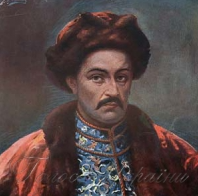
23 ноября 1708 РПЦ предала анафеме Гетмана Украины Ивана Степановича Мазепу за "измену" Петру I
какое отношение церковь имела к мирским делам при том, что её предназначение - служение богу, а не политика?
всё просто
РПЦ всегда являлась на московии государственным институтом, политическим инструментом, а не церковью и остаётся таковой по сей день..
A commuter spotted a plan to overhaul the Smithsonian’s National Museum of American History while commuting on a crowded Metro train. They sent ProPublica photos of the list https://t.co/j9LUGtOWHw
What I find particularly distressing is the number of Americans who have accepted Russian propaganda and are all too willing to repeat falsehoods intended to justify Russia's aggression against Ukraine. Among the most common are:
1. Ukraine brought the war upon itself by seeking NATO membership, or the West provoked Russia into invading.
This is nonsense. NATO is a defensive alliance, not an army advancing eastward to conquer territory. Central and Eastern European countries sought membership largely because of their historical experience of Russian and Soviet domination and their fear of renewed Russian expansionism. Russia does not possess a veto over the foreign policy decisions of sovereign states, and NATO enlargement provides no justification for invading Ukraine.
2. Ukraine is corrupt.
Ukraine has a corruption problem, as do many countries. According to Transparency International's 2025 Corruption Perceptions Index, Ukraine ranks 104th out of 182 countries. Corruption remains a serious challenge, but Ukraine has also undertaken institutional reforms and established mechanisms to investigate and prosecute it. More importantly, corruption does not diminish a country's sovereignty or justify foreign aggression.
3. Ukraine is not a real country.
History would disagree. Kyivan Rus', centered on Kyiv, emerged centuries before Moscow became a significant political center. Although both modern Ukraine and Russia share elements of this historical inheritance, the notion that Ukraine is merely an artificial Russian creation is historically indefensible.
Ukraine has repeatedly been subjected to Russian imperial domination and Soviet repression, including the Holodomor of 1932–33, a famine that killed millions of Ukrainians.
Crimea was transferred to the Ukrainian Soviet Socialist Republic in 1954. In 1991, Ukrainians voted overwhelmingly for independence, which Russia recognized. In 1994, Russia reaffirmed its commitment to Ukraine's sovereignty and existing borders under the Budapest Memorandum. In 1997, Russia signed the Treaty on Friendship, Cooperation and Partnership with Ukraine, explicitly recognizing its territorial integrity and the inviolability of its borders.
Russia subsequently violated those commitments.
4. Zelenskyy is corrupt.
There is no substantiated evidence that Zelenskyy has personally embezzled Western military assistance or enriched himself through the war. His earlier business dealings, including offshore financial arrangements, have raised legitimate questions, but allegations are not proof of criminal wrongdoing. By contrast, Putin's rule has been characterized by extensive patronage networks, opaque financial arrangements, and the enrichment of politically connected individuals.
5. Russia possesses nuclear weapons, so the West must avoid antagonizing Putin.
The United States successfully contained the Soviet Union for decades without nuclear war, despite confronting a considerably more formidable military adversary than contemporary Russia.
Nuclear escalation is a legitimate concern, but it cannot become an automatic veto over Western foreign policy. Deterrence depends on credible commitments and the ability to impose costs on aggression. Allowing Russia to dictate the policies of its neighbors through nuclear threats would establish a dangerous precedent, encouraging other nuclear powers to employ similar coercion.
Putin also has powerful incentives to avoid a nuclear confrontation that could threaten his regime and personal survival. While these considerations do not eliminate the risk of escalation, they should inform a rational assessment of it.
6. Russia is merely defending itself against NATO expansion.
NATO has expanded since 2004, but its enlargement has occurred through the voluntary accession of sovereign states, not territorial conquest. Russia's invasion of Ukraine produced precisely the outcome Moscow claimed to fear: Finland and Sweden abandoned their longstanding policies of military nonalignment and joined NATO.
Russia's actions in Georgia in 2008, Ukraine in 2014, and its full-scale invasion of Ukraine in 2022 are far more consistent with an attempt to preserve or reestablish a Russian sphere of influence than with a defensive response to an imminent military threat.
Putin has repeatedly questioned Ukraine's legitimacy as an independent nation, revealing ambitions that extend well beyond concerns about NATO.
What I find particularly disturbing is that Americans are willing to repeat these narratives with so little regard for historical evidence or the interests of their own country.
Russia is an authoritarian, expansionist state whose leadership has demonstrated a willingness to sacrifice enormous numbers of its own soldiers, devastate Ukrainian cities, and inflict immense suffering on civilians in pursuit of imperial ambitions.
Americans who knowingly promote the Kremlin's fabrications are lending their voices to a dictatorship hostile to the United States and the principles upon which its constitutional order rests.
They should consider whose interests they are serving.