“Men are so quick to blame the gods: they say
that we devise their misery. But they
themselves- in their depravity- design
grief greater than the griefs that fate assigns.”
Homer, The Odyssey
—As an initiator for the new year, Nietzsche’s words in 1882 always felt so proper to me:
“For the New Year.—I still live, I still think; I must still live, for I must still think. Sum, ergo cogito: cogito, ergo sum. To-day everyone takes the liberty of expressing his wish and his favourite thought: well, I also mean to tell what I have wished for myself to-day, and what thought first crossed my mind this year,—a thought which ought to be the basis, the pledge and the sweetening of all my future life! I want more and more to perceive the necessary characters in things as the beautiful:—I shall thus be one of those who beautify things. Amor fati: let that henceforth be my love! I do not want to wage war with the ugly. I do not want to accuse, I do not want even to accuse the accusers. Looking aside, let that be my sole negation! And all in all, to sum up: I wish to be at any time hereafter only a yea-sayer!”
At some point, you have to stop the war you wage against everything; you have to look aside everything, to stop even saying “no” to what you loathe; you rather have to leave everyone and everything be, so you end the reactive phase and initiate the really active one: the one that says “yea’” and starts actualising and reviving what you want to see embodied and glorified in this world.
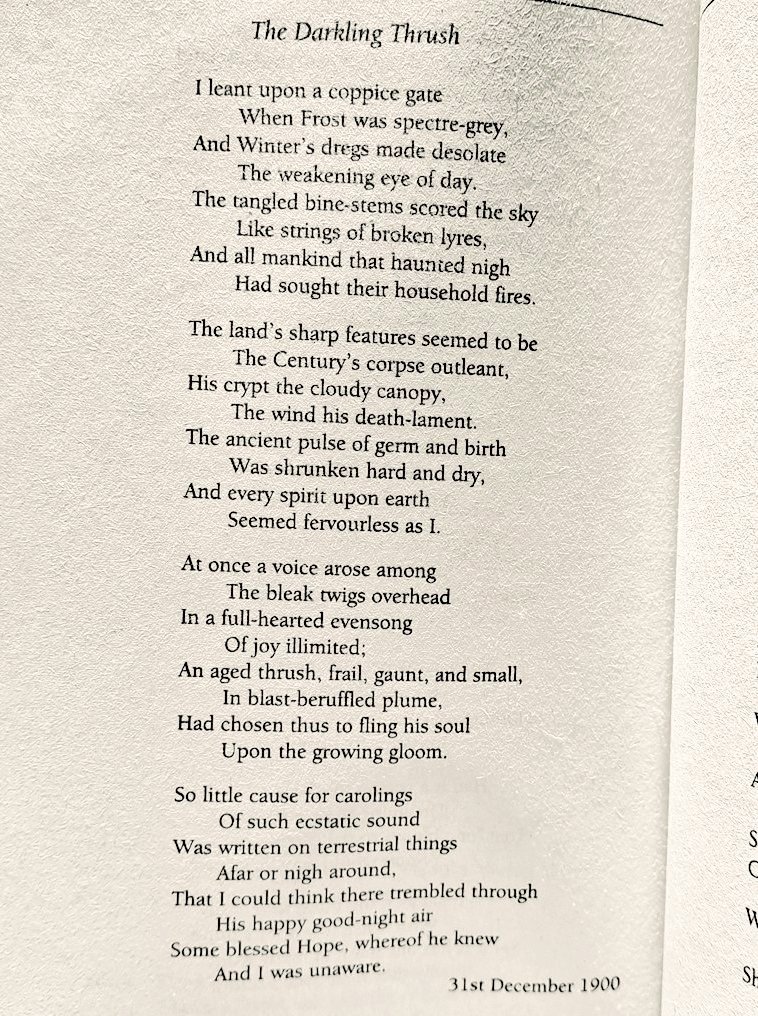
New Year's Eve, and 125 years old today is 'The Darkling Thrush' by Thomas Hardy.
(And when I myself read this poem, I often find myself becoming aware of that blessèd Hope from that frail and gaunt thrush ✨️)