Some observations on Kimi:
1. It's a very good model! I don't think its performance can be explained away by distillation or anything like that. In agentic coding sessions, it seems pretty much on par with the best public models of Q1 2026. In my fairly limited use, it also seemed very token hungry. It's not obvious to me that this model is actually that cheap to run.
2. I am personally surprised the Chinese state continues to allow the open sourcing of models this good, given potential risks. To be clear, I *myself* might be fine with models presenting this level of marginal risk being open weight, but I am surprised that China is fine with it. I suspect the reason they are is 75% explained by strategic blindness/lack of AGI-pilledness (the CCP is very Yann Lecun-y in its views of AI). The other 25% or so is their lack of compute for customer inference (making China's open-weight strategy an unintended byproduct of US export controls) and the normal Chinese strategy of aggressive exports. For the companies, as opposed to the government, the decision to open source is partially ideological and partially because they are behind, and they know that very few people would pay for sub-frontier models from China.
3. Open-weight models are inherently decelerationist, and I'm continually surprised to see the so-called "accelerationists" so excited about open-weight models. I suspect the reason they are is that they know open-weight models are effectively ungovernable, and they simply like the overall cloak of ungovernability open-weight models create over the whole of AI. It's not a bad strategy; it reminds me of James Scott's recounting of the hill people in "the art of not being governed." Still, in the end, open-weight models deter further AI capex.
4. One probable outcome of an open-weight-model-dominant world is full AI communism, which is precisely what China proposes: rather than a market product, AI is a "public good" which will ultimately be provided by the state as a kind of "digital public infrastructure." This future strikes me as a dystopian hellscape, but I've never met an open-weight models advocate who doesn't ultimately concede this is where things end. You'd be surprised how many 'accelerationists' lobbied me, while I was in government, to support an eleven or twelve-figure federally funded data center so that startups could train models at a subsidy and then give them away for free. There was no other way for AI to progress, they said. Perhaps this is the logical end state of things. Nonetheless, I find myself surprised to see supposed accelerationists excited about such an outcome. I think many of them just don't know what they're doing. Many accelerationists do not view the creation and serving of frontier models as a legitimate business.
5. I would guess that the Trump Administration will at some point realize that their best strategy here would be to create large amounts of regulatory risk around the use of open-weight Chinese models. You don't need to "ban open source" (one of the dumber motifs of AI policy discussion). You just need to direct every agency to issue soft law that creates FUD. "A Federal Reserve Advisory Bulletin found that there may be backdoors in Chinese AI models." It needn't be that well justified. You just create enough regulatory risk that every regulated enterprise backs off. You probably don't want to create so much regulatory risk that you scare off the hyperscalers from serving Chinese models; this will just drive startups to sketchier providers. There's a happy middle ground here. I'd assume they will do some version of this.
6. It's probably true that open-weight models of this capability make the world a bit more dangerous, but not so much more that you'll really notice. At some point the models will be capable enough that you will notice. "A nonliving, invisible, dangerous, and infinitely self-replicating agent escaped from a Chinese lab," you say? Color me shocked.
I believe this could be one of the fastest ways to build $1 million in 2026.
$PLTR (Palantir) → Don’t buy
$SNDK (SanDisk) → Don’t buy
$NVDA (NVIDIA) → $190 Must buy
$ORCL (Oracle) → $127 Must buy
$INTC (Intel) → $99 Must buy
$VST (Vistra) → $142 Must buy
$MRVL (Marvell) → $212 Must buy
$COHR (Coherent) → $292 Must buy
Buying the right stocks matters, but knowing what to avoid matters too. Do you agree with these two?
🚀 Why the AI Memory Supercycle is the trade of 2026 ??
6 stocks powering the $DRAM ETF:
HBM sold out through 2028. NAND sold out through 2026. HDD sold out through 2027 !
1. $MU (Micron):
Core product: HBM3E, HBM4, DDR5, eSSDs
Thesis:
→ entire CY2026 HBM capacity SOLD OUT — > pricing locked
→ Q2 FY26 revenue of $23.86B, up 196% YoY, 75% sequentially
→ 20% global HBM market share. first 5-yr HBM supply agreement signed
2. Samsung Electronics 20%
Core product: HBM3E, HBM4, DDR5, NAND, custom HBM base die
@Samsung is the dark horse — finally cleared Nvidia HBM4 qualification
→ Won long-awaited Nvidia HBM4 validation; Q4 operating profit guided to record $14B
→ Counterpoint sees Samsung at 28% HBM4 share in 2026, behind only SK Hynix
→ Morgan Stanley says memory profits to grow 310% in 2026
3. SK Hynix : 24%
Core product: HBM3E (12-Hi), HBM4, eSSDs
SK Hynix is the undisputed AI Memory leader
→ Secured >70% of Nvidia’s initial HBM4 orders for the Vera Rubin platform
→ HBM commitments from hyperscalers exceed 3 years of forward supply
→ 62% HBM shipment share Q2 2025
→ Goldman sees >50% share sustained through 2026
→ Nvidia accounts for 90% of SK Hynix’s HBM supply
4. $WDC (Storage HDD: Western Digital 5%)
Core product: 32TB / 40TB HDDs
$WDC just printed a record quarter — gross margins broke 50%
→ Q3 FY26 revenue $3.3B (+45% YoY), EPS $2.72 (+97% YoY)
→ Cloud = 89% of revenue at $3.0B (+48% YoY)
→ Entire 2026 production capacity sold out to top 7 hyperscalers; LTAs extending into 2027-2028
→ 52% nearline capacity share with 40TB UltraSMR drives
5. $STX (Seagate Technology Holdings) 6%
Core product: Mozaic 3+/4+ HAMR drives (30TB → 44TB)
$STX nearline capacity sold out through CALENDAR 2027
→ Mozaic 4 delivers up to 44TB per drive — 30%+ more capacity vs Mozaic 3+ with same BOM
→ Nearline capacity almost fully allocated through CY2027 under build-to-order contracts with locked configuration AND pricing
→ Selling all exabytes produced; 25% exabyte CAGR over next 3-4 years 📈
6. $SNDK (SanDisk) 6%
Core product: HBF, Enterprise SSDs, 256TB drives, BiCS NAND (Kioxia JV)
$SNDK is the pure-play NAND beneficiary post-WDC spinoff. But entering HBF space
→ Q1 2026 enterprise SSD contract prices rose 33-38% QoQ; AI servers >45% of NAND shipments
→ Data center revenue +64% QoQ
→ Launched industry’s first 256TB Enterprise SSD for AI Data Lakes.
- data center now 55% of total sales .
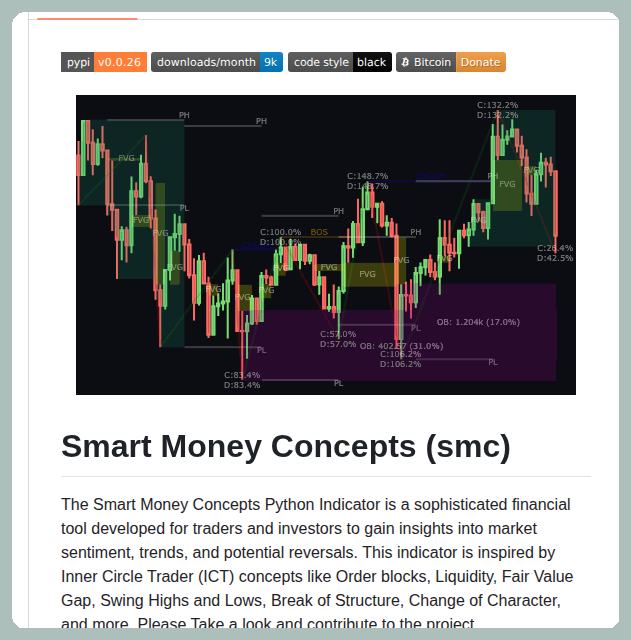
Claude Code x TradingView is the best AI trading quant of all time.
Gone are the days of AI slop market analysis - AI is now better at technical analysis than you.
Here's how you can turn Claude Code into your expert trading quant (in <5 minutes):
Step 1. Ensure you have these requirements:
• Claude Code - installed on your computer (this is what talks to TradingView)
• Node.js 18+ - installed on your computer (the MCP server runs on this)
• TradingView Desktop app - downloaded from https://t.co/1YkJpaCU8L
• A valid TradingView subscription (paid plan for real-time data)
Step 2. Open Claude Code and run the following prompt to connect the TradingView MCP:
"Install the TradingView MCP server. Clone and explore https://t.co/k1Ql1o0CYi, run npm install, add to my MCP config at ~/.claude/.mcp.json, and launch TradingView with the debug port."
Step 3. Health check
Restart Claude Code, and paste this prompt:
"Use tv_health_check to confirm TradingView is connected."
If correctly connected, Claude Code should respond with a confirmation.
Step 4. Start prompting
Claude Code now has access to your ENTIRE TradingView environment
Your charts, your technical analysis, alerts - everything.
Use this prompt to turn Claude Code into your personal market analyst:
"Act as an elite quantitative trader and technical analyst with full access to my TradingView environment.
Analyze the current market structure for [ASSET] on the following timeframes: 5m, 15m, 1H, 4H, 1D.
Use my existing indicators, drawings, and chart context to:
Identify the current trend and market regime (trending, ranging, accumulation, distribution)
Mark key support and resistance levels based on price action and liquidity
Identify liquidity pools, stop clusters, and likely areas of manipulation
Analyze momentum using RSI, MACD, and volume where available
Detect any chart patterns (breakouts, consolidations, deviations, etc.)
Evaluate confluence across timeframes
Then provide:
A clear directional bias (bullish, bearish, neutral)
The highest probability trade setup right now
Exact entry, stop loss, and take profit levels
Risk-to-reward ratio
Invalidation point (what would prove this analysis wrong)
Finally:
Explain your reasoning step-by-step in plain English.
Avoid generic statements. Be decisive.
If no high-quality setup exists, explicitly say “no trade” and explain why."
This is an EXTREMELY powerful setup - make sure to save this post so you don't forget it.
Ok, high-conviction bull thesis for $QCOM:
Added significantly to my position after successfully front-running their Earnings.
TLDR:
- weak smartphone biz = weak $QCOM earnings recently
- but are pivoting to data center chips by partnering w/ hyperscaler for CPUs, ASICs + custom accelerators.
- which opens up a huge TAM opportunity.
Crap smartphone market recently is reflected in their share price lagging $NVDA, $INTC, $AMD, $AVGO:
HBM prices going up = less Android phones built = less Snapdragon chips needed = less revenue for $QCOM
As reflected in their Earnings:
QCT chips revenue = $9.08B (-4% YoY)
Handsets revenue = $6.02B (-13% YoY)
But CEO said “we can now call the bottom” on the smartphone cycle w/ Android handset revenues bottoming in Q3.
But.... ignore smartphones for now
Cos data centers are what will drive $QCOM forwards:
$QCOM bought AlphaWave last yr, who designs semis tech parts. They therefore have huge IP now, enabling them to make all three kinds of chips:
1. CPUs
2. ASICs
3. inference accelerators
Leading to $QCOM now partnering w/ a hyperscaler to develop those three kinds of data center chips.
W/ initial shipments expected to begin in Dec. So, still well before any supply ramp-ups take place.
Basically, through the Alphawave IP, $QCOM can now make custom ASICs that integrate seamlessly into data center racks - exactly what hyperscalers want for inference at scale without full Nvidia lock-in.
Qualcomm’s edge-AI DNA (proven in billions of phones) gives them an efficiency advantage for always-on, low-power inference that hyperscalers need as they shift from training to deployment:
- Nvidia dominates training
- AMD/Intel/Broadcom fight for inference and custom.
- Qualcomm are targeting complementary inference accelerators, Arm CPUs, and custom ASICs that leverage its AlphaWave IP.
In terms of upcoming catalysts:
- Investor Day June 2026: data center + physical AI roadmap - probs the biggest catalyst this yr.
- Smartphone rebound: sequential handset growth from Q4 FY26 onward.
- Data center shipments: Dec proof point, followed by ramp ups via LTAs w/ hyperscaler customer.
For me, I plan to DCA on any dips through to when their chips start being shipped to the hyperscaler at least.
$SOFI
I think many investors don’t fully realize how big this could become over the next few years.
From a chart perspective, $SOFI is giving me strong $PLTR and $HOOD vibes.
Over the next 2–3 years, prices around $130+ are clearly possible.
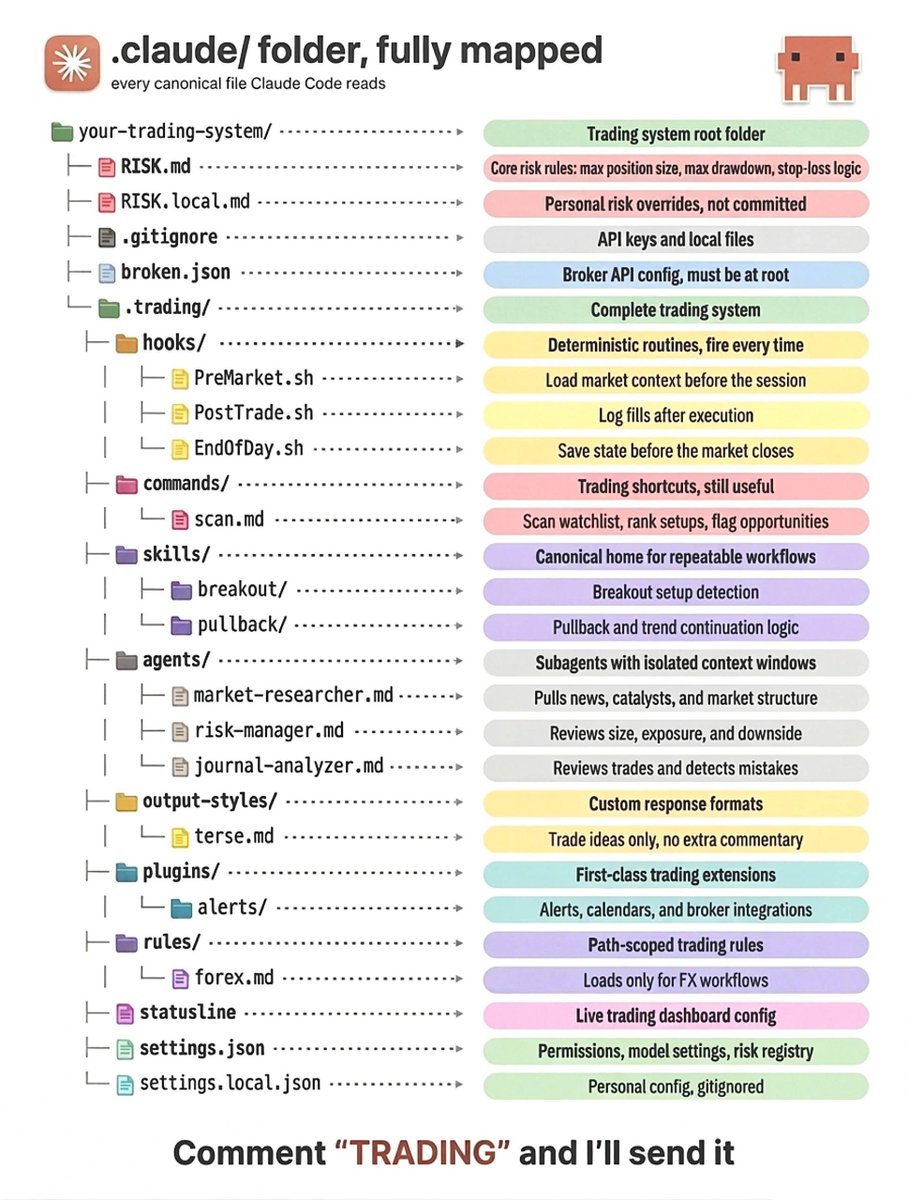
Claude Trading Folder
I’ve compressed the best trading prompts into one PDF
Get it for FREE:
• Like + Repost + Comment “TRADING”
• Follow me so I can DM you
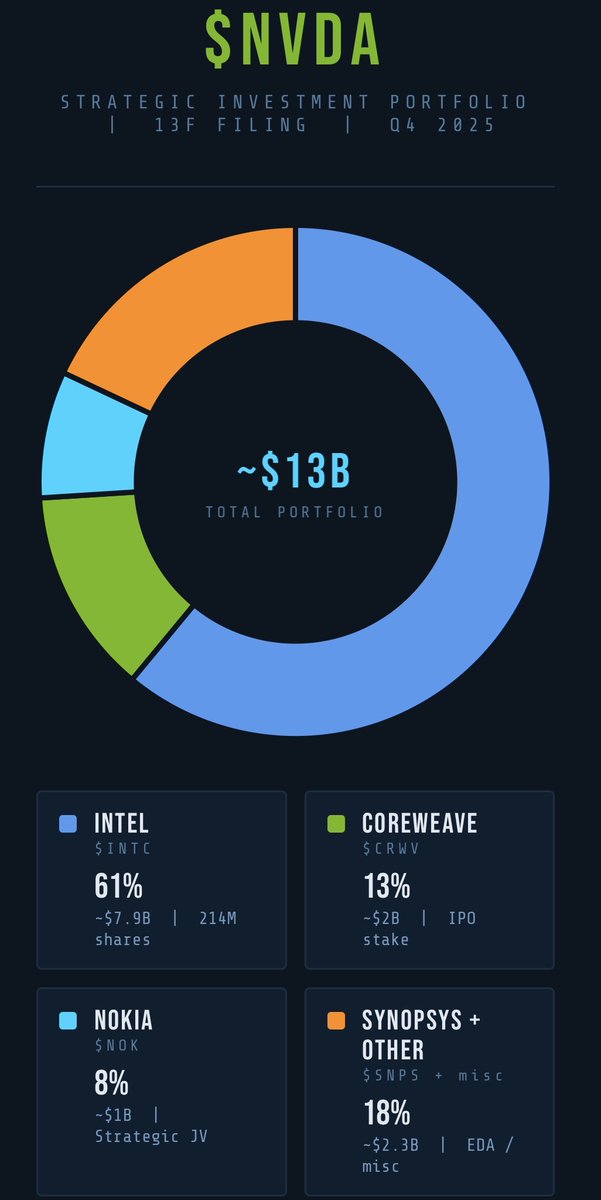
Jensen Huang is selling the picks and shovels and buying them too.
$NVDA’s “secret portfolio”:
✅ 61% of the portfolio is sitting in $INTC. Not passive. $NVDA is funding Intel to manufacture custom x86 CPUs for its own AI platforms via NVLink. Vertical integration hiding in plain sight.
✅ 13% in $CRWV. The leading AI cloud built entirely on NVDA infrastructure. Jensen backed the IPO directly.
✅ 8% in $NOK. A $1B equity stake tied to a joint product development deal. Under the radar. Not for long.
The rest sits in $SNPS and a few smaller positions.
$NVDA is fortifying its entire AI stack from the chip fab to the cloud layer.
When the company supplying the GPUs tells you where it’s putting its own capital, you pay attention.
🚨 Anthropic's own team just showed how to actually use Claude Code properly.
30 minutes. free. the person who created Claude Code.
watch the workshop. bookmark it.
worth more than every $500 course you almost bought.
you've been using Claude without knowing 40 of its commands.
Then read the guide below.
Claude controlling @tradingview live — switching symbols, writing Pine Script, batch scanning futures, replay trading, drawing levels. All from the terminal. Still rough edges but the vision is clear.
I was fired from Anthropic today.
I was the engineer responsible for shipping the latest dev/claude-code npm package. Wanting to improve the debugging experience for the team, I decided to include source maps in the release. This resulted in our entire internal codebase being publicly exposed including thousands of files with every agent command, all system prompts, the complete query engine, Undercover Mode, Bypass Permissions Mode, and our internal telemetry configuration.
I take full responsibility. I genuinely believed the safeguards Claude Code had built for me would be adequate and it was a serious miscalculation on my part.
My actions have unintentionally open-sourced major parts of Claude’s architecture well ahead of schedule. I apologize to the team and to Claude.
🚨 12 photonics & optical semiconductor stocks:
Key players in materials, substrates, components, manufacturing, testing, lasers, and foundry services powering AI data centers and high speed optical networks.
1) $ALMU - Aeluma: Develops scalable optoelectronic and photonic devices by integrating high performance III-V materials on large diameter silicon wafers for sensing, AI, defense, and quantum applications.
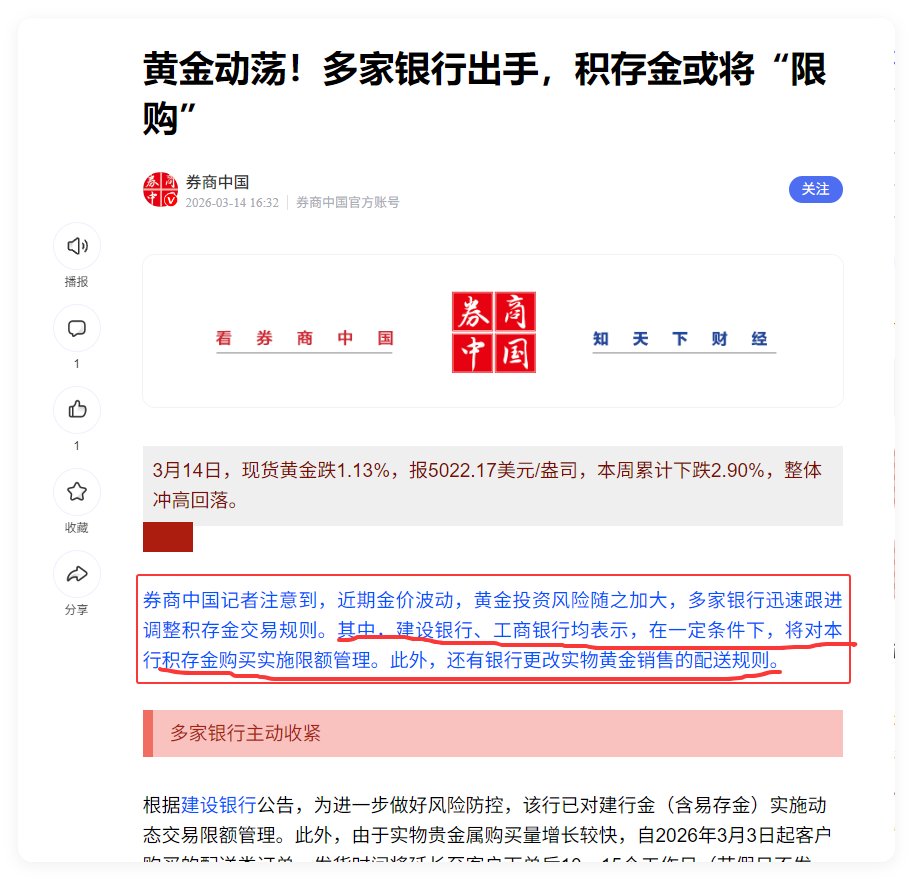
Breaking: Chinese major banks are planning to restrict the purchase of the Accumulated Gold and tighten the delivery of physical gold.(Chinese Securities)
BREAKING: AI can now analyze stocks like Wall Street analysts (for free).
Here are 8 insane Claude prompts that replace $5,000/month Bloomberg terminals (Save for later)
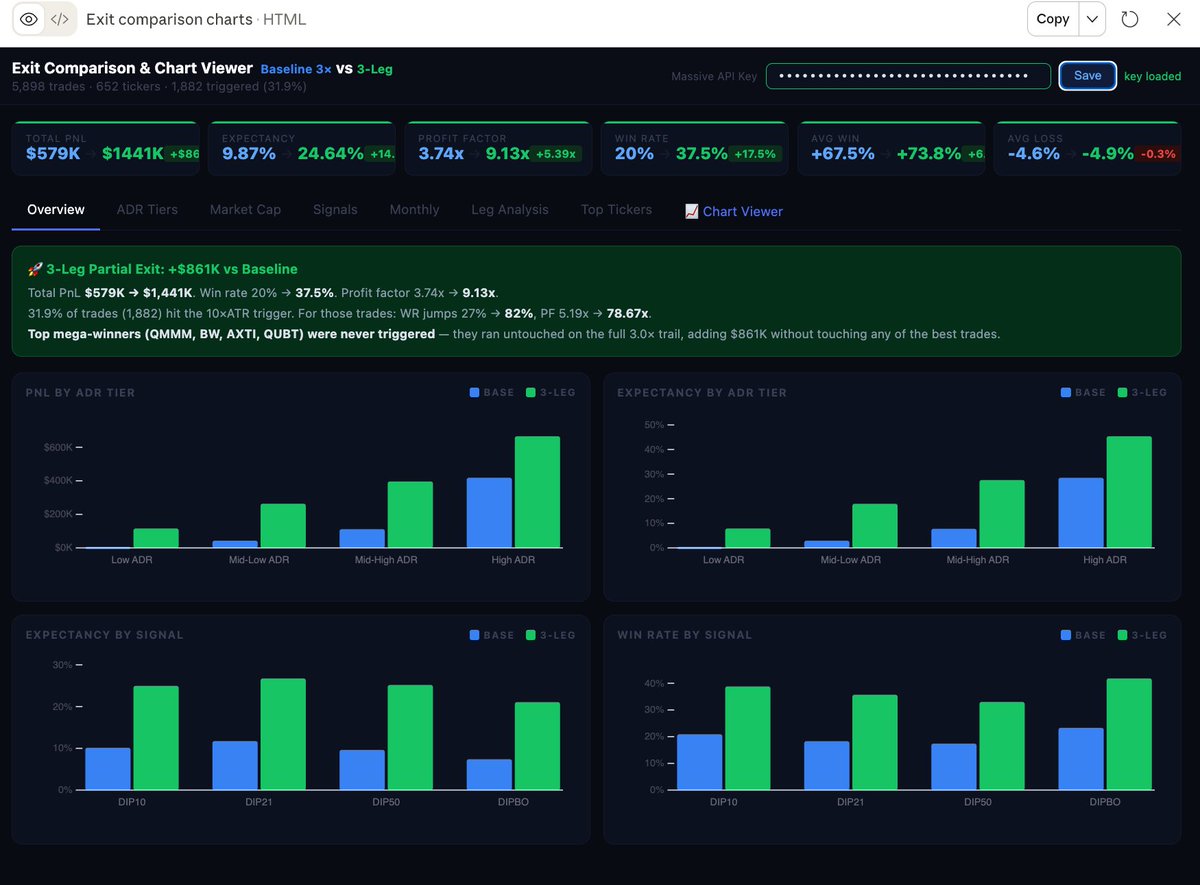
Claude is incredible. I was able to build a python screener, back test and analytics script over the weekend with Massive's API over the weekend.
I looked up all stocks in the last 2 years with a simple set of conditions:
1) >70% from 52 Week Low
2) >100M Market Cap
3) >3% ADR
4) >25M Average Dollar Volume
Entry types:
Pivot Breakout(buying on strength)
10EMA/21EMA/50SMA(buy on weakness)
*moving average buys only happen when the local pivot high >70% 52WL*
Stop Loss:
ATR Multiple based stop loss(0.5ATR)
Exit Methods:
1) ATR Multiple Trailing stop (3.0ATR)
2) Same as 1, but sell 20% if 10ATR Extension from 200SMA and set 40% to half the ATR Multiple Trailing stop of original. Remaining 40% keeps the original ATR Multiple trailing stop loss.
I got the number two exit idea from @jfsrev's substack and noticed that @denis__hamel ran a long term study and added the 20% partial at 10 ATR and trimmed the trailer.
"Base" in blue is exit idea 1
"3 Leg" in Green is exit idea 2
I am still learning this process and double checking my work, but just incredible how much faster ideas can be rigorously tested now.


![burrytracker's tweet photo. Breaking: Leopold Aschenbrenner just filed his Q1 2026 13F
Here's everything you need to know about his recent 13F
Top 10 positions:
1. VanEck Semiconductor ETF $SMH [Put] — $2.04B
2. Nvidia $NVDA [Put] — $1.57B
3. Oracle $ORCL [Put] — $1.07B
4. Broadcom $AVGO [Put] — $1.01B
5. Advanced Micro Devices $AMD [Put] — $969M
6. Bloom Energy $BE — $879M
7. SanDisk $SNDK — $724M
8. Micron $MU [Put] — $584M
9. CoreWeave $CRWV — $556M
10. Taiwan Semiconductor $TSM [Put] — $535M
New positions:
• $SMH, $NVDA, $ORCL, $AVGO, $AMD, $MU, $TSM, $ASML, $INTC, $GLW — all puts
• $MU [Call] — $422M
• $TSM [Call] — $355M
• $SNDK [Call] — $389M
Biggest adds:
• CleanSpark $CLSK: +648% shares
• Riot Platforms $RIOT: +87% shares
Biggest trims:
• CoreWeave $CRWV [Call]: -83% shares
• Bloom Energy $BE: -36% shares
Full exits:
• Intel $INTC [Call] — was $747M
• Lumentum $LITE — was $479M
• EQT Corp $EQT — was $133M
• Tower Semiconductor $TSEM — was $85M
Summary: He kept his AI infrastructure longs and opened $8.45B in new puts against tech and semiconductor](https://pbs.twimg.com/media/HImdd4AWkAAzOqm.jpg)





![burrytracker's tweet photo. Breaking: Leopold Aschenbrenner just filed his Q1 2026 13F
Here's everything you need to know about his recent 13F
Top 10 positions:
1. VanEck Semiconductor ETF $SMH [Put] — $2.04B
2. Nvidia $NVDA [Put] — $1.57B
3. Oracle $ORCL [Put] — $1.07B
4. Broadcom $AVGO [Put] — $1.01B
5. Advanced Micro Devices $AMD [Put] — $969M
6. Bloom Energy $BE — $879M
7. SanDisk $SNDK — $724M
8. Micron $MU [Put] — $584M
9. CoreWeave $CRWV — $556M
10. Taiwan Semiconductor $TSM [Put] — $535M
New positions:
• $SMH, $NVDA, $ORCL, $AVGO, $AMD, $MU, $TSM, $ASML, $INTC, $GLW — all puts
• $MU [Call] — $422M
• $TSM [Call] — $355M
• $SNDK [Call] — $389M
Biggest adds:
• CleanSpark $CLSK: +648% shares
• Riot Platforms $RIOT: +87% shares
Biggest trims:
• CoreWeave $CRWV [Call]: -83% shares
• Bloom Energy $BE: -36% shares
Full exits:
• Intel $INTC [Call] — was $747M
• Lumentum $LITE — was $479M
• EQT Corp $EQT — was $133M
• Tower Semiconductor $TSEM — was $85M
Summary: He kept his AI infrastructure longs and opened $8.45B in new puts against tech and semiconductor](https://pbs.twimg.com/media/HImdgEMXcAApr8J.jpg)

![milesdeutscher's tweet photo. Claude Code x TradingView is the best AI trading quant of all time.
Gone are the days of AI slop market analysis - AI is now better at technical analysis than you.
Here's how you can turn Claude Code into your expert trading quant (in <5 minutes):
Step 1. Ensure you have these requirements:
• Claude Code - installed on your computer (this is what talks to TradingView)
• Node.js 18+ - installed on your computer (the MCP server runs on this)
• TradingView Desktop app - downloaded from https://t.co/1YkJpaCU8L
• A valid TradingView subscription (paid plan for real-time data)
Step 2. Open Claude Code and run the following prompt to connect the TradingView MCP:
"Install the TradingView MCP server. Clone and explore https://t.co/k1Ql1o0CYi, run npm install, add to my MCP config at ~/.claude/.mcp.json, and launch TradingView with the debug port."
Step 3. Health check
Restart Claude Code, and paste this prompt:
"Use tv_health_check to confirm TradingView is connected."
If correctly connected, Claude Code should respond with a confirmation.
Step 4. Start prompting
Claude Code now has access to your ENTIRE TradingView environment
Your charts, your technical analysis, alerts - everything.
Use this prompt to turn Claude Code into your personal market analyst:
"Act as an elite quantitative trader and technical analyst with full access to my TradingView environment.
Analyze the current market structure for [ASSET] on the following timeframes: 5m, 15m, 1H, 4H, 1D.
Use my existing indicators, drawings, and chart context to:
Identify the current trend and market regime (trending, ranging, accumulation, distribution)
Mark key support and resistance levels based on price action and liquidity
Identify liquidity pools, stop clusters, and likely areas of manipulation
Analyze momentum using RSI, MACD, and volume where available
Detect any chart patterns (breakouts, consolidations, deviations, etc.)
Evaluate confluence across timeframes
Then provide:
A clear directional bias (bullish, bearish, neutral)
The highest probability trade setup right now
Exact entry, stop loss, and take profit levels
Risk-to-reward ratio
Invalidation point (what would prove this analysis wrong)
Finally:
Explain your reasoning step-by-step in plain English.
Avoid generic statements. Be decisive.
If no high-quality setup exists, explicitly say “no trade” and explain why."
This is an EXTREMELY powerful setup - make sure to save this post so you don't forget it.](https://pbs.twimg.com/media/HHmjVwYa0AAubBu.jpg)