@Ilhan Eradicating poverty starts with :
Removing obstacles placed by the government which hurt small business.
Eliminating taxes on the poor.
Opening up free trade so that the poor can better afford everything that they need.
Allowing Social Security to be fully ‘owned’ by citizens.
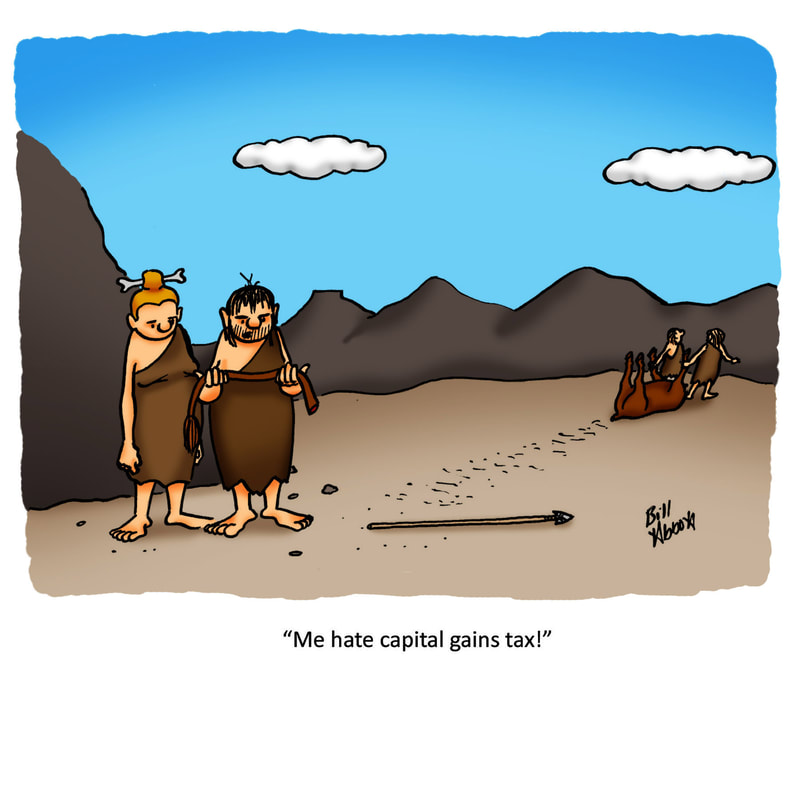
Capital gains tax is theft, committed twice against the same dollar.
You earn income. The government takes its cut immediately, in the US its between 22% and 37% depending on your bracket. What remains is yours, after-tax money, already processed through Washington's collection machine. You choose not to spend it. You save it, invest it, buy assets with it. The discipline required to delay consumption is precisely the behavior that funds capital formation across the economy.
Then the asset grows. You sell it. The government appears again, demanding 20% (plus the 3.8% Net Investment Income Tax for higher earners) on the nominal gain, which often includes pure inflation adjustments that represent no real increase in purchasing power whatsoever.
The IRS treats your patience as a second taxable event. The original dollar was already taxed. The "gain" frequently reflects nothing more than the dollar losing value while you held the asset. Murray Rothbard identified this pattern: the state punishes capital accumulation.
Consider a simple case. You invest $50,000 of after-tax earnings in 2016 into an S&P 500 index fund. By 2026, it's worth $115,000. Inflation consumed a meaningful slice of that $65,000 gain. You pay capital gains tax on the full nominal figure regardless.
Capital gains taxation suppresses investment, shrinks the capital pool available for productive enterprise, and forces entrepreneurs to seek financing from a shallower pond. Fewer productive investments get made. Workers carry that cost through lower wages and fewer opportunities. The state expands, while you suffer.
Milton Friedman discusses how to improve America’s public school system:
“Education ought to be a state and local matter, not a federal matter. It ought to be a parental matter. The responsibility for educating children is with their parents.”
“In order to make it a parental matter, you have to have a situation in which the parents are free to choose the schools their children go to. They aren’t now.”
“Today the schools pick the children. Children are assigned to schools by geography, by where they live. Essentially you’ve got a school picking its own children.”
“Take the amount of money that we’re now spending on education, divide it by the number of children, and give that amount of money to each parent. We keep on spending that, but spend it in the form of vouchers going to all parents.”
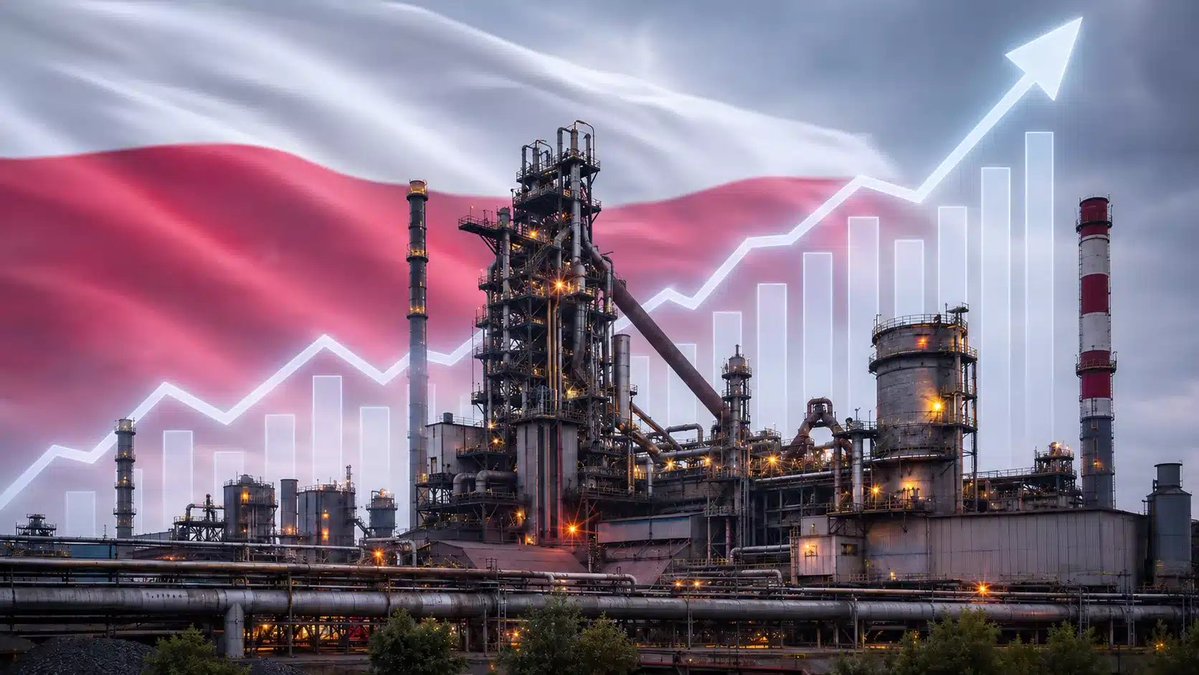
In 2010, Polish workers cleaned the houses of British professionals. Today, Poland's GDP per capita sits above $43,000 in purchasing power parity terms, level with Spain and closing fast on France. That reversal took roughly one generation. This was deliberate policy, not luck.
Poland ran a flat tax on business income, kept labor markets comparatively flexible, and spent the 1990s dismantling the Soviet pricing apparatus faster than almost any neighbor. Capital read those signals immediately. Volkswagen, Samsung, and hundreds of smaller manufacturers moved production east. Warsaw became a financial hub, not a branch office.
The EU structural funds helped, obviously, pouring +-160 billion euros into Polish infrastructure between 2004 and 2020. Funds alone don't explain the difference. Ukraine received aid too. Poland built what mattered around the money: enforceable contracts, a functioning court system, and a bureaucracy that didn't simply steal the paperwork.
Respect property, enforce contracts, keep inflation credible, and capital flows toward you. Poland did roughly that for thirty years while Germany and France were busy building regulations that made hiring someone feel like adopting them legally.
The housekeepers became engineers, then managers, then founders. Warsaw startup valuations crossed 50 billion euros in aggregate by 2024. Polish engineers now earn salaries that make relocating to London feel irrational rather than mandatory.
Wealth is produced where producers are left alone to produce it. Poland left them alone just enough.
Another 10 years of this and people from the UK will be cleaning the houses of professionals in Poland.
In the 1980s, a Stanford economist co-wrote a flat tax plan. The US Congress never passed it.
About a decade later, Estonia, a former Soviet republic, adopted a flat tax, and today it has more startup unicorns per capita than any other country in Europe.
Yesterday, that economist won the Nobel Prize in Economics. 🧵
Milton Friedman:
“In the long run, government will spend whatever the tax system will raise, plus as much more as it can get away with. That’s what history tells us.”
“So my view has always been: cut taxes on any occasion, for any reason, in any way that’s politically feasible, as the only way to keep down the size of government.”
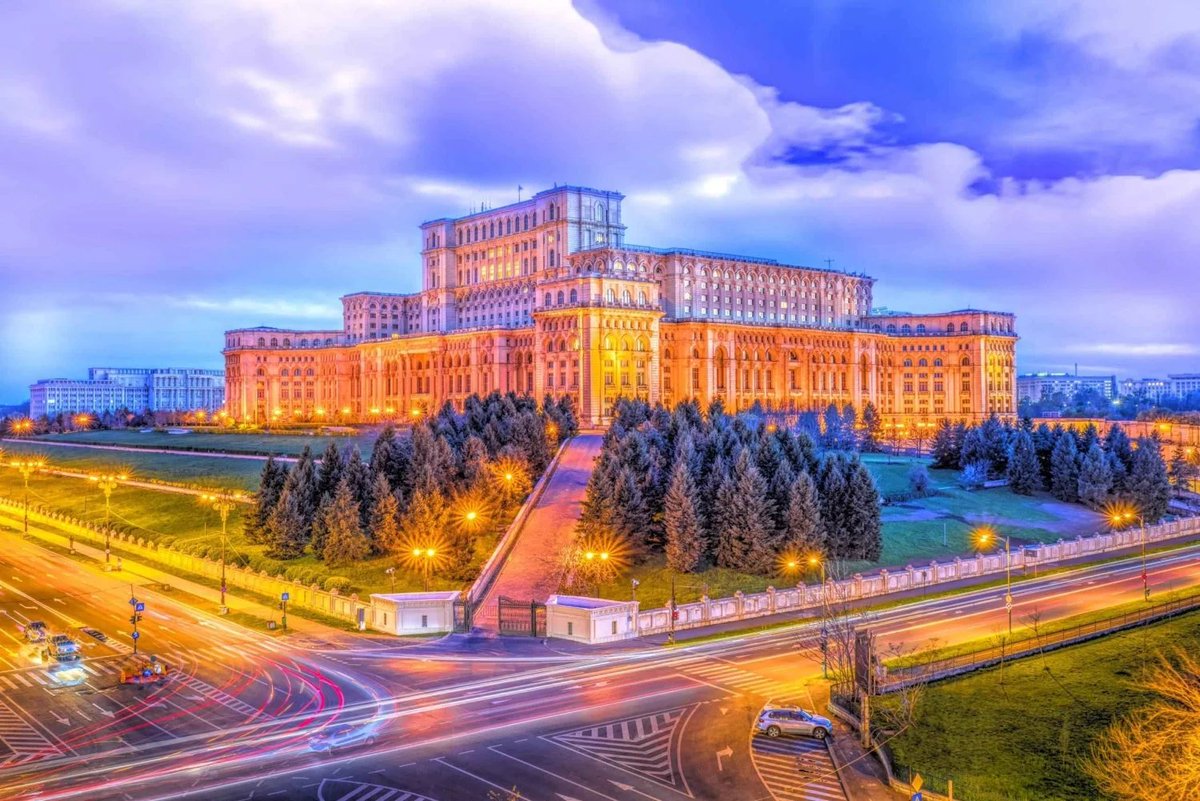
Nicolae Ceaușescu demolished seven square kilometers of central Bucharest, including nineteen Orthodox churches and 40,000 homes, to erect a palace covering 365,000 square meters. He named it the "House of the People." The Romanian people lived without heat through winters that dropped below minus 20 Celsius while their government rationed bread.
This is central planning operating exactly as designed. When the state controls all capital allocation, the preferences of one man replace the preferences of millions. Prices no longer carry information about scarcity; political will does. The palace consumed 700,000 tonnes of steel, one million cubic meters of marble, and 900 million dollars in mid-1980s purchasing power. Meanwhile, Romanians queued for cooking oil and wore coats indoors through January. The regime made this tradeoff deliberately, consciously diverted resources, and suppressed anyone who objected.
Central planning always produces this: concentrated, visible monuments for the ruler, and dispersed, invisible suffering for everyone else. The ruler faces no profit-and-loss signal, no bankruptcy, no customer walking out the door. The people face compliance or a bullet. Without prices generated by voluntary exchange, planners cannot allocate resources rationally. Ceaușescu proved the theorem empirically, at enormous human cost.
Remove the monopoly on force, restore private property, and people will rebuild their own cities without tearing down churches to do it.
In 2011, Somali pirates attacked 237 ships and were holding hundreds of sailors hostage at a time, waiting for ransoms in the millions.
Most Americans knew the problem from one incident — the 2009 hijacking of the Maersk Alabama and its captain, Richard Phillips, which ended with Navy SEAL snipers and became the Tom Hanks movie Captain Phillips.
Two years later, warships from the US, EU, NATO, China, India and Japan were patrolling the Gulf of Aden, and none of it had stopped the attacks.
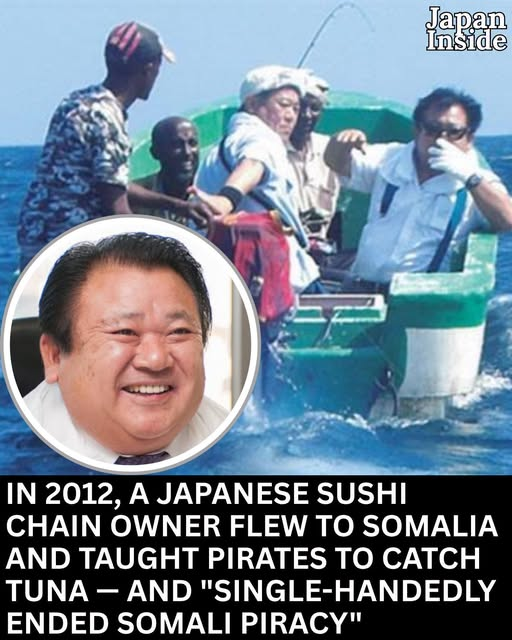
Then a sushi restaurant owner from Tokyo went to the coast to talk to the pirates.
His name is Kiyoshi Kimura, owner of the Sushi Zanmai chain — the man Japan calls the Tuna King, who paid a record $3.2 million for one bluefin this January.
According to his own account, he went around 2012 and concluded the pirates were out-of-work fishermen whose waters had been emptied by foreign trawlers.
So he says he gave them four fishing boats, taught them to catch yellowfin tuna, built freezers to hold the catch, and promised to buy every fish.
"They didn't even like pirating," he said. "I suggested that they catch tuna instead, and make a proud living for their families."
Somali attacks fell from 237 in 2011 to 15 in 2013, and by 2015 the hijackings had stopped.
The International Maritime Bureau credits navies, armed guards, hardened ships and Somalia's government.
Kimura's name is not on that list, and no one outside his own interviews has measured what four boats on one stretch of coast actually did.
Which is how a sushi man from Tokyo came to be credited, online and forever, with "single-handedly ending Somali piracy."
The Ridge Tracker Card now runs on Apple Find My and Google Find Hub, and is certified on both. Card-thin, recharges on any MagSafe or Qi charger, 10 months per charge. Whatever phone is in your pocket, your carry stays findable.
They look like a biker gang, yet instead of seeking trouble, they pursue people who harm animals.
In New York, Rescue Ink brought together tattooed bikers, veterans, former police officers, lawyers, and bodybuilders around a single purpose: protect animals that cannot protect themselves.
Their imposing appearance worked in their favor. The group confronted suspected animal abusers in person, helped dismantle dogfighting rings, rescued neglected pets, and assisted in locating stolen animals.
At their height, Rescue Ink handled large volumes of abuse reports and cooperated with authorities whenever possible. Over the years the group aided animals of many kinds, including dogs, cats, horses, pigs, reptiles, and other neglected creatures.
Their efforts grew so well known that Rescue Ink eventually received its own National Geographic reality series, introducing their distinctive style of animal rescue to viewers around the world.
Milton Friedman:
“There is an enormous amount of poverty in the world everywhere. There is no system that’s perfect. There’s no system that’s going to eliminate poverty completely.
The question is, which system has the greatest chance? Which is the best arrangement for enabling poor people to improve their lot?
On that, the evidence of history speaks with a single voice. I do not know any exception to the proposition that if you compare like with like, the freer the system, the better off the ordinary poor people have been.”
Capital flees taxation the way water flows downhill: By the physics of human choice.
When France raised its top income tax rate to 75% in 2013, Gerard Depardieu moved to Belgium and eventually took Russian citizenship. Eduardo Saverin renounced his U.S. citizenship before Facebook's 2012 IPO. These were transactions. Rational actors doing math.
Impose a cost on production and you get less production. Impose a cost on capital and capital relocates. The political class treats this as betrayal. Supply and demand applies to jurisdictions.
Cayman Islands, Monaco, Dubai, Singapore: these places didn't stumble into prosperity. They built low-tax, low-regulation environments and capital came to them. Singapore's top income tax rate sits at 24% with no capital gains tax at all. The result is a per capita GDP that buries most of Europe.
High-tax jurisdictions run the same experiment in reverse. You raise rates, your most mobile earners leave first, then your businesses restructure, then your tax base erodes, so you raise rates again on whoever remains. The spiral ends with a population that cannot leave because it has nothing worth taxing.
California has lost over 500,000 residents net to other states since 2020. Illinois has shed population for nine consecutive years. The people staying aren't the founders and investors. They're the ones who can't afford to move.
Tax havens don't cause this dysfunction. They simply make it visible by giving capital somewhere better to go.