Algo Trading, Strat, Macro. Math PhD (Erdős 3). Hon Reader@UCL. Created MSc Algo Trading (‘17-now), & teaching online. Too much street-side experience to list.
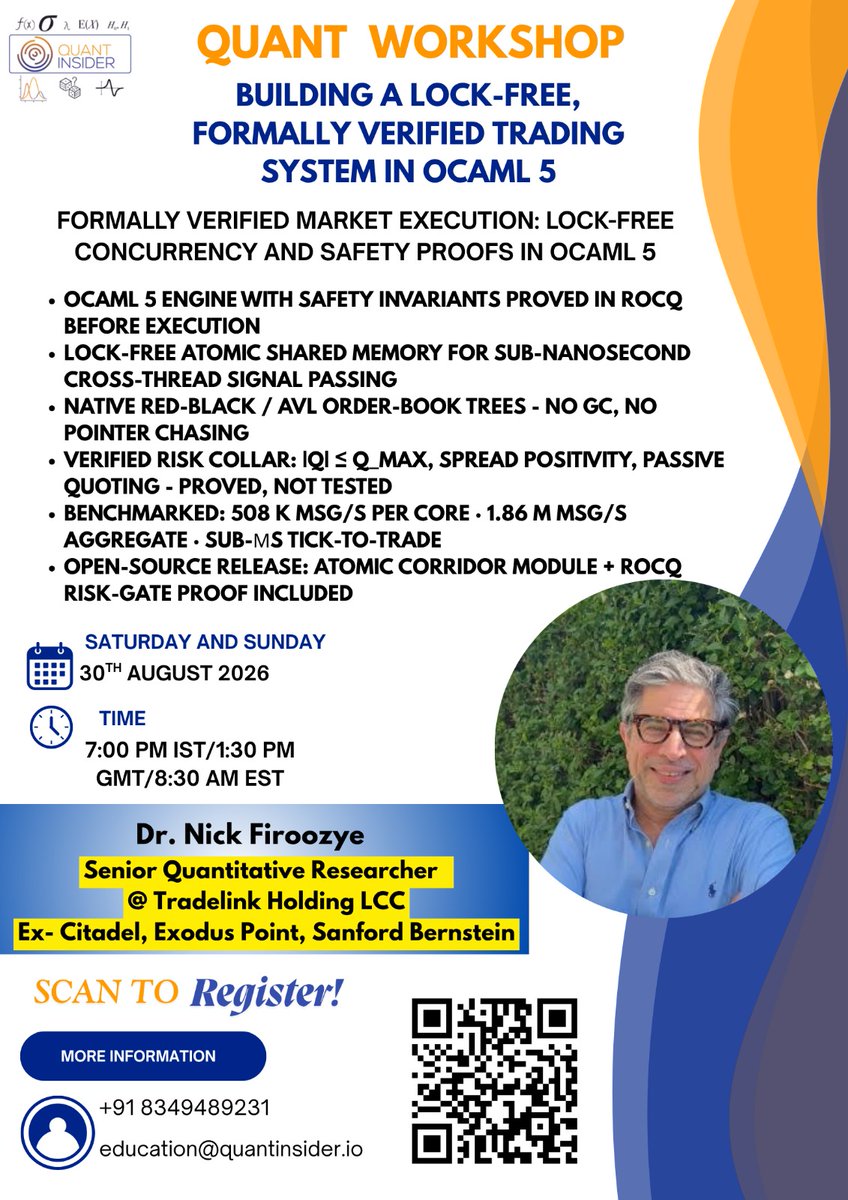
(High Speed) Formally Verified Order Matching Engines
Provably correct code is no longer limited to just mission-critical systems. Now, formal proofs are at the heart of the revolution in mathematics and are making inroads in finance.
Sign up now:
https://t.co/Ya5UNP08vP
I am back with a few thoughts.
I stopped reading all the trauma logs of mathematicians who recently got impacted by AI. Instead I switched to building a corpus of knowledge for why and how AI is interacting with mathematics.
I teach this term a new course here at Adam Mickiewicz University. It's title is "Computer assisted solutions to mathematical problems". I proposed it because I realized in the last 6 months something important.
A. It makes no sense to grieve the "good old ways". We should study to the bone how mathematics and computers interact. There are three levels: numeric, symbolic and formal.
B. The only way to prepare yourself for the rise of the technology is to understand it well. You cannot understand the progress of AI in mathematics if you don't know how the models are trained on the symbolic representation of mathematical proofs, how the training goes, why specific transformer architectures, reinforcement learning and basically a huge amount of incredible insights gives in practice some new value in mathematics.
C. It is incredibly fun to train your own models (yes I use generative models to help me build training pipelines too, otherwise I would not have enough lifetimes to do so).
D. The AIxMaths space is so incredibly complex - you have these weird, scalable token generating algorithms, recently in agentic form with memory, interactions etc. This is a field of study - we need to understand how it works. On the other hand, mathematics as a field of science is incredibly complex, people do very different kinds of axiomatic theories with their intuitions, tactics and strategies. This was never studied too seriously as a whole. We need to study it deeply.
So I am spending this term gearing up my students and myself for whatever is coming. We don't have any assumptions. I don't claim that models will become better at maths than all of human mathematicians. I don't think it's a good question. We just want to stay in the loop with the developments and see whether we can contribute to the change and see if this can be useful and productive.
I am looking forward to your feedback. The current plan contains the following topics:
- basic distinction between numerical computation, symbolic calculations and formal proofs
- basic understanding of the IEEE 754 standard and things around numerical computations
- how to build your own computer algebra system in Python and why it's so tricky
- why and how proof-checking software is important; we start with the basic principles of such designes, I plan to talk first about the foundations going back to Automath and the foundational work of de Bruijn.
- practical examples spanning real use cases of computer algebra, numerical integration and proofs in Peano arithmetic and how to read languages like Lean
- in the end I want to present some little post-trained models like Qwen which I taught how to do Peano arithmetic better and how they prove statements about this theory; there will be AlphaGeometry too and maybe a bit more about Mizar, Metamath and Lean. Just to give students some scope and perspective.
I plan to continue working on this course into a full book. I think I won't stop until I understand deeply why language models are currently so good at maths. It's something of utmost importance. It's important to see where this might stop and what lies beyond. I personally think these kind of questions will be the most important problems to answer by mathematicians themselves. We shouldn't stop until we find good answers to all of this. Reading AI slop is perhaphs a bit useful, but deep understanding of why it sometimes makes sense is even more challenging.
מיותר לציין שאני מסכים עם כל דבריו של ברק @barak, אבל חשוב להוסיף כמה נקודות כדי להבין את עומק הכישלון האסטרטגי של המדיניות הישראלית מול איראן, ובעיקר את חלקו של נתניהו בהבאתנו למצב הנוכחי.
א. היציאה מהסכם הגרעין ללא אסטרטגיה חלופית הייתה טעות אסטרטגית הרסנית. במקום לבלום את תוכנית הגרעין האיראנית, היא אפשרה לטהראן להתקדם באופן דרמטי בתחום ההעשרה ולהגיע ליכולות שלא היו ברשותה בתקופת ההסכם.
ב. הניסיון להצדיק בדיעבד את המלחמות הקודמות בטענה שאיראן הייתה על סף השמדת ישראל באמצעות נשק גרעיני פשוט אינו מתכתב עם המציאות. מדובר בניסיון לייצר הצדקה למלחמה באמצעות הפחדת הציבור הישראלי, בלי שהוצגה תשתית עובדתית משכנעת לטענה שאיראן עמדה על סף השגת נשק גרעיני.
ג. נתניהו התעלם ביודעין מהשינויים הדרמטיים שהתחוללו בתוך איראן, ובמיוחד מהמשמעות של נשיאות חסן רוחאני, שביקש לאתגר כמה מהנחות היסוד של מדיניות המשטר, בעיקר ביחס למערב. היציאה מהסכם הגרעין החלישה את המחנה הפרגמטי באיראן, חיזקה את מתנגדיו וסייעה לחסל את האפשרות להתפתחותה של אלטרנטיבה פוליטית משמעותית בתוך המערכת האיראנית.
ד. המדיניות הישראלית לא רק שלא הצליחה לעצור את התקדמותה הגרעינית של איראן, אלא במובנים רבים דווקא האיצה אותה. מחיסולים, דרך פיצוצים במתקני הגרעין ועד התנגדות כמעט אוטומטית לכל אפשרות של הסדרה מדינית, התוצאה המצטברת הייתה שאיראן התקדמה עד לסף יכולת העשרה לרמה צבאית. במקום להרחיק את האיום, המדיניות הזו תרמה להחרפתו.
ה. חיסולו של עלי ח'אמנהאי היה שיאה של המדיניות המוטעית הזו. ח'אמנהאי לא היה פציפיסט, ובוודאי שלא היה ידיד ישראל, אבל הוא היה מנהיג זהיר יחסית בכל הנוגע להפעלת כוח צבאי ישיר ולחציית הרוביקון הגרעיני. הסרתו לא הבטיחה הנהגה מתונה יותר. להפך, היא תרמה להתחזקותם של גורמים קיצוניים יותר, ובראשם משמרות המהפכה, וליצירת מציאות מסוכנת יותר מבחינת ישראל.
ו. במקום למקד את המלחמה בטיפול בכ-460 קילוגרמים של אורניום שהועשר לרמה של 60 אחוזים, נתניהו רדף אחרי יעד בלתי מציאותי של הפלת המשטר האיראני. זאת באמצעות תוכנית חובבנית שהתבססה, בין היתר, על גורמי אופוזיציה דוגמת רזא פהלווי וגורמים המזוהים עם מחמוד אחמדינג'אד, מתוך הנחה מופרכת שניתן יהיה להביא לקריסת המשטר באמצעות תקיפות אוויריות ועידוד התקוממות פנימית.
והשורה התחתונה חמורה במיוחד.
מדיניות נתניהו תרמה להבאת איראן לסף יכולת העשרה לרמה צבאית. שתי המלחמות שנועדו לכאורה להסיר את האיום האיראני לא הכריעו את איראן, לא הביאו להפלת המשטר ולא פתרו את בעיית הגרעין. יתרה מכך, הן עלולות דווקא לחזק את הגורמים בטהראן הסבורים שרק נשק גרעיני יבטיח את הישרדות המשטר.
ועכשיו, אחרי כל הכישלונות הללו, נתניהו מבקש להוביל אותנו למלחמה נוספת. מלחמה שעלולה לגבות מחיר עצום בחיי אדם, בכלכלה ובמעמדה הבינלאומי של ישראל, בלי להבטיח את השגת יעדיה, ועם סיכון ממשי שתדחוף את איראן עוד יותר לעבר החלטה לפתח נשק גרעיני.
הגיעה העת לשאול כיצד ייתכן שאחרי שנים של מדיניות כוחנית, שתי מלחמות ומחירים אדירים ששילמה מדינת ישראל, אנחנו ניצבים בפני איום איראני שלא הוסר, ואולי אף הפך למסוכן יותר.
בשתי מילים: כישלון אסטרטגי.
@miniapeur Susan Athey spoke about ML vs Econometrics. In ML they just want a good forecast. In Econometrics, they mostly care about significance and explanatory power. Similar take (but much later).
In Stats there are so many more bridges over time.
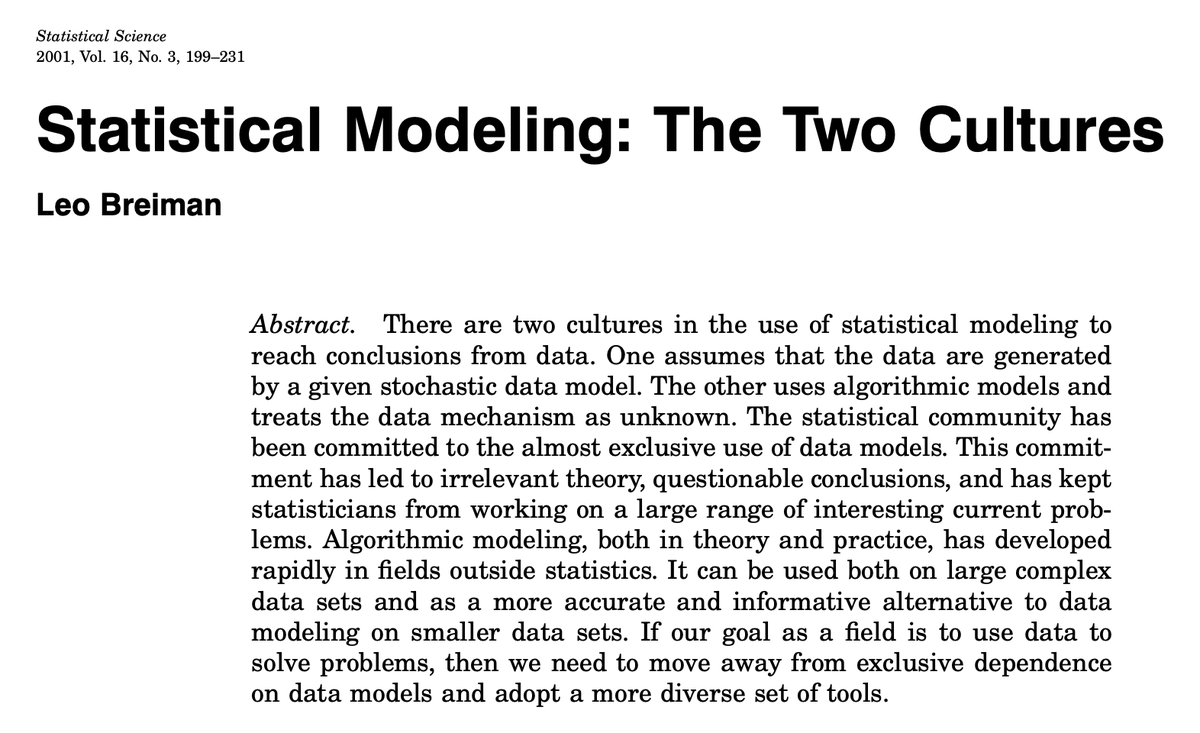
I would like to draw attention to this excellent text by Leo Breiman, one of the inventors of random forests and the creator of bagging, titled “Statistical Modeling: The Two Cultures”.
In it, Breiman challenges the traditional statistical emphasis on specifying probabilistic models of data generation, advocating instead for a greater focus on predictive performance and algorithmic approaches. More than two decades later, his arguments remain remarkably relevant to the relationship between statistics and machine learning.
Link: https://t.co/2PgqOfPeIc
Ruixiang Zhang told me about MathHelm, a non-profit site from mathematicians for mathematicians to discuss AI generated math papers.
https://t.co/D9evneYO13
@richards1052 Ar-Raḥmān (الرَّحْمَٰن) is not derived directly from Hebrew; rather, it is a cognate derived directly from the same Semitic root, retaining the conceptual bridge between the sheltering warmth of the womb and the highest expression of mercy.
Wow. Commercial banks have KYC obligations and are under law enforcement, but i guess you can bypass that by having access to an account at a central bank. This takes 'off the books' transactions to a whole other level.
This review of Federer's "Geometric Measure Theory" by someone who was struggling to understand it for years is pure gold.
"It was only a couple of years ago, after writing a 1500 page book (now 2015 pages) on the foundations of differential geometry that I finally managed to get the gist of the first 8 pages."
https://t.co/yCPsxNZtY6