@_Doc_Hawaii_@MHarrisonW Which no one disputes. The point made in the excerpt I posted above is that the victims in those camps turned out to have died from disease and starvation towards the end of the war. The US pathologist Dr Charles Larson later said there were no cases of poisoning.
@Danger_Dad_E3@RetroCoast Anne Frank was at Auschwitz-Birkenau in 1944. She later died of typhus at Bergen-Belsen. There were thousands of registered inmates who couldn't work. The walls of the delousing chambers still have blue staining. That's not seen elsewhere.
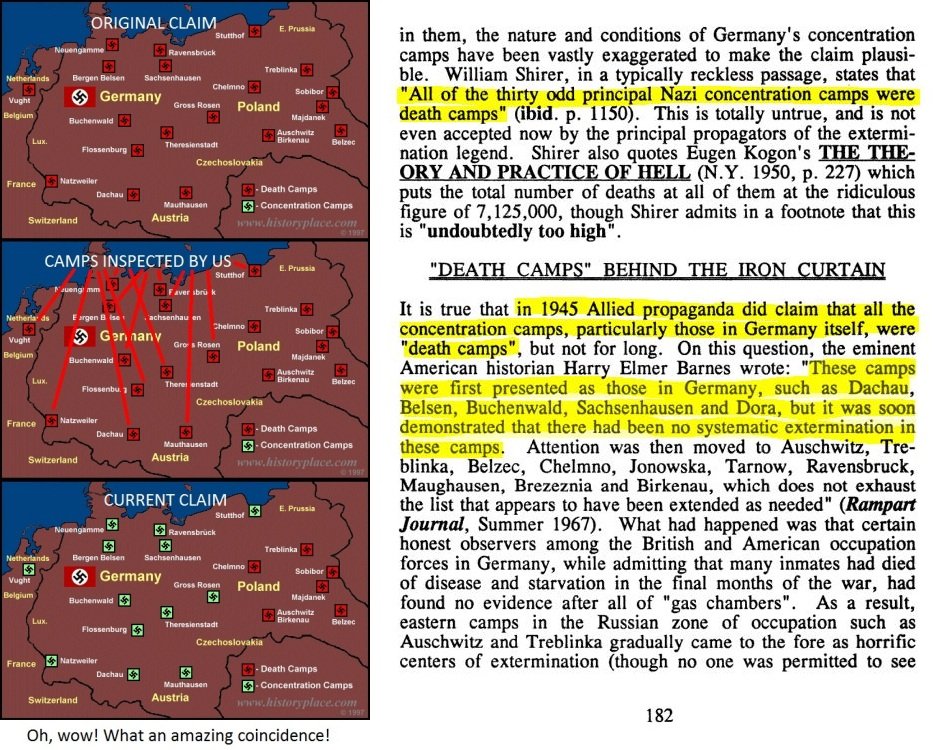
@Danger_Dad_E3@RetroCoast The problem is the original claims included the camps US and British troops liberated. Dr Charles Larson, army pathologist, later acknowledged there were no cases of poisoning. They retracted those claims in 1960. The remaining claims relate to camps the Soviets liberated.
@Danger_Dad_E3@RetroCoast Bletchley Park intercepted communications from those camps too. The causes of death appear consistent with the camps the US and British troops liberated.
@Eriuland@RetroCoast Interesting. Initially it was claimed the camps the US and British troops liberated were death camps. Those claims were retracted in 1960. The remaining claims relate to camps the Soviets liberated. Bletchley Park intercepted communications from those too.
@MideastMyths@RetroCoast@realomegahpla The problem is many labor camps were originally claimed to be death camps. The famous footage taken by US troops for example was assumed to be showing victims of death camps. Those claims had to be retracted in 1960. The remaining claims relate to camps the Soviets liberated.
@MarioNawfal Bletchley Park intercepted communications. The main cause of death was disease. There were some references to shootings and hangings. No references to gassing. Walter Lüftl, president of the Austrian Chamber of Engineers, did a report on how implausible the claims were.
@joseph_doody@exRAF_Al He referred to typhus? It was initially claimed that camp along with others British and American troops liberated were death camps. Dr Charles Larson confirmed no cases of poisoning and in 1960 the claims about camps in Germany were retracted.
@PoggEdward@exRAF_Al Germany had fallen into chaos by that stage and disease and starvation killed many. The Allies initially portrayed Dachau, Bergen-Belsen and Buchenwald as death camps. The US pathologist Dr Charles Larson confirmed no cases of poisoning and in 1960 the claims were retracted.
The “final solution” was not about extermination of the jews, but rather expulsion.
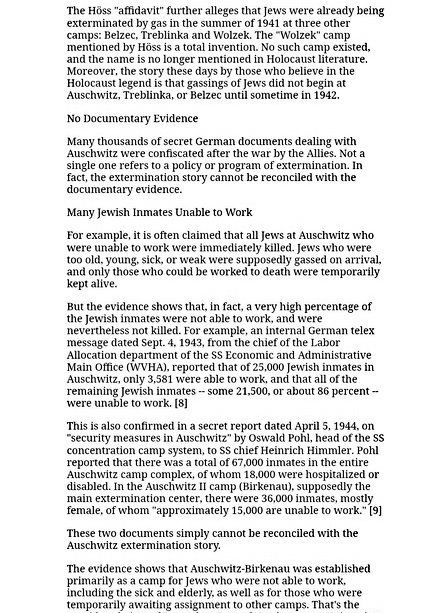
To this day there has not been any document found discussing anything about an extermination policy or even gas chambers.
@dcmallinson@ObhishekSaha@UOzkirimli Do you think US Supreme Court Chief Justice Harlan Stone & Supreme Court judge William O'Douglas were 'racist' for considering the Nuremberg trials were show trials or a high-grade lynching party? Defendants were tortured. The claims about camps US troops liberated were retracted
@dcmallinson@ObhishekSaha@UOzkirimli Butz was no more 'racist' than engineers like Walter Lüftl, Friedrich Berg, DuPont industrial chemist Dr William B. Lindsey, US army pathologist Dr Charles Larson, or Buchenwald inmate Paul Rassinier, a communist. Rassinier was vindicated in 1960 about camps in Germany.
@klineline2003@OneRise1990@ApostateProphet Anne Frank was at Auschwitz-Birkenau in 1944. She later died of typhus at Bergen-Belsen. Bletchley Park found illness was the main cause of death. Some were shot or hung. There were thousands of registered inmates who couldn't work.
@klineline2003@OneRise1990@ApostateProphet Harlan Stone, US Supreme Court Chief Justice, described the Nuremberg trials as a high-grade lynching party. Defendants were tortured. The claims that Dachau, Bergen-Belsen, Buchenwald were death camps retracted in 1960. Remaining claims relate to camps the Soviets liberated.
@KevSatoshi@Uncommonsince76 The official narrative was that they were used there and at various other camps the US troops liberated. The footage taken by American troops was used as evidence of death camps when they were in fact victims of disease and starvation towards the end of the war.