That glow never had a light of its own. Starting with a 1999 PowerBook, Apple simply let the screen's backlight shine through a cutout in the lid, which is why it went dark once screens got too thin, first on the 12-inch MacBook in 2015. It also started out upside down to everyone else, because Steve Jobs wanted it facing the owner opening the lid. Employees kept asking why, and a few years later he flipped it.
That chime only got onto Macs because someone broke the rules. In 1991, Apple sound designer Jim Reekes hated the old startup tone, since Macs crashed so often that hearing it usually meant you'd just lost your work. His bosses told him he couldn't change it, so he recorded a calm C major chord on a keyboard in his living room, inspired by the last chord of the Beatles' "A Day in the Life," and friends on the engineering team slipped it into the Quadra right before launch. When other engineers complained, they said taking it back out was too risky.
That fork came out of a falling-out. Finnish programmer Ville Turjanmaa wrote MenuetOS in 2000 just to see if a whole graphical system could be written in assembly and still fit on one floppy disk. When he moved on to a 64-bit version in 2004, mostly Russian volunteers kept the old one going, and after a fight over copyright notices in that code he made his 64-bit version closed source. The open branch became Kolibri, Russian for hummingbird.
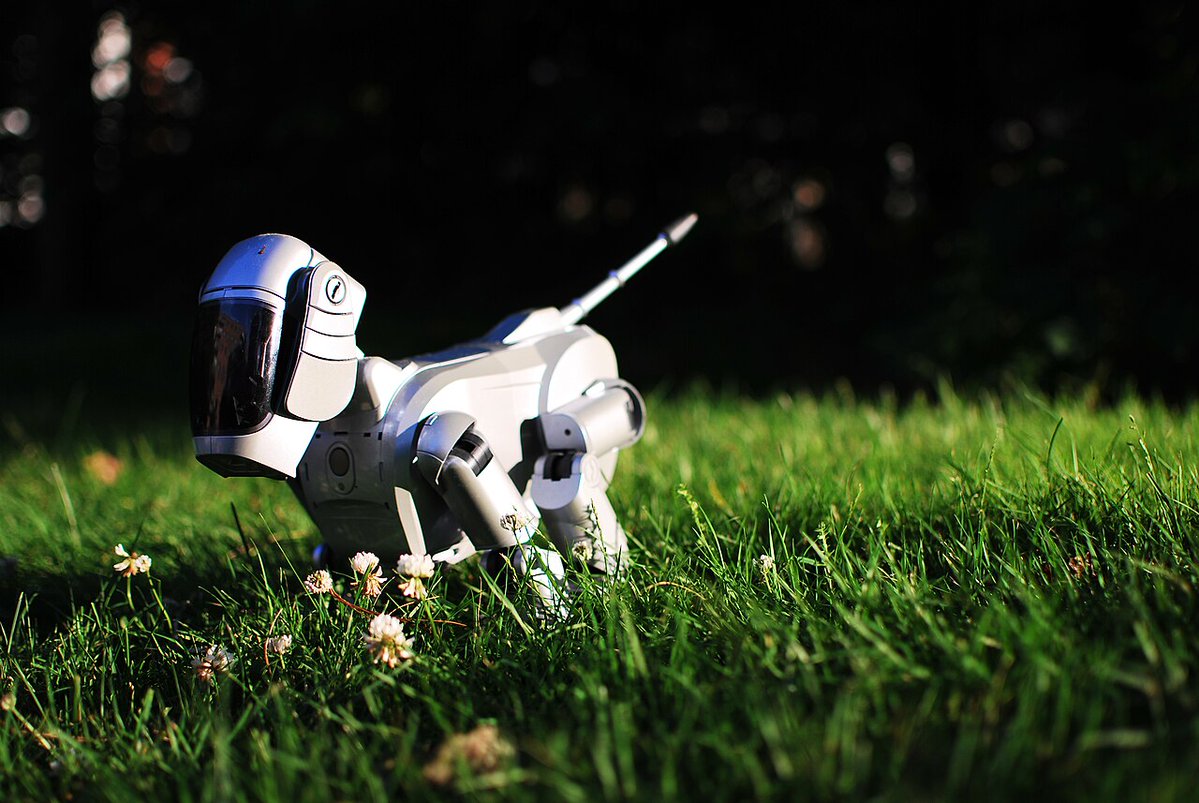
In Japan, a Buddhist temple has held funerals for robot dogs.
The dogs were Aibo, made by Sony. The first model went on sale in 1999 for 250,000 yen in Japan and $2,500 in the US, and the 3,000 units offered in Japan sold out online in about 20 minutes. Aibo could walk, respond to its owner and develop its own behavior over time.
Sony stopped making Aibo in 2006 and ended official repairs in 2014. A repair company called A-Fun, which employed former Sony engineers, kept many running with parts taken from Aibos that couldn't be fixed. Owners felt those donor dogs deserved a proper goodbye, so starting in 2015, Kofukuji temple in Isumi, Chiba, held funeral services for them before they were taken apart. Sony brought Aibo back in 2018.
MSN Messenger's 1999 launch set off a real spy-versus-spy fight, because Microsoft built it to log straight into AOL's own chat network. AOL kept blocking it, and Microsoft found a way back in at least 13 times. Then security researcher Richard Smith got an email from a "Phil Bucking" accusing AOL of exploiting a bug, and he traced it right back to a computer inside Microsoft.
The glass Corning made for Jobs grew out of a project that had already flopped once. In the early 1960s its engineers pelted a super-strong glass with frozen chickens, sold it as Chemcor, and got it into a handful of AMC Javelin windshields before carmakers balked at the price. Corning shelved it in 1971, and 35 years later that old know-how became the iPhone's screen.
Nokia's game phone made people hold it sideways to make a call.
The Nokia N-Gage launched in October 2003 for $299, combining a cellphone with a handheld game console. It had a screen in the middle with buttons on both sides, like a Game Boy Advance, and it could play multiplayer games over Bluetooth.
The design caused problems. The earpiece and microphone were on the edge of the phone, so making a call meant holding it against your face edge-on, which people mocked as sidetalking. Swapping games was worse: the game card slot sat under the battery, so you had to take off the back cover and pull the battery every time. Nokia fixed both in the N-Gage QD a year later, but the original had already become a punchline.
Lenovo tried the Touch Bar idea two years before Apple, and it flopped. Its 2014 ThinkPad X1 Carbon swapped the function keys for a glowing touch strip that changed with whatever app was open, and even dropped the Caps Lock key to make room, so you had to double-tap Shift instead. Reviewers hated it, and Lenovo put the real keys back the very next year.
In London, Microsoft bought a whole day's newspaper. On launch day it paid for the entire print run of Rupert Murdoch's Times, more than doubled to 1.5 million copies, and gave every one away free with a Windows 95 ad section inside. The paper normally sold about 655,000 a day, even home subscribers weren't charged, and some journalists called it a blurring of news and advertising.
That 2018 keyboard hid a fix Apple wouldn't admit to. Apple sold it as simply quieter, but when iFixit in San Luis Obispo pried off the keys that July, it found a thin silicone sheet under all of them, matching an Apple patent for keeping out dirt. Days later a leaked Apple repair guide said it was there to stop debris. Even so, a few grains of sand could still kill a key.
The 8-track exists because Bill Lear got fed up with someone else's tapes. In the early 1960s, Los Angeles car dealer Earl "Madman" Muntz sold a four-track player, and Lear, the Learjet founder, put them in his planes and even became a dealer. They kept jamming, so Lear had engineer Richard Kraus redesign it with twice the tracks. Ford offered it in the 1966 Mustang, and Muntz's version faded away.
Apple's 2013 try at an American-assembled computer got held up by screws. When it started building the $3,000 Mac Pro in Austin, Texas, the machine shop it hired could make only about 1,000 custom screws a day, and its owner often drove deliveries over in his own Lexus. Sales slipped by months, and Apple ended up ordering the screws from China.
A Mac Portable sent the first email from space. On August 9, 1991, astronauts Shannon Lucid and James Adamson typed it aboard the shuttle Atlantis, and it took three tries to get through to Houston. The message joked that they wanted more fuel so they could stay up longer, and signed off "Hasta la vista, baby, we'll be back!"
On December 31, 2008, Microsoft's Zune music players froze all over the world at once.
The Zune was Microsoft's answer to the iPod, launched in November 2006 for $249.99 with a 30 GB hard drive. It came in black, white and brown, and it could share songs wirelessly with other Zunes, something the iPod couldn't do.
On the last day of 2008, the 30 GB models got stuck on their startup screens. The cause was a bug in the clock software: 2008 was a leap year, and when the day counter reached 366, the code got caught in an endless loop. Microsoft's official fix was to let the battery run all the way down and turn the player back on after noon GMT on January 1. The players worked again, but Microsoft stopped making them in 2011.
Zhivkov wanted far more than a factory in his hometown. He said Bulgaria should become "the Japan of the Balkans," and for a while it nearly worked: by the late 1980s this small country was making about 40 percent of the computers used across the Soviet bloc, with some 300,000 people working in electronics. When communism fell in 1989, almost all of it fell apart within a few years.
The most replayed moment TiVo had ever measured came from a Super Bowl halftime show.
TiVo, launched in 1999, was one of the first digital video recorders sold to consumers. It recorded TV onto a hard drive, let you pause live broadcasts, and recorded your favorite shows automatically. Its founders, Mike Ramsay and Jim Barton, had worked at Silicon Graphics.
On February 1, 2004, during the Super Bowl XXXVIII halftime show, Justin Timberlake pulled at Janet Jackson's costume and exposed her breast for about a second. TiVo collected anonymous viewing data from its subscribers, and it announced that this was the most replayed moment it had ever recorded. Viewers had paused live TV, rewound it, and watched that same second again and again.
A $5 billion satellite phone network was sold for $25 million.
Iridium, backed by Motorola, launched in November 1998 with 66 satellites in low orbit, so a single handset could make calls from almost anywhere on Earth. The phones cost about $3,000, and calls could run several dollars a minute.
The plan assumed huge numbers of business travelers would sign up. But the phones were bulky, worked poorly indoors, and ordinary cellphones were spreading fast. Iridium filed for bankruptcy in August 1999, less than a year after launch, and there was talk of steering the satellites down to burn up. In 2000, investors led by former Pan Am executive Dan Colussy bought the whole system for $25 million. Iridium is still operating today.
Fun fact: Bose got into headphones because of a bad pair on a plane. In 1978, Amar Bose was flying from Zurich to Boston, found the airline's new headphones drowned out by engine roar, and worked out the math for noise cancelling before he landed. The first prototypes went to Dick Rutan and Jeana Yeager in 1986, who wore them on Voyager's nonstop flight around the world.
The very first "hello, world" had to be chopped into pieces. In Kernighan's 1972 guide to B, the language that came right before C, a short piece of text could hold only four characters, so he stored it as "hell", "o, w" and "orld" and printed them one after another. He said the phrase came from a cartoon he'd seen of a chick hatching from an egg.
On May 19, 1998, most of the pagers in the United States went silent at once.
At the time, about 40 to 45 million Americans carried pagers, small devices that beeped or vibrated and showed a number to call back. Doctors, repair workers and parents relied on them, and most signals were relayed through a single satellite called Galaxy IV.
That evening, Galaxy IV's onboard control computer failed, and the switch to its backup failed too. The satellite turned away from Earth, and an estimated 80 to 90 percent of US pagers stopped receiving messages. Some radio and TV feeds dropped off the air as well. Paging companies spent days moving service onto other satellites, and millions of people learned how much depended on one machine in orbit.