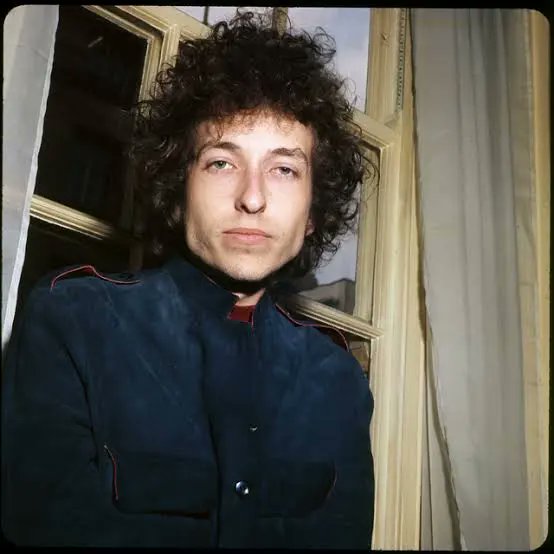
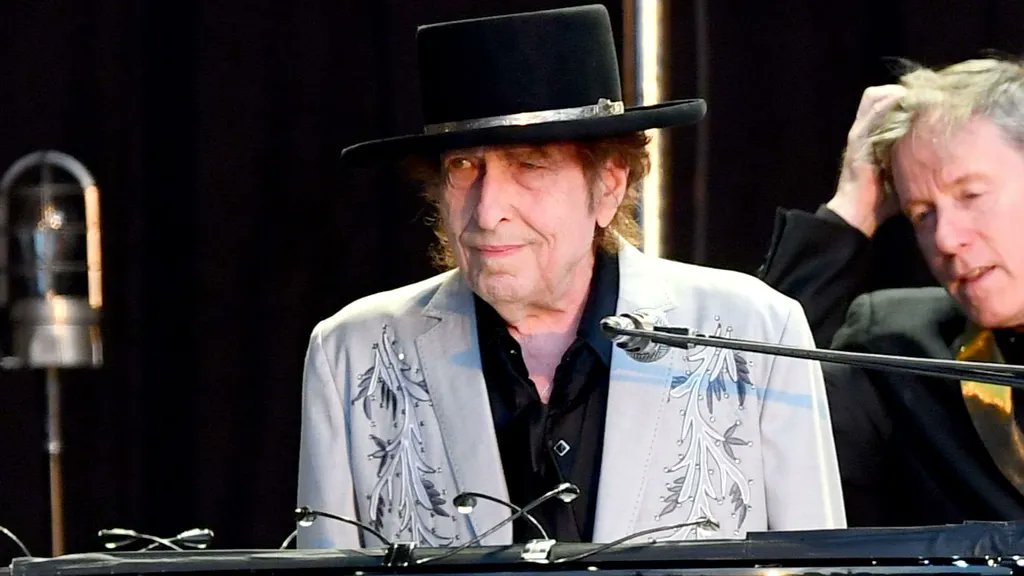
It’s 2026, and 85-year-old Bob Dylan is still performing and giving concerts.
How lucky we are to still be able to enjoy the greatest musical poet of the 20th century.
In this unreal footage, a 59-year-old Honus Wagner talks about playing baseball since he was 15 years old. He then bats with solid hits & then talks about his thoughts on the current baseball of the day.
Congratulations to Paul Skenes, who was named the Players Trust’s Most Valuable Philanthropist for June.
Paul will be awarded a $10,000 grant in support of his work helping veterans and first responders through the Gary Sinise Foundation. The Players Trust’s MVP award will be given six times this season to players who demonstrate an altruistic spirit and positive social impact beyond the diamond. Congratulations, Paul!
Andrew Toles hasn't played a game since 2018. Every year since then, the Los Angeles Dodgers have quietly re-signed him to a $0 contract for one reason only, so he can keep his health insurance.
Toles appeared in 96 games for the Dodgers from 2016 to 2018, hitting .462 in the 2016 National League Championship Series.
Then in 2019 he didn't show up to spring training. The team placed him on the restricted list indefinitely.
He was subsequently diagnosed with bipolar disorder and schizophrenia.
In 2020 he was found sleeping behind a FedEx building at Key West International Airport, arrested for trespassing, and taken to a mental health facility.
His father Alvin, a former NFL linebacker, gained guardianship and brought him home.
By 2021 Toles had been in at least 20 mental health clinics.
His father told USA Today: "Schizophrenia, it's just so tough. He can't even watch TV. He hears voices and the TV at the same time. I just want him to have a chance in life. That's all."
The Dodgers had been quietly re-signing him every year without publicising it.
Dodgers manager Dave Roberts said in 2021: "Man, I would love to see him. I'd love to put my arms around him. I miss him. I really miss him."
I've really like some of @TreaVTurner's slides an awful lot. I guess I'd have to see the videos of a few hundred of "the best" slides to form an opinion.
This simple truth is what exposes the rotten core of "America First," just as it did to the original isolationist and often pro-fascist version in the 1930s. Even the most cynical, self-interested stance should favor supporting allied democracies against hostile dictatorships.
Satchel Paige was 62 years old in 1968 when he contacted every Major League team hoping for one last chance, not to pitch regularly, but to secure the final 158 days he needed to qualify for an MLB pension. Nineteen teams rejected him before the Atlanta Braves’ president, William Bartholomay, stepped in.
Bartholomay openly admitted that baseball owed Paige, a Leagues legend and one of the greatest pitchers alive, a place in the pension system after decades of exclusion and delayed integration. So the Braves signed him as a part‑time pitcher and adviser, giving him an active roster spot and a dignified path toward the benefits he had earned.
Paige joined the team with his usual humor and mystique, refusing to confirm his real age and joking about “unfolding” his pitching arm again. Though he never appeared in a game for Atlanta, he worked with their pitchers and remained a symbolic presence, an aging star whose career had stretched from barnstorming buses to World Series appearances.
His résumé was already historic: a 17‑year Leagues career, a 1948 World Series appearance with Cleveland, two All‑Star selections, and the record as the oldest MLB pitcher after throwing three scoreless innings at age 59.
Before Paige could reach the 158‑day mark, the MLB Players Association negotiated a new agreement lowering pension eligibility from five years to four, retroactive to 1959. That change instantly qualified Paige, sparing him the wait and securing him a $250‑per‑month pension beginning in 1971.
Three years later, he became the first player inducted into the Hall of Fame through the Committee on Baseball Leagues, cementing his legacy as both a baseball icon and a symbol of long‑overdue recognition. He died in 1982, but the Braves’ gesture remains one of the sport’s most meaningful acts of respect.