Again, we say goodbye to a legendary voice actor today 😔
Veteran actress and VA Seela Sella has passed away at 89, leaving behind an extraordinary body of work across film, television, theatre, radio, and voice acting in Finland. Over the course of her career, she became one of the most respected performers of her generation, continuing to work well into her later years.
The Finnish actress also became a familiar voice to generations of animation fans through her extensive Finnish-language dubbing work, including several unforgettable Disney characters.
Some of her most memorable voice roles included:
• Yzma — The Emperor’s New Groove
• Lady Tremaine — Cinderella
• The Witch — Snow White and the Seven Dwarfs
• Magica De Spell — DuckTales
• Grandma Fa — Mulan
• Dowager Empress Marie — Anastasia
• Mad Madam Mim — The Sword in the Stone
• Tanana — Brother Bear
• The Queen — A Bug’s Life
• Madame Adelaide Bonfamille — The Aristocats
• Mama Gunda — Tarzan II
• Agnes Peenman — The Mask: Animated Series
From commanding the stage and screen to becoming the voice behind some of animation’s most memorable women, Sella built the kind of career that quietly became part of several generations’ lives.
Rest in peace, Seela Sella. Nearly seven decades of performances, and a voice that will continue living through the characters she brought to life. 🎙️❤️
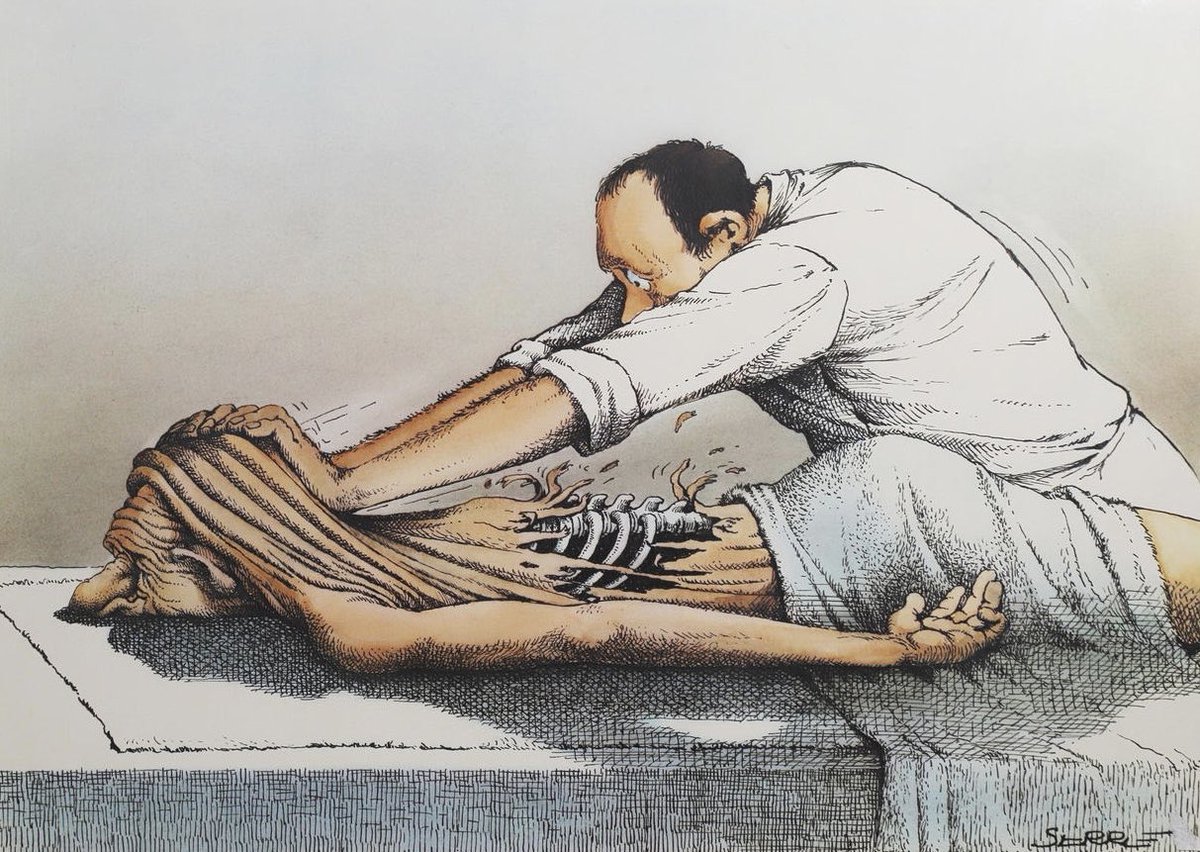
Claude Serre (1938–1998) was a French comic artist, illustrator, and engraver who trained for eight years as a stained-glass craftsman in Max Ingrand’s workshop. He worked in stained glass, lithography, engraving, and screen printing before dedicating himself to graphic humor. He published illustrations in magazines such as Hara-Kiri, Planète, and Lui, and showed an interest in fantasy and the fantastic from his earliest works, including the book Asunrath 🖌️
Victor Miller hass passed away 🙏😔
He wrote the original Friday the 13th and created Jason and Pamela Voorhees, has died at 86.
He gave Camp Crystal Lake its first night of terror.
A celebration of his life will be held in November on Friday the 13th.
Voyager hit a 90,000°F wall at the solar system’s edge.
NASA’s Voyager 1 spacecraft crossed one of the most dramatic frontiers in the cosmos: the heliopause, the tenuous boundary where the Sun’s influence finally gives way to interstellar space. What the probe discovered there was astonishing, a turbulent zone of superheated plasma with temperatures soaring between 30,000 and 90,000 °F (roughly 17,000–50,000 °C).
This wasn’t a physical wall or barrier, but a dynamic transition region where the outward-flowing solar wind abruptly slows, compresses, and piles up against the incoming pressure of interstellar material. That compression converts kinetic energy into thermal energy, driving the plasma to extreme heat levels far beyond anything found inside the heliosphere.
Remarkably, despite the blistering temperatures, this “wall of fire” would pose no danger to a hypothetical astronaut. The plasma is extraordinarily diffuse, far less dense than the best vacuums achievable in Earth laboratories, so there are simply too few particles to transfer meaningful heat. The region is hot in temperature but cold in practical effect.
Voyager’s instruments captured clear signatures of the crossing: a sudden plunge in solar wind particles, a sharp rise in galactic cosmic rays, and faint plasma oscillations that revealed the density and temperature of this exotic boundary layer for the first time. These vibrations, analogous to ripples on an unseen sea, provided direct measurements of conditions in a realm previously known only through theory.
The heliopause itself serves as a vital shield. The entire heliosphere, the vast bubble carved by the Sun, deflects most of the galaxy’s high-energy cosmic radiation, helping protect life on Earth from constant bombardment. Beyond this protective envelope lies the harsher, unfiltered radiation environment of the interstellar medium.
Today, more than 15 billion miles (24 billion kilometers) from home, Voyager 1 remains the farthest human-made object ever sent into space. Still operational and transmitting precious data, it continues to reveal the secrets of this distant frontier.
At the outer limit of our solar system, space is neither empty nor serene. It is a violent, glowing threshold: and humanity has only begun to map its mysteries.
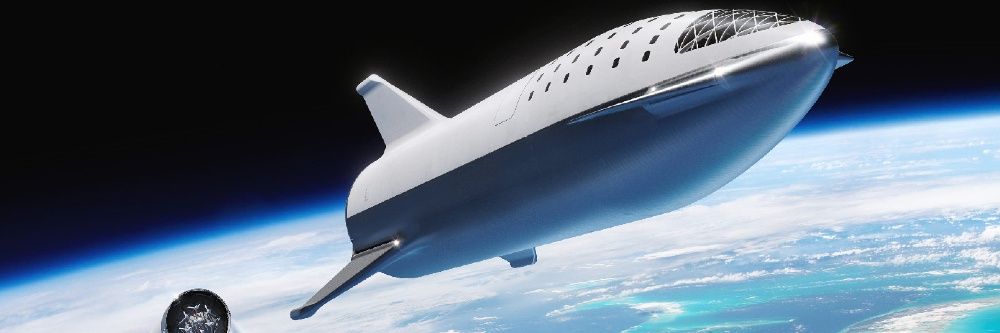
A former NASA engineer says his team has identified an electrostatic "New Force" that can generate thrust without any propellant, potentially challenging established physics and enabling devices capable of countering Earth's gravity.
Dr. Charles Buhler, a longtime NASA veteran and co-founder of Exodus Propulsion Technologies, claims that his group has uncovered a novel force produced purely through electric fields. Their experimental propulsion system creates directional thrust without expelling mass, unlike conventional rockets that rely on large amounts of heavy fuel. If validated, this propellantless technology could revolutionize spaceflight by slashing spacecraft weight and making sustained, fuel-free exploration of deep space possible.
The broader scientific community remains cautious. A reactionless drive of this kind would appear to contradict Newton's third law and the conservation of momentum. Earlier claims for "impossible" engines, such as the EmDrive, were ultimately debunked after careful testing eliminated experimental artifacts.
Buhler's extensive expertise in electrostatics, developed at NASA's Kennedy Space Center, gives the announcement more credibility than most fringe proposals. Nevertheless, the results require rigorous independent replication and peer-reviewed validation before they can be accepted as a genuine breakthrough.
The Muppets have released a statement on the tragic passing of Tim Curry.
“Few humans have earned the title of honorary Muppet more than the legendary Tim Curry. As a performer, he was unparalleled – witty, charming, unnerving, and deeply funny.
We will always consider it one of our greatest treasures to have been part of Long John Silver’s crew. Thank you for everything, Tim.”