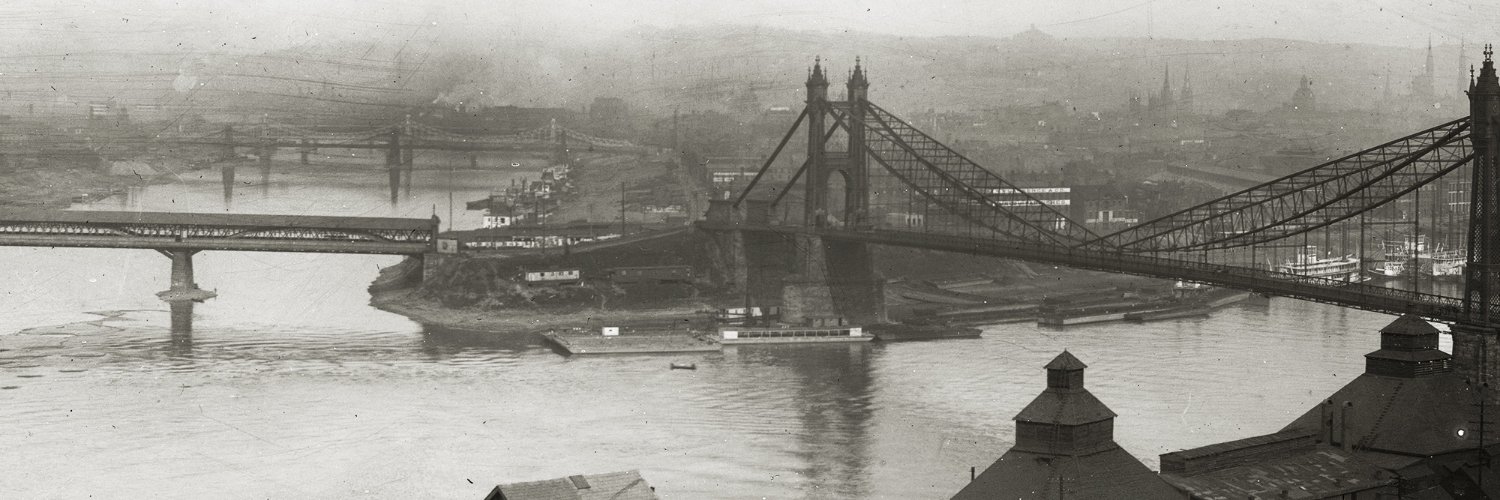
This has to be one of my favorite photographs of 1930s #Pittsburgh!
The incredible detail of Downtown Pittsburgh & the vantage point just blows me away!
From June 5, 1932
(Formally classified photo via USAAC)
@BigZeeDawg@colin_dunlap This, I totally agree with. However never before in history has someone been worth this much & with that wealth comes a great responsibility. Others in history have confronted this with courage (albeit much later in life).
That's awesome! A good friend of mine also benefited greatly from this as well. But the original argument wasn’t denying individual wins or unpublicized good acts. It was about the bigger pattern when someone reaches trillionaire scale through these ventures, does the same responsibility Carnegie ultimately chose apply? Giving away the overwhelming majority of his fortune for broad public good after building his empire?
Success stories & quiet donations don’t automatically settle whether extreme personal concentration at this level should trigger stronger societal return. Pittsburgh steel history shows both the upward mobility AND why that responsibility mattered.
The original point wasn’t denying impact. It was whether someone reaching trillionaire scale has the same responsibility Carnegie ultimately accepted.
Listing achievements and some donations doesn’t erase the question of scale. Carnegie created massive industry and jobs too, yet still chose to return the overwhelming majority of his personal wealth. At this level of concentration, the debate is whether that same standard should apply - not whether any good was done at all.
https://t.co/tilmkDLKYw
@jmaszak@dublinblacks@Literally_E2@colin_dunlap I'm pulling straight from Carnegie's own words from the Gospel of Wealth and not AI. History shows us the tales, helps us learn and mirror the positives and hopefully gives us insights from the past mistakes. https://t.co/XEaLZS7MzH
The debate isn’t denying those achievements or claiming he’s done less good than 99.9% of people. It’s whether reaching this extreme level of personal wealth still carries the responsibility Carnegie eventually took on by giving away nearly all of his fortune for public good after building his empire.Calling him a “weirdo” which is obviously true, is irrelevant to the economic question.
Impact and extreme concentration can coexist - the historical example shows one way to handle the latter is what I'm saying.
Agree the economic pie isn’t fixed and Musk’s companies create real jobs and value and that’s a clear positive. He’s also still in his main building years. The Carnegie parallel still holds though - after building his fortune he spent the rest of his life giving away nearly all of it for public good. At Musk's scale the question remains whether that same standard of broad responsibility will follow once the active creation phase slows.
@DMOZ0NE@marthadurham512@colin_dunlap The open question is whether the eventual scale of that direct public return will reach the same level of responsibility once the active building phase slows.
Absolutely agree that advancing technology benefits everyone. This isn’t about my personal goals or wanting a “slice” of anyone’s pie. It’s the straightforward question of whether reaching this extreme level of personal wealth carries the same responsibility Carnegie eventually embraced by giving away nearly all of his fortune for public good. History offers that precedent. Disagree if you like, but it’s not envy.
I’m not denying progress or labeling innovation “greed.” Steel & space tech delivered huge benefits. History also shows the real human costs during rapid industrialization like the dangerous conditions, long hours, and labor conflict in Pittsburgh’s mills. Carnegie responded by giving away 90% of his wealth. Pointing that out at trillionaire scale isn’t moralizing; it’s asking whether we’ve learned the full lesson on responsibility.
SpaceX and Starlink are genuine advances with clear benefits for connectivity and jobs so there's no argument there. Employee millionaires are a positive too. But the robber baron comparison still has value: even with progress and some shared gains, extreme personal concentration at this scale raises the same old question Carnegie eventually answered by giving away nearly all his fortune for public good. History isn’t one-sided.
Both can be true. Steel revolutionized industry & raised living standards over time - a huge net benefit. It also came with real human costs: dangerous 12-hour shifts, frequent accidents, and violent strikes in places like Homestead. Carnegie eventually recognized the responsibility that came with that wealth & gave away over 90% of his fortune before he died. Musk’s work on space is impressive too. The point isn’t to deny progress or call innovation “greed.” It’s whether someone reaching trillionaire scale has a higher bar for broad societal return than just company equity programs. The same standard Carnegie applied to himself.
History teaches us to hold both the benefits AND the costs in view.
@colin_dunlap Main question is when someone reaches this scale of wealth, the question of "what are you doing with the surplus for broader society?" becomes a legitimate one and "building more companies that make some employees rich" is only a partial answer.
Literally put yourself into the shoes of an employee of Carnegie or Frick in the 1890s. Sure - they world got some libraries out of it and it also revolutionized all building technology but at what cost to humanity and specifically, to the life of Pittsburghers? Carnegie spent most of the remainder of his life talking about responsibility when it comes to wealth (the Gospel of Wealth) and also about the core philosophy of helping other help themselves. Literally the birth of all labor unions began here and you must learn from history as to why we needed to do these things. Musk is not following this philosophy. Not using significant wealth to benefit us all (when it is obviously possible and affordable to him to do so) is the definition of GREED.
I'd be interested in arguments against this Scrooge McDuck philosophy
Very true that the employee equity programs are a real improvement and have created genuine wealth for thousands. But even with 4,440 millionaires from one IPO, Musk still captures the vast majority at trillionaire scale. Carnegie built his fortune in Pittsburgh steel too, yet spent his later years giving away more than 90% of it for public libraries, universities, and more. Company stock distribution is good, but it doesn’t answer the responsibility question at this extreme level.
42 years ago today, on June 9, 1984, an 18-year-old Mario Lemieux aka "Super Mario" aka "Le Magnifique" was selected by the Pittsburgh Penguins as the top pick in the NHL Draft. Lemieux (which literally means "The Best" in French) became a six-time NHL scoring leader, three-time MVP, Rookie of the Year and two-time Conn Smythe Trophy winner.
On this D-Day anniversary, I'm thinking about my grandfathers, Stanley Schalcosky and Morgan Donato, and the stories they carried home from WWII.
Researching their lives taught me that every veteran has a story worth preserving.
That's what inspired me to create Honor a Veteran.
https://t.co/0vpNCA3Y9F
#DDay #WWII #Veterans #MilitaryHistory
Some of you may remember Pittsburgh Oddcast, the podcast I created with @AndyLimberg937 that explored the strange, forgotten, and fascinating stories of Pittsburgh history.
When COVID hit, the show came to an unexpected end. Life took us in different directions, and many of the episodes became difficult to find.
Over the past few years, I've received countless messages asking where people could listen to the old episodes.
I'm happy to say they're finally back.
I've built a new Pittsburgh Oddcast archive featuring all 48 episodes, background information, photos, and direct links to listen.
Whether you're a longtime listener or discovering it for the first time, I hope you'll enjoy exploring these stories again.
https://t.co/pCa5JWz9f9
#Pittsburgh #History #Podcast #ThatsItFortPitt