The gospel of the Lord has already crossed the Atlantic Ocean and is now within touching distance of the world's super power. This is the word of the Lord.
@OkiyaOmtatah@JimiWanjigi@otienowill
Include the youth who know Odious debt is on the kenyan taxpayers as a chokehold.
Im the innovator of the https://t.co/Z2Qw3e37Ih and i would be part of my patriotic duty.
The @Cofek_Kenya has moved to the High Court in Milimani challenging several provisions of the Finance Bill, 2026 and seeking conservatory orders to stop their enactment and implementation pending determination of the petition. The argument is that Parliament is in the advanced stages of passing tax measures that will restructure how Kenyans are taxed on everyday transactions without adequate safeguards for consumer protection, privacy, public participation and fair administrative action as required by the Constitution. COFEK warns that once the impugned provisions are passed and brought into force, the resulting constitutional injury to taxpayers and consumers may be immediate and difficult to reverse.
COFEK specifically challenges new tax burdens on digital payments, scrap metal transactions and virtual assets as well as the proposed removal of a number of VAT exemptions and zero-rated supplies. For digital payments, the federation argues that expanding the tax and fee net around payment processing systems, card schemes and other financial infrastructure will raise operating costs for banks, fintechs and payment service providers which are costs that will inevitably be passed on to ordinary Kenyans through higher transaction charges and merchant fees. On scrap metal, the petition highlights the proposed 1.5% withholding tax on gross proceeds, warning that taxing turnover rather than actual income will disproportionately hurt low‑income youth, waste pickers and small dealers whose margins are already extremely thin.
Equally significant is COFEK’s concern over the removal of VAT exemptions and zero‑rating on essential goods and services such as basic foodstuffs, health products, agricultural inputs and educational materials. The petition argues that converting these supplies to the standard 16% VAT rate will inevitably push up production and distribution costs, with higher prices being borne by households already struggling with the cost of living. COFEK faults the Finance Bill for failing to provide any clear transition framework or targeted consumer protection measures to cushion Kenyans from the shock of these changes. The lobby therefore urges the Court to preserve the status quo through conservatory orders while it interrogates whether the impugned provisions meet constitutional standards of equitable taxation, transparency, meaningful public participation and respect for privacy and data protection in the emerging digital economy.
To everyone who helped bring the Obama Presidential Center to life, thank you. Michelle and I are so grateful for all your dedication and hard work over the years.
I got a little teary-eyed tonight thinking about my mother-in-law, Marian Robinson.
Yesterday's High Court judgment on the impeachment of H.E. Rigathi Gachagua raises serious and legitimate questions that our constitutional jurisprudence must grapple with honestly. The three-judge bench found that the Senate violated the former Deputy President's right to a fair hearing under Article 50 of the Constitution specifically by declining to grant an adjournment when he was unable to attend the proceedings. The court acknowledged that violation, issued a declaratory order and awarded Ksh.50 million in constitutional damages. Yet the bench ultimately upheld the impeachment itself. I respect the court and the constitutional role it plays. But I believe this outcome calls for serious reflection on the coherence of our remedial framework.
The tension in the judgment lies in this, if the Senate's refusal to adjourn was a constitutional infirmity serious enough to warrant a finding of violation and a Ksh.50 million award, then the question that naturally follows is whether that infirmity was capable of tainting the entire removal process. The right to a fair hearing is not procedural decoration. It is a substantive constitutional guarantee, particularly in proceedings that result in the removal of a person from high public office. Courts must therefore grapple carefully with what it means to vindicate a right while simultaneously affirming the outcome that flowed from its violation. It is a difficult balance and I appreciate that the bench was navigating complicated constitutional terrain.
It is instructive to recall the reasoning of the Supreme Court in the landmark 2017 presidential election petition delivered by the then Chief Justice David Maraga. The court, in a 4-2 majority, nullified the presidential election not on the basis that the outcome was necessarily wrong but on the basis that the process through which it was arrived at did not conform to the Constitution and the law. The court found that irregularities and illegalities in the transmission of results had compromised the integrity of the election and that the constitutional standard required more than a plausible result, it required a process that was itself constitutionally compliant. That principle that a flawed process cannot produce a constitutionally valid outcome remains a pillar of our public law.
When we place that 2017 reasoning alongside yesterday's judgment, a legitimate concern emerges. Both cases involved constitutional violations in the course of a high-stakes removal or electoral process. In 2017, the violation of constitutional standards was sufficient to nullify the result entirely. Yesterday, a violation of the right to a fair hearing was found, remedied in damages but the result was preserved. These are not necessarily irreconcilable positions, courts do have discretion in fashioning remedies but the distinction must be clearly reasoned and transparently justified because the precedent being set will govern how future impeachments are conducted and how future courts respond to violations within those processes.
My concern is about the precedent this decision may establish. If a constitutional violation during impeachment proceedings can be remedied by damages without disturbing the outcome, future Parliaments and Senates may not feel the full weight of their constitutional obligations when handling removal proceedings. The court itself noted the urgent need for Parliament to enact a dedicated statutory framework under Article 150 governing the removal of a Deputy President which is a legislative gap that should never have existed this long. That recommendation must not be ignored. A constitutional democracy is built on the integrity of its processes not merely its outcomes. We must ensure that the right to a fair hearing in Kenya remains substantive and not merely symbolic.
I don’t like @rigathi’s toxic and petty politics. I’ve disliked it since I found him at the University of Nairobi in 1986 singing “KANU and Moi Juu, Juu Kabisa!”
But as a man who is fully committed to fairness, justice and the rule of law, I believe that the Court’s ruling today was predetermined, is legally unsound and factually faulty. It should be overturned on appeal.
The impeachment of Gachagua was not conducted fairly, was unjustly rushed and was motivated by parochial personal differences with @WilliamsRuto. The court ought to have nullified it.
🚨 Thierry Henry Explains Why Arsenal Are One of the Most Hated Clubs in Football
🗣️: “People always ask why everyone is so obsessed with Arsenal. The answer is simple: relevance. When Arsenal are struggling, the world talks about them. When Arsenal are winning, the world talks about them. Very few clubs in football command that level of gravity.
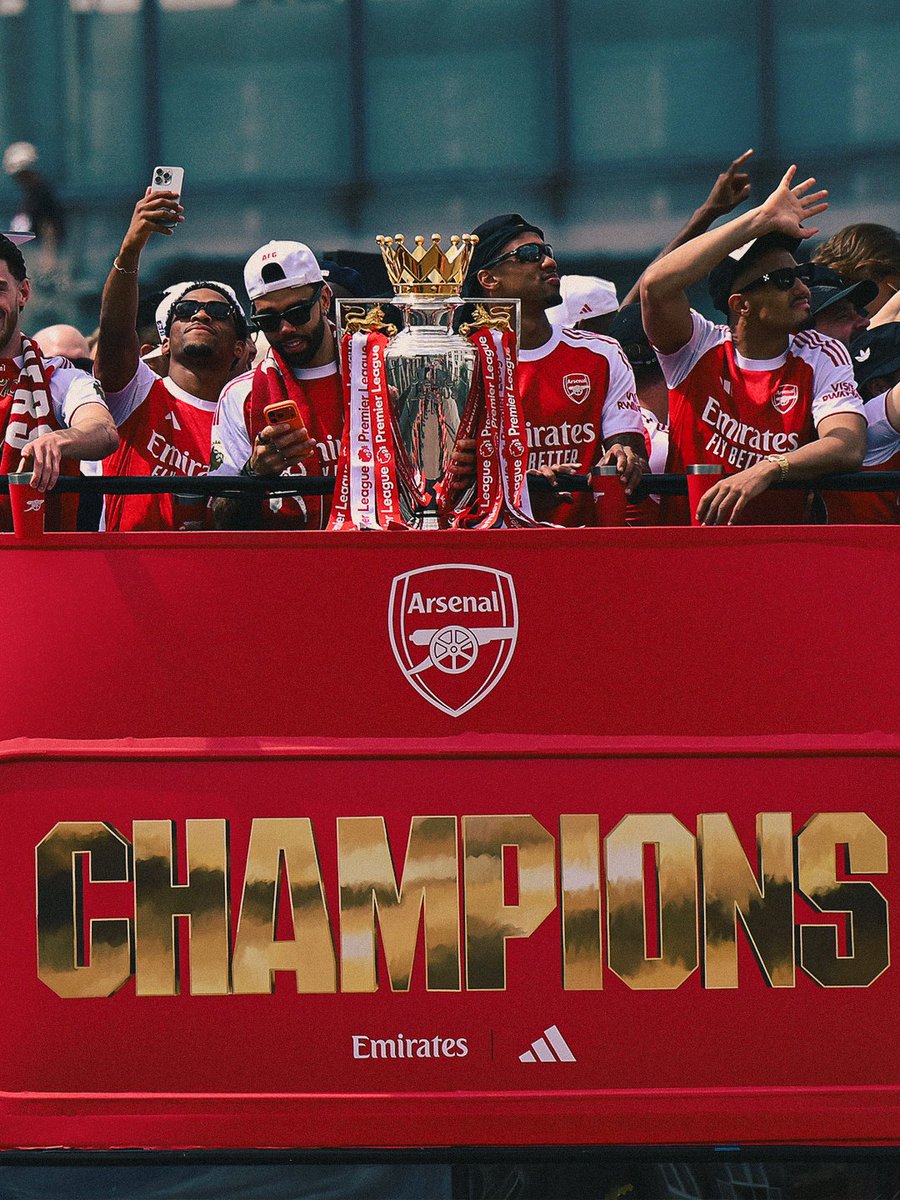
Arsenal have one of the biggest fanbases in the world, and with a fanbase that large, every opinion becomes louder. Every victory feels bigger, every defeat becomes a global discussion, and every title race turns into a war between supporters online.
In recent years, Arsenal have returned to competing for the biggest trophies, and that naturally creates enemies. Nobody hates teams that are irrelevant. Rival fans say they dislike Arsenal supporters because they are confident, loud, and everywhere. But if we're being honest, every successful club has supporters like that.
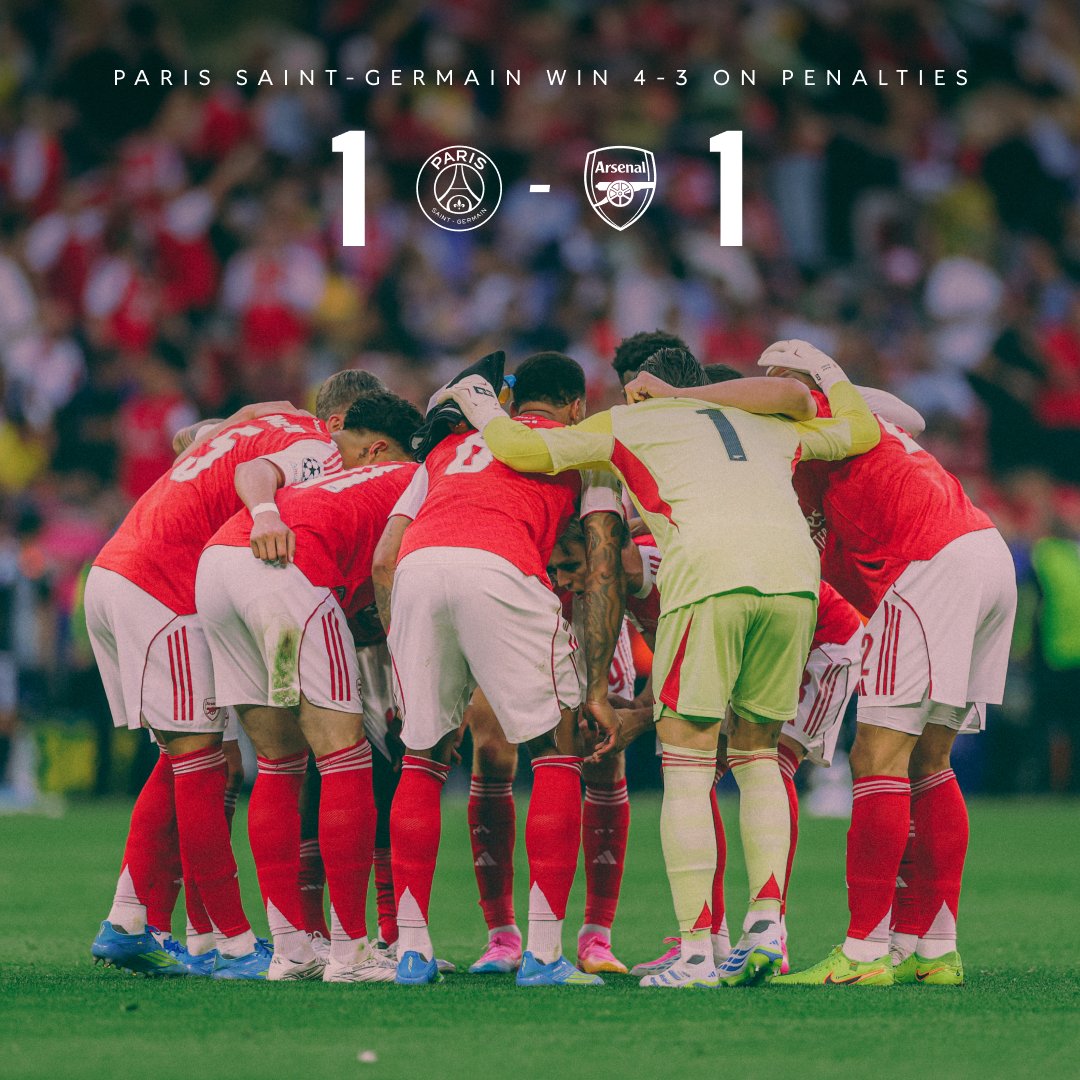
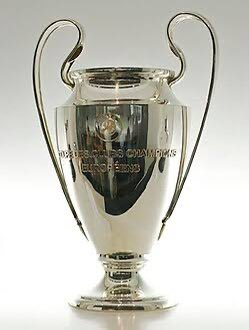
After losing to PSG in the Champions League final, you can already see thousands of fans who don't even support the opposing team celebrating Arsenal's downfall. That’s not just rivalry; that’s fear and obsession.
The reality is that Arsenal are one of the few clubs in world football that people either love or love to see lose. That's usually what happens when a club becomes big enough to live in everyone's mind, even when they're not playing.”
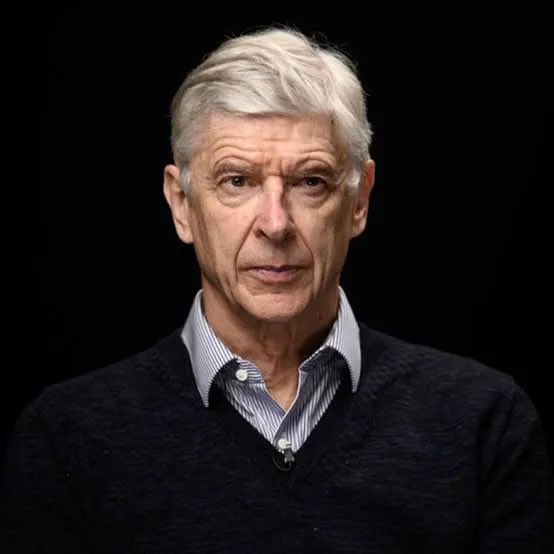
Arsene Wenger after the game:
We reached the final and gave everything we had, but I cannot help feeling that the game was influenced by more than just the football. There were decisions that went against Arsenal at crucial moments, and from where I stand, two penalty incidents deserved much closer attention, especially the challenge on Saka in the second half.
I am proud of this team. They showed courage, quality, character and the fighting spirit that Arsenal supporters expect. When you lose a Champions League final, it is painful. When key moments leave you with questions, the disappointment is even greater.
Congratulations to PSG on winning the trophy. But I believe Arsenal deserved the opportunity to compete on equal terms until the very end.
To the players: keep your heads high. Great teams are built through moments like this. Use the pain, learn from it, and come back stronger.
COYG ❤️
#PSGARS #UCLFinal
EBOLA is the most lethal contagious disease in the world. It has no treatment or vaccination.
Bringing Americans who are exposed to EBOLA to Kenya for whatever reasons is an act of HIGH TREASON as it exposes EVERYONE to extinction.
It must be opposed, resisted and overturned. No Ifs or Buts.
#SovereigntyFirst
#RutoMustGoNow
#NoToImperialism
BREAKING: As I promised you yesterday, today we reveal how Kenyans may have been misled on the REAL cost of Talanta Stadium.
You were told:
“KSh44.5 billion.”
But the latest Auditor-General report now suggests the long-term liability could exceed KSh97.5 BILLION once interest and the 15-year financing structure are included.
That is more than DOUBLE.
And it gets worse.
The Auditor-General says key guarantee documents linked to the deal were NOT provided for audit verification.
Meaning:
Kenyans could be carrying massive hidden costs without full transparency.
Now ask yourself:
How does a 60,000-seat stadium end up costing Kenya more than some of the biggest stadiums in Africa?
📍 Morocco:
Hassan II Stadium - 115,000 seats — approx KSh24.5B
📍 Morocco:
Ibn Battouta Stadium - 60,000 seats — approx KSh13.9B
📍 DRC:
Stade des Martyrs - 80,000 seats — approx KSh5.9B
Meanwhile, Kenyan taxpayers may end up paying over KSh97 BILLION for ONE stadium.
This matters because:
It is YOUR taxes,
YOUR fuel levies,
YOUR future debt burden.
At that cost exposure, Kenya could theoretically build multiple world-class stadiums.
Instead, ordinary Kenyans may be left paying for decades.
Source: Auditor-General report on the Sports Fund.
I have attached a snippet of the report in the image above
And there is more coming, an even bigger exposee, so follow me - Sholla Ard . Adiós! 👋