The 'Avrona Nature Reserve has been polluted by crude oil twice - in 1975 and in 2014. @MalayP found that gerbils may trade-off foraging efficiency and toxicity, and prefer 1975-polluted soil, but that this may have physiological costs. New paper - https://t.co/ayoORIVvU3
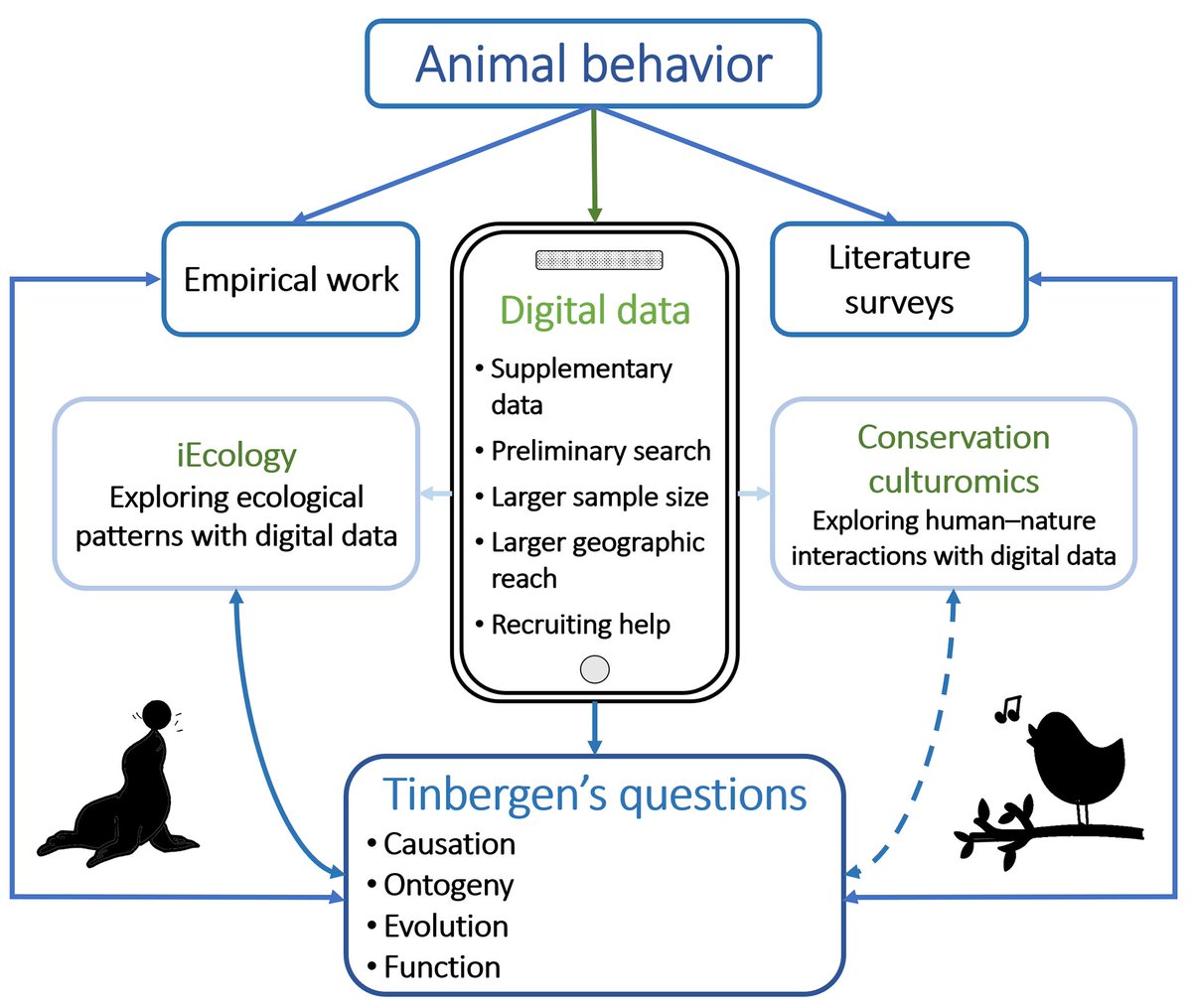
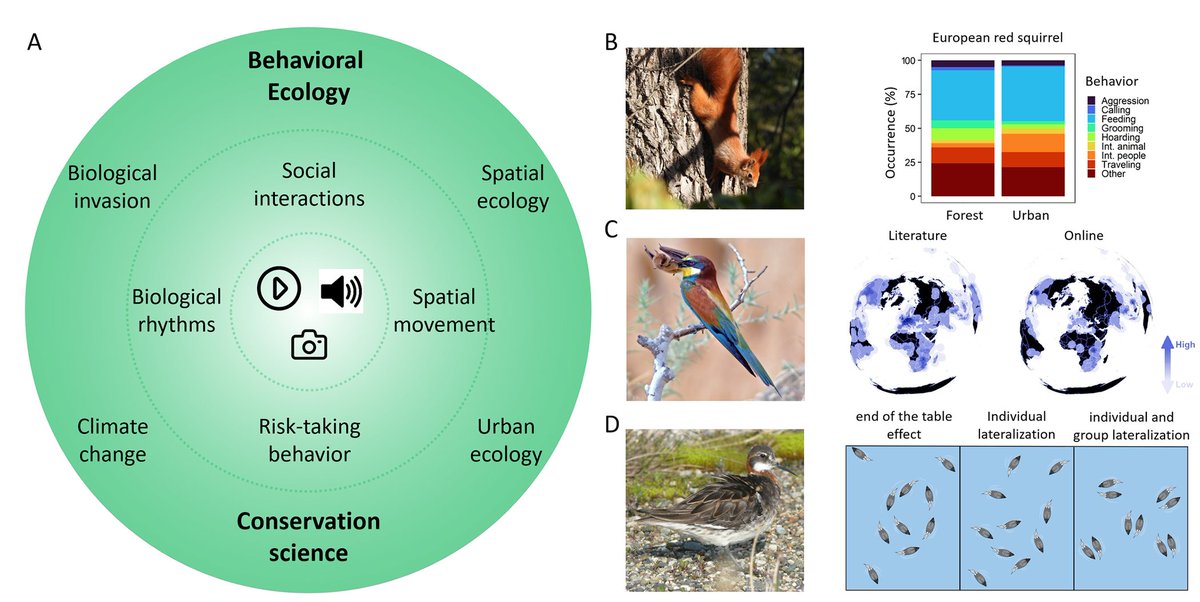
Explore how online data can advance behavioural ecology, uncover new phenomena in a rapidly changing world and more in our new MS in @PLOSBiology https://t.co/GDYDAp9avN. Many thanks to all co-authors involved 🤩
Food availability and predictability changes post-fledgling movements of Egyptian #vultures - and it is especially important when the food is part of #conservation work.
Officially published yesterday: https://t.co/RrrTitFgND
@oded_tal @AnimalFlight
New paper led by @mrmic1 investigating the impacts of pharmaceutical pollution on freshwater community structure and recovery from environmental disturbances.
https://t.co/32MQV7Kuys
#BobWongLab@MonashBiol @SLUwildresearch
In our latest paper in @EvolLetters, with @ChangHan@DRobledoRuiz @PacoGarciaGonzalez and @DingemanseLab, we used indirect genetic effects to study mate choice evolution in field crickets. If you happen to be @Evol_mtg on Saturday I'll talk more about it!
https://t.co/fLzCZSccH4
@CedScherer@AlisonGreggor @SwaddleJohn @alli_sabo @TeamMarmot Thank you!
You mean that in different panels the same colors mean different things? You are right of course. It was challenging because we had five panels with different categories, and tried to make it color-blind friendly. But as you noted, our solution creates a new challenge
What do conservation practitioners and researchers need in order to help them find relevant information and tools?
Without addressing the barriers to accessing knowledge, effective conservation solutions will be ignored. https://t.co/mkrwubQTZp
#integrative_conservation_clinic
Did you know that @ConBiology will publish translations of your articles to increase their impact?
The #Chinese version of our #windturbine noise paper is now available (as a supplementary): https://t.co/dHAoJyDc7C
风力发电机噪声对非繁殖期鸣禽行为的影响
Proud to have been part of a multi-agency experts committee on the effects of #noise pollution on the natural environment, along with @LehnardtYael.
Organized by @ISEESnews and @SvivaMinistry. Here's the report (in Hebrew): https://t.co/bJLtrPSAZj
Now we need to implement it!
New paper led by the incredible Yuval Zukerman @PaN_BES. We found that endangered mountain #gazelles shifted their activity to the night when close to #hiking and #bicycle trails, increasing their overlap with their predator, the golden #jackal. https://t.co/Ik8rv0kERW
PhD opportunity alert 🚨
I am looking for a movement ecologist that has experience with analyzing large sets of movement data to join my lab for a PhD project aimed at taking a multi-species approach and using large sets of animal movement data to improve conservation planning
Do you have a PhD in #acoustics or bioacoustics and you want to use that knowledge for conservation?
I have an open #postdoc position for an exciting new project on the impacts of anthropogenically-generated infrasound on wildlife. Come join our lab!
A new article in @Trends_Ecol_Evo, co-authored by SEI's @biljana_macura, explores how #AI and large language models can boost #EvidenceSynthesis in biodiversity conservation.
AI could address funding challenges & improve decision-making.
Explore 👉 https://t.co/62ku0NhH4r
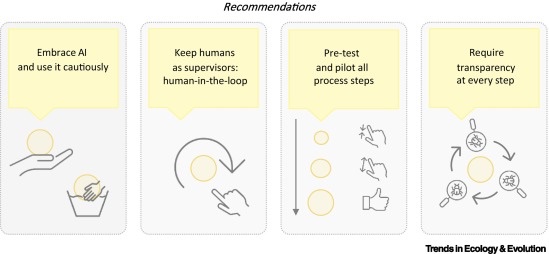
The number of AI tools that can be used to synthesize evidence in conservation is growing daily. How can we use these tools to improve systematic reviews and maps, and what are the dangers?
This is the product of a wonderful workshop made possible by @MonashUni and @bengurionu
How can we leverage artificial intelligence to improve evidence synthesis in conservation? What are the pros and cons? Check out our latest paper in @Trends_Ecol_Evo:
https://t.co/CtVMInQBvT
@MonashBiol#BobWongLab
📸 Ikiwaner GFDL 1.2
🧵Check out our preprint where we discuss the opportunities - as well as challenges - of AI to improve evidence synthesis in conservation science, with relevance also for the disciplines of ecology and evolution more broadly. 1/2
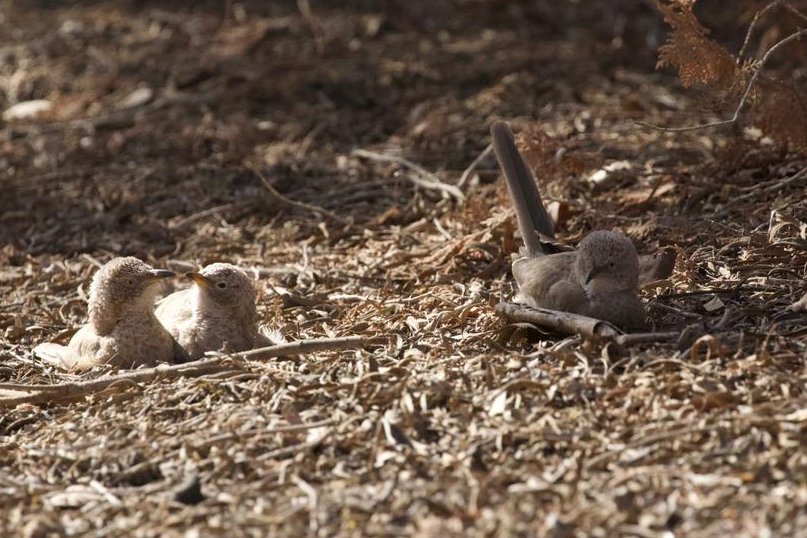
Expansion of settlements and agriculture in #desert habitats may initially seem to provide an oasis of resources in an otherwise stark environment
@krista_natasha shows that for the #ArabianBabbler, the reality is just the opposite
@Roll_Uri@BehavEcol
https://t.co/R7KOWkFUV8