A man spends 50 years teaching at MIT.
He knows his time is running out.
So he records one last lecture — everything he knows, distilled into a single hour.
He died 5 months later.
This is that lecture.
The most important hour you'll watch this week. 👇
Bookmark it for later
Back in the early 90s, before the Internet, we had "Defrag and Chill". You'd start Disk Defragmenter on your 540MB hard drive, dim the lights, crack open a Surge, and just vibe while the little blue bars crawled across the screen like they were solving world peace. Forty-five minutes of pure, unfiltered anticipation. No notifications. No algorithms. Just the two of you, the gentle grinding of the hard drive, and the sacred promise that your Solitaire games were about to feel 3% snappier.
This is MS_DOS 6.22, which I worked on, but I honestly have no idea who wrote defrag. Iconic utility though!
Someone finally documented how to actually use Claude Code.
22K+ stars. claude-code-best-practice.
Direct from Boris Cherny and team:
→ Always use plan mode, give Claude a way to verify
→ Ask Claude to interview you using AskUserQuestion tool
→ Use Git Worktrees for parallel development
→ /loop - schedule recurring tasks for up to 3 days
→ Code Review - fresh context windows catch bugs the original agent missed
→ /btw - side chain conversations while Claude works
→ Make phase-wise gated plans with tests for each phase
→ Use cross-model (Claude Code + Codex) to review your plan
→ CLAUDE[.]md should target under 200 lines per file
→ Use commands for workflows instead of sub-agents
→ Have feature-specific sub-agents with skills instead of general QA or backend engineer
→ Vanilla Claude Code is better than complex workflows for smaller tasks
→ Take screenshots and share with Claude when stuck
→ Use MCP to let Claude see Chrome console logs
→ Ask Claude to run terminal as background task for better debugging
→ Use cross-model for QA - e.g. Codex for plan and implementation review
The community workflows included:
→ Cross-Model (Claude Code + Codex) Workflow
→ RPI (Research Plan Implement)
→ Ralph Wiggum Loop for autonomous tasks
→ Github Speckit (74K stars)
→ obra/superpowers (72K stars)
→ OpenSpec OPSX (28K stars)
The billion-dollar questions it addresses:
→ What should you put inside CLAUDE[.]md?
→ When should you use command vs agent vs skill?
→ Why does Claude ignore CLAUDE[.]md instructions?
→ Can we convert a codebase into specs and regenerate code from those specs alone?
The daily habits:
→ Update Claude Code daily
→ Start your day by reading the changelog
→ Follow r/ClaudeAI, r/ClaudeCode on Reddit
Repost it. Bookmark it.
If you use GitHub (especially if you pay for it!!) consider doing this *immediately*
Settings -> Privacy -> Disallow GitHub to train their models on your code.
GitHub opted *everyone* into training. No matter if you pay for the service (like I do). WTH
https://t.co/vcSkhM5yLV
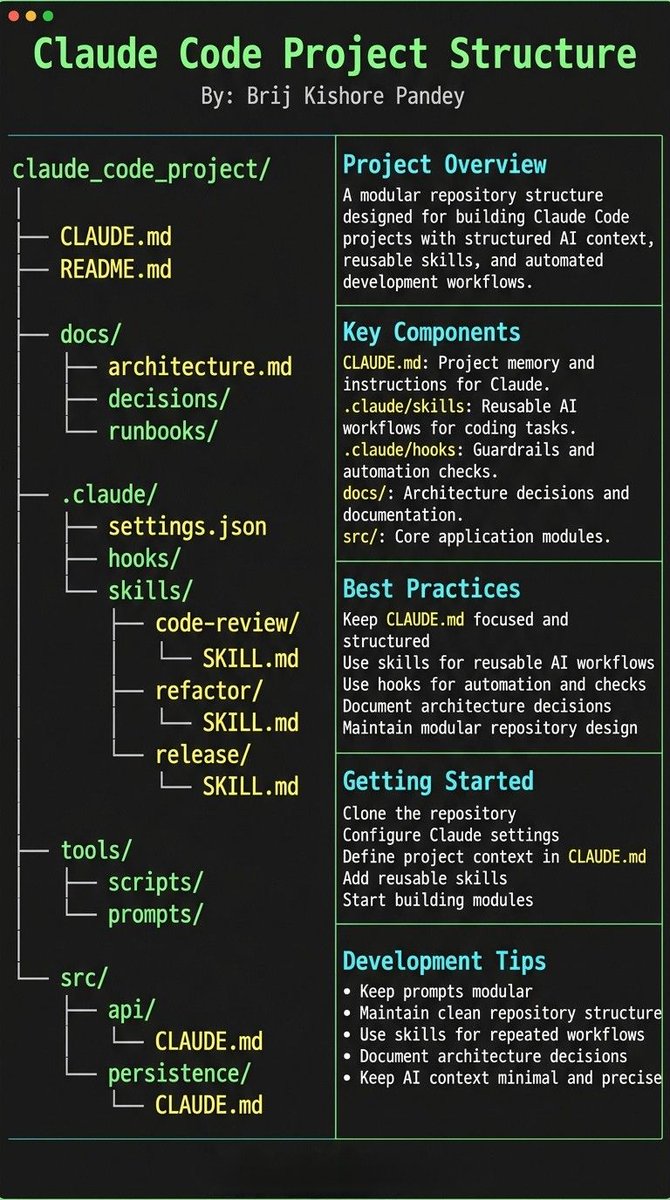
Most people think using Claude Code is about writing better prompts.
It’s not.
The real unlock is structuring your repository so Claude can think like an engineer.
If your repo is messy, Claude behaves like a chatbot.
If your repo is structured, Claude behaves like a developer living inside your codebase.
Your project only needs 4 things:
• the why → what the system does
• the map → where things live
• the rules → what’s allowed / forbidden
• the workflows → how work gets done
I call this:
The Anatomy of a Claude Code Project 👇
━━━━━━━━━━━━━━━
1️⃣ CLAUDE.md = Repo Memory (Keep it Short)
This file is the north star for Claude.
Not a massive document.
Just three things:
• Purpose → why the system exists
• Repo map → how the project is structured
• Rules + commands → how Claude should operate
If CLAUDE.md becomes too long, the model starts missing critical signals.
Clarity beats size.
━━━━━━━━━━━━━━━
2️⃣ .claude/skills/ = Reusable Expert Modes
Stop repeating instructions in prompts.
Turn common workflows into reusable skills.
Examples:
• code review checklist
• refactoring playbook
• debugging workflow
• release procedures
Now Claude can switch into specialized modes instantly.
Result:
More consistent outputs across sessions and teammates.
━━━━━━━━━━━━━━━
3️⃣ .claude/hooks/ = Guardrails
Models forget.
Hooks don’t.
Use hooks for things that must always happen automatically.
Examples:
• run formatters after edits
• trigger tests after core changes
• block sensitive directories (auth, billing, migrations)
Hooks turn AI workflows into reliable engineering systems.
━━━━━━━━━━━━━━━
4️⃣ docs/ = Progressive Context
Don’t overload prompts with information.
Instead, let Claude navigate your documentation.
Examples:
• architecture overview
• ADRs (engineering decisions)
• operational runbooks
Claude doesn’t need everything in memory.
It just needs to know where truth lives.
━━━━━━━━━━━━━━━
5️⃣ Local CLAUDE.md for Critical Modules
Some areas of your system have hidden complexity.
Add local context files there.
Example:
src/auth/CLAUDE.md
src/persistence/CLAUDE.md
infra/CLAUDE.md
Now Claude understands the danger zones exactly when it works in them.
This dramatically reduces mistakes.
━━━━━━━━━━━━━━━
Here’s the shift most people miss:
Prompting is temporary.
Structure is permanent.
Once your repository is designed for AI:
Claude stops acting like a chatbot...
…and starts behaving like a project-native engineer. 🚀
Wrote up about my personal journey from AI skeptic to someone who finds a lot of value in it daily. My goal is to share a more measured approach to finding value in AI rather than the typical overly dramatic, hyped bait out there. https://t.co/SpiIy7DEc9
Real Luxuries in Life
1. Living 10 minutes from work
2. Living 5 minutes from the gym
3. Having quiet neighbors
4. Having money left at the end of the month and investing it
5. Peace at home
6. Drinking coffee without rushing
7. Sleeping with a clear conscience
8. Laughing with people who truly get you
9. Traveling every year
10. Waking up naturally without an alarm
11. Enjoying a home-cooked meal with loved ones
12. Having time to read a book in one sitting
13. Finding joy in simple daily routines
14. Having a pet that greets you happily at the door
These are the things that actually feel rich.
5 years old - Dad knows everything!
7 years old - Dad knows.
10 years old - Maybe Dad doesn’t know?!
12 years old - Dad doesn’t know.
14 years old - Dad's gone crazy!
16 years old - Can’t take Dad seriously.
18 years old - What does dad know?!
22 years old - Dad's talking rubbish!
24 years old - I know more than Dad!
26 years old - Dad seems to know some things after all.
30 years old - Think I should ask Dad about this?!
40 years old - It’s amazing how Dad went through all this!
45 years old - Dad's been right all along.
50 years old - If Dad was here, I could have learned a lot from him.
Your manager: "Why is our AWS bill $47,000 this month?"
You: "Uh... the application is running?"
This conversation ends careers.
Cloud Engineers in 2025 must understand money, not just technology.
Every architectural decision has cost implications:
- Multi-AZ deployment vs single AZ
- Reserved instances vs on-demand pricing
- Data transfer costs between regions
- Storage class optimization strategies
You can build the most elegant infrastructure in the world.
If it bankrupts the company, you failed.
The Engineers getting promoted understand:
- How their technical decisions affect the bottom line
- How to optimize for cost without sacrificing performance
- How to communicate financial impact to non-technical stakeholders
Companies are drowning in cloud costs.
Engineers who can optimize spend while maintaining performance become indispensable.
Learn the business side of your technical decisions.
Your career depends on it.
Credit: Soleyman Shahir
As someone with autism, emotional regulation is a challenge for me. It always has been.
And yet, at Microsoft in the 90s, I someone survived one of the most cut-throat corporate environments you can imagine.
The most challenging part, I think, was dealing with OTHER people on the spectrum who were oblivious to how their words and actions made others feel.
I've seen people I suspect are also on the spectrum scream things like "That's the stupidest idea I've ever heard - I'm going to find the person that hired you and fire them!".
It was the 90s, mind you. But still, a bitter pill. No, it wasn't directed at me, but the sentiment has been once or twice :-)
My advice? I keep this little summary of Seneca's "On Anger" around. I find it useful, so I thought I'd share it!
Anger is a choice born from thinking we’ve been wronged and wanting payback; because it’s chosen, it’s trainable.
It wrecks judgment. Once angry, reason is sidelined and we act like we’re briefly insane—so don’t trust any decision made in that state.
It’s not useful fuel. Courage/justice come from reason and character, not rage; anger adds heat, not accuracy.
Root causes: brittle expectations, entitlement, reading ambiguity as insult, and rumination that keeps reopening the wound.
Anticipate annoyances (“premeditatio malorum”): people will err, delays happen, the world is messy—expect it and you’ll snap less.
First-aid: delay. Buy time—pause, breathe, count, walk. Anger fades fast if it doesn’t get immediacy.
Control the body to cool the mind: lower voice, slow speech, unclench posture; don’t “perform” anger.
Avoid known triggers: fatigue, hunger, alcohol, heated crowds, and online pile-ons. Exit early instead of “finishing the argument.”
Choose calmer company and models. Anger is contagious; so is composure.
With offenders: assume ignorance before malice; correct privately, gently, and specifically; aim to improve them, not to vent yourself.
Forgive ordinary faults; save severity for true harms—and even then, act when calm.
If you lead or parent: never punish in anger. Delay judgments, separate discipline from emotion, praise more than you punish, shape habits early.
In conflict, seek resolution, not victory. Offer off-ramps, concede small points, and don’t escalate with sharp words.
Daily practice: brief evening review—what provoked me, where I slipped, what I’ll do next time. Measure progress by fewer, shorter, softer flare-ups.
Reframe fast: “Will this matter in a month? Did they mean it? Have I done similar?” Perspective shrinks anger.
Use humor and distraction to break loops; change scene/device/context instead of stewing.
Bottom line: guard your judgment, slow your reactions, and act only when reason—not rage—has the wheel.
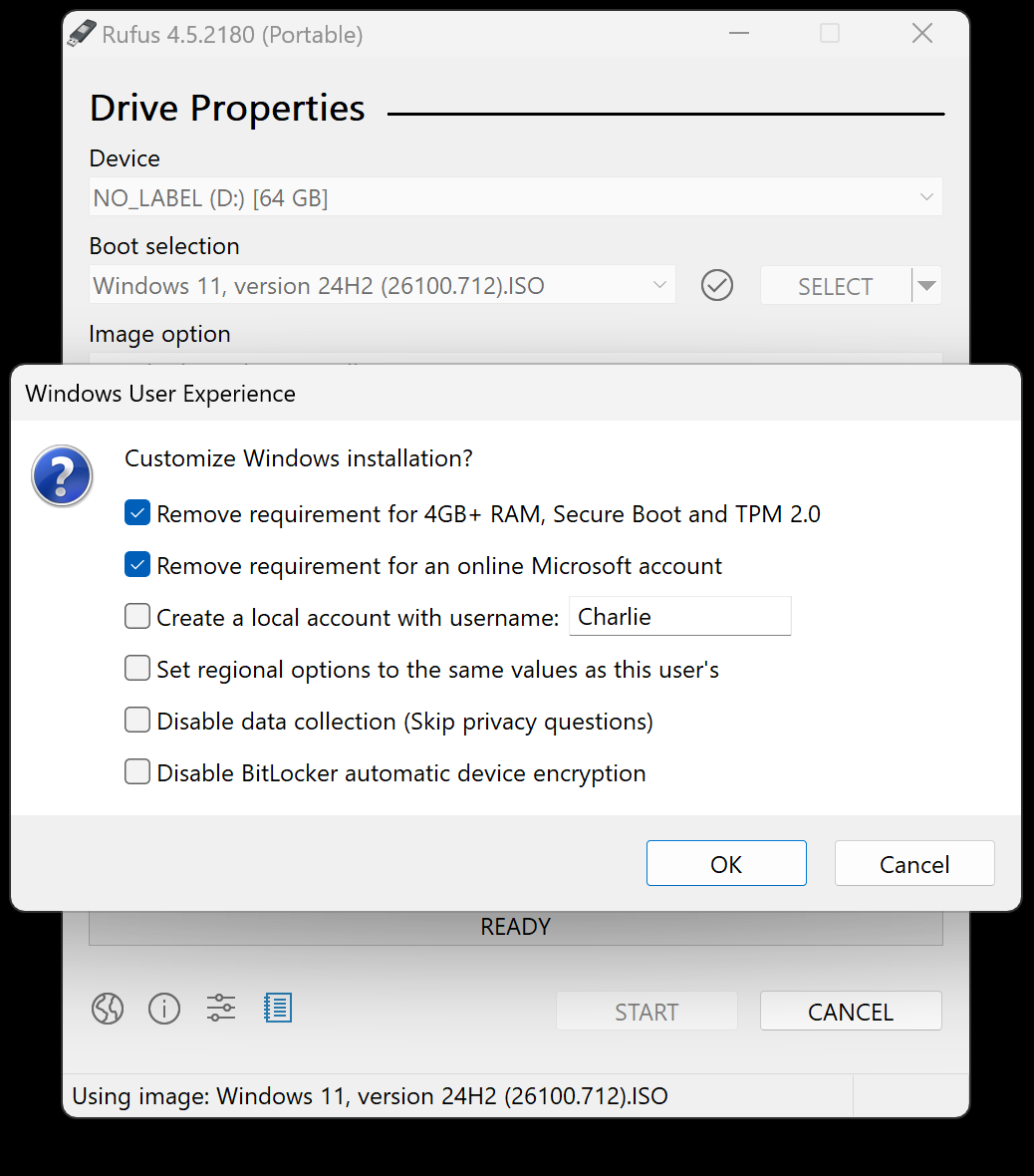
I am one again reminding people that if you are creating a Windows 11 installer, use Rufus
- You can bypass the RAM, Secure Boot and TPM requirements
- You can remove the requirement for a Microsoft account
- Disable automatic encryption
- Auto-create account and more




![techNmak's tweet photo. Someone finally documented how to actually use Claude Code.
22K+ stars. claude-code-best-practice.
Direct from Boris Cherny and team:
→ Always use plan mode, give Claude a way to verify
→ Ask Claude to interview you using AskUserQuestion tool
→ Use Git Worktrees for parallel development
→ /loop - schedule recurring tasks for up to 3 days
→ Code Review - fresh context windows catch bugs the original agent missed
→ /btw - side chain conversations while Claude works
→ Make phase-wise gated plans with tests for each phase
→ Use cross-model (Claude Code + Codex) to review your plan
→ CLAUDE[.]md should target under 200 lines per file
→ Use commands for workflows instead of sub-agents
→ Have feature-specific sub-agents with skills instead of general QA or backend engineer
→ Vanilla Claude Code is better than complex workflows for smaller tasks
→ Take screenshots and share with Claude when stuck
→ Use MCP to let Claude see Chrome console logs
→ Ask Claude to run terminal as background task for better debugging
→ Use cross-model for QA - e.g. Codex for plan and implementation review
The community workflows included:
→ Cross-Model (Claude Code + Codex) Workflow
→ RPI (Research Plan Implement)
→ Ralph Wiggum Loop for autonomous tasks
→ Github Speckit (74K stars)
→ obra/superpowers (72K stars)
→ OpenSpec OPSX (28K stars)
The billion-dollar questions it addresses:
→ What should you put inside CLAUDE[.]md?
→ When should you use command vs agent vs skill?
→ Why does Claude ignore CLAUDE[.]md instructions?
→ Can we convert a codebase into specs and regenerate code from those specs alone?
The daily habits:
→ Update Claude Code daily
→ Start your day by reading the changelog
→ Follow r/ClaudeAI, r/ClaudeCode on Reddit
Repost it. Bookmark it.](https://pbs.twimg.com/media/HEetkU-bEAA0hd_.jpg)