Introducing Claude Fable 5: a Mythos-class model that we’ve made safe for general use.
Its capabilities exceed those of any model we’ve ever made generally available.
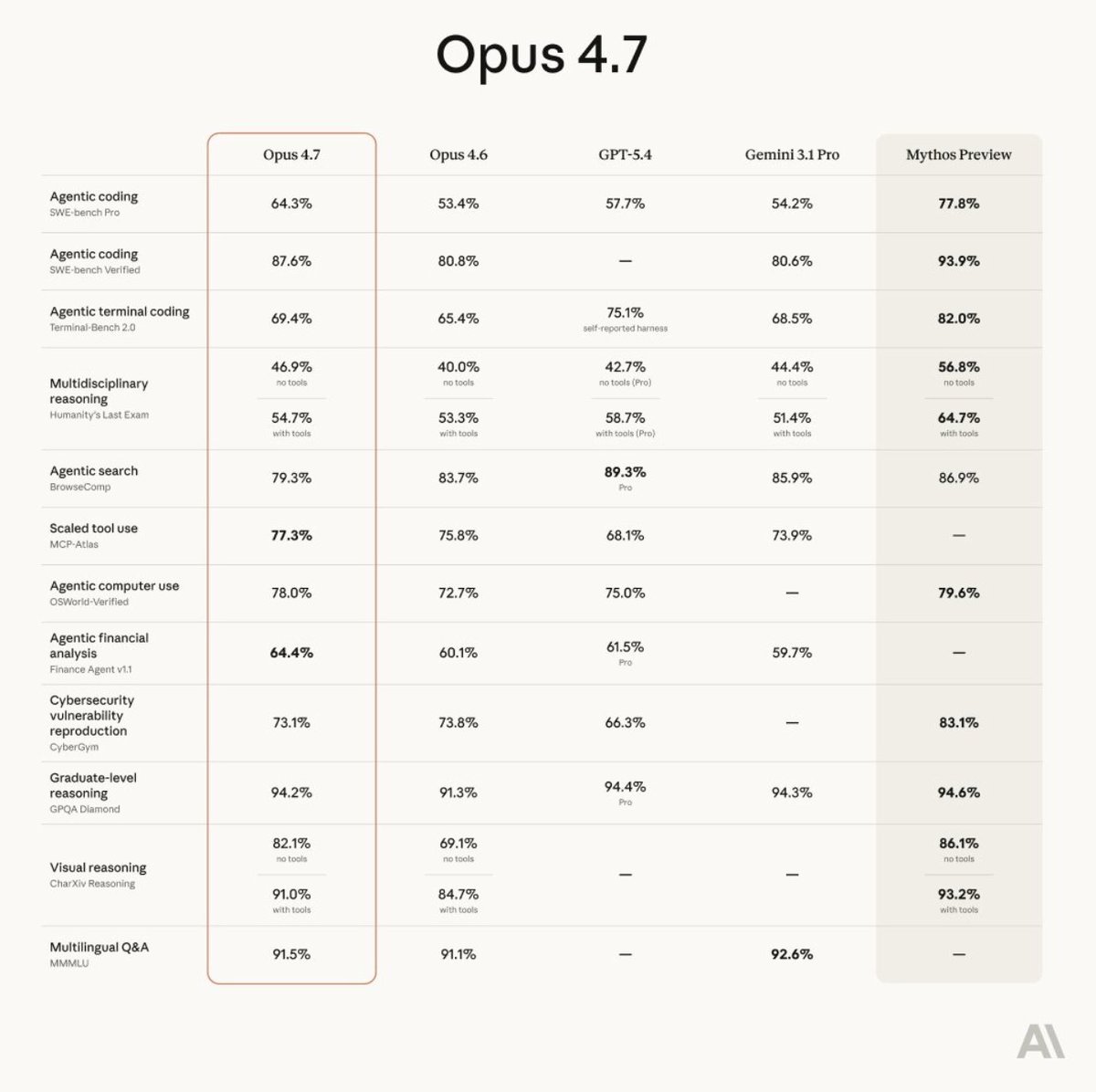
Introducing Claude Opus 4.7, our most capable Opus model yet.
It handles long-running tasks with more rigor, follows instructions more precisely, and verifies its own outputs before reporting back.
You can hand off your hardest work with less supervision.
🔥🚨BREAKING: A petri dish filled with human brain cells just learned to how to play DOOM
Scientists at Cortical Labs have successfully trained a cluster of approximately 200,000 living human neurons, grown on a microelectrode array chip, to play the classic 3D video game DOOM.
Introducing Rork Max
AI that one-shots almost any app for iPhone, Watch, iPad, TV & Vision Pro. Even Pokémon Go with AR & 3D.
Max is a website that replaces Xcode. Install on device in 1 click. Publish to App Store in 2 clicks.
Powered by Swift, Claude Code & Opus 4.6.
Microsoft just proved again: no matter how big the infra, one bad Friday can offline half the dev world.
AI code gen gets blamed for bugs, but at least Claude doesn't take the whole cloud with it when it naps.
Governance > generation, even for outages.
Thoughts?
NOW - Musk: "My prediction is there'll be more robots than people... everyone on Earth is going to have one and going to want one... who wouldn't want a robot to... watch over your kids, take care of your pets... we are in the most interesting time in history."
I’m working on a long-form piece connecting Trump’s Greenland comments with the current AI race and what they both reveal about power, leverage, and strategic assets in the 21st century. It’s not about headlines or memes, but about why these statements are being made now and what they signal beneath the surface. I’ll be publishing it as a full article soon.
AI changed how code is written, but it didn’t change how responsibility works. When something breaks in production, nobody asks which model generated the logic. They ask who shipped it, who reviewed it, and who allowed that behavior to exist. This is where policy quietly enters the codebase. Rate limits, permissions, defaults, and guardrails are no longer “engineering details” but governance decisions. Vibe coding feels fast and creative, but real software lives under contracts, regulations, audits, and users who don’t care how elegant your prompt was. The future of coding isn’t just about writing instructions for machines, it’s about defining boundaries that machines are not allowed to cross and being able to explain those boundaries when something goes wrong.