This trial was done in standard risk myeloma in patients not undergoing transplant
But I think its implications will probably extend to other situations in practice, similar to the low dose vs high dose dex trial. Time will tell. Side effects of long term lenalidomide can be troublesome especially fatigue, diarrhea, and cramps.
If Len 2 years is sufficient with triplet induction and no transplant then it makes sense that if we improve induction further (quads) and add transplant, the benefit of indefinite duration maintenance will be even less since there will be less of the clone for the maintenance to eradicate or control. For high risk patients it may support an MRD driven maintenance approach.
https://t.co/k8nGWeSA03
MajesTEC-4 was the most fascinating study reported at EHA 2026 for me.
Not because 100% MRD negativity (10⁻⁵) was achieved.
What truly caught my attention was the magnitude and speed of CR/sCR conversion.
After ASCT, CR/sCR rates were approximately 25-40%.
Within 6-12 months of Tec-based maintenance, CR/sCR approached 100%.
That is breathtaking.
MASTER, CASSIOPEIA, and PERSEUS established an extraordinarily high bar. MajesTEC-4 is now challenging those landmark studies despite being an early run-in cohort of ~90 patients.
The deeper question is not whether teclistamab is active.
We already know it is.
The question is why it appears so active in the post-ASCT setting.
Where do the effector T cells come from?
Are they predominantly reinfused with the autograft?
Do the classic Mayo observations linking early lymphocyte recovery to superior outcomes offer a clue?
Perhaps ASCT is doing more than cytoreduction.
Perhaps maintenance is doing more than maintaining.
Step by step.
Trial by trial.
Not only are responses becoming deeper.
More patients are achieving them, and they are achieving them faster.
#EHA26 #MultipleMyeloma #ASCT #MRD #Myeloma
#Investigación
Junio de 2024. El presidente @petrogustavo es captado en Panamá de la mano de una mujer hasta ahora desconocida.
Su nombre es Vanessa Cortés y desde que Petro es presidente, ha tenido un rápido crecimiento patrimonial.
Va 🧵
No Front line D-Vd
I personally would not favor D-Vd as frontline architecture in most newly diagnosed myeloma patients, even if the regimen is clearly active in relapse.
To me, frontline therapy is not simply about achieving response. It is about achieving:
• deep MRD-negative states
• durable immune control
• long-term tolerability
• optimal sequencing biology
Biologically, bortezomib mainly induces proteotoxic/ER stress and plasma-cell apoptosis. Effective, yes. But it may not disrupt the IRF4/MYC plasma-cell survival circuitry as deeply as IMiD-based approaches.
Lenalidomide also appears to provide stronger immune synergy with anti-CD38 therapy:
• NK/T-cell modulation
• enhanced ADCC
• sustained immunologic pressure
This may partly explain why D-Rd, D-VRd, and anti-CD38 + IMiD strategies consistently move toward deeper and more durable MRD outcomes.
In addition:
• neuropathy limits long-term PI intensity
• duration of response with Vd historically is not particularly long
• t(11;14) disease is often less PI-dependent and more BCL2-driven
So while D-Vd is relapse-proven, I am not convinced it has the biologic depth or durability profile we now expect from optimal frontline therapy in the IMROZ/CEPHEUS era.
The modern frontline direction increasingly feels less like “maximum cytotoxic stress” and more like:
immune engagement + transcriptional collapse + sustained MRD suppression.
Dr. Fun + G
#mmsm #myeloma # #Hemetwitter
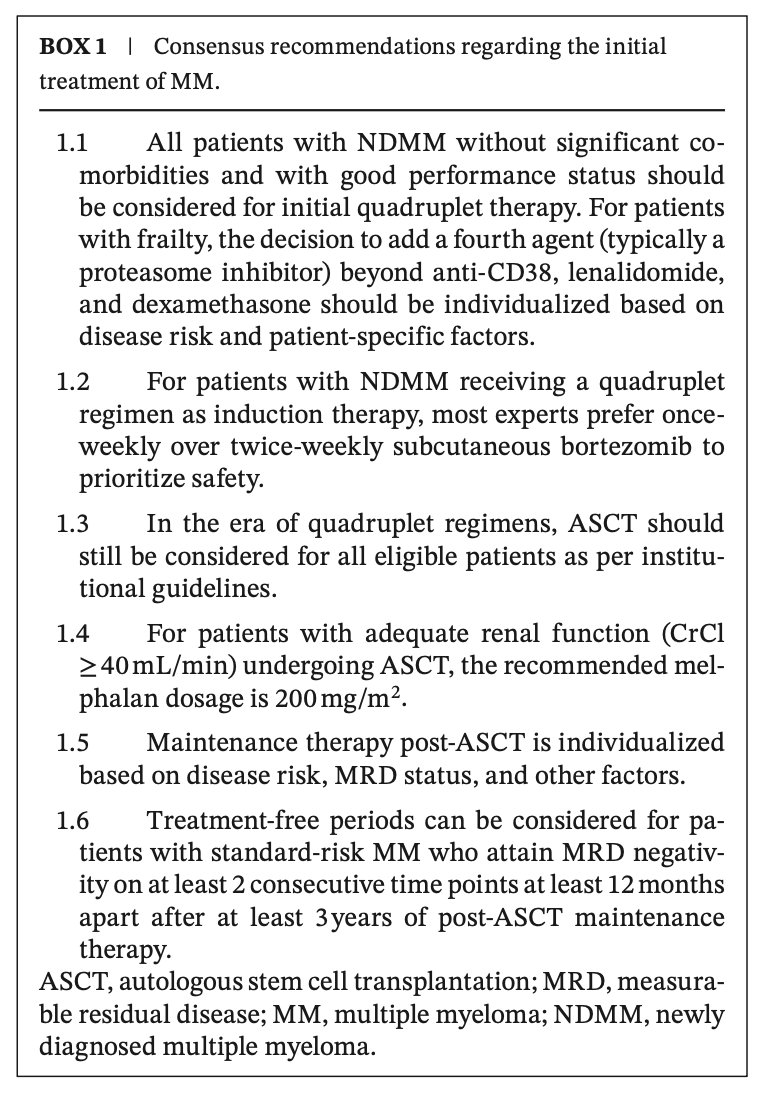
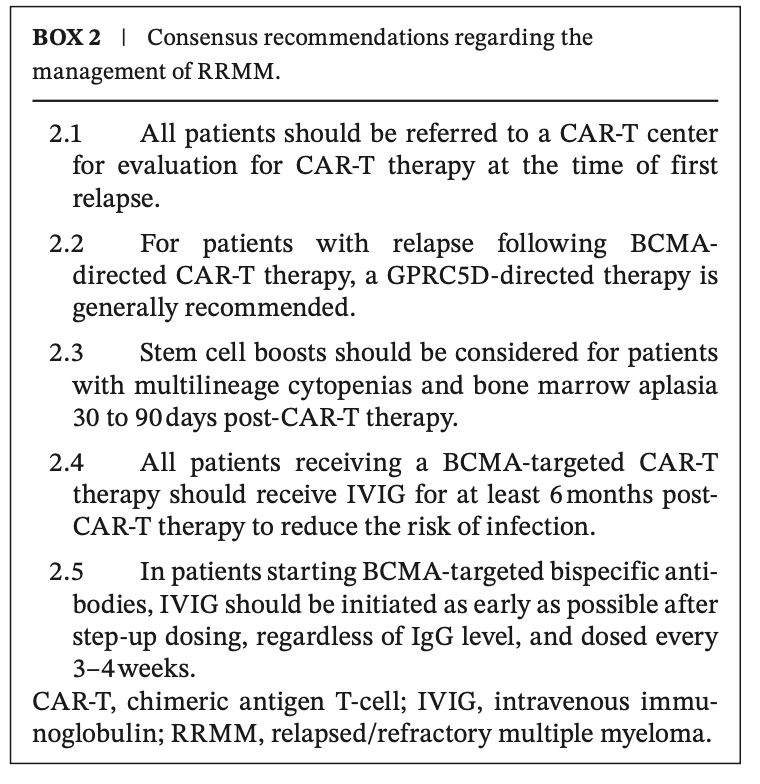
Thanks @AjaiChari for leading new Bridging Gaps recs for myeloma #MMsm, now in @AjHematology!
Intentional focus on what makes common sense based on current data, even if not in orig trials. E.g.
1️⃣ 1x/wk Velcade
2️⃣ MRD-guided len 🛑 as option
3️⃣ IVIG PPx & bsAbs
Worth a read!