WE HAVE CRITICALITY!
Oklo has completed first criticality at its Groves Isotope Test Reactor.
Built in less than a year under the @ENERGY’s Reactor Pilot Program, Groves offers a concrete blueprint for future advanced nuclear deployment as the fastest fully privately financed and built reactor project of its kind.
Today, Oklo proves that advanced reactors can be built, started, and operated faster than anyone thought possible and shows the world that America can build nuclear again.
https://t.co/7pPFBtljLJ
We built Groves-1 and brought it to first criticality in less than a year.
Now, the U.S. DOE has cleared it for unrestricted operations.
What’s next? Testing equipment, training operators, and gaining real-world experience that can inform Groves-2 and future Aurora powerhouse deployments.
We’re building, operating, and applying what we learn to the next isotope and power project while collecting data that could benefit the U.S.’s entire nuclear fleet.
Learn more: https://t.co/f24fHn7TVp
We've just secured a key piece of the puzzle for scaling our Aurora powerhouses: the fuel to run them.
Oklo has officially signed definitive, multi-year fuel purchase agreements with @centrus_energy, securing enough nuclear fuel to support up to five Aurora powerhouses for multiple years, with deliveries scheduled to begin in 2029.
These agreements build on the letter of intent announced in June, supporting the first phase of our planned 1.2 GW Ohio power campus, future Aurora projects, and later refueling our first powerhouse in Idaho.
Securing fuel years in advance helps us plan future projects with greater certainty and puts another important piece in place as we work toward commercial deployment.
There's also a direct connection to customer demand. @meta's prepayment for future electricity from Oklo is helping fund fuel purchases for our initial Ohio deployments. In turn, our prepayments to Centrus will help expand U.S. uranium enrichment capacity, strengthening the domestic fuel supply chain we'll need as we grow.
This is how we're turning customer demand for electricity into investment in both new Aurora powerhouses and the fuel needed to operate them.
Learn more: https://t.co/9IJLmdThN3
This Veterans Day, we're proud to recognize the many veterans on the Oklo team, including those who served in the U.S. Navy's nuclear program and continue to bring their experience and expertise to our work today.
To our colleagues who have served, and to veterans across the country, thank you for your service and sacrifice.
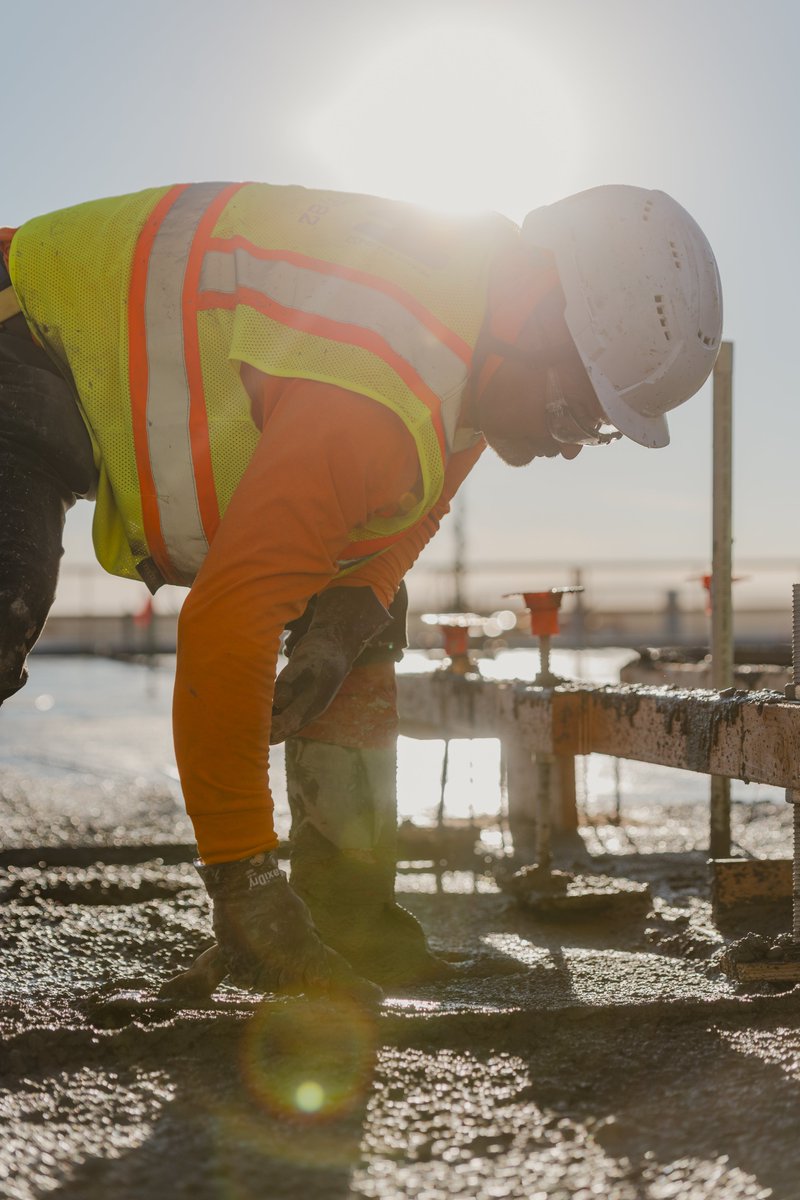
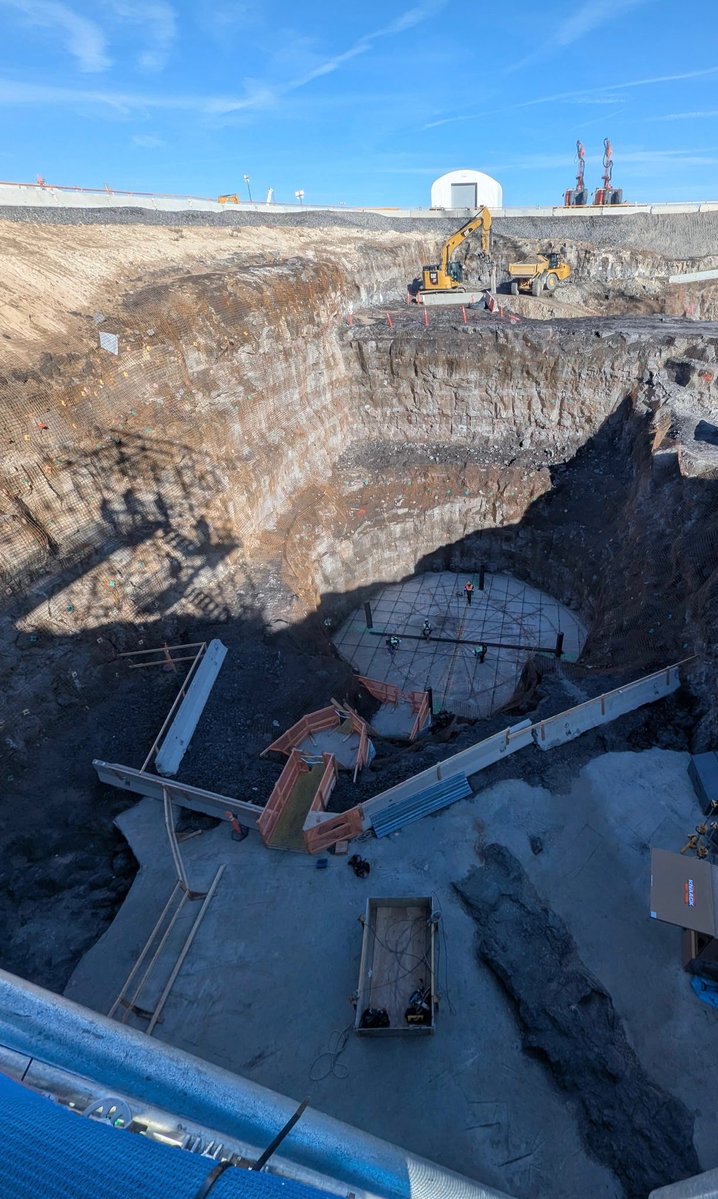
Structural concrete is in place at Oklo’s Aurora-INL site at @INL, marking a major step in moving our first planned commercial powerhouse from excavation to construction.
The work follows months of deep excavation, drilling, blasting, and round-the-clock material movement to prepare the foundation. With concrete now poured, years of engineering are taking physical shape on the ground.
As we target a 2028 startup, each milestone at the Aurora-INL is helping us build the playbook for future deployments and laying the foundation for a new approach to deploying nuclear power faster and smarter.
Congratulations to Oklo Co-Founder and COO @caorilne on being named to @TIME's 2026 TIME100 Climate list in the Innovators category!
Since co-founding Oklo in 2013, Caroline has helped lead our mission to make clean, reliable, affordable nuclear power a reality. From advancing next-generation reactors to pioneering new approaches to nuclear fuel recycling, her leadership is helping shape the future of energy.
In her TIME profile, Caroline discusses what it takes to turn promising clean energy technologies into real-world projects, why community engagement matters, and what gives her hope about the future of nuclear energy.
We're so proud to see Caroline recognized alongside leaders driving meaningful progress around the world.
Read her full profile here: https://t.co/nVqZeEfawU
Oklo’s Q3 update is out. The key takeaway: we’re generating revenue today and building additional opportunities across power, fuel, and isotopes.
→ Manufacturing and engineering: Generating revenue today through in-house capabilities
→ Isotopes: Working toward the first contracted isotope delivery and developing Groves-2 Forge
→ Fuel: Advancing fabrication and recycling capabilities to support our fleet and external customers
→ Power: Advancing Aurora construction in Idaho toward future power sales
These opportunities build on shared engineering, operating, and deployment capabilities across one integrated nuclear technology platform.
CEO Jacob DeWitte joined @CNBCTheExchange’s @KellyCNBC to discuss the quarter and how we’re working to turn assets under development into revenue-generating operations. 👇
Scaling our Aurora powerhouses starts with building the supply chain years ahead of the need.
Oklo has reached a strategic manufacturing agreement with US Forged Rings (USFR) to reserve planned domestic capacity for large reactor components.
Reserving capacity now—the agreement reserves manufacturing capacity for 27 Aurora powerhouse reactor modules through 2035—aims to address a potential manufacturing bottleneck ahead of future deployments. USFR’s planned North Carolina campus would bring manufacturing stages together to reduce transportation between suppliers and improve coordination.
By reserving now, Oklo is establishing a basis for planning multiple deployments and creating opportunities to carry qualified processes and production experience from one powerhouse to the next, helping make our reactors more repeatable.
Read more: https://t.co/RrZjUYvXgn
Advanced nuclear can meet growing energy demand with 24/7 carbon-free electricity, making it an essential climate solution, but it will take the right investments to realize that potential.
At Oklo, we’re taking a deliberate approach to how we deploy capital, build capabilities, and execute across every aspect of our business – from power, to fuel, and isotopes.
On @_LatitudeMedia's @_GreenBlueprint podcast, Oklo co-founder and COO @caorilne joined Lara Pierpoint to discuss the business strategy behind those decisions and how they support our long-term plans.
From bringing the Groves Isotope Test Reactor from a greenfield site to criticality in less than a year, to investing in fuel fabrication, recycling, and isotope production, every step is helping us develop capabilities, gain operating experience, and advance our path toward commercial deployment.
These aren’t isolated initiatives. They’re part of a broader strategy to build a business that can deliver clean, reliable power while creating additional opportunities across the nuclear life cycle.
Hear Caroline discuss how we’re prioritizing investments today to build the capabilities we need for tomorrow: https://t.co/8ORWWuvFOp
Generating more nuclear power means we need more nuclear fuel. Right now we import most of the uranium for fuel used in the U.S., and experts are raising concerns about fuel supply being able to keep pace with demand. But what if there was a different approach?
At Oklo, we're developing another pathway by recycling used nuclear fuel and putting the recovered valuable material back to work.
That means turning recovered materials into new fuel for our Aurora powerhouses, with the potential to supply other fuel manufacturers and compatible reactors. It also creates opportunities to recover valuable isotopes for medical, research, and industrial applications.
By developing recycling, fuel fabrication, and power generation together, we're working to unlock more value from existing nuclear materials while exploring more economical ways to manage what remains.
For Oklo, achieving first criticality at our Groves Isotope Test Reactor was a milestone in reactor building experience. As CEO Jake Dewitte explains, it was an opportunity to “learn from it and make the next one better.”
In a conversation with @tboypod's @NickOfNewYork & @jackkramer, Jake discussed why successfully turning Oklo’s first reactor on is such an important step in Oklo’s journey toward deploying future reactors at speed and scale.
Watch the full conversation: https://t.co/VG05TV7sP5
Where people see nuclear waste, Oklo sees a resource.
Oklo is developing fuel recycling technology to get more value from existing fuel sources, recover usable material to support future clean energy generation and reduce nuclear waste.
That means greater fuel availability, stronger resource efficiency, and lower energy costs over time.
How much will it cost? And when can we get it?
These are the two questions Oklo Senior Vice President and Head of Business Development @BrianGitt hears most often from customers looking to advanced nuclear to meet growing power demand.
Fuel is central to both answers. Even the most advanced reactor can't deliver affordable power on schedule without a reliable, cost-effective fuel supply.
That's why Oklo is developing fuel recycling and fabrication capabilities. Recycling can recover more energy from used fuel, create a domestic fuel source, and reduce dependence on new mining and enrichment. All of this can support our Aurora powerhouse deployments and the broader nuclear industry as we build toward a more abundant, affordable domestic fuel supply.
For Oklo, fuel strategy is deployment strategy. Brian explains why in his latest op-ed for @RealClearEnergy.
Read more:
https://t.co/SuS2jcU0OJ
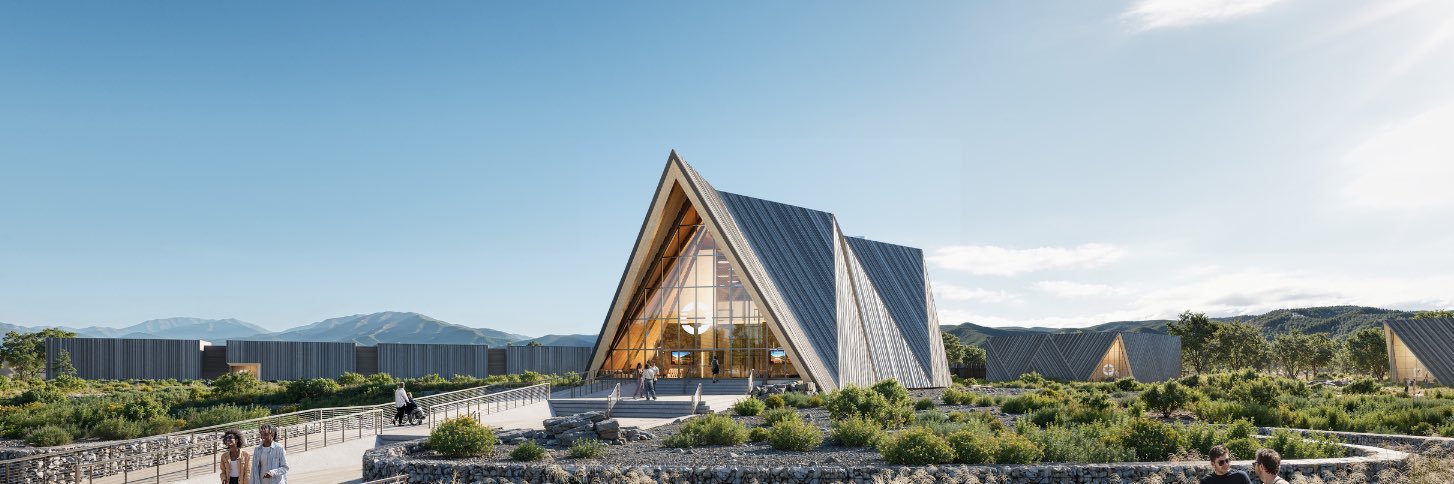
COMING SOON: Oklo’s first Aurora powerhouse @INL.
The Aurora-INL is our first planned commercial powerhouse and an opportunity to build the playbook for the powerhouses that follow. Every step, from construction and supply chain execution to system integration and authorization, is helping us learn how to build faster, smarter, and at scale.
With a 2028 startup in sight, we’re turning years of engineering into something much bigger than a single project. We’re building the foundation for a new approach to nuclear power.
Can waste from recycling nuclear fuel be disposed of safely and affordably?
New research from a three-year @ENERGY-funded study found that every scenario evaluated for permanent disposal in deep boreholes met safety criteria and at a projected cost of less than a fraction of a penny per kilowatt-hour of electricity generated.
Conducted with @DeepIsolation, @argonne, @cwru, and Oklo, the study provides an important proof point for a more complete approach to used nuclear fuel.
For Oklo, these results support the recycling strategies we are developing to put used nuclear fuel back to work while safely and economically managing what remains.
“The long-term solution for how we think about energy abundance, availability, affordability, sustainability, being clean…it is fast reactors and recycling.” - Oklo CEO Jake DeWitte
Less than a year after reaching first criticality at the Groves Isotope Test Reactor, Jake hosted @tboypod’s @NickOfNewYork & @jackkramer for a conversation about how nuclear technology can support America’s future in more ways than one.
Paired with fast reactors, Jake described used nuclear fuel recycling as the “silver bullet” that can create a cleaner and more sustainable nuclear lifecycle while also enabling the production of vital medical isotopes used to diagnose disease and treat cancer.
Full conversation here:
https://t.co/02YlQvtBvI
When Sci-Fi Becomes Reality: Oklo. What if nuclear power plants could be smaller, easier to deploy, and eventually turn used nuclear fuel into a new source of energy?
That was the kind of idea @JacobDeWitte brought to @TimDraper. When Jake was building @Oklo, the timeline alone was enough to make most investors walk away.
Tim recalls asking a nuclear physicist friend what it would take to build a new nuclear plant in the U.S. The answer: Five years to design. Five years for approval. Five more years to build.
Tim invested anyway. Draper Associates committed $1 million early on. Tim has said the decision was made within an hour. They were betting not only on the technology, but on Jake’s ability to push through an industry defined by long development cycles, regulation, and enormous technical complexity. Draper Associates went on to back Oklo through every round leading up to its public listing.
Today, Oklo is developing its Aurora fast-fission powerhouses: compact, metal-fueled, sodium-cooled reactors designed to deliver clean, reliable power. The current Aurora product line is designed to produce 15–75 MW of electricity, with the potential for larger systems in the future.
But the reactor itself is only part of the idea. Oklo is also developing technology to recycle used nuclear fuel into new reactor fuel. Conventional reactors leave most of the fuel’s potential energy unused; Oklo says its recycling approach could recover up to 95% of the energy remaining in used fuel while reducing the amount of material requiring long-term disposal. And what once sounded like a distant nuclear vision is moving into the physical world.
Oklo’s first Aurora powerhouse at Idaho National Laboratory is under construction. In June 2026, the U.S. Department of Energy approved its Preliminary Documented Safety Analysis, another major step toward operation. Oklo currently forecasts commercial operations at the Idaho project beginning in 2028. The ambition is getting much bigger, too. In 2026, Oklo and Meta announced an agreement supporting development of a nuclear-energy campus in Ohio that could eventually scale to 1.2 GW to support Meta’s regional data-center infrastructure.
The best frontier companies don't necessarily make an impossible technology appear overnight. Sometimes they take an industry everyone assumes is too slow, too regulated, or too difficult to reinvent, and ask whether the underlying assumptions are still true.
Why it matters for builders: A long timeline doesn't automatically make an idea unrealistic.
The more important questions are:
🔎 Has the technology changed?
💰 Can the economics change?
🕚 And is the founder willing to stay with the problem long enough to make the future arrive?
That was the bet on Oklo. And more than a decade after the company was founded, the experiment is still moving forward.
What does Oklo’s progress mean for the work ahead?
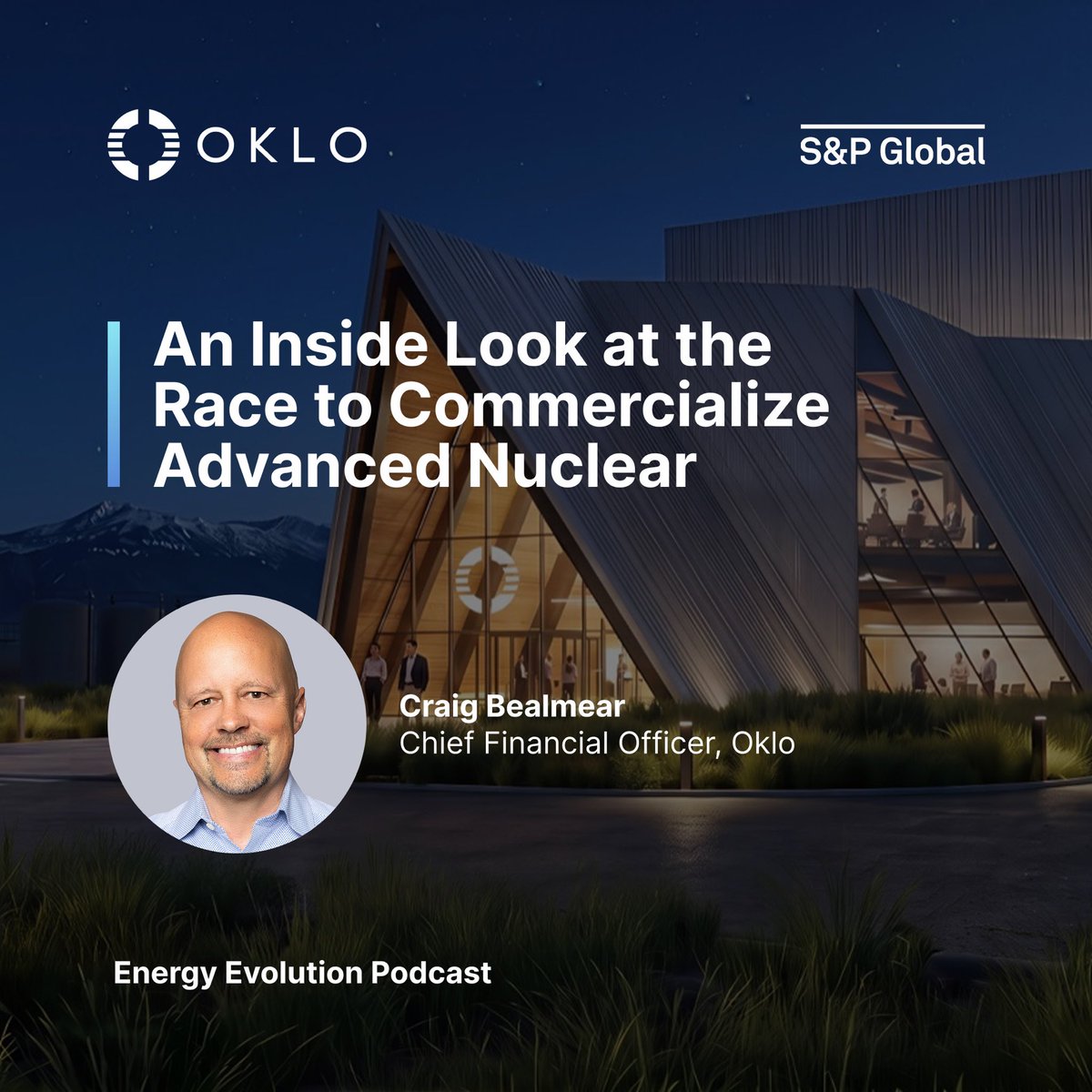
On @SPGlobal’s Energy Evolution podcast, Oklo CFO Craig Bealmear joined @AbbieRBennett to discuss how the opportunity for advanced nuclear has changed and why execution will determine which companies deliver.
Craig talks about Oklo’s Groves Isotope Test Reactor, which went from a greenfield site to criticality in less than a year, and gave Oklo concrete experience in construction, procurement, and bringing a nuclear facility into operation. Delivering electricity from our Aurora powerhouses will require applying many of those lessons from Groves, with fuel supply, construction capability, and supply chains central to our ability to deploy.
For those following Oklo’s long-term progress, Craig explains what we’ve accomplished and what we need to build for the next stage.
Listen to the conversation:
https://t.co/cnxf2jaQAJ
After building our Groves Isotope Test Reactor from the ground up and bringing it to criticality in less than a year, Oklo has been selected to advance Groves 2 Forge as part of the U.S. @ENERGY’s Nuclear Energy Launch Pad initiative.
Groves 2 Forge builds directly on what we learned at Groves. We plan to integrate isotope production and processing together in one facility with an initial focus on lutetium-177, an isotope used in targeted cancer treatments.
We are taking what we demonstrated at Groves and moving toward commercial-scale isotope production, while building the experience and infrastructure needed to strengthen domestic isotope supply.
Groves showed how quickly we can build. Groves 2 is about building on that momentum to produce materials that can make a meaningful difference in people’s lives.
Learn more:
https://t.co/REBogcuWYE
Ohio has a proud legacy of manufacturing, innovation, and building the infrastructure that powers America. We're thrilled to build on that foundation by partnering with @OhioState to help develop the talent that will carry it into the next era of nuclear energy.
Through $4.5 million in combined support, our partnership will help Ohio State launch a new undergraduate nuclear engineering major in fall 2027, while expanding hands-on learning, research facilities, faculty support, and student scholarships.
That includes expanding the university's Nuclear Reactor Laboratory and establishing the new Oklo Experiential Engineering Education Lab, giving students more opportunities to turn classroom learning into real-world engineering experience.
Building the next generation of nuclear energy means building the next generation of nuclear engineers alongside it. As we advance our plans for nuclear deployment in Ohio, we're proud to invest in the people who will help bring those plans to life.
Learn more:
https://t.co/4CP3h3TXT6
Today, @oklo announced a transformative gift to fuel the expansion of nuclear engineering education and research at Ohio State! https://t.co/NfVIklPijC