Today on NGBET
Codes - 79441, 79435
Not on NGBET
Sign up now 👉 https://t.co/nsQvOhHtsz
Use promo code “DUNS” to get up to 200% welcome bonus on your first deposit as a new customer
Bet Responsibly 🙏
PRESS STATEMENT:
NDC BOYCOTTS IGP'S SECURITY MEETING, CONDEMNS ESCALATING VIOLENCE AGAINST ITS MEMBERS
The Nigeria Democratic Congress (NDC) condemns in the strongest terms the spate of violence orchestrated against its members across the country.
Therefore, the NDC has decided to boycott the security meeting called by the Inspector General of Police. We no longer feel safe and protected by a Police Force that watches helplessly the slaughter of our members across the country by hired thugs of the ruling APC. We will not lend legitimacy to a process that has failed to protect us.
The violence against NDC members has become an intolerable pattern across the length and breadth of Nigeria.
From Benue State, where our Presidential Candidate, Mr. Peter Obi, was prevented from entering the state by thugs loyal to the APC government, to Edo, Calabar,Enugu and the incessant attacks on our members in Delta State, the political temperature is on the rise, with campaigns turned into a battlefield.
Politics and campaigns are not supposed to be war. However, the APC government has turned the campaign into a battlefield, where lives have become nasty, brutish and uncertain.
The situation is compounded by the complicity of the Police and security forces. The killing of four members of the NDC in Delta State was done in the full glare of the Police and security forces who were supposed to protect all Nigerians.
Presently, the Nigeria Police has become an APC Police sustained by taxpayers' money.
The NDC and its members no longer feel safe and protected by the Police and security agencies, due to the manifest bias shown by their inability to carry out a proper investigation and make those responsible for the violence face the full wrath of the law.
We call on the international community to compel President Bola Ahmed Tinubu and the APC government to play by internationally accepted democratic standards.
Democracy cannot survive where opposition members are hunted, attacked, and killed with impunity while state institutions look the other way.
The NDC remains committed to peaceful, issue-based campaigns, but we will not be intimidated, silenced, or chased out of the democratic space.
Signed:
Osa Director, Esq.
For Inquiries: @DirectorOsa
National Publicity Secretary
Nigeria Democratic Congress (NDC)
23rd November, 2026.
ANAMBRA STATE : ADVANCING EDUCATION, ENERGIZING INDUSTRY AND SHAPING A NEW NIGERIA
After returning from an official working visit to the United States of America, I arrived in Onitsha, Anambra State, yesterday, 20th November 2026, to continue our nationwide series of town hall meetings.
I began the day by visiting my alma mater, Christ the King College, Onitsha. Together with my friends, I am supporting the construction of a Teachers’ House to preserve the supportive teaching and learning environment for which the school is known. I commend the management and students of this distinguished institution for upholding its high standards.
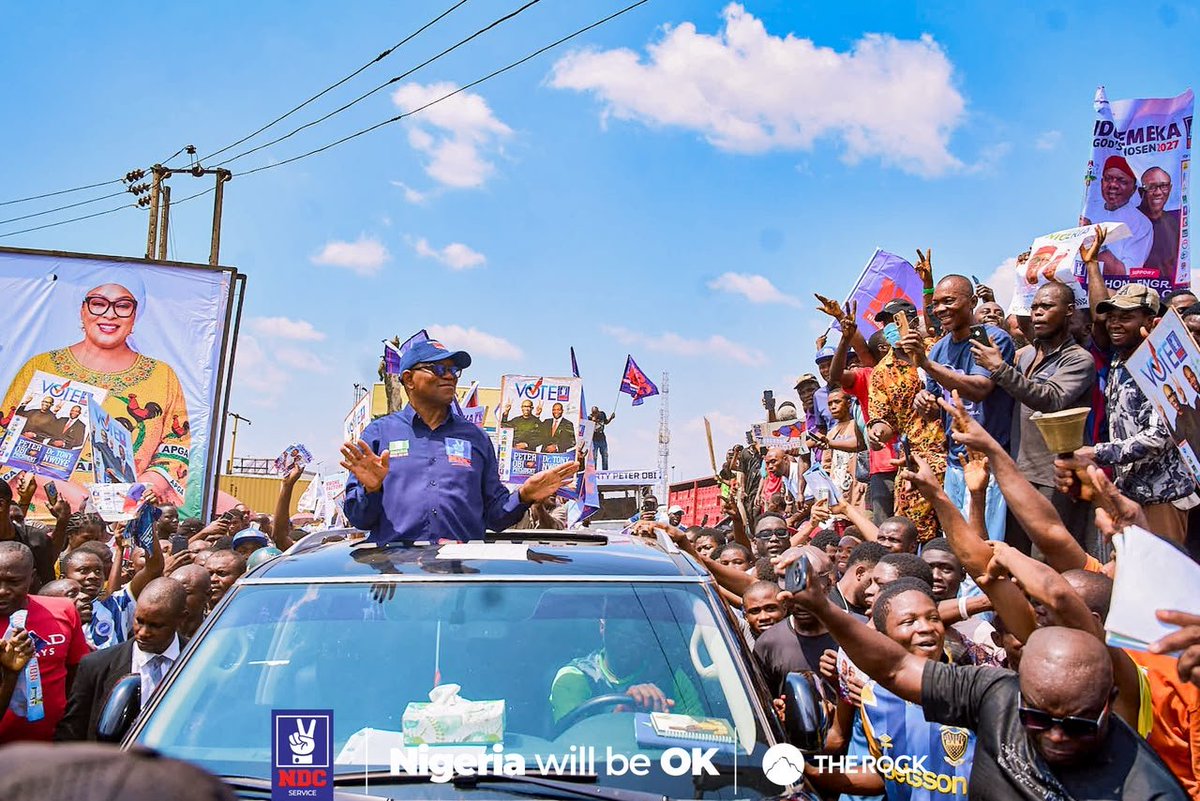
We then travelled through Head Bridge, Ochanja, and Main Market, engaging with workers, traders, drivers, and other hardworking Nigerians who are striving to earn a living despite the challenging economic conditions affecting the country.
At the Archbishop C. J. Patterson International Auditorium Complex, Onitsha, where our town hall meeting took place, I reaffirmed the commitment of His Excellency, Senator Rabiu Musa Kwankwaso, and me to promoting national unity and taking decisive action to address the insecurity affecting many parts of Nigeria.
I also assured our numerous supporters and well-wishers of our determination to generate, transmit, and distribute at least 10,000MW of electricity to drive production and revive the country’s major industrial centers.
We also underscored our key priorities, especially substantial investment in education through the construction of at least 40,000 additional classrooms and the recruitment of the necessary number of teachers nationwide to tackle the problem of out-of-school children.
In the healthcare sector, we are committed to building at least 10,000 fully operational primary healthcare centers, with at least one located in every ward nationwide, thereby reinforcing the foundation of healthcare delivery in Nigeria.
These initiatives, together with other purposeful investments and policies, will contribute to our efforts to expand productive capacity and lift our people out of poverty.
I express my gratitude to the good people of Anambra State for their warm welcome and hospitality. I also commend our party leaders and members for their continued commitment and hard work in advancing the ideals of our party and engaging with our supporters.
NDC ka’ ma!
A New Nigeria is POssible, and Nigeria will be OK!
-PO
As Chairman of the South-East Governors’ Forum for several years, I also encouraged cooperation among governors and security agencies across the region. We understood that criminal networks did not respect state boundaries; therefore, the response could not be confined to individual states.
Bello specifically acknowledged the contribution of this regional cooperation to the effort to dislodge notorious armed-robbery gangs from the South-East.
A SECURITY MODEL BUILT ON PARTNERSHIP
Our experience taught us that security is not achieved by government acting alone. It requires the cooperation of the police, military, intelligence agencies, paramilitary organisations, community vigilantes, traditional institutions and ordinary citizens.
We therefore promoted a system in which the security agencies were adequately equipped, communities were encouraged to provide useful intelligence, and government remained actively involved in supporting operations.
We also understood that the welfare and morale of security personnel mattered. Officers who were sent on dangerous assignments needed vehicles, fuel, communications equipment, operational allowances and the necessary infrastructure to perform their duties.
Our approach was not to interfere with the professional responsibilities of the security agencies but to give them the support required to discharge those responsibilities effectively. Security was not simply about purchasing equipment; it also involved building trust between the police and the people, encouraging intelligence-sharing, strengthening community participation and ensuring that criminal activities had consequences.
A NEW NIGERIA IS POSSIBLE: CONFRONTING NIGERIA’S SECURITY CRISIS
Today, insecurity is arguably Nigeria’s greatest challenge. From terrorism and banditry to kidnapping, armed robbery and communal violence, Nigerians are increasingly unable to live, travel, farm and conduct their businesses in safety. Communities are attacked, farmers driven from their lands, travellers abducted and innocent citizens killed.
This situation demands more than speeches, promises and occasional military operations. It requires deliberate leadership, adequate investment, effective intelligence-gathering and sustained collaboration among all security agencies.
Our experience in Anambra demonstrated that security challenges can be confronted through proper planning, institutional support and responsible leadership. We equipped the security agencies, strengthened their infrastructure, improved their operational capacity, encouraged community participation and promoted cooperation across state boundaries.
Nigeria needs the same seriousness of purpose. Our security agencies must be properly equipped, motivated and held accountable. Intelligence-gathering must improve, criminal networks and their sponsors must be dismantled, and federal, state and local governments must work together. We must also address the underlying social and economic conditions that make criminal recruitment possible.
We did not claim that every security challenge disappeared during our administration. What we demonstrated was that determined leadership and sustained institutional support could substantially improve the security situation. The testimonies of the Commissioners of Police who served in Anambra, the public assessments of the Inspector-General of Police, together with the investments and interventions documented here, provide evidence that can be independently verified.
Protecting lives and property is not a favour government does for its citizens; it is one of its most fundamental obligations. Nigerians deserve to live without fear and to pursue their livelihoods in safety. Our country can achieve this if we make security a genuine national priority and match our commitments with action.
A New Nigeria is POssible.
In Series 7, we shall look at Poverty Alleviation. -PO
NIGERIANS, GO AND VERIFY (6)
SECURING LIVES AND PROPERTY: PARTNERSHIP WITH SECURITY AGENCIES
Peter Obi
In the preceding instalments, I explained how we approached governance under the Anambra Integrated Development Strategy (ANIDS), beginning with strengthening state institutions and investing in education and other critical sectors. Our conviction was that development must rest on strong institutions, capable human beings, and a secure environment.
No meaningful development can take place where lives and property are constantly under threat. Education, commerce, investment, and other productive activities can only flourish when people feel safe. This informed our approach to security. We understood that the responsibility of protecting lives and property could not be discharged through speeches and declarations alone. It required deliberate investment, effective coordination, and sustained partnership with the security agencies.
When we assumed office, Anambra faced serious security challenges. Armed robbery, bank attacks, kidnapping, and other violent criminal activities had created an atmosphere of fear. In 2006, I personally approached the then Inspector-General of Police, Mr Sunday Gabriel Ehindero, to seek urgent intervention. Following our appeal, the police authorities constituted a special team comprising experienced officers, including the late Haruna John, Alhaji Amusa Bello, and others, to confront the security challenges in the state.
We therefore made security a major priority of our administration, recognising that government must provide both the leadership and the resources required to enable security agencies to perform their duties.
EQUIPPING THE SECURITY AGENCIES
We believed that those entrusted with protecting our people must be adequately equipped. Accordingly, our administration, using funds from the security votes, provided over 600 patrol vehicles to various security agencies, including the Police, Army, Civil Defence, Customs, Immigration, NDLEA, Road Safety, Prisons, SSS, Navy, and community vigilante organisations.
Our support went beyond vehicles. We provided Armoured Personnel Carriers (APCs), armoured Hilux patrol vans, communication gadgets, repeater and linker stations, base stations, mobile vehicular radios, walkie-talkies, generators, and other logistical requirements. We also used the same security votes to provide financial support for their operations, including fuel, weekly allowances, and other essential needs of security personnel.
We paid particular attention to community security because we understood that effective policing must have a strong local presence. Again, using funds from the security votes, we provided billions of naira to the 177 communities in Anambra State to strengthen security in their respective areas. We directed traditional rulers and town union presidents to establish vigilante groups under police supervision, with the police providing uniforms for proper identification. We also contributed towards the payment of their salaries.
Additionally, we provided 250 patrol vehicles to communities across Anambra State. These vehicles were manufactured by Innoson Vehicle Manufacturing Company in Nnewi. Some towns received more than one, depending on their size and security needs. This initiative was also extended to universities and other large institutions in the state.
We also recognised that markets were particularly vulnerable because of the volume of commercial activities and the large number of people who visited them daily. Thus, in March 2014, we presented security vehicles to major markets in Onitsha and its environs. The beneficiaries included Bridge Head Market, Ogboefere Market, Building Materials Market, Ogidi, Onitsha Main Market, Marine Modern Market, Ogbaru Main Market, Ose Okwodu Market, Electronics Market, and the Amalgamated Market Traders Association.
WASHINGTON, DC : PRESENTING NIGERIA’S DEVELOPMENT AND DEMOCRATIC FUTURE ON THE GLOBAL STAGE.
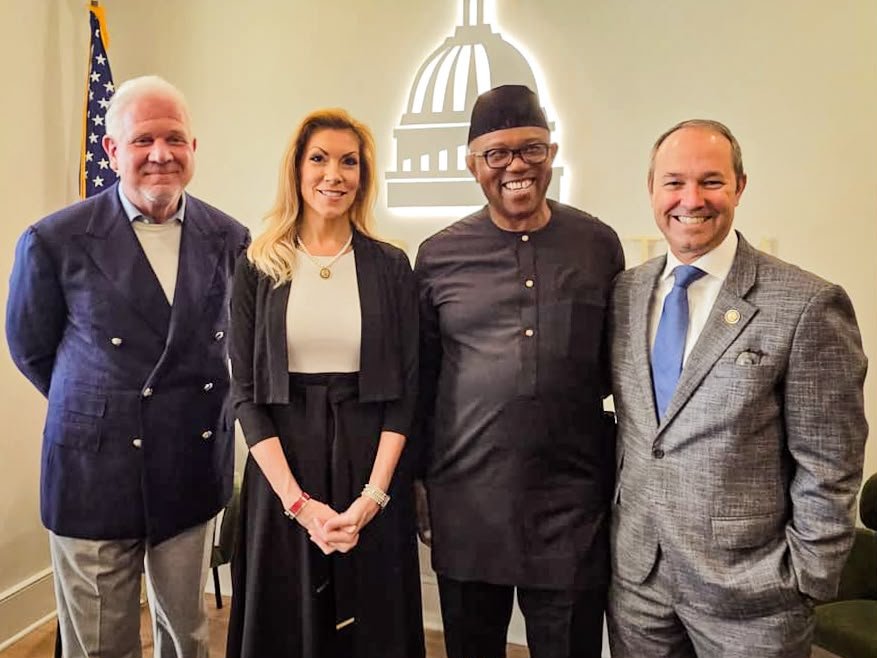
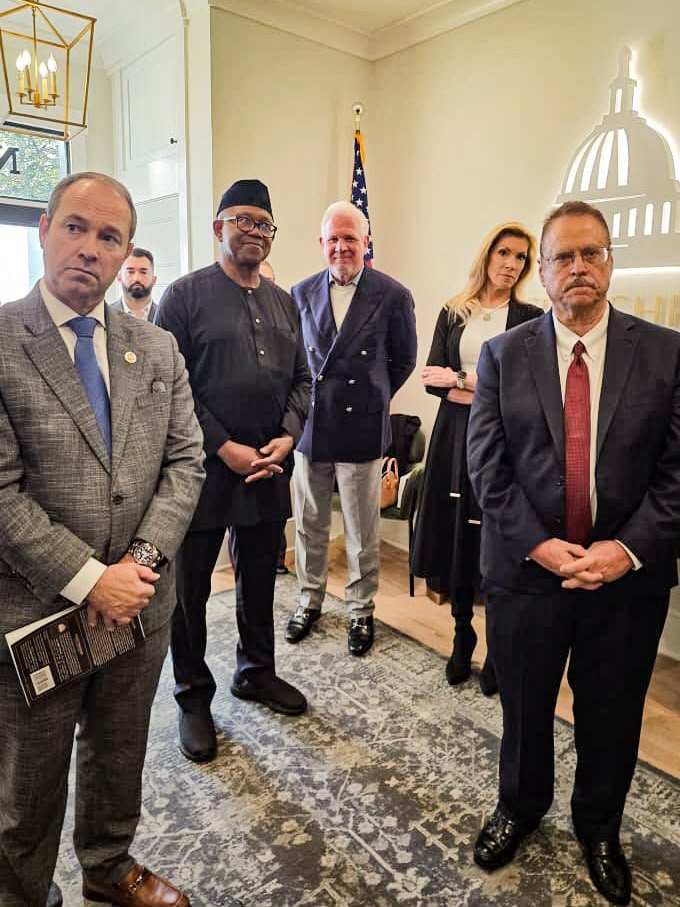
Yesterday, Monday, November 16, I arrived in Washington, DC, for a series of significant meetings and engagements with congressional leaders from both the U.S. House of Representatives and the Senate, as well as other influential American figures. These discussions focused on vital matters affecting Nigeria’s development, the well-being of our people, and the future of our democracy.
I began the day with a substantive interview with renowned American television commentator Glenn Beck. Our conversation addressed Nigeria’s challenges, the pressing need for accountable leadership, the responsible management of our vast human and natural resources, and the opportunities to establish Nigeria among the world’s leading nations.
I also met with prominent American leaders, including Congressman Marlin Stutzman, Congresswoman Beth Van Duyne, Congressman Todd Tiahrt, Suzanne Bock Grisham, retired U.S. Army Colonel Albert V. Short, and other esteemed stakeholders.
One of the day’s principal highlights was my address on Capitol Hill, during which I underscored the urgent importance of international cooperation and support for Nigeria’s advancement, particularly in the areas of national unity, security, economic prosperity, and the welfare of our citizens.
Our conversations also addressed the protection of Nigeria’s emerging democracy and the strengthening of democratic institutions to ensure elections are free, fair, transparent, and credible, accurately reflecting the will of the Nigerian people.
Nigeria has immense potential to emerge as a leading nation within the global community. What is urgently required is accountable leadership, responsible stewardship of our resources, resilient institutions, and an authentic commitment to the security, unity, and well-being of every Nigerian.
Throughout these engagements, my message remained unequivocal: Nigerians must determine Nigeria’s future. Every vote must be counted, the rights of every citizen must be safeguarded, and the people’s will must consistently prevail.
I remain encouraged by these engagements and firmly committed to working with Nigerians at home and in the diaspora, alongside our international partners, to build a peaceful, secure, united, and prosperous Nigeria.
Our journey continues. Our determination remains steadfast.
A New Nigeria is POssible! -PO
NIGERIANS, GO AND VERIFY (2)
Building the Institutions of the State
Peter Obi
In Series 1, I explained the philosophy that guided our administration in Anambra State: governance as a public trust, anchored on character, competence, capacity, and compassion. I also introduced the Anambra Integrated Development Strategy (ANIDS), our comprehensive framework for achieving balanced and sustainable development across all sectors.
But a development vision, however noble, cannot succeed without strong institutions to drive it. Before the government could effectively deliver on its promises in education, healthcare, infrastructure, security, and other sectors, we had to first restore the machinery of government itself. We could not build a prosperous state on a cracked and unstable foundation.
This was why one of our foremost priorities under ANIDS was to rebuild, strengthen, and reposition the institutions of government. When I assumed office, the physical and administrative architecture of governance was in a deplorable condition. Our task was not simply to construct buildings but to restore the institutions, systems, and structures through which government could function effectively.
We therefore began systematically rebuilding the infrastructure of governance across the executive, legislature, judiciary, civil service, and local government system.
Restoring the Seat of Government
The Government House in Awka, the state capital, had been vandalised and burnt by reactionary forces in 2004. We therefore had to rebuild, re-equip, and furnish it, restoring its dignity and functionality as the seat of executive government.
In the same vein, we rehabilitated the Governor’s Lodge in Amawbia and constructed a new Governor’s Lodge in Onitsha. These investments were intended not merely to provide accommodation but to strengthen executive presence and facilitate effective governance across the state’s major administrative and commercial centres.
Strengthening the Legislature and Judiciary
We rehabilitated the Anambra State House of Assembly Complex in Awka, providing our lawmakers with a more conducive and decorous environment in which to discharge their constitutional responsibilities. We also provided legislators with vehicles to facilitate the effective performance of their legislative duties.
We recognised that a functioning democracy requires strong institutions, including an effective legislature and an independent judiciary, each operating within its constitutional mandate.
In strengthening the judiciary, we provided brand-new vehicles to High Court judges. This was the first time such provision had been made for them in the history of the state. We also provided vehicles to magistrates for the first time since the creation of Anambra State.
These interventions were intended to strengthen the administration of justice, improve mobility, and enable judicial officers to discharge their responsibilities more effectively.
Rebuilding the Civil Service: The Chief Jerome Udoji State Secretariat Complex
Before our administration, many Ministries, Departments, and Agencies (MDAs) operated from scattered rented apartments, while civil servants lacked a centralised and decent working environment. This untidy arrangement undermined coordination, efficiency, and the dignity of public service.
We addressed this situation by constructing the two-phase, ultra-modern Chief Jerome Udoji State Secretariat Complex, comprising Blocks 1 and 2. The project brought the MDAs together under one roof, improved administrative coordination, and provided civil servants with a more suitable environment in which to serve the people.
The complex was named after Chief Jerome Udoji, the first indigenous Chief Secretary (the equivalent of today’s Secretary to the State Government) of the Eastern Region during the First Republic. This was also a recognition of his contribution to public administration and the civil service tradition.
NIGERIANS, GO AND VERIFY (1)
Introduction: Governance as a Public Trust
Peter Obi
When I took office as Governor of Anambra State, our beloved state was at a critical juncture. Leadership had become increasingly disconnected from the people, and many of the essential institutions needed to support a modern society were weak, ineffective, or absent altogether. We understood that governance could not continue according to established habits. It needed to be reconceived as a solemn public trust founded on transparency, prudence, accountability, and demonstrable results.
Our governing philosophy rested on four principles: character, competence, capacity, and compassion. We understood that leadership was not a platform for self-promotion, political slogans, or the pursuit of personal acclaim. Its purpose was to improve the circumstances of ordinary citizens. It meant converting public resources into concrete benefits and ensuring that government’s foremost responsibility was to serve the people. Achieving this demanded more than good intentions; it required a clear vision, careful planning, and disciplined execution.
Among our earliest findings was that the state lacked a unified development plan to direct its priorities and determine how resources should be allocated. We therefore promptly created the Ministry of Economic Planning to establish the institutional foundation for deliberate, coordinated, and sustainable development. After completing the necessary groundwork and consultations, we launched the Anambra Integrated Development Strategy (ANIDS).
At that time, the Millennium Development Goals (MDGs) were being pursued worldwide across eight clearly defined priorities: eliminating extreme poverty and hunger; achieving universal primary education; advancing gender equality and empowering women; reducing child mortality; improving maternal health; combating HIV/AIDS, malaria and other diseases; promoting environmental sustainability; and fostering a global partnership for development.
We adopted ANIDS as our overarching development philosophy and strategic framework for advancing these objectives, tailoring them to the distinctive circumstances, needs and development priorities of Anambra State. Instead of viewing the MDGs as remote international benchmarks, we worked to convert their aims into practical policies, programs and measurable results that would produce tangible improvements in the lives of our people.
We also undertook a deliberate effort to redefine the state’s identity, changing its public image from ‘Home for All’ to ‘The Light of the Nation’. This was not merely a change in slogan; it reflected our resolve to restore public confidence in government, renew civic pride and show that Anambra could serve as a model of purposeful leadership and development.
The ANIDS Blueprint: A Comprehensive Framework for Development
ANIDS served as the foundation for our commitment to broad-based and balanced development. We did not accept the idea that government could focus on a single sector while leaving others behind. We recognized that education, healthcare, infrastructure, security, agriculture and capable public institutions were mutually dependent. Advancement in one area could not be sustained without commensurate progress elsewhere. Accordingly, we pursued development across every sector, guided by defined priorities, disciplined planning and prudent stewardship of public resources.
Central to this vision was the restoration of the dignity of the Anambra person. We understood that dignity could not be restored through rhetoric alone. It was evident in the condition of roads and other infrastructure, the availability of healthcare, the quality of education, the performance of public institutions and the way government treated its workers, pensioners and traditional institutions.
Let’s even say we all want to be tribal bigots together.
Tinubu failed ( A Yoruba man)
We are left with 2 competent people . An Igbo man ( Peter Obi) and another Yoruba man( Seyi makinde) but somehow you want yet another Yoruba man to take over?
Regardless of how you spin this thing. It simply doesn’t make sense.
It is no longer even about bigotry it is simply genuine hatred for the Igbo race.