Spent the last few weeks building a tool I originally needed for myself.
@soothsay_io
Think Hemingway, but for AI visibility.
- Paste an article.
- Get an audit for:
• LLMEO
• SEO
• Readability
• Originality
The question I’m trying to answer:
Why do some articles get surfaced by ChatGPT, Claude, Gemini, and Perplexity while others don’t?
Ps. It’s alive.
https://t.co/MwIxFc7skO
Try it. Break it. Tell me what sucks.
Sui Is Not the Next Solana: Why Evan Cheng Left Facebook to Build the Blockchain That Works
Evan Cheng sat down with me on the 125th episode of When Shift Happens to unpack a bold ambition: fixing the broken foundation of the crypto world.
As the co-founder and CEO of @Mysten_Labs, the team behind the @SuiNetwork, @EvanWeb3 left a comfortable role at Facebook at age 50 to build what no one else in the blockchain space had managed: infrastructure that actually works for users and businesses.
In this deeply personal and technical conversation, he reflects on the failures of decentralisation, lessons from Libra, and what it really means to start over, later in life, with conviction.
The Failure of Decentralisation
From the outset, Evan is blunt: “Nothing in this space has won.” Despite the hype, the crypto world has consistently failed to deliver on the promise of decentralisation. Projects either collapse under their own complexity or fall back into centralised control—something Evan has witnessed first-hand. “Every mistake you make in infrastructure makes it very convenient to fall back to centralisation,” he says.
He calls out Ethereum as a case study in this regression: “Where are most things happening? On Base. And they don’t even pretend it’s decentralised.” For Evan, the issue isn’t decentralisation as a concept, it’s the flawed infrastructure that makes decentralisation practically unworkable. Users often fall back to centralised exchanges and services because current systems are too slow, fragile, or costly to trust.
“What people forget is that when someone builds a product, it becomes a business,” Evan explains. “And if it’s a business, it needs to be profitable. That’s why the ideal isn’t really working.”
Leaving Facebook to Start Over at 50
Most people see their 50s as a time to slow down. Not Evan Cheng.
After leading Facebook’s now-defunct crypto project, Libra (later Novi), Evan realised meaningful change would require stepping away from big tech. “It’s very difficult to change people’s minds in a big company,” he recalls.
By the time Libra was shut down and Novi merged with other teams, Evan had already decided it was time to leave. He departed with no product, no protocol design, and no certainty, only a vision. “We felt like if we didn’t do it, no one would,” he says. Together with four co-founders, most of whom had worked with him at Meta, Evan launched Mysten Labs to build the infrastructure crypto needed.
He also started his first company at 51. “Clearly it’s not too late to start,” he says, especially not in crypto, a space typically dominated by twenty-somethings. The bigger challenge was on the personal front. “There’s a lot of sacrifice,” he admits. From predictable routines to a life of chaos, family, travel, and social responsibilities, everything changed. “My friends thought I’d gone to the dark side,” he laughs.
Even his wife needed convincing. Evan didn’t negotiate; he built credibility. “I had to prove myself again." Everything from raising funds, building a team, to launching products was about earning that trust and showing progress.
Mysten Labs and the Power of First Principles
Evan isn’t interested in iterating on the past. “We’re not building a better Solana,” he insists. “We’re identifying the problem, then building the solution.” Sui is not an EVM-compatible chain. It uses the Move programming language, supports composable on-chain data, and includes tools like zkLogin for easier onboarding.
What makes Sui unique, Evan says, is that it brings together design, engineering, and user needs all at once. “It’s all of the above. People fail to understand that. It’s not just engineering, it’s design.”
Mysten’s five co-founders didn’t set out with titles and rigid job descriptions. They just started working. “We never argued about who owns what,” Evan says. “We trusted each other, and that trust came from having built things together before.”
Their previous experience together at Meta forged mutual trust, and a clear articulation of each founder’s role helped get VCs on board, despite conventional wisdom advising against funding teams that large.
Even defining what Mysten Labs is remains open-ended. “The company’s mission is to enable business transformation through decentralisation,” Evan explains, “but I don’t want to say anything that limits our potential.”
A Culture of Agency and Trust
One of Evan’s deepest convictions is about agency. Mysten was built for high-agency people, the kind who don’t wait for permission to act.
This approach stems from frustration with big tech’s bureaucracy. “Most people want to do the right thing. But big companies beat that instinct out of you.” At Mysten, the team removes those frictions. Decisions are made by those closest to the problem, guided by data, capability, mutual trust, and overall alignment.
Even among the five co-founders, conflict is navigated with the shared understanding that the relationship comes first. “If you approach conflict knowing you’ll find a path forward, you handle it differently,” Evan says.
What the Future Holds
When asked if he feels like he’s made it, Evan laughs. “We had a t-shirt that said: ‘One year done. 1% solved.’ And honestly, I think we’ll always be at 1%.” For him, the journey is about constant iteration. But that doesn’t mean progress isn’t happening. Sui has already attracted users, partners, and real businesses building on its tech. “We’re seeing people use Sui not just because it exists, but because it works.”
He believes that in 24 months, people will look back and realise their imagination was too small. “The impact is orders of magnitude bigger than what we can see now.”
So what does success look like to Evan? It’s not a coin price or a killer app. It’s feeling free. “I’m happy when I’m doing what I want to do, surrounded by people I respect and trust. That’s everything.”
Final Thoughts
Evan Cheng’s journey is a rare combination of technical brilliance, existential reflection, and unshakeable conviction. This episode isn’t just about a blockchain; it’s about what happens when someone refuses to accept compromise, even late in life.
Whether you’re a builder, founder, or sceptic, there’s something vital in this conversation about what crypto could, and still might, become.
����If you enjoyed reading the summary, head over to When Shift Happens on YouTube or your favorite podcast platform to access the full convo.
The Sui Overflow 2025 shortlisting results are IN 🛠️🌊
Out of nearly 600 projects and 3,000 builders, the top teams are headed to Demo Day!
Expect bangers only.
Meet the shortlisted projects 👇
https://t.co/V6nGq7Cuud
@FroncKacper @mattpocockuk Syntax should be easy to understand, but like he said, this is pretty niche.
And it has it's uses, however scarce they may be.
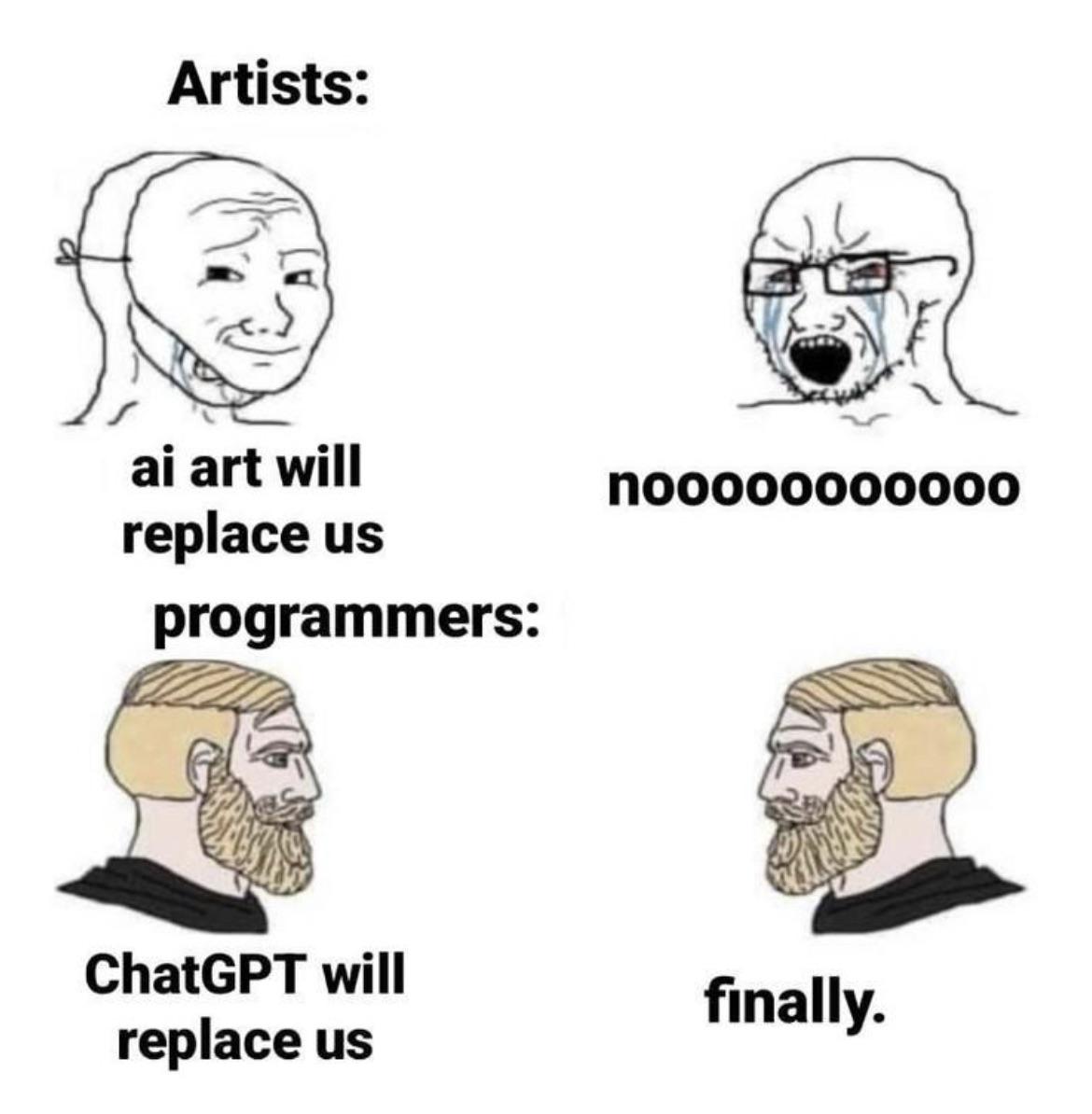
It’s funny when people say “AI coding tools suck”
Bro, just two years ago, we had to scavenge code on blogs like dumpster divers or be humiliated posting stack overflow questions.
Now we just type some nonsense like “make react card w/ talwind, blue bg, typescrp” and it throws a century of programming knowledge into a blender, hits margarita, and gives us code that almost doesn't suck. Pure magic.
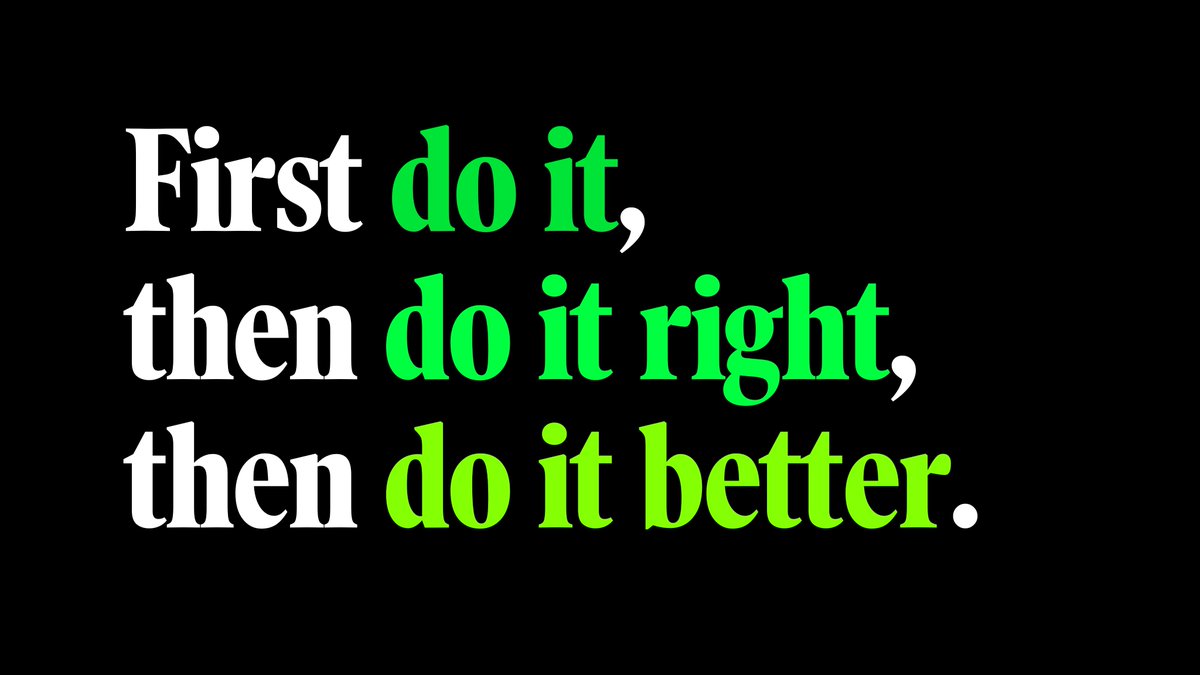
"First do it, then do it right, then do it better."
Just start. The journey to success often begins with a single step, but that first step can be the hardest to take. It's easy to get caught up in the fear of failure or the desire for perfection, but I hope this quote I first shared in 2013 can be a reminder of the importance of simply getting started as we go into 2024.
Just Start Somewhere
"Start slow if you have to. Start small if you have to. Start privately if you have to. Just start." - James Clear
Taking that first step doesn't require perfection or immediate mastery. The key is to overcome inertia and take action, as this action will lead to progress, learning, and (if you’re lucky and consistent) ultimately success.
When you start, you allow yourself the opportunity to grow, adapt, and move forward.
The Power of Starting
Beginning a new project or habit often feels daunting. According to psychologists, we tend to overestimate the pain of starting and underestimate our ability to persist.
However, studies show that "small starts" predict eventual success better than initial enthusiasm or early progress. This phenomenon is known as the fresh start effect - taking the first step energizes us and bolsters motivation.
So focus on starting without putting pressure on perfection. Progress and course corrections will follow.
First, Do It: Embrace the MVP Mindset
Doing it = get the simplest MVP out.
A Minimum Viable Product (MVP) represents the simplest version of a product or idea that allows you to test, gather feedback, and iterate.
By embracing this mindset (just get something done - it's OK if rough, a prototype, a draft), you focus on progress over perfection, understanding that getting something out into the world is far more valuable than waiting for the perfect moment.
Expand Your Comfort Zone
Venturing outside one's comfort zone can elicit fears of failure. Leaning into discomfort not only builds confidence and skills, but research shows it makes us more receptive to learning. Recognize that fear is often the mind's way of urging us to grow. Don't let it stop you from progressing.
Then, Do It Right: Refine and Correct
Doing it right = fix correctness issues.
Once you've taken that first step and put your MVP out into the world, it's time to refine and correct. This stage is about learning from feedback, identifying areas of improvement, and making adjustments accordingly.
It's a chance to iterate on your idea, ensuring that it meets the needs of your audience or customers while aligning with your vision.
Cultivate Curiosity and Resilience
Meeting new challenges with curiosity and resilience makes venturing outside our comfort zone more sustainable and enjoyable. Cultivate curiosity about growth opportunities and your capacity to rise to them. Set mini-challenges to incrementally expand your horizons.
When facing inevitable setbacks, avoid self-criticism and tap into resilience - the ability to recover, learn and continue progressing.
Self-compassion, adaptability and maintaining perspective are key here. With consistent effort, you build confidence in your ability to start, stumble, learn and work toward mastery.
Finally, Do It Better: Strive for Continuous Improvement
"Doing it better = iterate towards an ideal end-state (e.g., make it fast)."
The journey doesn't end with merely doing it right.
The final step is to continuously improve, striving for excellence and growth.
By iterating towards an ideal end-state, you demonstrate a commitment to progress, ensuring that your product, idea, or project remains relevant, innovative, and successful.
Set New Goalposts
As you improve, have a clear idea of when you are “done” or update your goalposts. Elite athletes turn small gains into competitive edges via the aggregation of marginal gains. Identify areas of potential improvement and set measurable stretch goals, from increasing efficiency to enhancing user delight.
Overcoming the Greatest Barrier to Progress
"The greatest barrier to progress is not lack of resources or talent, but fear of failure."
Recognizing that fear of failure is the most significant obstacle in the pursuit of success allows you to confront it head-on.
By acknowledging this fear, you can focus on taking that first step, knowing that once the ball starts rolling, it becomes much easier to keep it in motion.
Remember that starting is more than half the battle. Don't wait until you feel ready, because the perfect moment may never come.
The Bottom Line
Rather than striving for perfect execution, embrace the power of starting - put forth an MVP, soft launch an initiative, or set a milestone. Progress begets motivation. By simply starting, you open the door to growth and innovation. The rest will follow.
Embrace the power of starting and then iterating until you're happy.
My 10 cents on this hot debate.
Bootstrappers say: you don’t need to pay for all these tools, it’s all bulshit and scam. Those startups raise $300m, bribe all YouTubers and influencers to post good stuff about them and convince office clerks that it’s “cool boys” who use it.
VC backed say: don’t reinvent the wheel, but instead buy each tools, sdk, api, module from those who put years into building just this one thing and make it nearly perfect.
What I say: use free or cheap plans when you’re in MVP stage, because it saves you time.
The chance that you’ll suddenly get huge traffic and have to pay vercel $37393 is maybe 0.0001%. The reality is that almost all project you launch will fail, so better fail faster.
Once one of your project finally gets traction, you can refactor the code and redo the whole thing.
I’ve done it in @unicornplatform where it relied on maybe 20 third party vendors and when I started getting 10k new users every week the costs went through the roof. I’ve spent some time refactoring the code and infra and dropped 90% of theirs party vendors and moved to hetzner and cut costs 90%.
But if I started this way, I’d be solving the problem that doesn’t exist yet and maybe because I waste time on it I’d spend less on product and fail.
So there is no 0 or 1.
Never go into extremes.
Be wise per stage you’re at.