As a small, student-centered department, students receive access to scholarships, opportunities for internships and one-on-one research experiences. #okstate
Dr. Phillip Mulder was elected as an ESA Fellow! 🎉
Dr. Mulder and his team grew the undergraduate program at @okstate from less than five students to nearly 70 students, recruiting double-digit enrollment for the past seven years.
🔗: https://t.co/IqXNs006sO via @EntsocAmerica
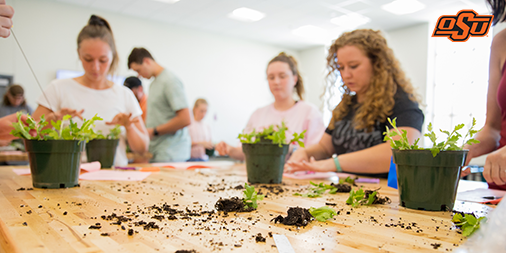
In addition to six greenhouses — including an isolated entomology greenhouse — the @GreenleafNrsy Head House includes a modern classroom with plant prep areas where students can gain hands-on experience.
Today we celebrate the grand opening of the Greenhouse Learning Center! 🌱🎉🌱
This $6 million facility will serve students in multiple disciplines in CASNR including @OKstateHORTLA, @osu_aecl, @OSUplantsoilsci, natural resource ecology and management, and @okstate_epp.
Thanks for sharing, First Lady!
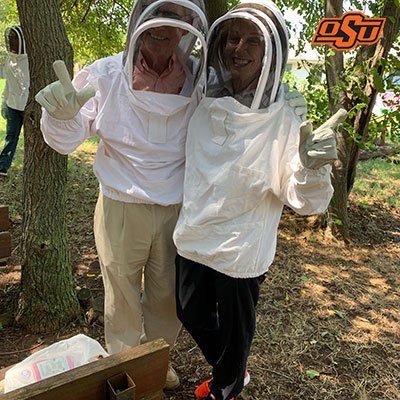
"@okstate is helping spread the word about insects, by getting students involved, and by conducting research and citizen science project."
📸: @OSUFirstCowgirl & @burnshargis
Sampling for Sorghum Headworms Using the Headworm Decision Support System
🔗: https://t.co/ondWb1FAPF
✍️: Tom A. Royer, @okstate Cooperative Extension entomologist
✍️: Norman C. Elliott, research entomologist, @USDA, ARS
✍️: Kristopher L. Giles, #okstate entomology professor
Vesicular Stomatitis Virus (VSV) has been confirmed in a horse in Tillman County, Oklahoma. This is a viral disease that is an economically important disease of cattle and horses but can infect all cloven hoofed animals.
Learn more, here: https://t.co/R8xzR7AIyR
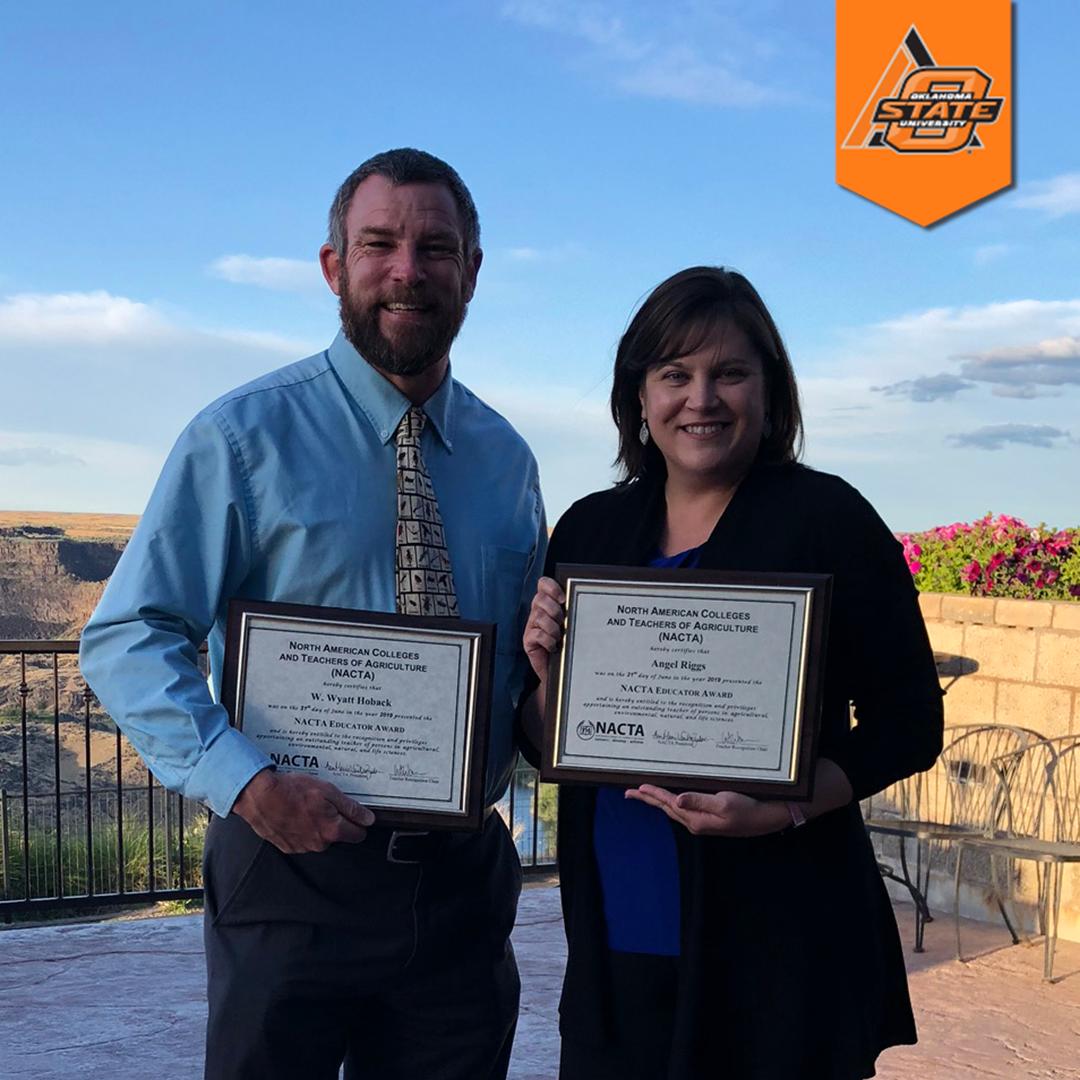
Well deserved! 👏 Dr. Wyatt Hoback, @okstate_epp professor, and Dr. Angel Riggs, @OSU_AECL professor, recently received the @NACTATeachers Educator Award!
Q: How do you manage flies and mosquitos around cattle and 🐴s to prevent the spread of diseases? 🤔
A: Find out below with Dr. Justin Talley, @okstate Cooperative Extension livestock entomologist.
📺: @SUNUPtv
https://t.co/ITqLYVG4Hb
We encourage growers to inspect their fields once a week. When aphids are detected in a field, increase sampling to two times per week. Look at three consecutive plants and examine one upper and one lower 🌱on each plant.
Read the @okstate e-pest alert: https://t.co/rhIsrsB84i
Home gardeners may be concerned that their plants are suffering from Ramorum blight or SOD. At this time, new rhododendron plants purchased at Home Depot or Walmart from February-June 2019 are the only effected.
Read the @okstate e-pest alert, here: https://t.co/bBWydVdjAI
Make sure to join us for the Pecan Crop Loading Thinning Field Day!
📆: August 1
⏰: 2:30 p.m.
📍: Cimarron Valley Research Station
https://t.co/LYwVBPEEAb
Heavy feeding by Potato Leafhoppers causes the entire alfalfa leaf to turn yellow and heavily infested fields take on a yellow color, even from a distance.
Read the @okstate e-pest alert, here: https://t.co/76PfiO9Rez
Crapemyrtle bark scale diminishes the appearance of infested trees and shrubs by depositing honeydew on the branches and foliage, which encourages the growth of black sooty mold.
Read the @okstate e-pest alert, here: https://t.co/UJoU2OCqgc
Dr. Tom Royer, @okstate Cooperative Extension entomologist and IPM coordinator, has advice for producers as summer crops mature.
📺: @SUNUPtv
https://t.co/hA5badYLCX
Most pecan insects should be reported as the number per nut cluster or per tree. In the early season, the pecan nut case-bearer should be reported as the number of eggs or larvae per 100 clusters.
https://t.co/zz5VY4HsAp
Abundant rainfall has produced some high-quality 🍅 plants this year, and
hornworms and pinworms will reap the rewards if you’re not monitoring for them. #GardenTips
Learn more from this @okstate e-pest alert: https://t.co/33TbqvZ1pT
A number of serious fungal, bacterial, nematode, and viral diseases are common to stone fruits and should be of concern to all growers. Learn more, below! ⬇️
https://t.co/3pkVj1Rms9
Up until adult emergence in early June, intensive shallow cultivation of soil may destroy pupae. This is the only cultural management strategy for grape rootworm, & there are no known natural enemies that attack this pest.
Read the @okstate e-pest alert: https://t.co/EhMk2UvkMe
Grape rootworms were found in large numbers feeding on grape leaves. This
insect pest had not been seen in the Perkins vineyard since June 2008, and the sheer number of adult beetles encountered was alarming.
Read the full @okstate e-pest alert, here: https://t.co/EhMk2UvkMe