What else does Onana need to do to be dropped for crying out loud!!! Singlehandedly got us out of CL in his first season and possibly might prevent us from making CL in his last season (I hope).Matic definitely has a point! #BBCFootball#Onana#ManUtd
@samuelluckhurst So if they knew the players were selected and bought specifically for a style of play, why then hire a coach with a completely different style of play, mid-season? Inept leadership! Thought Ineos were supposed to be better!
I have been wondering how people can compound assets locally and the more I think about it, the more I go back to retail. Someone here mentioned that if you invest in things people must do or use at least twice a day in Nigeria, you will never be poor. I thought of toilet paper.
A CALL FOR APPLICATION!!!
NITDA/COURSERA Scholarship Programme: Cohort 3
Application Start date: 24th january 2024, and the training programme will kickoff on February 10th, 2024
Hurry up and apply now, and don't miss out on this incredible opportunity.
Application link https://t.co/mmEylsbGS3
🔴 Ten Hag: “We were dominant, but we didn’t score. We were in total control in and out of possession”.
“We gave them nothing until the 72nd minute when we switched off”.
🔴 Ten Hag on Varane starting: “You see that we need strong defending today”.
“He is very experienced, and especially against Bayern, we need to defend very strongly”, told TNT.
A MATTER OF PRINCIPLE
by Muhammadu Buhari
RARELY in modern times can so few have tried to take so much from so many. If Nigeria had lost its arbitration dispute with Process & Industrial Development in a London court on 23 October, it would have cost our people close to USD15 billion.
We won, and all decent people can sleep easier as a result. Justice Robin Knowles said Nigeria had been the victim of a monstrous fraud. But it was a close-run thing. As the judge said: “I end the case acutely conscious of how readily the outcome could have been different, and of the enormous resources ultimately required from Nigeria as the successful party to make good its challenge.”
But ordinary Nigerians never took the decisions that ended up before Justice Knowles. Had Nigeria lost, it would have required schools not to be built, nurses not to be trained and roads not to repaired, on an epic scale, to pay a handful of contractors, lawyers and their allies - for a project that never broke ground.
How did it get to this point? How did Nigeria prevail? Was this a one-off, or par for a shabby and distasteful course? What are the lessons for the future?
The ‘P&ID Affair’ was already firmly set by the time I came into office in 2015. A company registered in the British Virgin Islands that no one had heard of, with hardly any staff or assets, had won a contract to build a gas processing plant in Cross Rivers. The company was owned by Irish intermediaries who knew Nigeria well and had done business in everything from healthcare to fixing tanks.
The previous government could not supply the gas. The plant was never built. Construction was not started. P&ID did not even buy the land for the facility. But the contract, incredibly, was clear: P&ID could sue Nigeria, and claim all the profits it might have made over 20 years as if everything had been completed.
Nigeria was in court in London, trying to talk down liability and costs. Back at home, fixers were looking to work out a quiet settlement. This is often the way. A lot of contracts end up in dispute. P&ID won a settlement in 2017 of USD6 billion, with compound interest. People, including out of work ex-British Cabinet Minister Priti Patel, were queuing up to insist we paid, or risk Nigeria becoming an untrustworthy trade pariah.
It was clear that far from the whole story had been told. I tasked Abba Kyari, my chief- of-staff and Attorney General of the Federation, Abubakar Malami, with finding a way, even at that late stage and despite so much conflicting advice, to get us a fair hearing. Working with a number of different agencies and senior officials of government, we began to find a huge amount of evidence, not all of which Justice Knowles was to accept. But he agreed that P&ID had paid bribes. He agreed that one of P&ID’s founders had committed perjury. And he agreed that P&ID had somehow found in its possession a steady supply of Nigeria’s privileged internal legal documents, outlining our plans, strategies and problems.
My own view is that this whole, sorry affair shows how important it is to follow the legal process in resolving a dispute. It shows that given time and opportunity for each side to present their case, the temple of justice can satisfactorily resolve all disputes without resort to extra-judicial measures. It was definitely worth the struggle: this was an attempted heist of historic proportions, an attempt to steal from the treasury a third of Nigeria’s foreign reserves.
But even at this moment, we should note what the English judge cautioned. The arbitration process in London “was a shell that got nowhere near the truth.” We need better contracts, in the public and private sector. And we need greater transparency: the reality is that, had P&ID not conjured up quite such an outlandish ransom, they may have found themselves in the same place as the myriad other invisible contractors who all too often quietly take Nigeria for many millions in out of court settlements. Sterner sanctions are indicated for Nigerian public officials who have been proven to connive with foreign criminals to defraud our country.
Nigeria has won this battle with corruption, but the war is far from over. As Justice Knowles concluded: “This case has also, sadly, brought together a combination of examples of what some individuals will do for money. Driven by greed and prepared to use corruption; giving no thought to what their enrichment would mean in terms of harm for others. Others that in the present case include the people of Nigeria, already let down in so many ways over the history of this matter by a number of individuals in politics and administration whose duty it was to serve them and protect them.” Well said.
Muhammadu Buhari served as President of the Federal Republic of Nigeria 2015-23
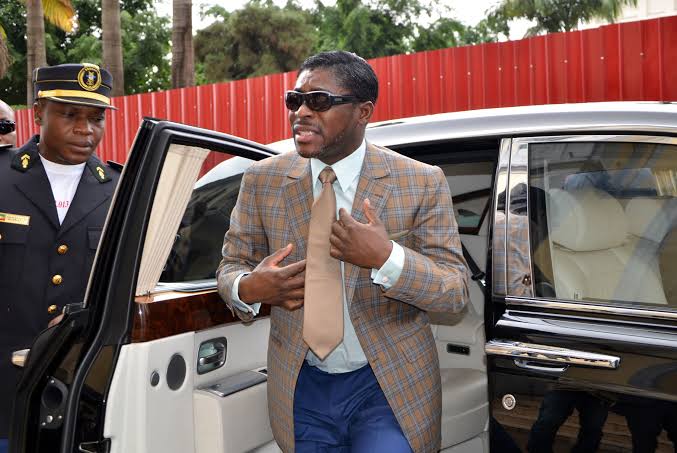
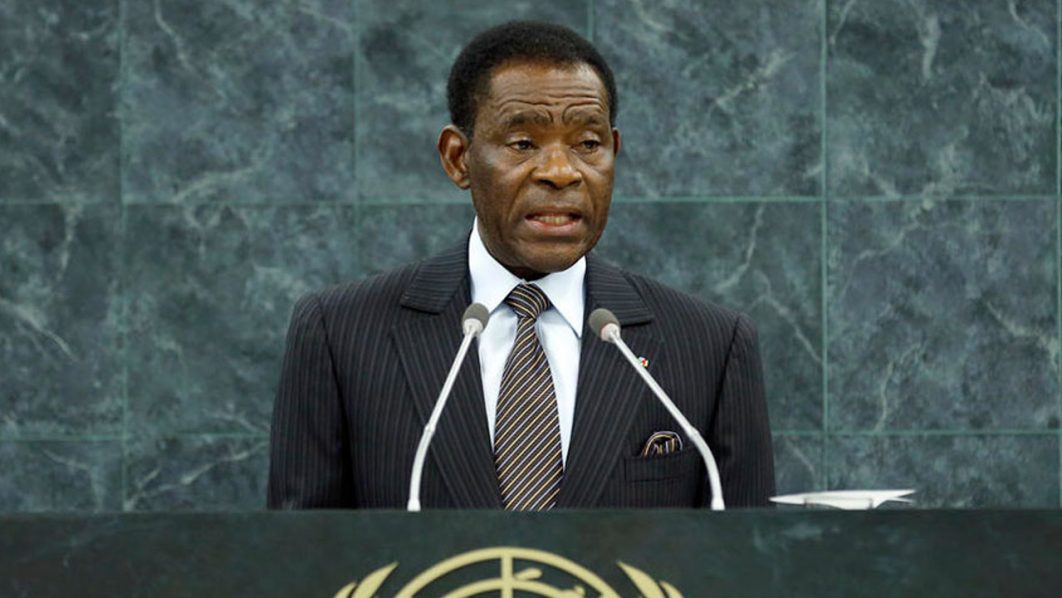
Equatorial Guinea has been ruled by President Teodoro Obiang since 1979.
His son, Teodorin has been his Vice President since 2016.
His uncle was the President from 1968 to 1979.
Equatorial Guinea started building a new capital, after failed coup attempts in 2004 and 2017.
if you’re a software engineer, don’t skimp on the fundamentals. understand operating systems, networking, databases, concurrency, data structures, algorithms, system design.
these concepts allow you to build systems that scale and stand the test of time.
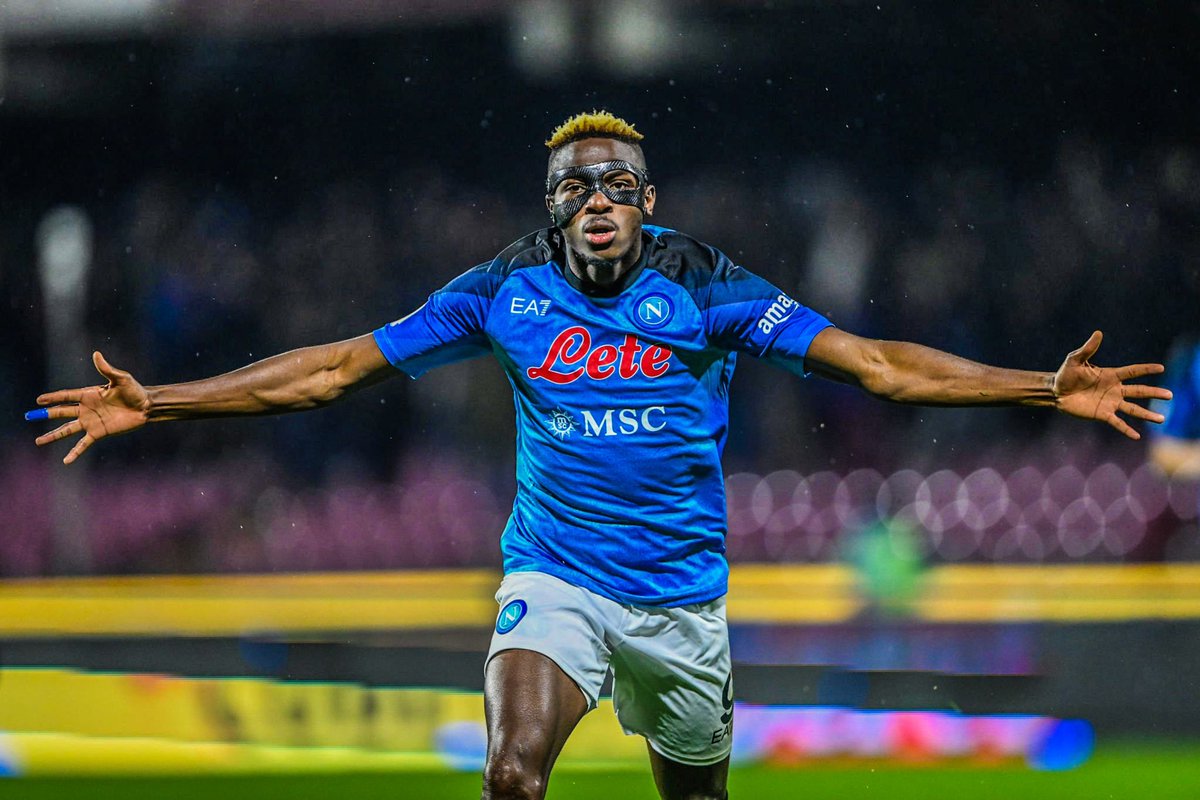
🚨🇳🇬 Al-Hilal have offered €140m to Napoli for Victor Osimhen. The Italian club want €150m to even consider selling him, reports @SkySports.
The Saudi club will also pay him €1m a week, resulting in a yearly wage of €52m.
@kelseyhightower Every tool is a problem of course when you don't use it the right way. Kubernetes is not the problem setting the industry back. It's the wrong implementation of it that set it back.
NITDA - COURSERA SCHOLARSHIP COHORT 2
As part of the Federal Government's commitment to create 1 million jobs in the digital economy, National Information Technology Development Agency (NITDA), in partnership with Cousera, hereby offers an opportunity to build capacity that can provide you with skills for digital jobs.
The call for application starts on Wednesday, 31st May 2023 and is to close on Wednesday 14th June 2023.
The Cohort 2 training starts on Monday, 19th June 2023 for a period of 6 months.
Don't miss this opportunity to skills that can give you access to global jobs.
To Apply please click: https://t.co/X9ik1QeH60
#NITDADigitalSkills
@UnitedStandMUFC He's only using the Glazers angle to get right witht he fans. The timing of his interview is wrong. The EtH comments are wrong and unacceptable. A great player but he's bottled this one. It's sad but they need to go separate ways!