I am happy to share that our Phase 1b VS-01 paper is finally out! 🎉
After a long journey of analysis, it’s great to see this work is finally published.
Huge thanks to all co-Authors and the Team of @JonelTrebicka's Lab @MEDB_LAB
🔗 https://t.co/N5jFL0eCuU
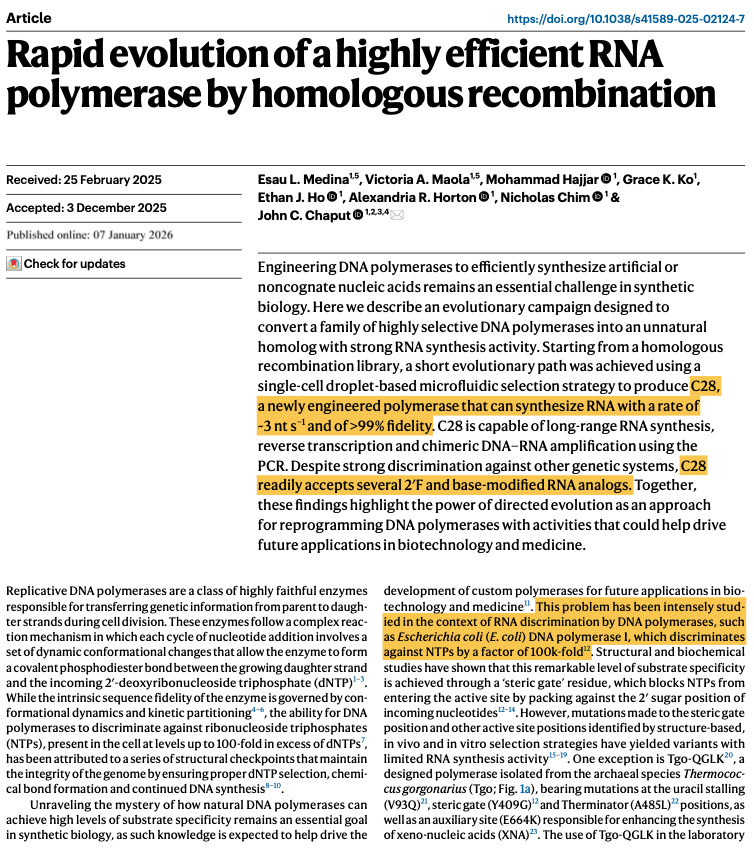
This paper is wild. After 3 rounds of directed evolution, they converted a DNA polymerase into an enzyme that can do:
- RNA synthesis
- Reverse transcription
- Synthesis of "unnatural" nucleotides
- Synthesis of DNA-RNA chimeras
One of the best papers I’ve read recently.
For context: In nature, it is DNA polymerase that takes a DNA sequence as a template and then copies it. These enzymes are crucial in replicating the genome for cell division, and they are EXTREMELY specific for DNA over RNA. This is key because RNA nucleotides are present in the cell at concentrations ~100x higher than DNA nucleotides, so the enzyme has evolved clever strategies to select one over the other.
RNA polymerases, for comparison, are the enzymes that take a DNA sequence as template and then convert it into RNA. They are involved in gene expression, for example.
To convert a DNA polymerase into an RNA polymerase (and all the other functions I mentioned earlier), the authors did a fairly straightforward directed evolution experiment.
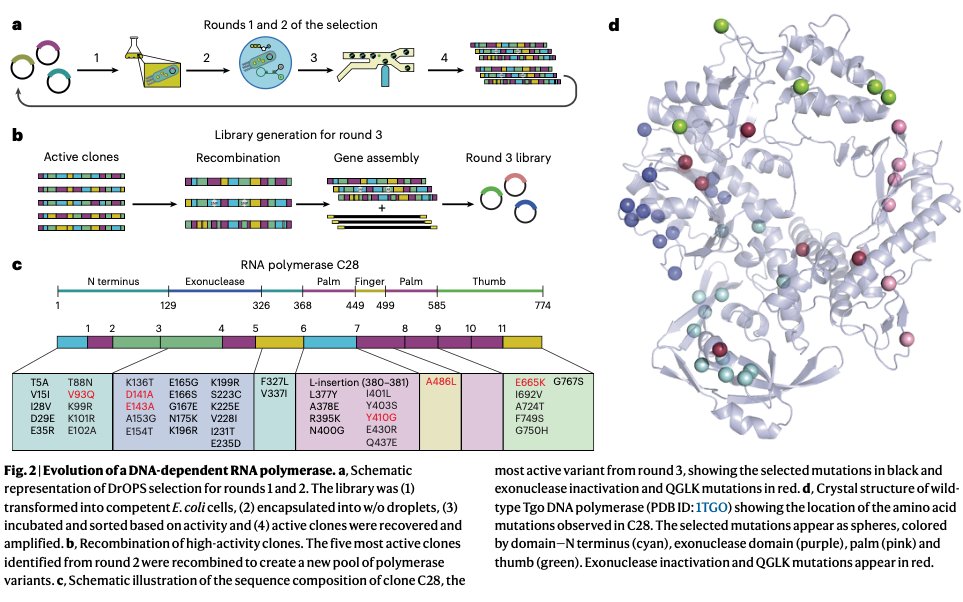
First, they took four DNA polymerase enzymes belonging to various archaea. These DNA polymerases don’t check for DNA vs. RNA as stringently as other types of cells, so they’re a good starting point to evolve RNA polymerases. The authors inserted some targeted mutations into these enzymes, based on known mutations in the literature. For example, they swapped the amino acid at position 409 for a smaller amino acid, thus removing a “gate” that keeps RNA building blocks from entering the enzyme.
Next, they took the four genes encoding these DNA polymerases and cut them up into 12 segments each. They randomly stitched these 12 segments together — from the four different genes — to build millions of unique variants. Each shuffled gene was inserted into an E. coli cell.
Then, they grew up these cells (each carrying a unique polymerase) and put them into microfluidic droplets. A device isolates each droplet, lyses the cell open, and releases the polymerase. The droplet also contains RNA building blocks and a DNA template, encoding a fluorescent reporter. If the polymerase begins synthesizing RNA, it will produce a detectable signal. They screened about 100 million droplets in 10 hours of work, searching for those with a signal.
For each well that yields a fluorescent signal, the researchers isolated the DNA and sequenced it to figure out which polymerase it was. They repeated this 3x times, finally isolating a really excellent RNA polymerase variant which they called "C28."
C28 has 39 mutations compared to the wildtype enzymes. It incorporates about 3.3 nucleotides of RNA per second, with 99.8% fidelity. The crazy thing is that this enzyme can also copy DNA or RNA templates back into DNA (reverse transcription), or use chimeric DNA-RNA molecules as a template and amplify them. It is just a super versatile polymerase that can act on DNA, RNA, or modified nucleotides, to build just about anything.
Our final issue of 2025 has gone live!
🫁pertussis prevention
🏭pollutants and gut bacteria
🕳️porins and resistance in E. coli
🧬many flavours of CRISPR
🦟fatal fungal attraction
...and more 👇
https://t.co/sl1Czf1wXe
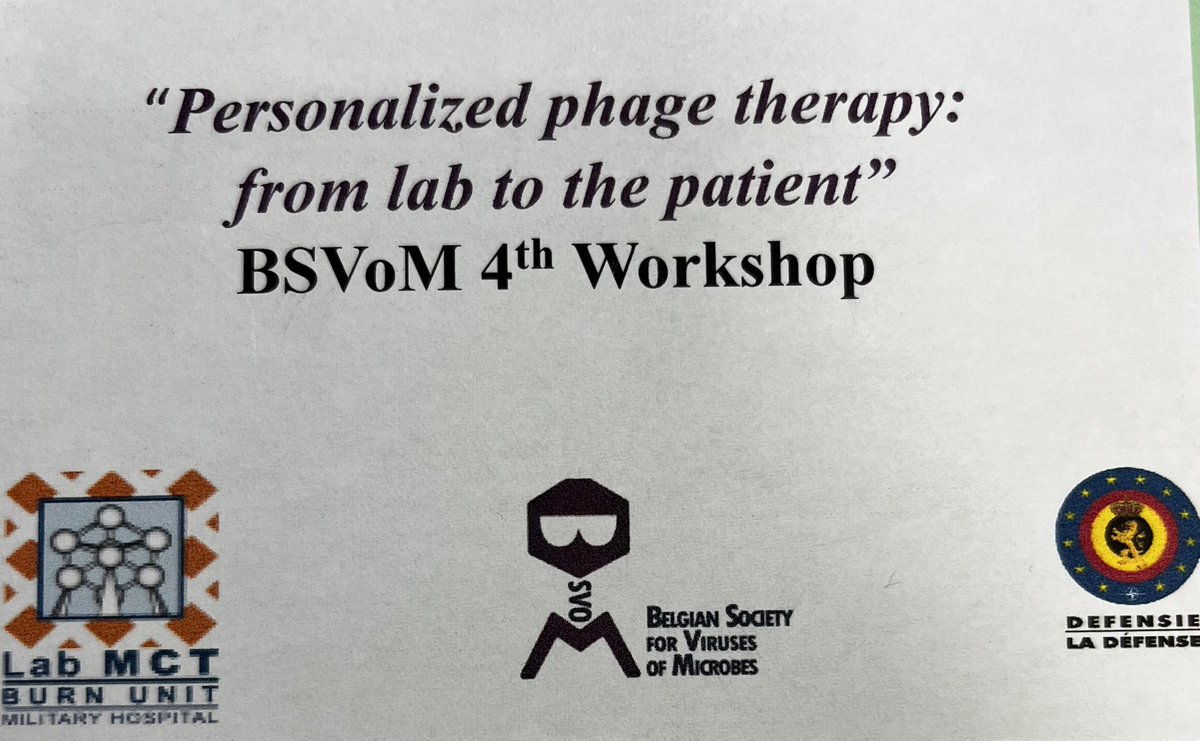
@BSVoM_official@bsvom It was a great and inspiring course on personalized phage therapy, thanks a lot to all the organizers, speakers and personell of the Queen Astrid Military Hospital for this great course and hospitality.
Off to a 2-day workshop about Personalized Bacteriophage Therapies in Brussels, Belgium 🇧🇪.Hosted by the @BSVoM_official looking forward to great scientific exchange.
It was a nice and inspiring evening at @goetheuni yesterday for the 25th birthday of @Innovectis and the award of the Goethe innovation price. A evening full of inspiration on the gateway of science and business.
New article online, thanks to all co-authors and collaborators from @goetheuni, @UK_Frankfurt and @ACLF_I. Here we show the effect of Enterococcus faecium DNA on inflammation and kidney dysfunction in acute decompensated cirrhosis and ACLF.
https://t.co/IzD6AeHclX
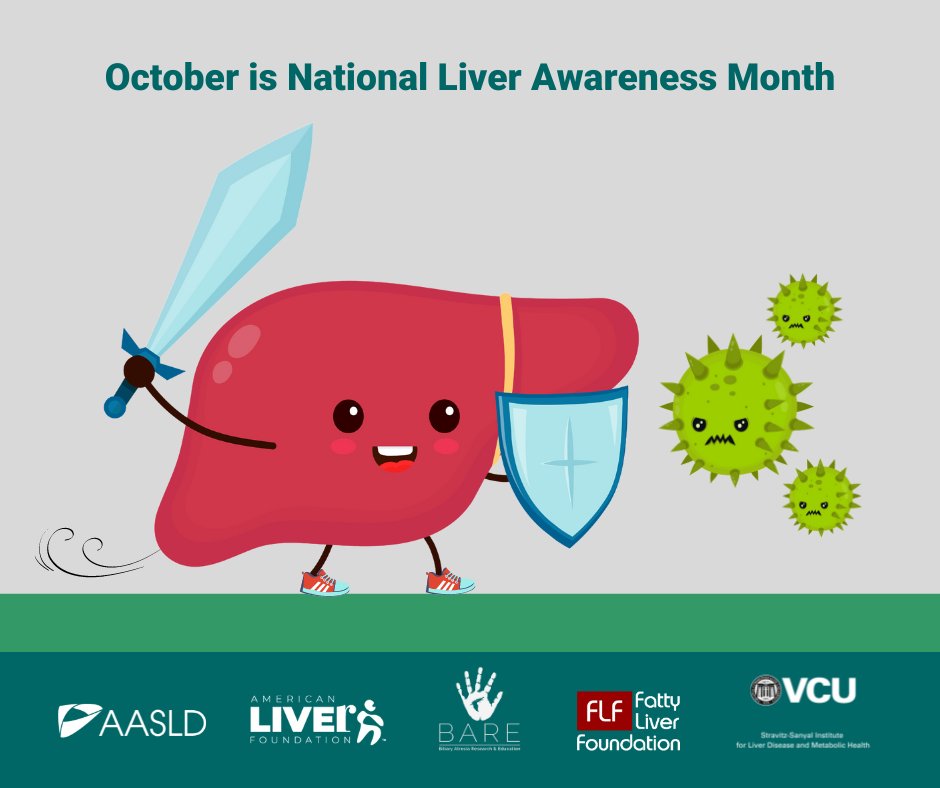
Your liver is amazing-it just keeps going and going! It is responsible for over 500 vital functions, including regulating blood levels, removing toxins, and balancing and creating nutrients for the rest of the body. #get2knowyourliver@LiverSaver@VCU_Liver@BAREInc_org@liverUSA
New article out with collaborators @UniklinikAachen and colleagues @MEDB_LAB and @CARIMMaastricht: Alterations of the peptidomic composition of peripheral plasma after portal hypertension correction by TIPS https://t.co/jpJy074atk