Father, neonatologist, associate professor, researcher on cord clamping and neonatal transition, believes in art of medicine as well as science of medicine
Delighted that the optimising cord clamping UENPS webinars are now available online. Fascinating to hear of the ongoing work by @olamedmac and Anup Katheria and hear practical tips for success in bedside resuscitation. @BAPM_Official@UENPS_EU@RCObsGyn https://t.co/wVW7SgFB0B
The twin papers from the iCOMP Meta-analysis led by @LeneSeidler finds 2. waiting at least two minutes before clamping the cord of a premature baby may reduce the risk of death compared with waiting less to clamp the cord.
https://t.co/wZ9y1VsU00
The twin papers from the iCOMP Meta-analysis led by @LeneSeidler finds 1. premature babies whose umbilical cord is clamped 30 seconds or more after birth are less likely to die before leaving the hospital
https://t.co/eu9ZKQKbpC
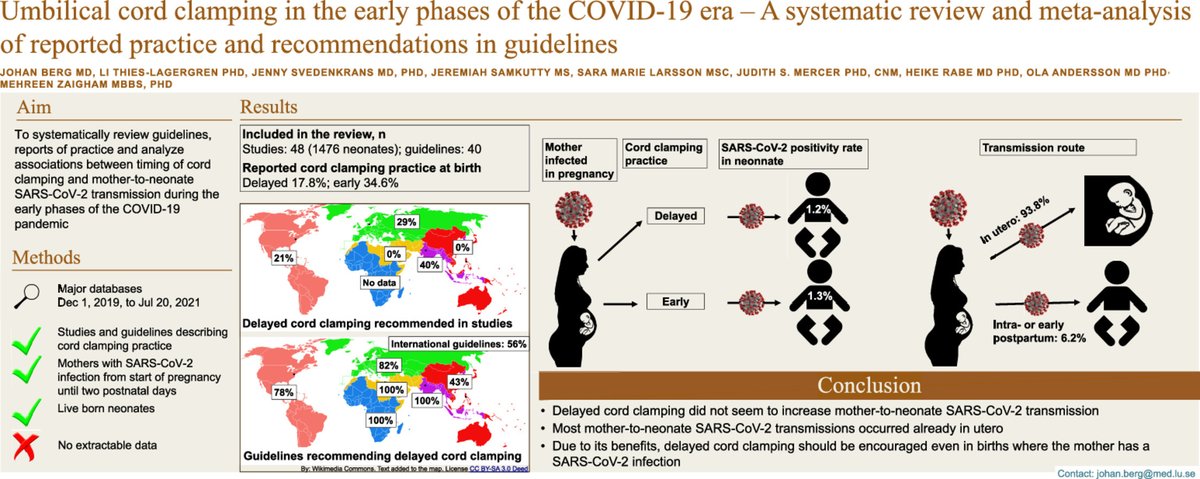
Our new review in pre-print: Umbilical cord clamping in the early phases of the COVID-19 era
•Many neonates born to #covid + mothers had cords clamped early
•Timing of cord clamping did not affect mother-to-neonate #covid transmission
@mehreenz1
https://t.co/fsuIFVEM0R
Introducing stabilisation and resuscitation with intact cord circulation? It is feasible using a wide variety of approaches -see our scoping review - Alikhani - Acta Paediatrica - Wiley Online Library #icr#cordclamping#optimalcordclamping https://t.co/UaHiXPJs9F
📢 Just published! 📚 Our scoping review explores the feasibility of intact cord resuscitation and stabilisation during C-section deliveries. Discover the range of approaches, equipment, and management options identified in the study. Read more: https://t.co/e6bAeSDJ3a
New biomarkers are developing and offer an important frontier in neonatal haematology.
Hyper high haemoglobin content in red blood cells and erythropoietic transitions postnatally in infants of 22 to 26 weeks’ gestation: a prospective cohort study @ADC_FN https://t.co/YcDFRw4IcP