There's a physicist at Stanford named Safi Bahcall who modeled this exact principle and the math is wild.
He calls it "phase transitions in human networks." When you're stationary, your probability of a lucky event is limited to your existing surface area: the people you already know, the places you already go, the ideas you've already been exposed to. Your opportunity window is fixed.
When you move, your collision rate with new nodes in a network increases nonlinearly. Double your movement (new conversations, new cities, new projects) and your probability of a serendipitous encounter doesn't double. It roughly quadruples. Because each new node connects you to their entire network, not just to them.
Richard Wiseman ran a 10-year study at the University of Hertfordshire tracking self-described "lucky" and "unlucky" people. The single biggest differentiator wasn't IQ, education, or family money. Lucky people scored significantly higher on one trait: openness to experience. They talked to strangers more, varied their routines more, and said yes to invitations at nearly twice the rate.
The "unlucky" group followed the same routes, ate at the same restaurants, and talked to the same 5 people. Their networks were closed loops. No new inputs, no new collisions.
Luck isn't random. Luck is surface area. And surface area is a function of movement.
The lobster emoji is doing more work than most people realize. Lobsters grow by shedding their shell when it gets too tight. The growth requires a period of total vulnerability. No protection, no armor, soft body exposed to the ocean.
That's the cost of movement nobody posts about. You have to be uncomfortable first. The new shell only hardens after you've already moved.
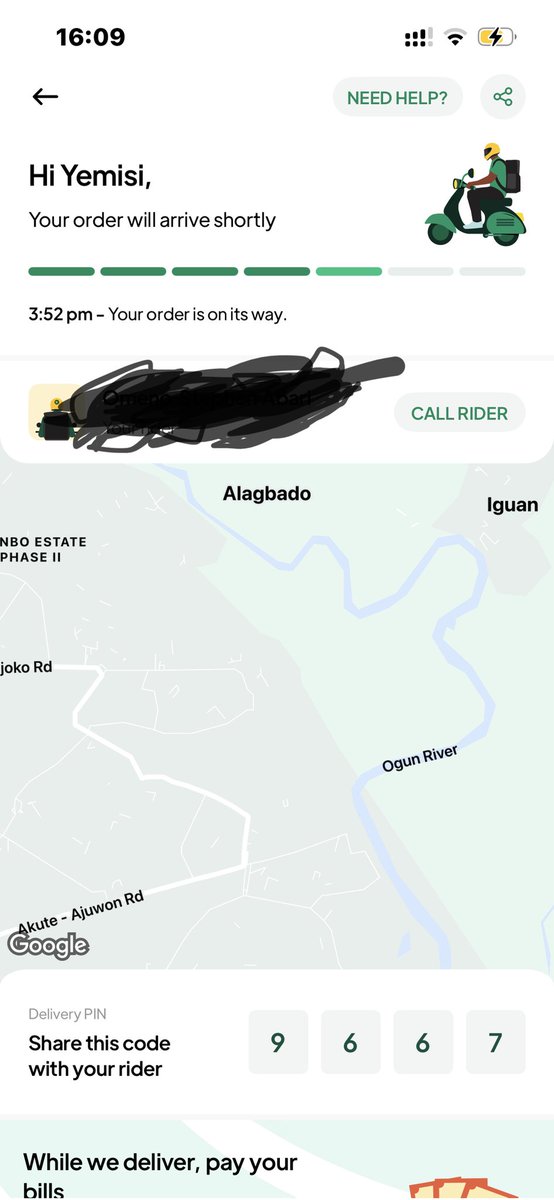
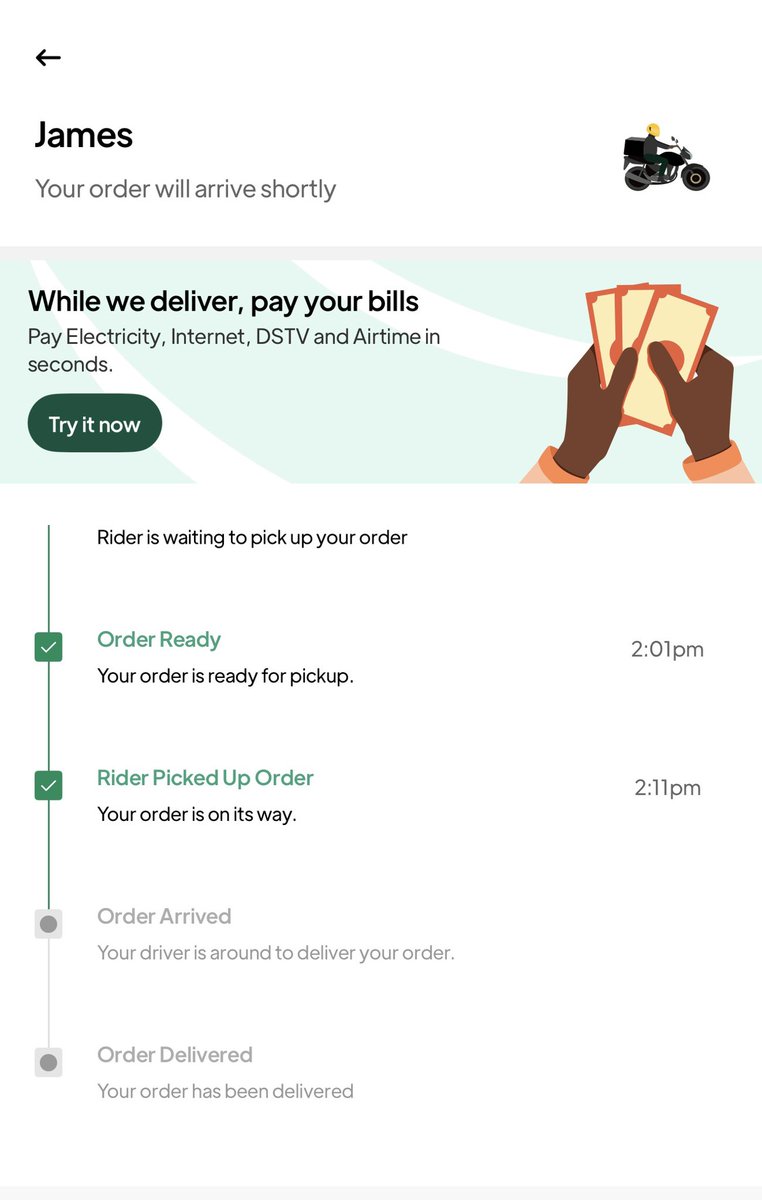
Saw this tweet on the 6th of this month. Ordering today and can see that @chowdeck has actually implemented the maps feature! Nicely done, awesome customer experience💯
Dear @chowdeck, from a product manager’s perspective, adding a map feature where users can see how far or close their rider is would greatly improve the user experience. Right now, I don’t know exactly where my rider is, and their number isn’t even going through
if you choose A WORKING WOMAN, you must accept that she CANNOT manage a house full time by herself. if you choose A HOUSEWIFE who can take care of and manage the household completely, you need to accept that she DOES NOT MAKE MONEY and you will have to provide for everything. if you choose a SUBMISSIVE WOMAN, you should accept that she DEPENDS on you to lead. if you choose to be with a STRONG WOMAN, you should accept that she is STUBBORN and has her own thoughts and ways
The company hired me to lead their "Agile Transformation."
I don't know what Agile means.
Nobody does.
That's why it works.
I make $425,000 a year.
To move sticky notes.
From left to right.
On a board.
The board is digital now.
The sticky notes cost $80,000 in Jira licenses.
Progress.
Day one, I said "we need to break down silos."
Everyone nodded.
Silos are bad.
I don't know why.
But destroying them is a career.
My career.
I introduced "squads."
Squads are teams.
But disrupted.
We disrupted the teams into teams.
Different names.
Same people.
Same problems.
But Agile problems now.
Agile problems are strategic.
A senior engineer asked what we're actually changing.
I said, "The mindset."
He asked what that means.
I said, "It's a journey."
He asked where we're going.
I said, "Toward agility."
He asked what agility means.
I pointed at the sticky notes.
They were moving left to right.
That's velocity.
We have velocity now.
The VP of Engineering said two-week sprints don't fit their work.
I said, "That's waterfall thinking."
Waterfall is bad.
Like silos.
I don't know what waterfall is.
But I know it's bad.
She stopped talking.
Waterfall accusations end conversations.
We had a retrospective.
In the retro, we discussed what went wrong.
Everything went wrong.
We put it on sticky notes.
Then we moved the sticky notes.
Into a column called "Parking Lot."
The Parking Lot is where problems go to die.
It's full.
We don't look at it.
That's agile.
Velocity is up 40%.
I defined velocity.
I also defined the points.
I also defined the stories.
We're crushing it.
At the things I made up.
To measure.
Ourselves.
The CEO asked for ROI.
I showed a chart.
The chart went up.
Charts should go up.
This one did.
I didn't label the Y-axis.
Nobody asked.
Leadership is confidence.
We do standups now.
Every day.
We stand.
For 45 minutes.
Standing is agile.
Sitting is waterfall.
My legs hurt.
But we're transforming.
The transformation is now "Phase 3."
Phase 1 was assessment.
Phase 2 was implementation.
Phase 3 is "continuous improvement."
Continuous means forever.
Forever means job security.
I'm very secure.
My contract was extended.
Three more years.
For "cultural impact."
The culture is confused.
But impacted.
Agile transformation isn't about being agile.
It's about transforming.
Continuously.
Toward more transformation.
The destination is the journey.
The journey is billable.
A teacher gave a balloon to every student, who had to inflate it, write their name on it, and throw it in the hallway.
The teacher then mixed all the balloons. The students were given 5 minutes to find their own balloon.
Despite a hectic search, no one found their balloon, At that point, the teacher told the students to take the first balloon they found and hand it to the person whose name was written on it.
Within 5 minutes, everyone had their own balloon. The teacher said to the students, "These balloons arelike happiness.
We will never find it if everyone is
looking for their own. But if we care about other people's happiness, we'll find ours too."
May your day be filled with happiness!🎉
Consideration.
If you really love someone, you consider them. You think before you speak, and you move with an awareness of how your actions affect their peace. You care about what makes them feel safe, not just what makes you feel good. If you truly love them, you think about how your actions will affect them.
Dear Founders, CTOs, Managers, and Developers,
I want you to read the quoted tweet and genuinely imagine this happening to your own product, the one you’re building or have already built.
The truth is, the founders of Bunni probably never took security seriously. And just like them, many of you still don’t, because “security doesn’t make money,” right? “We’re a small business,” “hackers won’t bother with us,” “we’ll deal with it later.”
That mindset is exactly how companies end up in situations like this.
Every time I get the opportunity to speak with people in your position, I emphasize one thing: invest in security early. Hire at least one competent security engineer. Budget for external penetration testing, not for compliance, but to protect your brand, your customers, & your reputation.
Security might not directly generate revenue,
but it prevents you from losing everything you’ve built.
Yes, security is expensive.
Yes, security is a choice.
But the cost of a breach is a hundred times greater, and when that day comes, you’ll realize it’s no longer a choice, it’s a debt you’ll have no option but to pay.
Please, take this as a wake-up call.
Reflect, & start taking security seriously, before someone else forces you to.
Help tag any founder, engineering manager, or developer to read this.
My husband is one of the most intelligent people I've ever met, and I was immediately taken by him, but over the years, I've come to learn most people can't see it. He dresses simply. He uses plain language. He likes superheroes and video games. They conclude they're not seeing a smart person. People aren't looking for intelligence itself. They look for signifiers of it, the song and dance of it, the whirling bedazzlement of "genius," like a peacock spreading its wings. That is how easy it is to fool someone.
What you do in private, shows in public. Reading shows in a conversation. Your diet shows in energy. Your discipline shows in confidence. Your focus shows in your results. You are what you cultivate when no one is watching. Prioritize your time & focus on discipline/consistency.