The Delhi High Court has in its judgement of ABD Maestro Limited v. Great Galleon Ventured Limited ruled on an aspect of law that has concerned many who have appeared for defendants over years. In a common judgment of 3 November 2026 covering seventeen commercial suits, Justice Purushaindra Kumar Kaurav returned every plaint for want of territorial jurisdiction. In more than half, neither party was in Delhi.
For instance consider the hypothetical that a plaintiff in Mumbai sues a defendant in Jodhpur, pleads a trap purchase delivered to a Delhi address, adds a line about a website being “accessible” here, and asks for an ex parte injunction. The judgment notes that the same order could have been placed from “Ladakh, Tamil Nadu, Arunachal Pradesh, or Gujarat,” and that reading the CPC to reward it makes “a mockery of the concept of territoriality.” In one suit the order was placed by the filing advocate, to the address on his vakalatnama.
What I really value in the judgement is the candour with which it approached filing practices. The Court admits that after “enjoying, effectively, a pan-India jurisdiction, it becomes difficult for a court today to draw a Lakshman Rekha,” and describes itself as a Banyan Tree that “also stunts the growth of other trees below it.” It calls investigator-led trap orders “gaming of the system,” refuses to be a “silent spectator in this theatre called ‘jurisdiction’ scripted by the plaintiff,” and records a plaintiff who, asked for the basis of its pleading, “roars ‘demurrer doctrine’.”
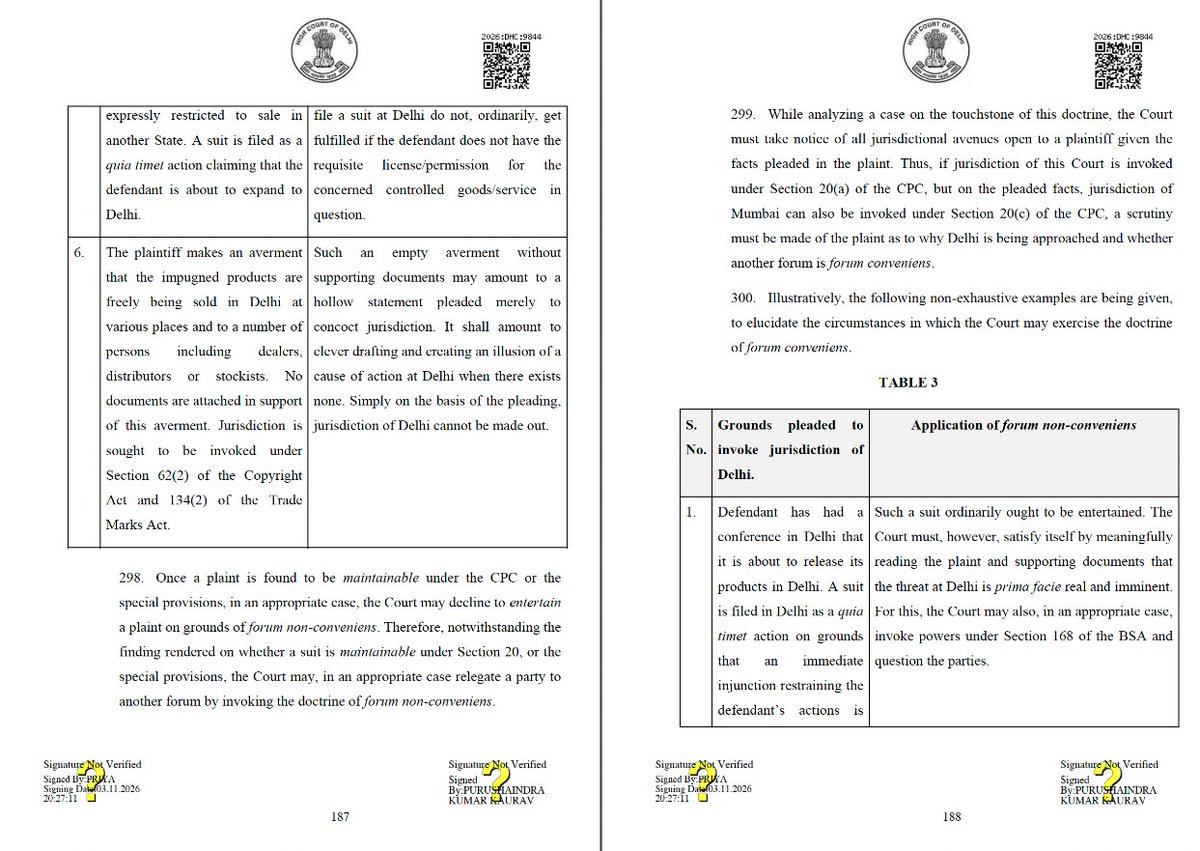
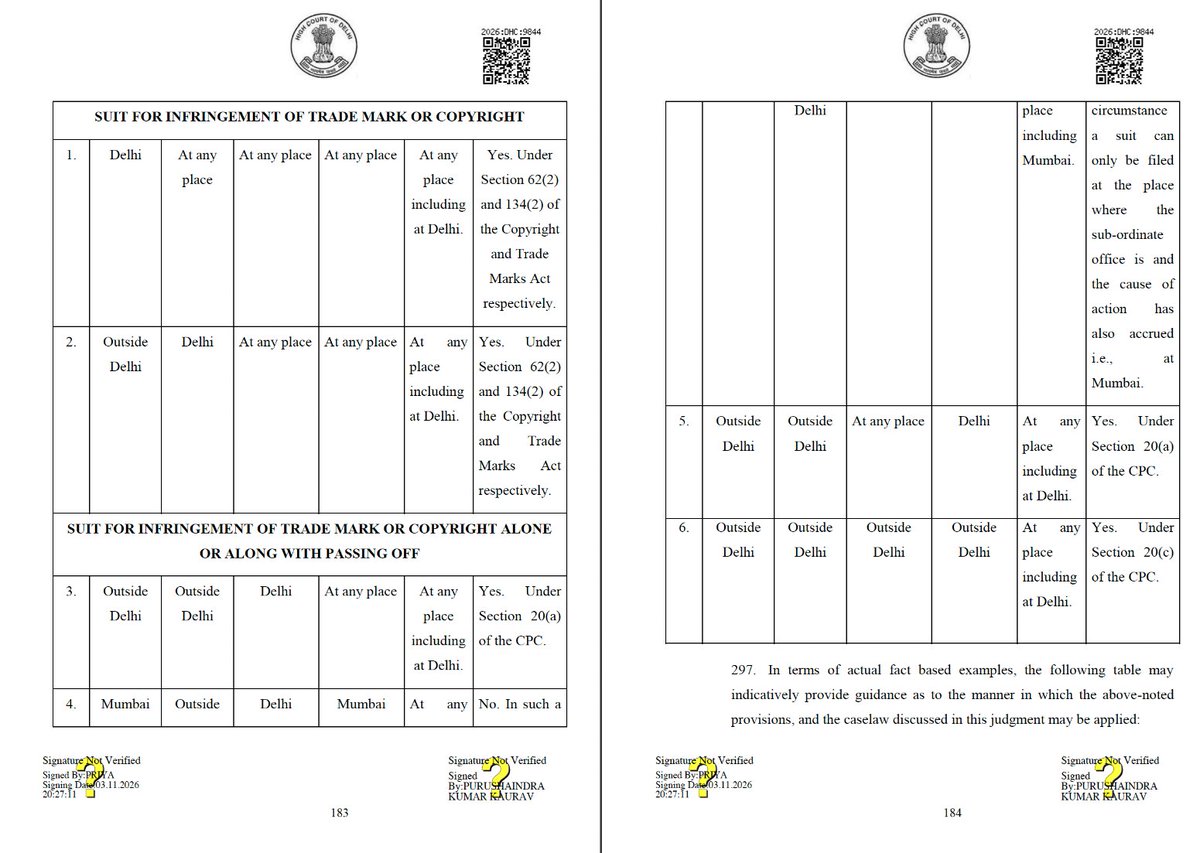
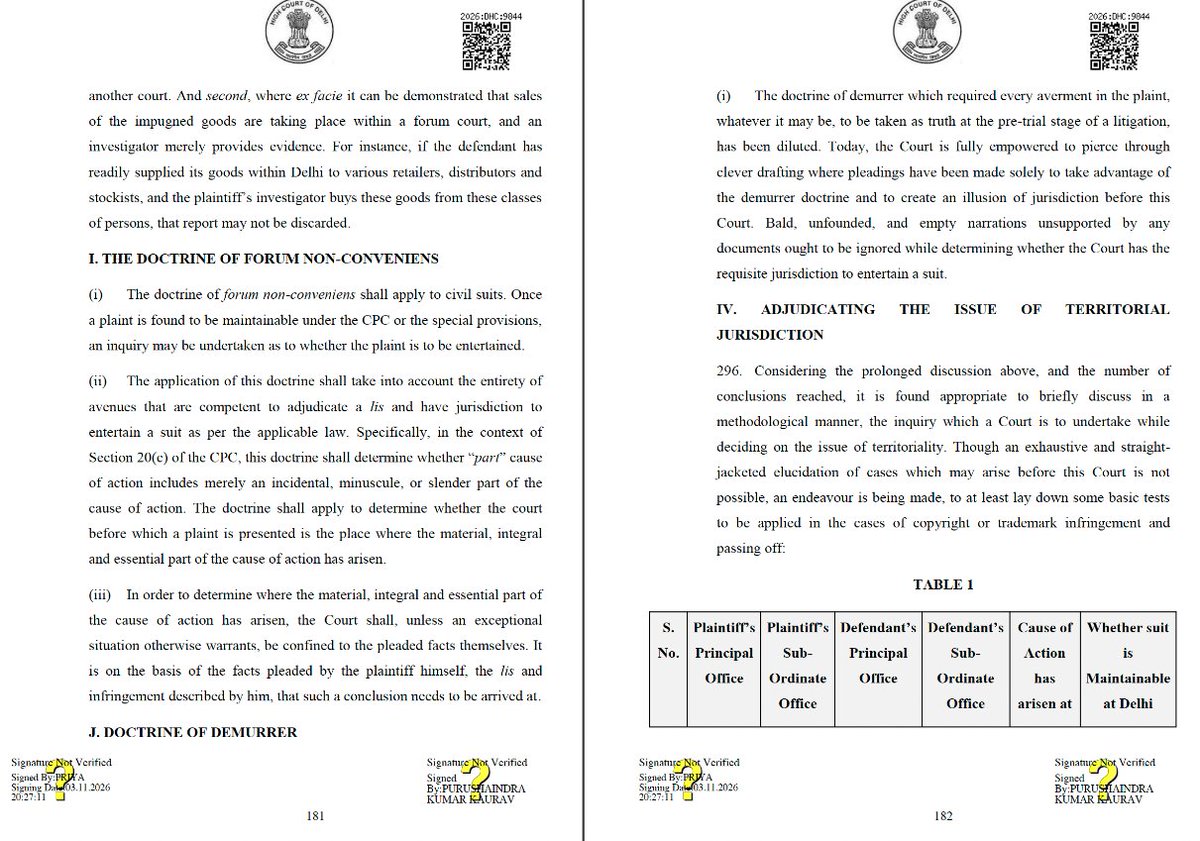
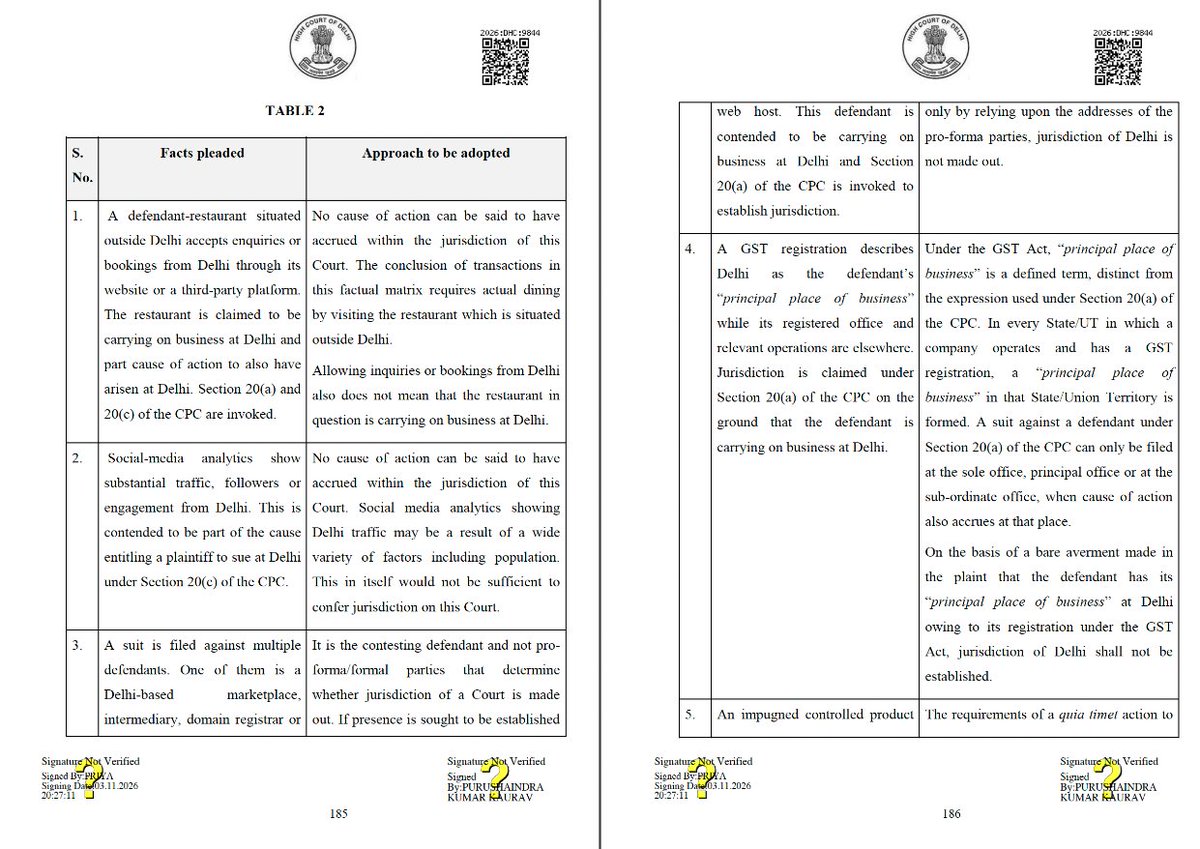
The real problem has always been the summons stage. Jurisdiction paragraphs in IP plaints were in the past not put to sufficient scrutiny on the first date, the injunction issued, and the objection left for the defendant to raise months later at its own cost. That laxity made the High Court a magnet for IP litigation which often went beyond territoriality. I am pasting some tables (can post only 4 images) from the judgement (another really cool addition that makes the application of principles under it clear) which I have skimmed but hopefully will read more deeply in the coming days.
Trump’s USP has always been that he doesn’t behave like a conventional politician. He is direct, accessible and comfortable with unscripted interactions with media. He doesn’t need every interaction to be carefully choreographed. That’s what makes his political style different.
#WATCH | Delhi | Members of Agarwal and Vaishya organisations hold protest in support of Chief Election Commissioner Gyanesh Kumar and the Special Intensive Revision (SIR) of electoral rolls (27.09)
#Breaking : ECI Sources:
Both the Election Commissioners and the Chief Election Commissioner have *unanimously* approved the SIR Orders for Bihar, SR Orders of Assam, SIR Orders for 12 States/ UTs and SIR orders for 19 States/ UTs.
The approved SIR orders include the Declaration Form to be submitted alongwith Form 6 for new voters to be added to reduce paper work and for the ease of citizens.
This is in line with Section 21(3) of the RP Act 1950 and has also been upheld by the Supreme Court.
Senior Advocate Colin Gonsalves for the student, Senior Advocate Mukul Rohagti for the DM Medha Roopam and Solicitor General Tushar Mehta for Uttar Pradesh Government.
Questions Over Listing Of Noida DM Medha Roopam's Plea In Supreme Court |@1Simranbakshi
The episode also brings the exercise of Master of Roster powers under scrutiny.
https://t.co/Z7iHM0tGn8
Winter is coming. And the legal armies are gathering.
The parties fighting for control over India’s Tata Group have retained some of the country’s most prominent law firms and advocates, as they dig in for a protracted and high-profile battle.
My report.
https://t.co/Yit50wcCPA
Having worked closely with Ratan Tata earlier, being aware of his legacy and not only knowing personally all the principal actors on both sides in the current so called Tata dispute but also having deep, genuine and abiding respect for and excellent equations with all of them, my first reaction, as I enter the fray as the lead lawyer for one side, is one of sadness and regret that these issues could not be solved amicably. But in the ultimate analysis, fundamental rights of shareholder-owners cannot be nullified in the manner in which they have been. To stultify shareholder ownership rights would spell doomsday for corporate governance across hundreds of Indian companies. To stymie democratic intra Trust decision-making by Tata Trusts by putting a sudden and completely unwarranted fetter on even their covening for a meeting is another matter of patent legality. Rupturing the over hundred years of Tata Trust and Tata Sons established hyphenated relationship and divorcing one from the other seems unthinkable. Ignoring the unvarying precondition of Trust unanimity in voting & the clear veto in provisions applied without cavil for decades appears patently unjustified. Sadly, the Supreme Court judgement in Tata- Mistry which clearly gave Tata Trusts primacy in the relationship with Tata Sons, upheld the special Articles in this regard in the Tata Sons articles and spoke of the fiduciary duty to millions of Indians, seems to have been selectively forgotten. Unfortunately, in the absence of collegiality and conviviality, these and many other related issues can only have legal solutions.
Comedy so goated that the whole ecosystem is rattled. Mr. Manmohan Singh faced similar or even worse direct jokes but nobody complained, so why the outrage now.
Don’t know who the comic is, but he was definitely gross and unfunny. The hardest thing about political satire is the difference between sharp & cruel. This was not sharp, it was cruel, the timing was off, it landed badly even with Congress supporters. When your star campaigner is going to share stage with a performer you should have checked his jokes and done a dummy run in front of mixed audiences. Now the fallout is shared by your leader. The opposition had enough jokes to crack on Dr MMS silences or Mr ABV’s pauses or Deve Gowda’s napping or Rajiv Gandhi’s fumbles but the then top opposition leaders never indulged in it. They instinctively knew. They didn’t have MBA analysts with laptops egging them on. The office of the PM is respected & you might make fun of the person in private but on public platforms the language is formal, the criticism needs to be satirical and indirect. The Jantar Mantar event seems to have misled many people to believe that India’s public language has changed across the country. It might have to some extent, granted. But they don’t want you to adopt it. From you they expect decorum. That is why you are leaders, we/they are masses.
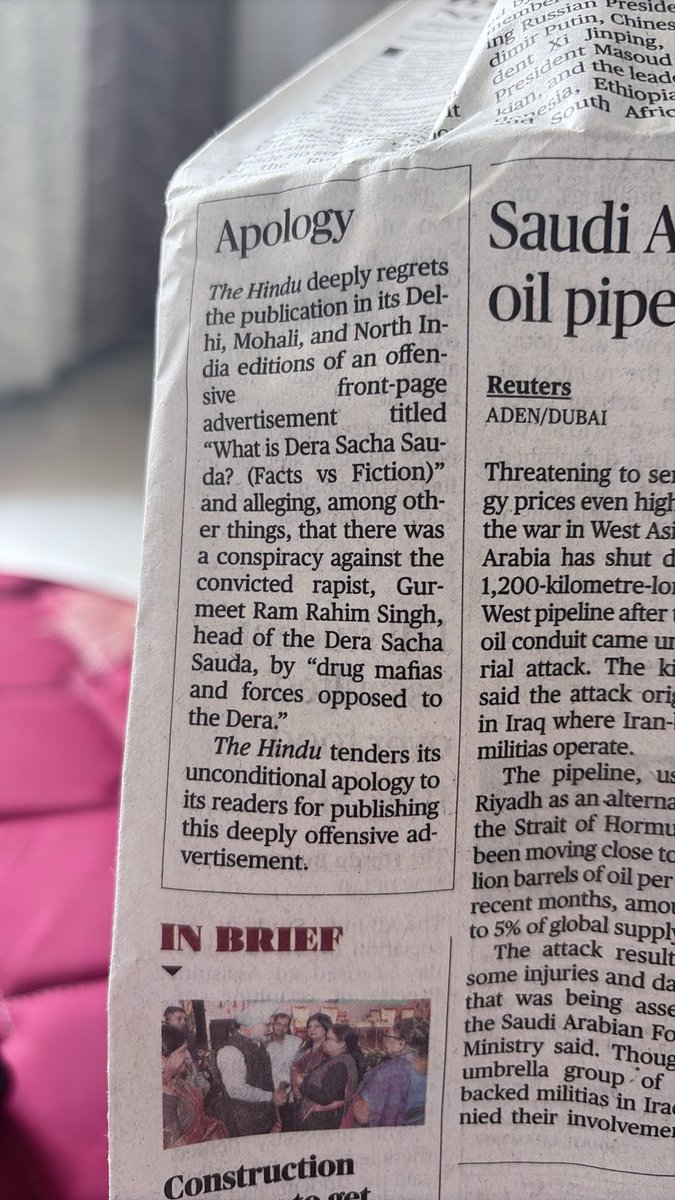
Hindu has conveniently done both. First published a full page ad whitewashing rapist's image and then a small apology in one corner of first page to pacify the criticism.