🇺🇸🎧Don´t miss! New American History Podcast!
Follow along on a journey through the exciting history of the United States! 🇺🇸🎧
Webbsite: https://t.co/kS6unOVIA9
iTunes: https://t.co/3A14Glc3C8
Facebook: https://t.co/kwWC9Jkett
Instagram: https://t.co/Q4hKDqwKTV
Episode 13 is released!
The episode will present the exceptional Rhode Island, Thomas Hooker, Connecticut colony, fundamental orders, the orthodox puritans of New Haven, John Wheelwright, New Hampshire, The Pequot War and the United colonies of New England.
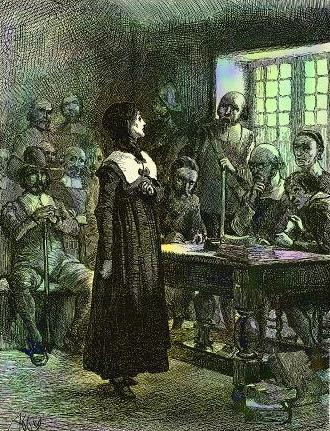
Episode 12 released! The episode will present the puritans struggle for orthodoxy, controversies, Roger Williams, Anne Hutchinson, Council of New England, Fernando Gorges, Robert Child, Cambridge platform, Samuel Gorton, church membership and the half way covenant.
Episode 11 released! On John Winthrop, the puritans, a troubled time in Europe, a city on a Hill, Council of New England, Cambridge agreement, founding of Salem and Boston, Great migration, Watertown protests, representative government and bicameralism and the founding of Harvard
Episode 10 released!
The episode will present the downfall of the London Company, The Old Dominion, Crown colony, 3rd Anglo-American war, Calvert family, Lord Baltimore, founding of Maryland, religious toleration, Kent Island conflict, indentured servants and tobacco bonanza.
Episode 9 released!
This episode will present the Popham colony, separatists, the pilgrims, Mayflower, Plymouth colony, Willam Bradford, Mayflower Compact, Miles Standish, Squanto, Thanksgiving, Merrymount, new towns and becoming overshadowed by Massachusetts.
Episode 8 released!
The episode will present the Jamestown colony, power struggles, John Smith, Powhatan, new charters, Pocahontas, Dales Laws, headrights system, John Rolfe, tobacco growing, first House of Burgesses, the massacre of 1622 and the fall of the London company.
Hilarious letter from John F Kennedy 🇺🇸 asking his mother after the Cuban Missile Crisis to not contact Russian leader Nikita Khrushchev again without asking him first
#POTUS 🤣
#MothersDay#HappyMothersDay
Compared to the Napoleonic Wars, both the role of artillery and cavalry was reduced when compared to the infantry with respect to proving decisive on the battlefield. For instance, a well-respected study by Colonel Trevor Dupuy showed that compared to Napoleon's time, Civil War artillery only accounted for 8-10% of battlefield casualties compared t0 40-50% in Napoleon's time. Infantry and the improved rifle musket over the earlier smoothbore tended to be the deciding factor during the Civil War period.
This did not mean, however, that Civil War artillery was useless. When used to anchor a critical defensive position and well-protected by infantry supports, artillery could still be deadly.
One of the best examples and widely used by both sides was the Model 1857 "Napoleon" 12-pounder smoothbore gun-howitzer.
Key performance specifications:
Caliber: 4.62 inches (12-pounder)
Range: 1,700 yards (1,550 meters) at maximum elevation
Projectile weight: 12.3 pounds (5.6 kg)
Muzzle velocity: 1,485 feet per second (453 meters per second)
Weight: 2,360 pounds – gun and carriage (1,070 kg)
Length: 66 inches (1.68 meters)
Maximum effective rate of fire: 2-3 rounds per minute
Crew size: 6-8 men
The 1857 Napoleon gun-howitzer was a versatile weapon that could fire both solid shot and explosive shells, making it effective against both infantry and fortifications. It was also relatively easy to maneuver, and its accuracy and effectiveness made it a favorite of both Union and Confederate forces during the Civil War.
The most common types of ammunition used by the Napoleon during the Civil War:
Solid shot: a simple iron or steel ball that was effective against enemy troops, artillery pieces, and fortifications. The effective range of solid shot was up to 1,500 yards (1,370 meters).
Shell: an explosive round that had a hollow body filled with gunpowder and a fuse. The fuse would be set to detonate the shell in mid-air or upon impact, creating a lethal blast radius. The effective range of a shell was up to 1,600 yards (1,460 meters).
Case shot or shrapnel: a round filled with small lead or iron balls (78), along with a bursting charge that would scatter the balls upon detonation, creating a deadly spray of shrapnel. The effective range of case shot was up to 1,200 yards (1,100 meters).
Canister shot: a round that contained dozens of iron or lead balls packed in sawdust or sawdust-like material. When fired, the canister would break apart, releasing the balls in a cone-shaped pattern that was devastating to enemy troops at close range. The effective range of canister shot was up to 400 yards (365 meters).
The effective range of the M1857 12-pounder Napoleon gun-howitzer depended on the ammunition type, the angle of elevation, and other factors such as weather conditions and terrain. However, in general, the effective range of the Napoleon was between 1,200 and 1,700 yards (1,100 and 1,550 meters), making it a highly effective weapon on the Civil War battlefield.
A Giant Shotgun Against Infantry Charges
The weight of the canister shot used in the M1857 12-pounder Napoleon gun-howitzer during the Civil War was approximately 14.8 pounds (6.7 kg). The canister shot was a cylindrical container made of tin or iron, which was filled with 27 iron or lead balls, each about 1.49 inch (3.78 cm) in diameter and packed in sawdust or similar material.
When fired, the canister would break open at the muzzle of the gun, releasing the balls in a cone-shaped pattern that was deadly to enemy troops at close range. The effective range of canister shot was typically up to 400 yards (365 meters), making it a devastating weapon against infantry charges or in other close quarters combat situations.
(given the devastating performance of the Napoleon, especially at close quarters, one can see why the Confederate Army of Tennessee allowed special battle honors to be placed on regimental battle flags for units credited with the capture of enemy artillery - the "crossed-cannons, inverted" battle honor).
A new episode is now available! Listen to find out how Andrew Jackson managed to wrap up the Creek War in 1814 only a few short months after his force had diminished to nearly nothing. #history#POTUS#Madison#Warof1812 https://t.co/N5owHnxgVr
On May 13, 1846, Congress declared war on Mexico, which resulted in Mexico losing about half of its territory, including present-day California, Utah, Nevada, Arizona, and New Mexico, for $15 million in 1848.
#OnThisDay, May 12, 1864, the Union and Confederate Army had reached a stalemate during the Battle of Spotsylvania Court House. Federals opened with a massive assault on the Confederate Mule Shoe Salient. This area became known as the “Bloody Angle.” https://t.co/yoYyrlKgSV
#OTD in #History, 1775, the 2nd Continental #Congress convened. It both planned for war & drafted the Olive Branch Petition. But the King rejected reconciliation. And by July 1776, Congress answered what Adams called “the greatest question…which ever was debated in America” #USA
Seeking to reduce tensions, the British government repealed all Townshend duties except the tea tax #OnThisDay May 10, 1773. Parliament, however, awarded the floundering East India Company a monopoly on the tea trade, leading to large-scale protests. https://t.co/1nRU5AwBLR
The battle of Shiloh—the bloodiest battle of the Civil War up to that point—ended #onthisday in 1862.
Brig. Gen. James A. Garfield & his brigade of the US Army of the Ohio arrived at Shiloh just as the battle was ending.
Image: “Shiloh: Scene of Battle,” Kurz & Allison, 1886.
We're here, episode 100! 🥳
To mark the occasion, we see the start of the reign of one of Sweden's most famous Kings, kickstarting the early-modern period of Swedish history!
Enter Gustav Vasa 👑🇸🇪
Episode 7 released!
The episode will present the Sea Dogs, privateering, Francis Drake, west country men, Martin Frobisher, John Davis, Humphrey Gilbert, Walter Raleigh, the lost colony of Roanoke, John White, the first English-American child Virginia Dare, the Virginia Company.
Episode 6 released!
The episode will present the background of English colonization, war of the roses, Henry VIII and the Anglican Church, the reformation, Elisabeth I, the Spanish Armada, enclosure, wool industry, primogeniture, sturdy beggars, mercantilism and overpopulation.