🚨 BOOM: The Ilhan Omar investigation just landed on JEANINE PIRRO'S DESK.
The Star Tribune reports the DOJ pulled the probe into Omar's immigration paperwork and finances away from federal prosecutors in Minnesota.
Those Minnesota prosecutors had already closed an earlier look without charges.
A D.C. GRAND JURY IS NOW REVIEWING THE EVIDENCE.
Omar denies any wrongdoing.
Minnesota had its shot. Now Judge Jeanine gets a turn.
As the Ukraine Defence Contact Group meets in Brussels today, NATO remains fully committed to supporting Ukraine.
Since Russia's full-scale invasion, Allies have provided unprecedented levels of support to 🇺🇦 including military, training and non-lethal aid
#StandWithUkraine
A mother and her 11-month-old baby were thrown into the ocean when their boat began sinking five miles from shore. Neither had a life jacket, and powerful waves were crashing around them. As a stranger jumped in to save them, the mother disappeared beneath the surface.
It happened off the coast of Florida. José Sirven was boating with his family when he spotted a distress flare. Eight people were in the water as a violent storm battered their sinking boat.
José steered toward them, but the mother and baby were still beyond reach. He handed control to a friend and jumped in without a life jacket.
When the mother slipped underwater, José dove after her, grabbed her, and fought to keep her head above the waves.
His friend tried bringing the boat alongside them, but the waves pushed it away. Twice they tried and failed. José held onto the exhausted mother until they finally reached the boat on the third attempt.
The mother and baby were pulled aboard, and José steered the overloaded boat, now carrying 15 people, back through the storm. All eight people rescued from the water survived.
José risked his own life for a mother and baby he’d never met. Without him, they might never have made it home. He deserves recognition for that.
Deputies found a 5 year old with a handcuff still on his ankle.
His dad is now charged with torture.
David Wesley Phillips, 30, of Vance, Alabama.
He's charged with aggravated child abuse of a child under 6.
And child torture.
August 17: deputies and a school official went to his home.
He had never enrolled his 5 year old son or 8 year old daughter in school.
The boy still had a handcuff on his ankle, which was scratched up from the cuff.
The boy told deputies his dad put him in "timeout" before work and he was stuck to the bed.
Court records say Phillips allegedly cuffed the boy to a bedframe over and over for 5 weeks.
Sometimes, for hours while he was at work.
The boy had cuts around his ankle, bruises, and severe emotional trauma.
The children weren't removed from his custody that day.
Why not???
After that visit, Phillips allegedly whipped his daughter for telling deputies.
The next day, a social worker found chains hanging from a bedframe and pills on the floor under the bed.
The state finally took both kids.
Investigators say the kids had been cut off from family, friends, school, and doctors since at least November 2025.
A children's hospital report later documented torture.
By Sept. 10, he was on the sheriff's Most Wanted list, last known in the New Orleans area.
He wasn't arrested until Nov. 9.
Bond is $15,000 cash on the torture charge.
No bond on the aggravated abuse charge until there's a hearing.
$15k bond for torturing a child?
The destruction of the Kerch Bridge’s arch and the blockage of the shipping channel by its debris affect far more than Russia’s transport links with occupied Crimea. It triggers a chain of disruptions to maritime and river transport, grain and oil exports, military logistics, and the economies of entire Russian regions. Debris from the bridge blocks the Kerch–Yenikale Canal, cutting off direct access to the Black Sea for the ports of Rostov-on-Don, Azov, Taganrog, Yeysk and Temryuk, as well as occupied Mariupol and Berdiansk. But the consequences extend further. Through the Don and the Volga–Don Canal, the Sea of Azov is connected to the Volga, the Caspian Sea and Russia’s vast network of inland waterways.
The main target of the Ukrainian strike is the military logistics network supplying occupied Crimea. The Kerch Bridge remains an important supply route for Russian forces, and Ukraine will seek to put it permanently out of service. Moscow cannot count on restoring the bridge and shipping through the Kerch Strait without interference while the war continues. The loss of road and rail links forces Russia to reroute cargo through occupied southern Ukraine, where transport routes are already supplying the front. Crimea will not be completely isolated, but Russia will lose an important fallback option for its military logistics. The fewer supply routes remain, the harder it becomes for Russia to supply its troops and hold occupied territory.
The second major blow is to Russian grain exports. According to S&P Global estimates, the route through the Kerch Strait and the Azov–Don system accounted for around 28% of Russian wheat exports in August 2026. This puts more than a quarter of exports of one of Russia’s main agricultural commodities at risk. Some grain can be rerouted through other ports, but this requires rail capacity, freight wagons, grain storage facilities and available terminals. All of this costs money and takes time. Grain will accumulate in storage, export contracts will go unfulfilled, transport costs will rise, and the prices paid to Russian agricultural producers will come under pressure.
It was Russia that blockaded Ukraine’s Black Sea ports in 2022, withdrew from the grain deal in 2023, and continued destroying Ukrainian grain silos, terminals and port infrastructure. It is now also systematically targeting production facilities themselves: in November 2026, Russian strikes shut down Astarta’s soybean processing plant and damaged Kernel’s oilseed crushing plant. The destruction of the power grid further paralyses the processing and storage of agricultural products. Russia is systematically destroying Ukraine’s agricultural supply chain, from production to exports, while trying to push Ukraine out of global food markets. If Moscow now loses the ability to ship its own grain through Kerch, along with grain stolen from occupied Ukrainian territories, this is a direct consequence of the war it launched.
The third blow is to Russian petroleum product exports. Some fuel from refining centres in the Volga region and the Kama basin reaches Black Sea export routes via the Volga, the Volga–Don Canal and the Sea of Azov. Blocking passage through Kerch severs this transport chain. Russian carriers will have to find alternative ports or shift cargo to rail. This means additional costs, delays and competition for transport capacity. All of this comes against the backdrop of Ukrainian strikes on Russian refineries, which have already reduced fuel production and shipment capacity. Novorossiysk’s major oil terminals do not depend directly on the Kerch Strait, but access through the Sea of Azov has been an important export route for some producers in Russia’s interior.
The fourth blow is to the freight transport system as a whole. The problem extends beyond vessels unable to pass through the canal. A ship stuck in port cannot make its next voyage. Grain that cannot be shipped out fills storage facilities. A terminal at capacity stops accepting new cargo. A producer loses a buyer, a carrier loses revenue, and an exporter loses a contract. Even after passage is restored, these losses will not automatically disappear: accumulated cargo will have to be moved, and disrupted schedules will have to be reorganised. In this way, a single blocked canal creates problems for businesses and transport companies far beyond the Sea of Azov.
The fifth blow is to Russia’s railways. Cargo previously transported by water will have to be shifted to overland routes. But the rail network does not have unlimited spare capacity. Moving additional millions of tonnes of grain, petroleum products and other goods requires freight wagons, locomotives, track capacity and port terminals. This additional cargo will compete with existing freight flows, including military shipments. Russian Railways will be able to absorb some of these volumes, but at the cost of delays, higher logistics costs and the displacement of other freight.
The sixth blow is to naval logistics. Through the Volga, the Volga–Don Canal, the Don and the Sea of Azov, Russia has been able to transfer certain small warships and auxiliary vessels between the Caspian Flotilla and the Black Sea Fleet. Blocking the Kerch–Yenikale Canal deprives it of this direct route. The Caspian Flotilla, of course, retains its ability to operate in the Caspian Sea, while other inland waterways maintain connections to northern maritime basins. But the usual route from the Caspian to the Black Sea through the Sea of Azov becomes unavailable to these vessels. Russia loses another means of rapidly redeploying part of its naval forces between theatres of operations.
The seventh blow is to occupied Mariupol and Berdiansk. Russia is trying to incorporate these Ukrainian ports into its own transport system, using them for cargo shipments, military logistics and the removal of resources from occupied territories. Without access to the Black Sea, their role is sharply diminished. Russia will therefore lose the benefits it derives from the port infrastructure it seized during the war.
Moscow must recognise that Ukraine is unlikely to allow it to restore, without interference, transport infrastructure used to sustain Russian aggression. The Kerch Bridge supports Russian military logistics, giving Ukraine every reason to continue strikes aimed at putting it permanently out of service.
This is the central irony: the Kremlin built the bridge as a symbol of Crimea’s annexation, only to create a critical and highly vulnerable transport hub whose damage can paralyse routes deep inside Russian territory. The bridge Putin intended to bind Crimea to Russia forever may now cut off a substantial part of Russia itself from direct access to the Black Sea.
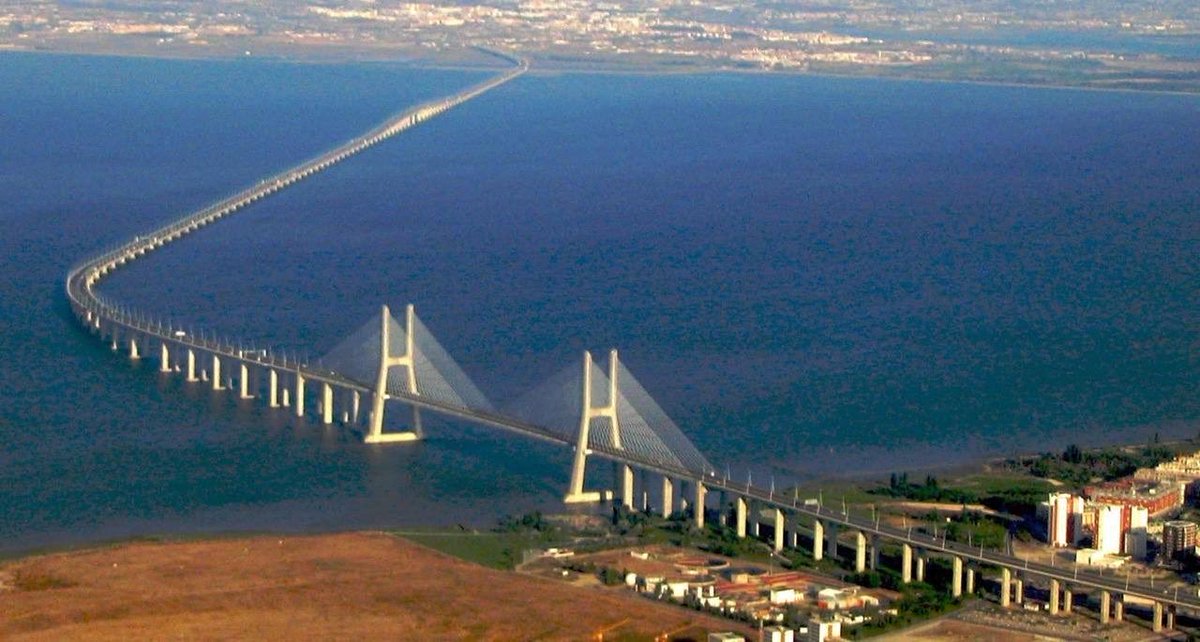
By the way: As of today, the Vasco da Gama Bridge in Portugal has reclaimed the title of the longest road bridge in Europe.
And all thanks to the Ukrainians.
An ordinary evening at a McDonald’s in Rivne turned into a moment of solidarity when members of a local choir unexpectedly began singing Ukraine’s spiritual anthem, "Prayer for Ukraine."
Customers and employees alike rose to their feet to honour the performance. 🇺🇦
📹: tania_ostrovska01 / Threads
"Nobody stopped Putin with words. So, we are targeting his energy infrastructure so he could understand what he is doing.”
- Zelensky 🇺🇦
............
Zelensky says more than 55% of Russia’s oil refining capacity has been neutralized.
Russia is losing and Putin still shows no interest in ending the war.🤷♀️🤦♀️
🚀 Ukraine deployed 11 types of missiles, drones, and other systems in the operation against the Crimean Bridge
According to the published statement, the operation lasted several weeks and consisted of seven stages. It was planned and coordinated by Ukraine's Security Service (SBU) together with the General Staff of the Armed Forces of Ukraine.
The operation involved Dovbush, Vendeta, Da Vinci, Sichen, MICH 2000, Ruta, Palyanytsia, An-197, FP-1, FP-5 Flamingo, and R-360 Neptune.
Before the final strike, Ukrainian forces systematically targeted Russian air defense systems, radars, and electronic warfare equipment.
Palyanytsia drones struck the road section of the bridge, while Neptune missiles, Ruta drones, and FP-5 Flamingo missiles hit the railway section.
The statement claims that Flamingo missiles carried out a precision-guided strike, with communication maintained until the final seconds.
Rail and Vehicle crossings into Crimea
Kerch Road Bridge - Destroyed ❌
Kerch Rail Bridge - Disabled ❌
Chongar Road Bridge - Destroyed ❌
Chongar Rail Bridge - Destroyed ❌
Armiansk Road Bridge - Disabled ❌
Armiansk Rail Bridge - Disabled ❌
2x Pontoon Bridges - In Use 🟡
Russia has two small Pontoon Bridges remaining into Crimea, one in Chongar and one in Armiansk. Ukraine can destroy both of these Pontoon Bridges whenever they’d like, and as many times as they’d like preventing all traffic into or out of Crimea by land. Ukraine could also patrol drones over both pontoon bridges striking any vehicles that decide to approach them
As of today, Crimea is on the verge of having no car traffic entering or leaving if Ukraine targets pontoons, and due to significant damage to the Kerch Railway Bridge there is no longer access by rail into or out of Crimea. The main form of transport will be by ship or by ferry across the Kerch Strait