Until 2016, she was a healthy woman. Today, walking up the stairs with hardship, she started her testimony: "Most Holy Father, to be truly honest with you, I must admit that I, too, would like to be healed..."
She said she first came here to the Accueil Notre-Dame at the age of 20 to help the sick and disabled members of the diocesan pilgrimage from Metz ("where you are going tomorrow!" she told the Holy Father)
She recalled the typical tasks of a person who accompanies the sick: "the journey, the arrival, life here for four days, the joys, the fellowship, the daily tasks -- washing, nursing care, the fatigue, and sometimes the pain of a death occurring during the pilgrimage."
For over 14 years, she accompanied the sick to Lourdes during her time off from her job at a ceramics factory.
"In 2016, my life changed completely," she told the pope and other sick gathered in front of Acceuil - a special Lourdes hospital hotel where pilgrims of all health stages are welcomed and receive professional medical help.
"On August 15, 2016, following a bicycle accident where I fell into a ravine, I became paraplegic," the woman told Pope Leo.
"Thus began a long journey of pain, despair, struggle, and rehabilitation," she said, adding the time was full of despair.
"When I returned to Lourdes the following year, in 2017 -- back at the Accueil Notre-Dame but now with my disability -- I could no longer make sense of things; my faith wavered. I was angry with Mother Mary. I often went to pray at the Grotto, to cry out my despair and my rage."
"And it was at the Grotto that I found comfort in Her."
Back home, she said she struggled greatly to regain her independence: "driving again, getting my own apartment, learning a new trade, and finding work. I sent out dozens of résumés looking for a job. Without success."
One day, "without really believing it would work," she applied for a position as a welcome staff member at the Sanctuary of Lourdes.
"And this is the grace I have received: to work in this place I love."
"It does not erase my suffering; I struggle every day with a body that does not function properly. Thanks to rehabilitation, I am walking a little again, using a walker. I turn to Mother Mary when things get too hard; she helps me a great deal."
"Most Holy Father, I am proud to now be of service in welcoming pilgrims, enabling them to access the grace of this unique place and sharing my faith with them."
Have tissues ready.
Video: Vatican Media
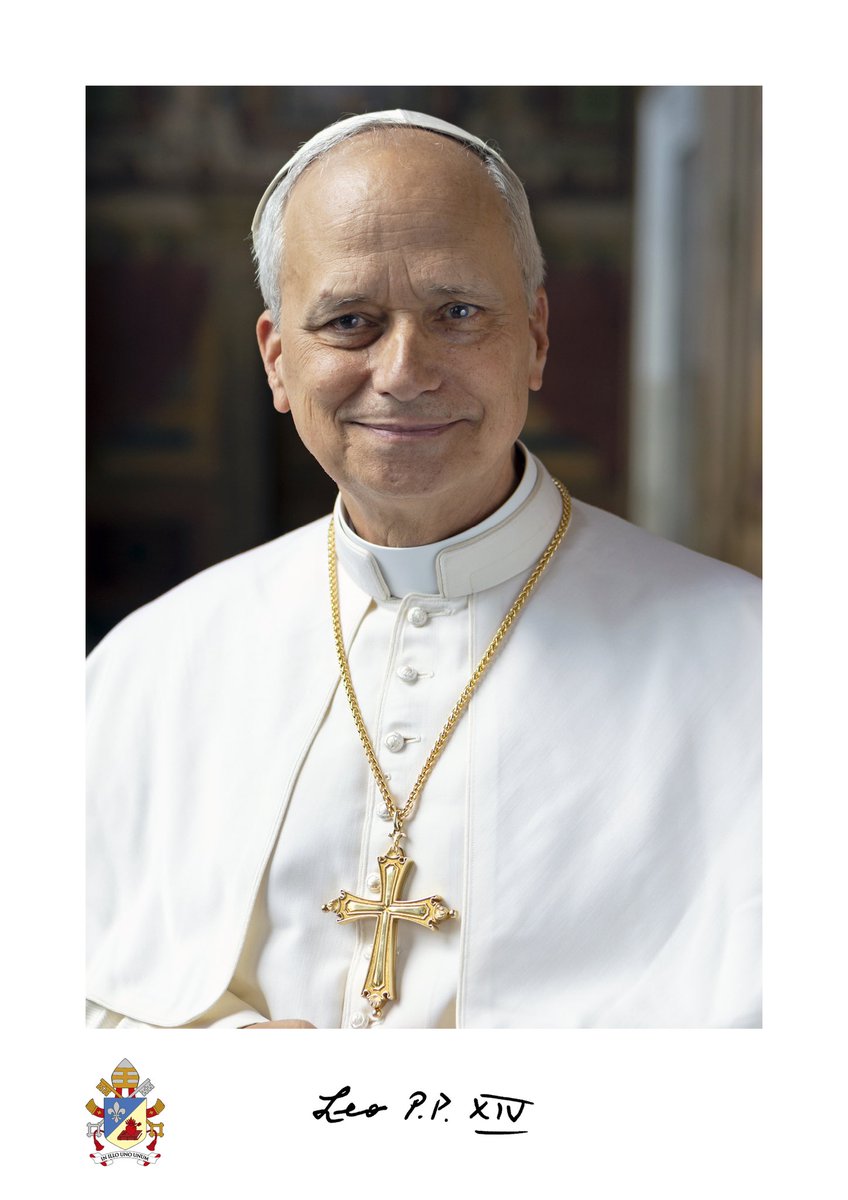
In what will certainly become one of the most fundamental speeches of his pontificate, Pope Leo XIV told the Spanish Parliament, before receiving a 7-minute standing ovation: "The defense of human life is neither a partisan issue nor a confessional interest: it is a goal of civilization."
"If life ceases to be recognized as a fundamental value, what future can our societies have?" he said, speaking to a gathering of politicians, many supporting abortion and euthanasia.
"Can a community that casts into the shadows the unborn child, the elderly, the sick, those who suffer in silence, or those who depend entirely on the care of others be called fully just?"
"Every human life must be recognized and safeguarded from conception to its natural end, in every circumstance of its existence. When this certainty is obscured, the most vulnerable are the first victims, and the law loses its deepest meaning: to serve and protect every person."
"For this reason, the moral greatness of a nation is manifested, above all, in its capacity to accompany, protect and love those lives that are most fragile," he said, repeating what John Paul II emphasized decades ago.
Starting his speech he commented that Church's is the "message offered in the spirit of service to the human person."
"When the Church addresses anything concerning public life, she does so while respecting the proper mission of institutions and the legitimate responsibility of those who have received the mandate to legislate," Pope Leo said, emphasizing "the Church offers a reflection born of the desire to serve the common good."
He hailed Spain as country that "has known how to view the human being as more than just a cog in the social, economic or political order. It has recognized the human being as a creature open to truth, endowed with freedom, and driven by a thirst for eternity that no temporal reality can quench -- in a word, as someone whose dignity takes precedence over all utility and to whose service legislative action is subject."
He said it was Catholic orders that "helped to shape a legal and moral consciousness capable of remembering that authority always entails responsibility and that every human being must be recognized as a subject of rights and duties."
"That aspiration continues to resonate today: that dignity, justice and the common good should be the measure of social relations, both at the national and international levels."
Referring multiple times to his "Magnifica Humanitas" encyclical, he said: "When the common good ceases to be a shared horizon, public action runs the risk of fragmenting into partial interests, incapable of safeguarding what belongs to all."
"In this context, the family — the primary human reality and the natural foundation of the community — takes on particular importance," Pope Leo said.
"The family will always be the first school of humanity, where one learns, before anywhere else, the basic grammar of living together: welcoming life, caring for others, forgiving, serving and belonging."
"Human life can never be treated as a commodity," the pope said.
"A law does not attain its true greatness merely by having been formally enacted; it attains it when, in addition to being valid in form, it can stand before the dignity of the person and pass that test without shame."
"I invite you, then, to lift your gaze to the world around you, not to turn away from reality, but to remember that every decision by public authorities affects real people, especially those who have less power to make their voices heard."
"The expanse of one’s vision consists precisely in looking more deeply at what is at stake in every public decision. This is why, alongside technical solutions and legal reforms, a moral renewal is also needed."
Video: Vatican Media
(fragment of speech follows)
🕊️ Durant ce #Carême, pourquoi et comment prier avec la Parole de Dieu ?
Le père Francisco Dolz, vicaire à Saint-François-Xavier (7e) et aumônier au Bon Conseil, nous répond et nous fait découvrir les richesses de la prière avec la #Bible 📖
Retrouvez toutes nos vidéos sur notre chaîne YouTube 📺
La consommation de drogue et l’addiction qui l’accompagne doivent nous alerter : elles sont le signe d’un désenchantement du monde et d’un vide intérieur temporairement comblé par les promesses d’une euphorie chimiquement entretenue.→https://t.co/gSqxzGF1wQ
La cathédrale Notre-Dame de Paris a accueilli ce 19 novembre la “Nuit des témoins”, un événement organisé par l’AED, l’Aide à l’Église en détresse, qui cherche à ouvrir les yeux du monde entier sur la persécution des chrétiens et à les soutenir par la prière.
Le roi Charles III est devenu jeudi le premier monarque britannique à prier publiquement avec un pape depuis le schisme anglican au XVIe siècle, à l'occasion d'une célébration présidée par Léon XIV dans la chapelle Sixtine ⤵️
Steven James Gunnell témoigne après l'interdiction de son film «Sacré Coeur» : «J'ai pété un câble hier soir, je ne supporte plus qu'on censure le christianisme en France», dans #MorandiniLive
Magistral!
« Il y a des catholiques en France les Gars, va falloir vous y faire ! « déclare Steve James Gunnel à propos de la volonté d’invisibiliser et de censurer le Christianisme!
Bravo! Nous ne tendrons pas l’autre joue au progressisme islamo gauchisant! Certainement pas!
"Tu disparais dans la ville, tu n'existes plus, tu te confonds avec la brique. Il n' y a plus de regard qui s'accroche à toi."
À 17 ans, Sorj Chalandon fuit le domicile familial et vit un an dans les rues de Paris. La froid, la faim, l'indifférence des gens mais surtout l'extrême solitude... Il raconte dans son dernier roman Le livre de Kells cette année à la rue, comment il en est sorti et pourquoi elle le hante encore aujourd'hui.
🗣️"Bernard Pivot est l’homme qui nous a fait comprendre que les livres sont des perturbateurs existentiels."
François Busnel termine cette émission par la lecture d'un texte écrit en hommage à Bernard Pivot, à qui La Grande Librairie doit beaucoup. #LGLf5
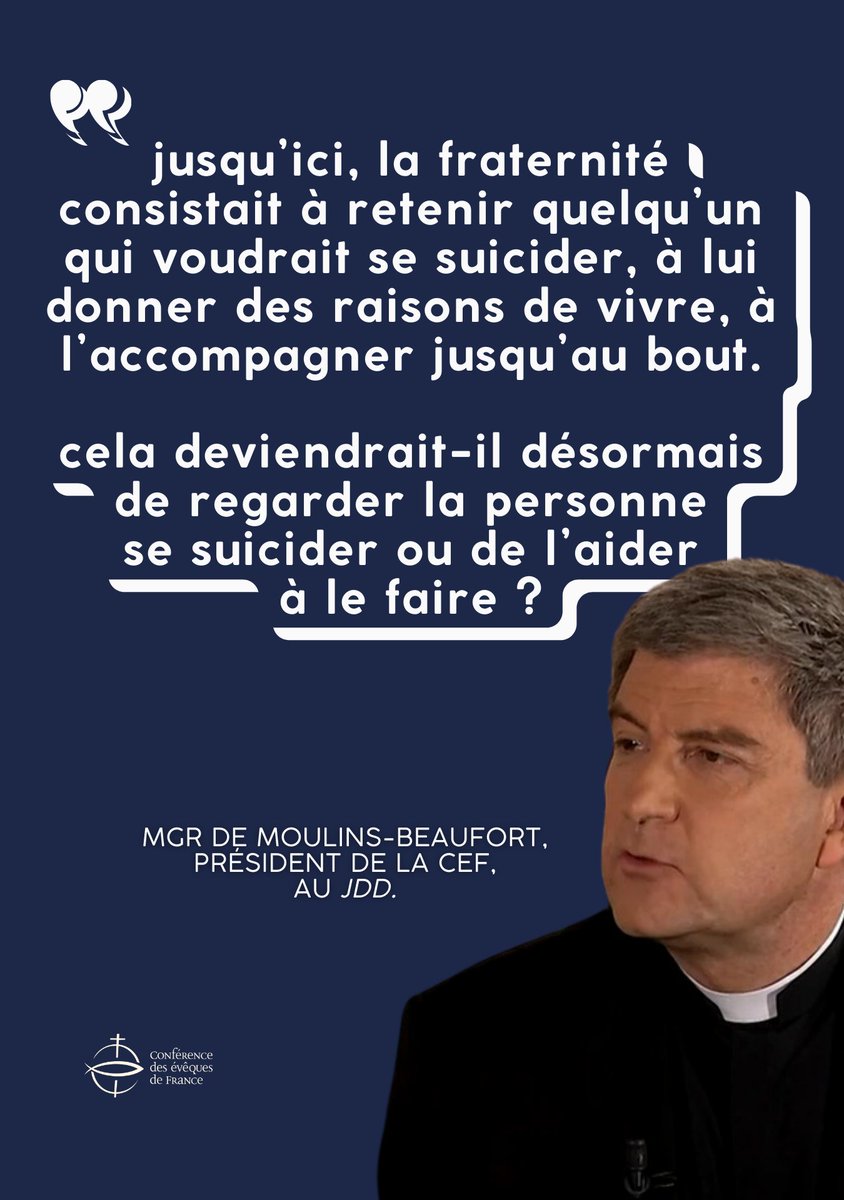
« Fraternité », « aide à mourir », « accompagnement » : cette maléfique euphémisation ne contribue pas à la justesse du débat démocratique.
L'Eclairage Spirituel de @MgrMRouge sur @radionotredame à écouter dans son intégralité ici : https://t.co/uWJI838TbD
🎬Bonne nouvelle, je rumine !
Quand la prière du #NotrePère vient au secours de nos ruminations intérieures… La chirurgienne de la prière, la moniale, nous apprend à désirer le Règne du Père !
👉https://t.co/k7cIWEryqF
#bonnenouvelle une série de PRENOM MARLENE produite par KTO