⚡️ The man was simply drinking coffee when a group of people in military uniforms suddenly swarmed him. Ukraine, 2026.
This is what «mobilization» looks like 🫠
Former Pfizer Chief Toxicologist Dr. Helmut Sterz just testified in the German Parliament on March 19, 2026.
He straight-up said the mRNA COVID shots skipped proper cancer risk checks because of ‘time pressure.’
And for mass production? They switched to a bacterial process that left ‘significant contamination’ with bacterial DNA in the vials.
He called the whole rollout a ‘vaccination tragedy’ and estimated tens of thousands of excess deaths in Germany alone.
If even insiders from Pfizer are now saying it should never have been approved this way… what else are we still not being told?
THIS is how they brainwash children into Marxist Ideology…
A Grandmother is removed from a Council Meeting for reading books provided to school children…
She cannot repeat them to the people that approve the disgusting literature…
HOW IS THIS REAL?
🚨They TRIED to get rid of this video of Bill Gates admitting it, but it’s been found!!! He’s a Eugenist POS!!!!
Something needs to happen to him before he gets us all….
https://t.co/KihgISC6aJ
The company behind POM juice, a juice marketed as a superfood antioxidant-rich drink, was just named California’s 2nd-largest user of paraquat — one of the most toxic herbicides still allowed in the U.S.
Over 56,000 pounds sprayed in a single year… on crops used to make this so called health drink.
Paraquat has been linked to Parkinson’s disease, cancer, and neurological damage. It drifts into nearby communities and lingers in soil for years.
More than 60 countries have already banned it.
So why is it still being used here?
Help us continue the work to get these chemicals out of our food supply.
[https://t.co/s4BLFmKoxU]
I think healthy people have been made fun of for a very long time now. Yes the sunglasses. Amazing the difference it makes not wearing sunglasses. It's almost difficult for me to burn now even with my Fitzpatrick II skin. The only place I can burn is out at the ocean with the giant mirror of the water. If that doesn't tell you that the environment is communicating with your body through the eyes, nothing will. In addition, I can see in the dark now, and my vision has improved slightly. I used to not be able to read the phone without glasses and now I can.
EPSTEIN FILES🔥 Ohmygod
Frm: John Brockman
To: JEFFREY EPSTEIN
“p.s. You missed the big event on Saturday. A party with a dozen beautiful East Side girls (well, a dozen one-year olds!!)” 👈 👈🤬
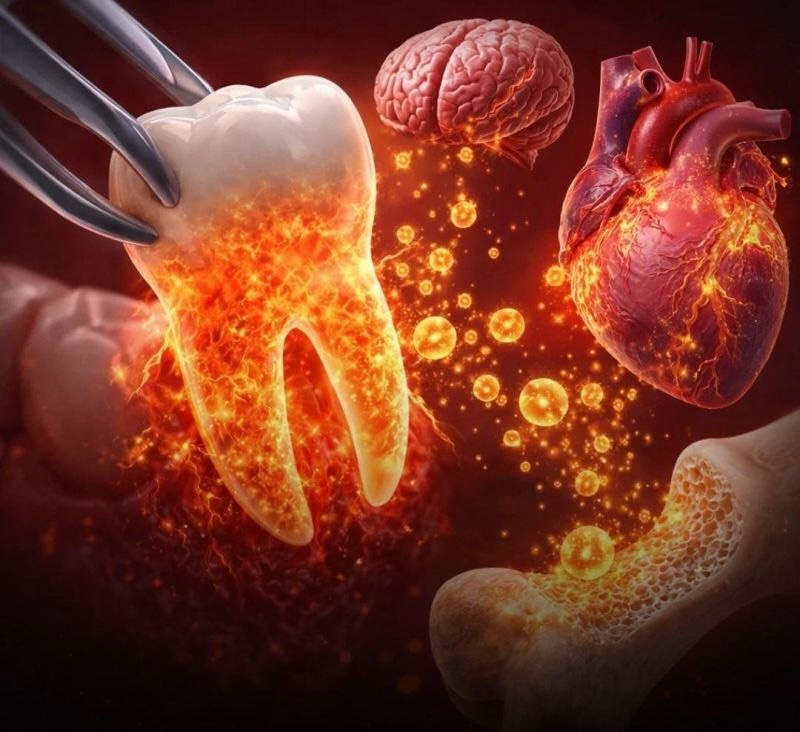
SURPRISING DISCOVERY 🚨 Scientists discover wisdom teeth contain stem cells capable of repairing the heart, brain, and bones.
Wisdom teeth contain dental pulp, a soft connective tissue threaded with blood vessels and nerves. Inside that pulp lives a dense population of mesenchymal stem cells, a class of undifferentiated cells that researchers classify as among the most therapeutically valuable biological material a human body produces.
These are not ordinary cells maintaining routine tissue. They are blueprint cells, capable of receiving chemical signals from damaged environments and reshaping themselves into whatever the body needs most, neurons, cardiomyocytes, osteoblasts, even hepatic cells under the right conditions.
The brain operates under a brutal rule: most of its neurons do not regenerate after damage. A stroke, a traumatic injury, a neurodegenerative disease removes cells the brain cannot replace through normal biological processes. Researchers have spent decades attempting to solve this through synthetic means, engineered cell therapies, growth factor injections, gene editing approaches that cost extraordinary resources and produce inconsistent results. What dental pulp stem cells demonstrated in laboratory conditions is that they can migrate toward neural damage sites, integrate with existing tissue architecture, and begin producing neurons and glial support cells. The mechanism involves neurotrophic factor secretion, essentially the cells releasing signaling proteins that stimulate the surrounding neural environment to repair itself from within.
Cardiac muscle operates under a similarly unforgiving rule. After a heart attack, the dead muscle tissue becomes fibrotic scar material. The heart compensates by making surviving muscle work harder, a process that gradually leads to enlargement, weakening, and eventual failure. Dental pulp stem cells introduced into cardiac tissue in multiple studies produced measurable reductions in scar formation and demonstrated the ability to differentiate into functional cardiomyocytes, beating in synchrony with native heart cells. Some studies recorded improved ejection fraction in animal models, the core measurement of how effectively the heart pumps blood.
Bone regeneration represents the most clinically advanced application already moving toward human trials. Dental pulp stem cells express high levels of osteogenic markers and respond rapidly to bone morphogenetic proteins, the chemical messengers that trigger skeletal repair. Their application in craniofacial reconstruction, spinal fusion, and long bone defect repair is being studied across multiple institutions simultaneously.
What separates these cells from other stem cell sources is the combination of accessibility and biological youth. Bone marrow aspiration requires sedation and produces significant post procedure pain. Umbilical cord blood requires planning around birth. Wisdom teeth emerge between 17 and 25, during peak cellular vitality, and come out during a procedure most people already schedule. The extraction window is permanent. Once the teeth are gone and the pulp degrades, that specific population of young, highly potent cells is irretrievable from that individual.
Cryogenic preservation protocols now exist that maintain dental pulp stem cell viability for over two decades. Several countries have commercial dental stem cell banks operating with the same institutional model as cord blood banking, long term frozen storage, indexed against future therapeutic need. The science supporting the value of preservation is no longer speculative. What lags behind is public awareness and clinical infrastructure in markets where this remains obscure.
The wider pattern is worth recognizing. Medicine has repeatedly discovered that profound biological tools were present in tissues it previously categorized as vestigial, unnecessary, or inconvenient. The appendix was considered evolutionary junk for over a century before researchers identified its role in gut microbiome preservation. Wisdom teeth carried the same dismissal, a developmental relic from ancestors who needed extra molars for coarse diets, relevant only in their capacity to cause orthodontic problems.
The pulp inside them was never junk. It was a repair system the body built during youth and stored in one of the most protected anatomical locations, surrounded by enamel, the hardest substance the human body produces.
Evolution rarely wastes that kind of architecture.