Red Velvet's sampled music:
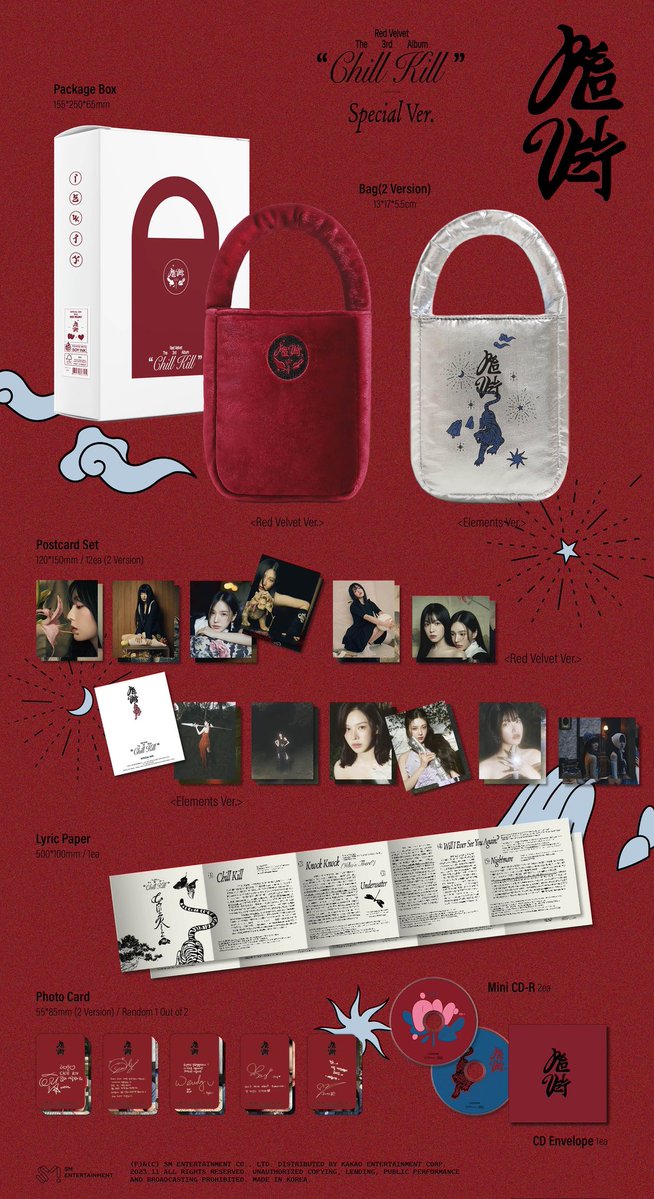
1. "Air on the G String" - Bach (for "Feel My Rhythm")
2. "Rhapsody in Blue" - George Gershwin (for "Birthday")
3. "Dance of the Sugar Plum Fairy" - Tchaikovsky (for "Knock Knock (Who's There?)")
4. "Lujon" - Henry Mancini (for "Orchestra") 🆕🔜
Nobody has ever made the dark feel as real as old Disney did.
In these films the night isn't an absence of light. It's a color, and someone mixed it by hand…
Disney had its own paint laboratory, built by a woman named Mary Weiser, the first of its kind in animation. Its job was to invent shades that did not exist yet. In the early thirties, when the studio was still making shorts, there were around eighty shades on the shelves. By the time they finished Snow White there were fifteen hundred.
Every one of them went on by hand, cel by cel, and each cel needed hours to dry before it could be photographed.
The Ink and Paint department was almost entirely women. According to the Walt Disney Family Museum, the paints were sometimes named after them, and to have a color carry your name was considered an honour.
So the dark of Bambi's forest, the lamplight in Geppetto's workshop, the blue at Cinderella's attic window: none of it is a filter or a setting or a dimmer turned down. Each is a specific colour that a specific person mixed in a jar, and some of those jars had her name on the label.
That is why these scenes still feel more alive than anything made since. We went from hands, to computers, to AI, and at every step there is a little less of the person left in it…
The author Joanna Maciejewska said it better than anyone: "I want AI to do my laundry and dishes so that I can do art and writing, not for AI to do my art and writing so that I can do my laundry and dishes."
MARCO RUBIO ACABA DE DESTRUIR EL MITO COMUNISTA PARA SIEMPRE!
«Dicen que el comunismo “suena bien en teoría, pero falla en la práctica”.
Mentira rotunda.
El comunismo nunca sonó bien, ni siquiera en la teoría.
Lo que propone es un mundo oscuro, plano, gris y miserable: un hormiguero humano donde todo lo excepcional se corta de raíz, donde la grandeza es un delito y la diferencia, un pecado.
Un mundo sin coraje, porque el valiente es peligroso.
Sin creatividad, porque el genio amenaza al rebaño.
Sin ambición, porque aspirar a más es “egoísmo burgués”.
Sin héroes, sin gloria, sin grandes causas que enciendan el alma.
Un mundo sin milagros, sin hombres que se eleven y logren lo extraordinario.
Un mundo sin Dios.
Para los arquitectos de la envidia revolucionaria, la civilización occidental, con sus catedrales, libertades, genios y conquistas, no es un logro: es una humillación intolerable.
Les recuerda cada día lo que ellos jamás podrán crear.
Y como no pueden construir, destruyen.
Como no pueden elevarse, arrastran todo hacia abajo.
Como no pueden brillar, apagan la luz.
El comunismo no es un error económico.
Es un odio existencial contra la grandeza humana.
Por eso siempre termina igual: en miseria, sangre y tumbas.
Nunca fue una utopía.
Siempre fue una distopía disfrazada de compasión.