Our administration will not relent on its efforts to protect farmers, raise productivity, strengthen the agricultural value chain, support local industry, and ease pressure on food prices over time.
This is the meaning of promise made, promise kept.
We will continue to take practical steps to strengthen Nigerian agriculture and protect food security for every Nigerian.
~ President Bola Ahmed Tinubu
5/5
However, securing inputs and keeping blending plants active and productive, is only the first step. The real test is last-mile and immediate access. Fertiliser must reach the farmers who need it, when they need it.
That is why, amongst other programmes, we launched the Renewed Hope Farm Input Support Programme (RH-FISP) through the National Agricultural Development Fund. Under this intervention, 515,720 bags of locally produced fertiliser are being distributed to 128,930 smallholder farmers across 25 states and the FCT for the current planting season.
The NADF, as part of this mandate, is also supporting modern agriculture through digital extension services, harmonised fertiliser application guidance, and targeted support for priority crops including rice, maize, cassava and soybean.
4/
As of May 2026, more than 449,000 metric tonnes of fertiliser inputs, equivalent to about 9 million bags, had been secured, with 10 vessels discharged or in transit. We remain on track to deliver a 1.1 million metric tonne fertiliser programme this year, equivalent to about 22 million bags. Despite the global shocks, strategic contracting for key inputs also generated ₦61.58 billion in savings in 2026 alone, helping to keep fertiliser more affordable for farmers.
Nigeria now has more than 90 operational fertiliser blending plants, the largest blending capacity in Sub-Saharan Africa. This capacity means jobs, local production, industrial growth, and greater resilience for our food system.
3/
Over the past year, disruptions in global supply chains and rising costs of key fertiliser inputs, exacerbated by conflict in the Middle East, created serious pressure for many countries. For Nigeria, the risks were glaring if we failed to move fast. This includes potential input shortages, higher fertiliser prices, pressure on local blending plants, reduced farm productivity, and higher food prices.
I am pleased to inform you that we moved early.
Through the Presidential Fertiliser Initiative (PFI), now restructured under MOFI, we strengthened procurement, secured critical raw materials, signed forward agreements, improved coordination across the value chain, and protected Nigeria’s local fertiliser blending industry from the worst effects of global market disruption.
2/
When we came into office, we made a promise to Nigerians that food security would be a major pillar of our Renewed Hope agenda.
We promised to support our farmers, strengthen local production, reduce dependence on imports, and build an agricultural system strong enough to withstand shocks from beyond our borders.
That promise is being kept.
1/
PRESS RELEASE
𝐓𝐇𝐄 𝐅𝐄𝐃𝐄𝐑𝐀𝐋 𝐆𝐎𝐕𝐄𝐑𝐍𝐌𝐄𝐍𝐓 𝐍𝐎𝐓𝐄𝐒 𝐈𝐌𝐅 𝐀𝐒𝐒𝐄𝐒𝐒𝐌𝐄𝐍𝐓 𝐎𝐅 𝐍𝐈𝐆𝐄𝐑𝐈𝐀'𝐒 𝐄𝐂𝐎𝐍𝐎𝐌𝐘 𝐀𝐍𝐃 𝐑𝐄𝐌𝐀𝐈𝐍𝐒 𝐂𝐎𝐌𝐌𝐈𝐓𝐓𝐄𝐃 𝐓𝐎 𝐒𝐔𝐒𝐓𝐀𝐈𝐍𝐈𝐍𝐆 𝐑𝐄𝐅𝐎𝐑𝐌𝐒 𝐌𝐎𝐌𝐄𝐍𝐓𝐔𝐌
Abuja, 9 June 2026
The Federal Government welcomes the publication of the International Monetary Fund (IMF) 2026 Article IV Mission Concluding Statement on Nigeria and notes its overall positive assessment of the country's economic reform programme. The report provides further independent validation that the bold and necessary reforms undertaken under the leadership of President Bola Ahmed Tinubu, GCFR, are strengthening macroeconomic stability, restoring confidence, and laying the foundation for sustainable and inclusive growth.
The IMF observed that reforms implemented over the past two and a half years have yielded improved macroeconomic outcomes and enhanced Nigeria's resilience to external shocks. The Fund specifically highlighted improvements in foreign exchange market functioning, stronger external buffers, ongoing fiscal and revenue reforms, banking sector resilience, and growing macroeconomic stability. These developments affirm that Nigeria is moving in the right direction and is better positioned to withstand global economic uncertainties than at any time in recent years.
The Government is particularly encouraged by the IMF's recognition that the difficult but necessary decisions to end fuel subsidies, eliminate deficit monetisation, liberalise the foreign exchange market, and strengthen fiscal discipline have contributed significantly to reducing vulnerabilities and rebuilding confidence in the economy. The report notes that Nigeria now faces global shocks with stronger policy frameworks and buffers than before.
The recent conflict in the Middle East has created new challenges for economies around the world through higher energy prices, rising food costs, tighter financial conditions, and disruptions to global supply chains. While these developments present inflationary pressures, the IMF acknowledged that Nigeria has demonstrated notable resilience. Despite significant increases in global energy prices, the foreign exchange parallel market premium has remained below five percent, sovereign spreads have remained broadly stable, and investor confidence has been preserved.
The IMF further noted that Nigeria is well positioned to benefit from higher energy prices through stronger export earnings, improved fiscal revenues, and increased foreign exchange inflows.
The Federal Government remains focused on translating these opportunities into long-term gains by increasing crude oil production, expanding domestic refining capacity, growing gas production and exports, and attracting new investments across the energy value chain.
The Government acknowledges the IMF's observation that poverty and food insecurity remain significant challenges. While progress is being made in terms of per capita income growing by nearly 10 percent in 2025 indicating marked reduction in poverty levels, we are mindful that macroeconomic stability, while necessary, is not sufficient on its own. Economic growth must be inclusive and must translate into tangible improvements in the welfare of Nigerians.
Accordingly, the Government continues to strengthen targeted social protection programmes, including direct cash transfers to vulnerable households, support for small businesses, student financing through the Nigerian Education Loan Fund (NELFUND), consumer credit initiatives, healthcare investments, and interventions aimed at improving livelihoods and expanding economic opportunities.
In agriculture, the Government is scaling up investments through the Renewed Hope National Agricultural Mechanisation Programme and other initiatives designed to improve productivity, expand irrigation and dry-season farming, enhance access to inputs and financing, strengthen value chains, and improve food security. These efforts are aimed at moderating food inflation while creating jobs and raising rural incomes.
The Federal Government also welcomes the IMF's recognition of the progress being made in domestic revenue mobilisation and public financial management reforms. The successful implementation of Nigeria's new tax laws, the digitisation of revenue collection processes, improved transparency in public finance, and enhanced accountability mechanisms will continue to strengthen fiscal sustainability while ensuring a fairer and more efficient tax system.
We note the IMF's recommendations regarding fiscal reporting, budget transparency, and data reconciliation. The Government is already taking steps to strengthen fiscal data integrity, improve coordination among relevant institutions, enhance transparency in budget execution, and deepen public financial management reforms. Efforts are ongoing to improve fiscal reporting systems and ensure that economic and fiscal statistics continue to meet the highest international standards.
The report's medium-term outlook reinforces confidence in Nigeria's economic prospects. The IMF projects continued economic growth above four percent, improving external reserves, rising investment, and strengthening fiscal revenues over the medium term. Public debt has already declined relative to GDP, while reserve buffers have strengthened considerably. These outcomes which complement recent sovereign credit rating upgrades by leading international rating agencies reflect the growing resilience of the Nigerian economy and the positive impact of ongoing reforms.
The Federal Government remains firmly committed to maintaining macroeconomic stability, accelerating inclusive growth, strengthening fiscal discipline, deepening structural reforms, improving the investment climate, expanding infrastructure, enhancing human capital development and job creation. We will continue to pursue policies that support private sector growth, attract domestic and foreign investment, and improve the competitiveness of the Nigerian economy.
While challenges remain, the direction is clear and the foundations are stronger. The ultimate objective of these reforms is not merely improved economic indicators, but better outcomes for every Nigerian - lower inflation, decent jobs, higher incomes, greater economic opportunity, and a better quality of life.
𝐓𝐚𝐢𝐰𝐨 𝐎𝐲𝐞𝐝𝐞𝐥𝐞
Honourable Minister of Finance and Coordinating Minister of the Economy
Federal Republic of Nigeria
I will not stand before you and declare the work finished, because it is not. The housing deficit this nation carries is counted in the millions, and it will take years of steady labour to close, and I would rather say that to you plainly than flatter you with a lie.
But the difference now is real. For the first time in a generation, the whole housing value-chain is moving together: the land and its title, the building, the materials, the equipment, the finance, and the family at the end of it, and no part waits idle on another.
Housing has moved from a welfare conversation to a national growth strategy. Real estate and construction now sit among Nigeria’s major GDP contributors, proving that every affordable home financed is also a factory order, a labour contract, a mortgage asset, a household balance sheet and a contribution to national output.
That is what I promised for our housing sector, and that is what is now being delivered. Renewed Hope was never charity. It is the right of every Nigerian to a place called home.
Bola Ahmed Tinubu
President of the Federal Republic of Nigeria
But a home that is built and cannot be bought is only a monument, and on this point, Nigeria has stumbled for decades. So, we turned to the question of money.
Through the MOFI Real Estate Investment Fund, 1,859 families across 25 states have now drawn ₦128 billion in mortgages, fixed at 9.75 per cent and repayable over 20 years, terms our people were told for a generation they would never see.
Through Family Homes Funds, we have kept faith with the poorest, housing widows and low-income earners, under a mandate to reach 500,000 homes and the 1.5 million jobs that rise with them.
4/
A house does not begin at its walls, and we refused to govern as though it did. We promised to confront the foundation, the tools and the cost of building itself.
So we have moved to title land that sat for generations as dead capital, working with the World Bank to lift this nation from fewer than one plot in ten formally registered toward one in two.
We have strengthened the framework that governs equipment leasing, so that a builder or contractor can secure the machines a project needs with legal certainty and the confidence of those who finance them, and no site stands idle for want of a crane.
And,we have published uniform prices on our homes, so that no Nigerian pays a bribe to learn the cost of a roof, while raising materials hubs in all six zones so that we build with our own hands and our own resources.
3/
We promised a programme built on a national scale, 100,000 homes in all, with 50,000 in the first phase through cities of 1,000 units in every geopolitical zone and the Federal Capital Territory, and estates of up to 500 units in the remaining 30 states.
What stands today is no longer a drawing. We broke ground on more than 3,000 homes at Karsana in Abuja, the 2,000-unit city at Ibeju-Lekki in Lagos has reached advanced completion with sales already underway, and across the country, more than 15,000 units are rising as I write this.
2/
When I placed the Renewed Hope Agenda before Nigerians, I did not speak of housing in vague terms. I gave my word that this administration would work to make decent homes affordable again, and that a hardworking family, after years of paying rent, would finally have a path to a house of its own.
Let me account for that promise plainly, by juxtaposing what we pledged beside what we have actually achieved.
1/
I commend all our patriotic front-line soldiers in the fight against terrorism in all forms.
You stand as a shield between innocent citizens and those who seek to destroy the peace, safety, and dignity of our communities.
In the forests, on the roads, at forward operating bases, in the air, creeks, and across difficult terrains, you carry the burden of national protection so that millions of Nigerians can sleep, work, worship, farm, trade, and raise their children in hope.
This fight has not been easy. It has come with pain, pressure, and sacrifice. But your courage has remained firm. Your service is acknowledged. Your sacrifice is honoured. Your country does not take you for granted.
To every officer and soldier of our Armed Forces, to the Police, DSS, Civil Defence, intelligence services, local security formations, and all who work day and night to keep Nigeria safe, I say thank you.
I also acknowledge the families behind the uniform. Many of you have endured long absences, anxious nights, and the emotional cost of duty. Nigeria remembers that sacrifice, too.
We honour those who have paid the supreme price in defence of our country. Their names may not always trend, but their courage lives on in rescued communities, protected families, and the survival of the nation they served.
The fight against terror is not only a military operation. It is a national duty. Citizens must support our security forces by providing timely, useful information. When you see something, say something. When you know something, report it.
Nigeria will not surrender to fear. We will not allow terrorists, bandits, kidnappers, or violent extremists to define who we are as a people. Their violence is not our identity. Their hatred does not represent Nigerians of any faith, creed, or community.
To our troops and all front-line patriots, thank you for your courage. Thank you for your vigilance. Thank you for your service.
May the Almighty protect you as you protect our country.
Bola Ahmed Tinubu
President and Commander in Chief of the Armed Forces
Federal Republic of Nigeria
The system — colors included —spread rapidly, and in 1935 the Federal Highway Administration officially standardized red, yellow, and green as the required colors for all traffic lights in the United States.
Copied from History fact.
WHY ARE TRAFFIC LIGHTS RED, YELLOW AND GREEN
For drivers in many parts of the globe, the red, yellow, and green sequence of traffic lights has become an instinctual part of how we move through the world. But why these three colors? How did they come to govern the movement of billions of people across the planet every day? As it turns out, there are a few factors in play, including the history of transport, color psychology, and basic physics.
Red Lights and Railroads
The colors used in traffic lights today were not invented for roads. They were largely inherited from the railway industry, which began developing light-based signaling systems in the 1830s (based on even older semaphore flagging). But in the early days of railroads, the colors were slightly different: While red was used to signal “stop,” white meant “go,” and green was the color used to indicate caution.The use of red in the original system was never really in doubt. In the human psyche, red has an innate connection with warning and danger — a psychological and possibly biological response that might be due to the color’s association with blood and fire. That alone makes red a natural choice for warning signs. But there’s also some physics in play. Red has the longest wavelength of any color in the visible light spectrum, making it visible over greater distances than many other colors. Red light also dissipates less in the atmosphere when compared to shorter-wavelength light. So, when a signal must be seen from as far away as possible — and remain visible in fog, rain, or at night — red is the perfect choice. The people in charge of developing railway signals were well aware of both the psychology and physics of the hue, and as it worked just fine for trains, it was later used as the color for “stop” in the world’s first mechanical, electric traffic lights, which appeared in Paris in 1923.
From White Light to Green
While red was a no-brainer for “stop” for both train and traffic lights, the choice of yellow and green wasn’t so inevitable. The railway system originally used white as the color for “go” — but it soon became apparent that this was problematic and potentially dangerous, simply because of the sheer prevalence of white lights in our surroundings. A train driver could easily mistake a star, streetlamp, oil lantern, or the light from a building for a “go” sign. So the railroads decided to adopt a new color — something more distinctive and not easily confused with the light pollution of the modern world. The solution was to replace white with the color initially used to indicate caution: green. Green light has a shorter wavelength than red but remains highly visible over long distances — and, due to the nature of the photoreceptors in the human eye, green is actually a more widely visible part of the light spectrum at any distance.
The human eye contains photoreceptor cells called cones, which come in three types sensitive to roughly red, blue, and green wavelengths. The green-sensitive cones are the most numerous and most sensitive, so our eyes process green light more efficiently than any other color. This, combined with the psychological association that green has with calm and safety, made it a good option for “go.” It also offered an obvious contrast with the red lights already used for train traffic.
The Addition of Yellow
With green selected for “go,” the railroads chose yellow (or amber) to represent caution. Yellow was distinct enough from red and green to make it a viable option — it sits between those two colors in the visible spectrum. As well as being bright and easy to spot, yellow occupies a middle ground psychologically, having neither red’s alarm nor green’s calm.
When William Potts — the Detroit police officer credited with designing the first three-way colored traffic lights in the 1920s — adapted the system for the road, he continued the use of yellow as the intermediate cautionary light.
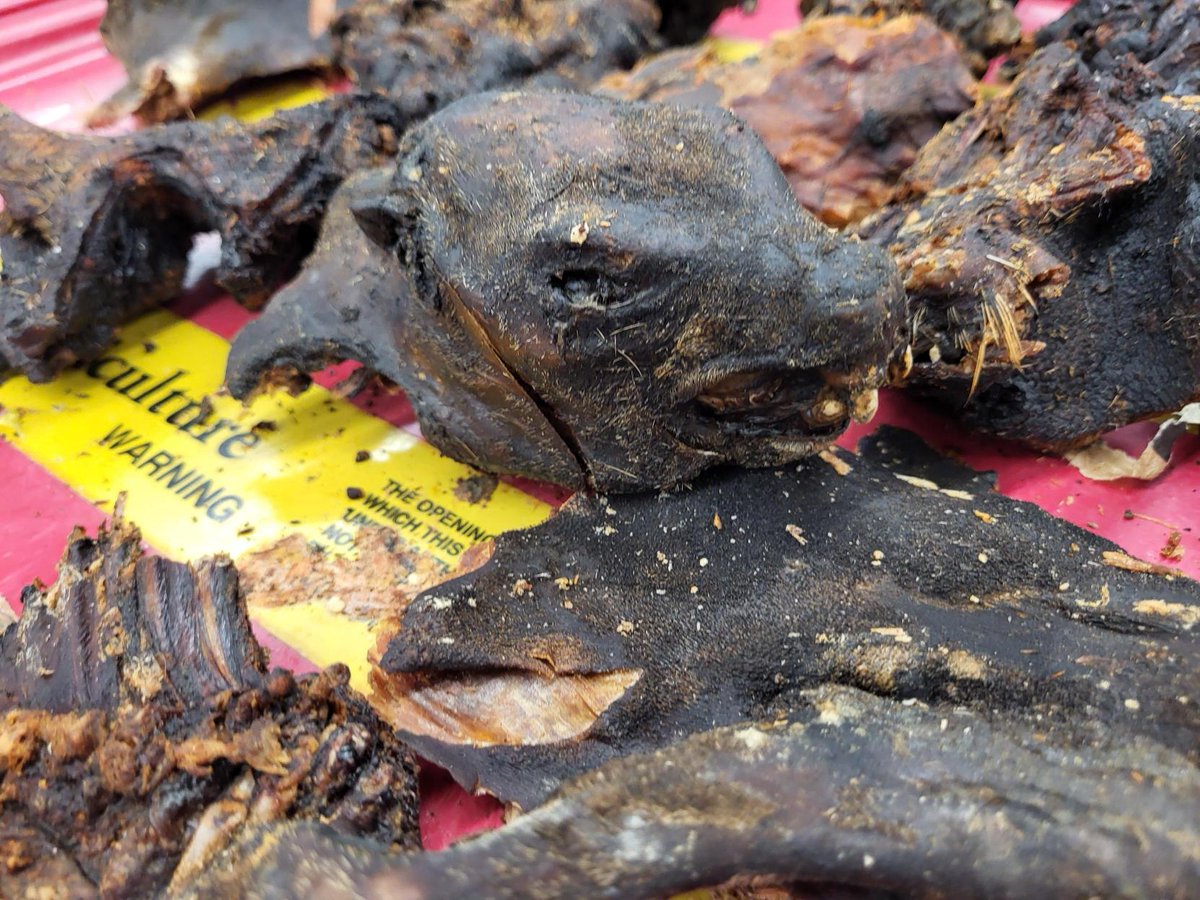
When traveling into the U.S., please note that bushmeat is prohibited to bring into the country. Before you come back from your trip abroad, check CBP's restricted items list about the items you plan to bring back. ➡️ https://t.co/02J14VASbn