Stablecoins are probably the least “exciting” part of crypto.
And that might be exactly why they matter so much.
While everyone watches the next token pump, stablecoins are quietly doing the boring stuff moving money, settling trades, powering payments, and giving people a way to stay onchain without riding every market swing.
But don’t let the word “stable” fool you.
A stablecoin is only as solid as what’s behind it. Reserves, issuers, transparency, liquidity, and regulation all matter. If you’re using one, it’s worth knowing what’s actually under the hood.
The bigger picture is pretty simple:
Crypto doesn’t just need assets people can speculate on. It needs money people can actually use.
And stablecoins are getting closer to filling that role.
Not flashy.
Just useful.
#Binance
#BinanceAcademy
#LearnWithBinance
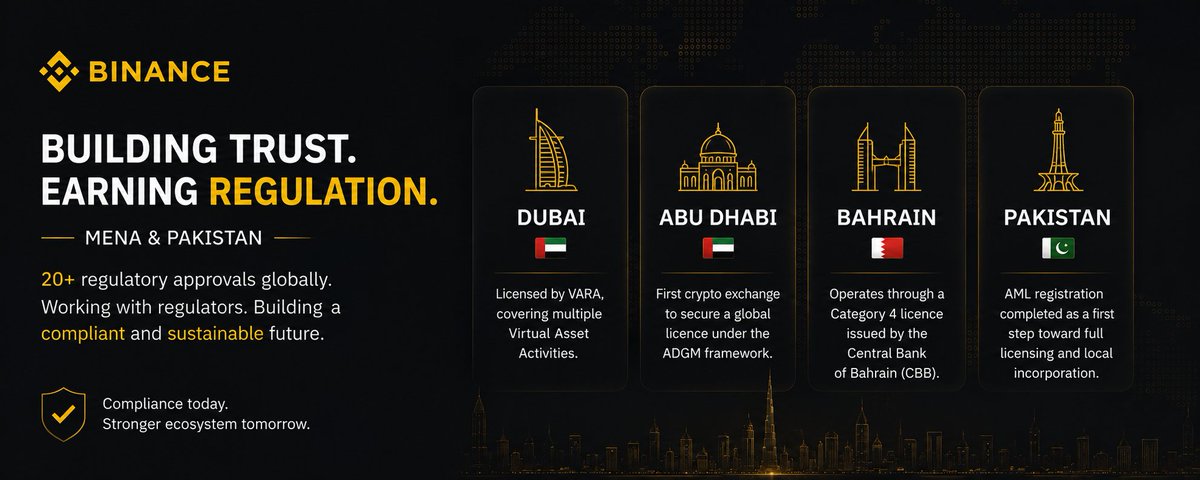
Binance has been making some interesting moves across MENA & Pakistan lately.
It’s easy to focus on prices, listings and trading.
But behind all that, regulation is what can actually open the door for crypto to grow in more countries.
Binance now has 20+ regulatory approvals globally.
🇦🇪 Dubai — VARA licence
🇦🇪 Abu Dhabi — ADGM licence
🇧🇭 Bahrain — Category 4 licence from CBB
🇵🇰 Pakistan — AML registration completed
Pakistan is the one I’m watching closely. 🇵🇰
There’s still a way to go, but you’ve gotta start somewhere.
Slowly but surely, crypto is finding its place in the region.
#Binance
#BinanceAcademy
#LearnWithBinance
Spot vs Futures,I Wish Someone Explained This to Me Earlier
When I started trading crypto, Spot and Futures looked almost the same on the screen.
Pick a coin. Pick a direction. Make a trade.
But under the hood, they’re very different.
Spot Trading
With Spot, you’re buying the actual asset. If I buy BTC on Spot, I own BTC and can hold it for as long as I want.
No expiry, no liquidation from leverage. Pretty straightforward.
Futures Trading
With Futures, I’m not simply buying the coin. I’m trading a contract based on where I think the price will move.
It also gives you tools like leverage and the ability to trade both sides of the market.
Sounds cool, but there’s a catch.
Leverage is a double-edged sword. It can boost your exposure, but one wrong move can hit your position hard or even get you liquidated.
What I Learned
Spot and Futures aren't competitors. They're different tools for different jobs.
If you don’t understand leverage, margin, or liquidation yet, don’t rush just because you see other traders doing it.
In crypto, knowing what you’re clicking matters just as much as knowing when to buy or sell.
#Binance
#BinanceAcademy
#LearnWithBinance
The Line Between Crypto & TradFi Is Fading!
A few years ago, crypto and traditional finance felt miles apart. Stocks and ETFs lived in one world, while digital assets lived in another.
That’s changing pretty fast. More platforms are starting to offer access to both, and imo, this is where finance gets interesting.
It’s not about crypto eating TradFi’s lunch or TradFi pushing crypto aside. They can actually complement each other.
One brings decades of established markets and infrastructure. The other brings a new digital layer and different ways to participate.
Two different roads, but they’re starting to lead to the same place. For users, that could simply mean more choice under one roof.
No need to pick a team. Learn both, understand the risks, and use what makes sense for you.
The financial world isn’t standing still. Neither should your knowledge.
#Binance
#BinanceAcademy
#LearnWithBinance
Stablecoins might not be the flashiest part of crypto, but they’ve quietly become one of the most useful.
Think about it: crypto never sleeps, but prices can swing like crazy. Stablecoins are designed to track assets like the US dollar, making them useful for trading, payments, transfers, and moving money around onchain without dealing with the same level of volatility.
But here’s the catch “stable” doesn’t automatically mean safe.
Who issues the stablecoin, what actually backs it, how reserves are managed, and what regulations apply are all worth checking. You still need to do your homework.
As more finance moves onchain, I think stablecoins are going to stay right in the middle of the conversation.
Not the loudest crypto narrative, maybe. But definitely one worth understanding.
#Binance
#BinanceAcademy
#LearnWithBinance
Regulation isn’t the exciting part of crypto. But it matters.
Binance has been stacking up approvals across MENA instead of just talking about expansion.
Dubai → VARA licence 🇦🇪
Abu Dhabi → ADGM licence 🇦🇪
Bahrain → Category 4 licence 🇧🇭
Pakistan → AML registration 🇵🇰
That Pakistan move caught my eye.
It’s still early days, but getting the regulatory side sorted is how bigger things eventually get off the ground.
Bit by bit, the pieces are falling into place.
#Binance
#BinanceAcademy
#LearnWithBinance
Spot Trading vs Futures Trading What’s the Difference?
When I first got into crypto, I thought trading was pretty simple. You buy something, wait for the price to move, and sell it. But once you dig a little deeper, you realize Spot and Futures are two completely different ball games.
Spot Trading
Spot is the simpler one. You buy an asset at the current market price, and once the trade is completed, you actually own it. If you buy BTC on Spot, that BTC is yours. People often use Spot when they simply want to buy, hold, or sell an asset without dealing with contracts or leverage.
Futures Trading
Futures works differently. Instead of buying the actual asset, you’re trading a contract based on where you think the price will go. You can trade both upward and downward price movements, which gives you more flexibility, but also adds more complexity.
The Risk Part
This is where things can get spicy. Futures can involve leverage, which can increase your market exposure with less capital. Sounds tempting, but it cuts both ways. Bigger exposure can mean bigger gains, but losses can pile up just as fast, and positions can even get liquidated.
Which One Makes Sense?
There’s no one-size-fits-all answer. Spot is generally more straightforward, while Futures comes with more tools and more risk. Before jumping in, know what you’re trading and understand how much you can actually lose.
The market has a funny way of teaching expensive lessons when you skip the homework.
#Binance
#BinanceAcademy
#LearnWithBinance
Stablecoins are getting a lot of attention lately, and tbh, it makes sense.
Crypto prices can be all over the place. Stablecoins are designed to track assets like the US dollar, giving people another way to trade, send money, make payments, or simply move funds around onchain.
But “stable” doesn’t mean zero risk.
How a stablecoin is backed, who issues it, how reserves are managed, and the rules around it still matter. Sometimes you’ve gotta look under the hood instead of taking the name at face value.
As crypto slowly finds its way into everyday finance, stablecoins are becoming a pretty big piece of the puzzle.
Worth understanding how they actually work before jumping in.
#Binance
#BinanceAcademy
#LearnWithBinance
Spot vs Futures Know What You’re Getting Into
A lot of people enter crypto thinking Spot and Futures are basically the same thing.
They’re not.
Spot Trading
With Spot, you buy the actual asset at the current market price. Buy BTC, ETH, or any other crypto on Spot and you own that asset.
It’s simple: buy, hold, sell. No rocket science.
Futures Trading
With Futures, you’re trading contracts based on price movements rather than simply buying the underlying asset.
You can trade whether you expect the market to move up or down, and leverage can give you larger exposure with less capital.
But that’s a double-edged sword.
Leverage can amplify profits, but it can amplify losses just as quickly. Push it too far and liquidation can knock on your door before you know it.
The Bottom Line
Spot is generally simpler and easier to understand.
Futures gives traders more flexibility, but with that comes more complexity and risk.
Don’t jump into the deep end just because everyone else is doing it.
Understand the game before you play it.
#Binance
#BinanceAcademy
#LearnWithBinance