@gkbalogs Multi brand strategy, increase market presence to gain market share and cater for the different categories of customer that consumes milk. They might even consider an option for the lactose intolerant .
@autocareplusng I engaged you in August 2023 to inspect a lexus Rx350. Everything you flagged about the car happened eventually. So please stay on track and keep doing your job.
YOU MAY STILL BE YOUR PARENT'S CHILD
Dear Eric,
PHENOTYPE or GENOTYPE
Your "genotype" test might be lying to you!
READ ME!!!!
Many labs in Nigeria aren’t actually giving you your genotype...they’re giving you your phenotype. And yes, there’s a difference!
1) Phenotype is like vibes, genotype is the DNA behind it.
Labs report HbAA, AS, SS, etc., based on what your blood is showing, not the exact genes you inherited. It’s like saying someone is rich because they drive a Benz...without checking their bank account.
● Phenotype: The observable expression of the hemoglobin types present in the blood, typically reported as AA, AS, SS, AC, SC, etc.
● Genotype: The actual genetic makeup of the individual, which requires DNA-based testing to determine specific alleles at the HBB gene locus.
2) Your "AA" might not be so innocent.
Some rare hemoglobin variants (HbD, HbE, HbO, thalassemias) can masquerade as AA or AS. Imagine thinking you married an AA, only to find out 9 months later you were lied to. SURPRISE! 🎁
3) Why does this matter?
You could accidentally have a child with sickle cell disease because the lab "forgot" to check for rare variants. A ₦5k test today could cost you millions in medical bills later. 😬
4) How do you avoid this mess?
● Get HPLC (High-Performance Liquid Chromatography) instead of basic electrophoresis.
● If your result is confusing, get DNA testing...because genes don’t lie, but lab results sometimes do.
Moral of the story: If you're testing for genotype, ask “Is this phenotype or genotype?” before life humbles you!... and when you have done the right test and it's still confusing you need to ask the source deeper questions.
𝗥𝗲𝗰𝗿𝘂𝗶𝘁𝗶𝗻𝗴 𝗛𝗥 𝗶𝗻 𝗮 𝗣𝗮𝗶𝗻𝗳𝘂𝗹 𝗘𝗰𝗼𝗻𝗼𝗺𝘆: Why my Company is Pivoting to Internships
If you lead a small company in Africa, by now, you've gotten the memo. Educational systems are failing and the pipeline for talent is shrinking.
The few "good" staff are either being scooped up by bigger firms or are leaving the country ("Japaing").
And, this generation of employees ain't loyal. You'll recognize it from their CVs. They spend 2 or 3 years in organizations before moving on. So, once you train them, there's a high probability they will leave.
Then, there's the uptick in anxiety and impostor syndrome plaguing young workers. The harsh macro-environment, wave of technology addiction and fracturing families are contributory factors.
So, what are you to do as a CEO?
𝗪𝗵𝗮𝘁 𝗦𝗶𝗺𝗼𝗻 𝗦𝗶𝗻𝗲𝗸 𝗧𝗵𝗶𝗻𝗸𝘀
The first time I heard @SimonSinek speak about generational workplace issues, I balked at the implications for Africa. What I took away was that leaders would increasingly do the work parents should have done at home (but didn't do).
And so, in the evolving workplace, mentoring, and coaching must be prioritized. As a CEO, your main headache will no longer be the technical work but the personal baggage that people bring to work.
In other words, you will be dealing with stuff that should've been dealt with at home, or personally.
Case in point: companies want staff that are street smart but in an average privileged middle-class African home, children never do the following on their own - use public transport, haggle at a local market or cook for an entire family - until they are shipped off to College.
In the west, camping is not just a parental bonding exercise. It's an excuse to teach children survival skills. What is the equivalent in middle-class Africa now?
The rich typically use internships in the companies that they own, and prestige sports to hone independence and socialization in their children.
𝗦𝗼𝗰𝗶𝗮𝗹 𝗜𝘀𝘀𝘂𝗲𝘀 𝗮𝘀 𝗕𝘂𝘀𝗶𝗻𝗲𝘀𝘀 𝗖𝗵𝗮𝗹𝗹𝗲𝗻𝗴𝗲𝘀
Some of the issues plaguing young workers are societal:
1. Incessant consumption of bad news and the proliferation of click bait.
2. Use of technology devices all-day every day.
3. Excessive peer comparison on social media, and online bullying.
These things are causing shorter attention spans, increased anxiety, low self-esteem, impostor syndrome and a lack of socialization, resulting in loneliness.
How are small organizations supposed to cope with what parents, educators, governments and self should have addressed before people resume for work?
𝗗𝗼𝘂𝗯𝗹𝗲-𝗯𝗮𝗿𝗿𝗲𝗹𝗲𝗱 𝗣𝗿𝗼𝗯𝗹𝗲𝗺𝘀
How does a growing company compete with large firms for top talent and then be expected to take on the additional burden of social deficits?
If the biggest companies are having to poach from their peers to fill their talent pipelines, what is a small entity to do?
Something has to give because as a CEO, if you don't address these issues, your company will find it difficult to attract good talent, and even when you do, you will experience high staff turnover and poor productivity.
The next China 🇨🇳 is:
- not Mexico 🇲🇽
- not South America 🇧🇷
- not Central Asia 🇰🇿
- not Africa 🇿🇦
- not America with robots 🇺🇸
- and it is not India 🇮🇳
It is non-English speaking Southeast Asia 🇮🇩 🇻🇳 🇧🇩 🇲🇾 🇹🇭 🇰🇭 🇲🇲 🇸🇬
Vietnam, Indonesia, Malaysia, Thailand, Cambodia, Bangladesh, and Myanmar (no Philippines, no India) with Singapore as the new region’s “Hong Kong”.
That is 500 million people who will power the world’s next chapter of low cost manufacturing.
In this video I break down the 9 reasons why this is the case:
1. Willing governments (now is our time)
2. Willing people (traditional tiktok and no onlyfans)
3. No competition for the same workers (English verbal India and Mexican cartels)
4. Population density (Indonesia 🤯) for supply chain clustering
5. Educated populations with the right culture and the ability to level up from worker to engineer to boss (happening in Vietnam already)
6. Ports
7. Proximity to raw materials 🇨🇳 🇯🇵 🇰🇷
8. Proximity to manufacturing knowledge 🇨🇳 🇯🇵 🇰🇷
9. A trading hub to make it call come together
China is going to blow our minds over the next 10 years but a lot of industries are going to leave that country for non-English speaking SEA, and no it won’t be automated in the developed world.
This is a 10-20 year trend.
The future from China to Southeast Asia, is Asian.
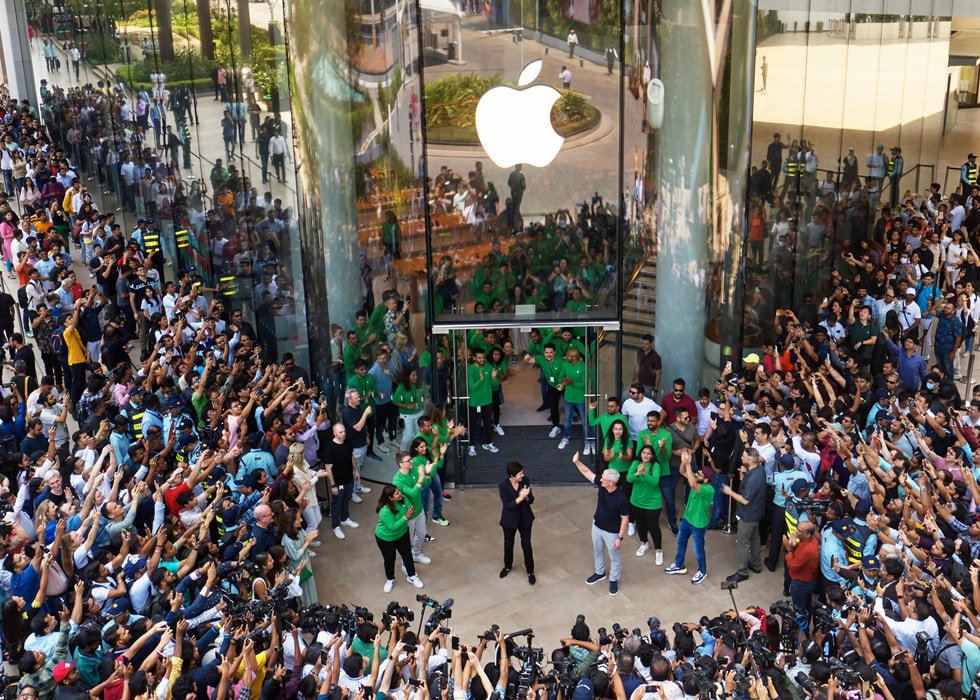
Earlier this year, Tim Cook visited India to open India's 1st Apple store
But why fly 13000km for a store-opening? Because these are no ordinary stores
These are Steve Jobs' greatest invention, even bigger than iPhone!
THREAD: Why you'll never see shopping the same way again🧵