Hi Crime Watch. Can you please hide my ID? I bought an Arsenal jersey for £85 as a gift for someone living in Zimbabwe. I sent the parcel with DHL on 18 August 2026 and paid £48 in charging fees. VAT charges were to be paid upon collection.
After 6 days, I messaged them to ask about the status of my parcel, as it showed as on hold or in clearance when I tracked it. They replied that they had just launched an investigation and would get back to me by 28 August 2026.
On 28 August, they told me that the local customs department confirmed the parcel was on hold awaiting VAT payments. I then notified the recipient to pay the VAT, and he was told to pay US$123 for a jersey that cost £85. Despite this, he paid the amount. They said they would call him to collect the parcel after 4 or 5 days because they needed to clear it.
Today, the recipient went to check on his parcel since he hadn’t received a call. They told him to pay an additional storage fee of US$87 because the parcel should have been collected within 3 days of arrival. They weren't communicating with me; if you track it, it either shows as on hold or in clearance until I messaged them to find out what was going on.
Can you please tag the responsible authority and anyone else who knows more about these matters? Imagine paying US$123 in VAT for a T-shirt that costs £85, and on top of that, they are claiming US$87 in storage charges. I told him to leave it because it’s too much for just a T-shirt. It doesn’t make sense to me. I wish others knew about this so they wouldn’t fall into the same trap.
@DHLAfrica@Zimra_11
@HeraldZimbabwe This diversion of should be ring-fenced taxes is destroying our country. Instead of setting up data centers they're busy doing @MoLAFWRD_Zim work. Just like zinara setting up solar farms or drilling boreholes instead of fixing road. This is nonsense.
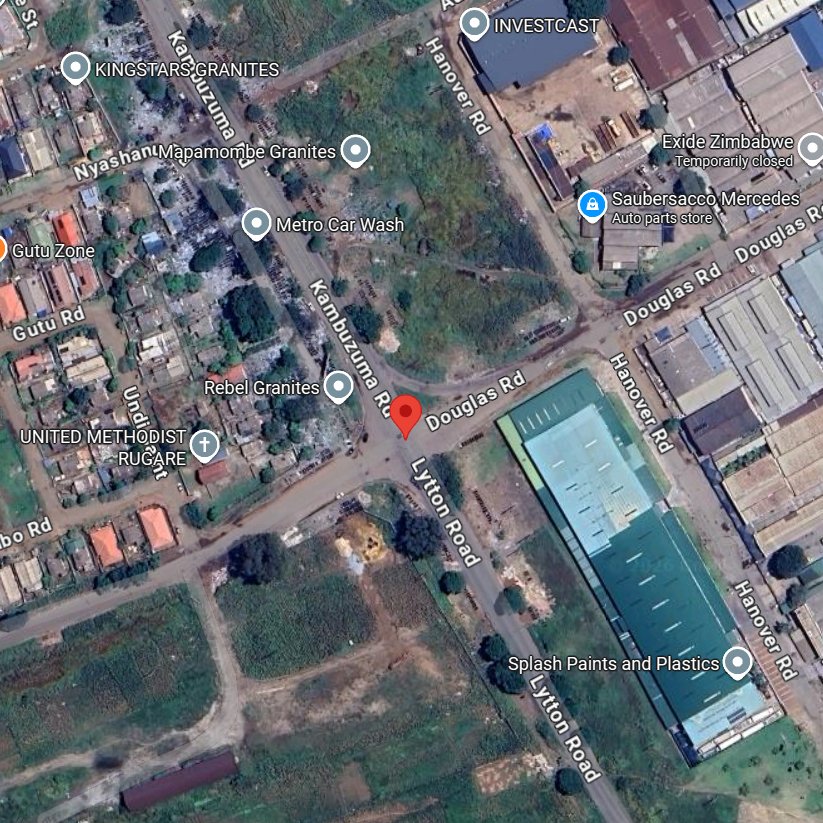
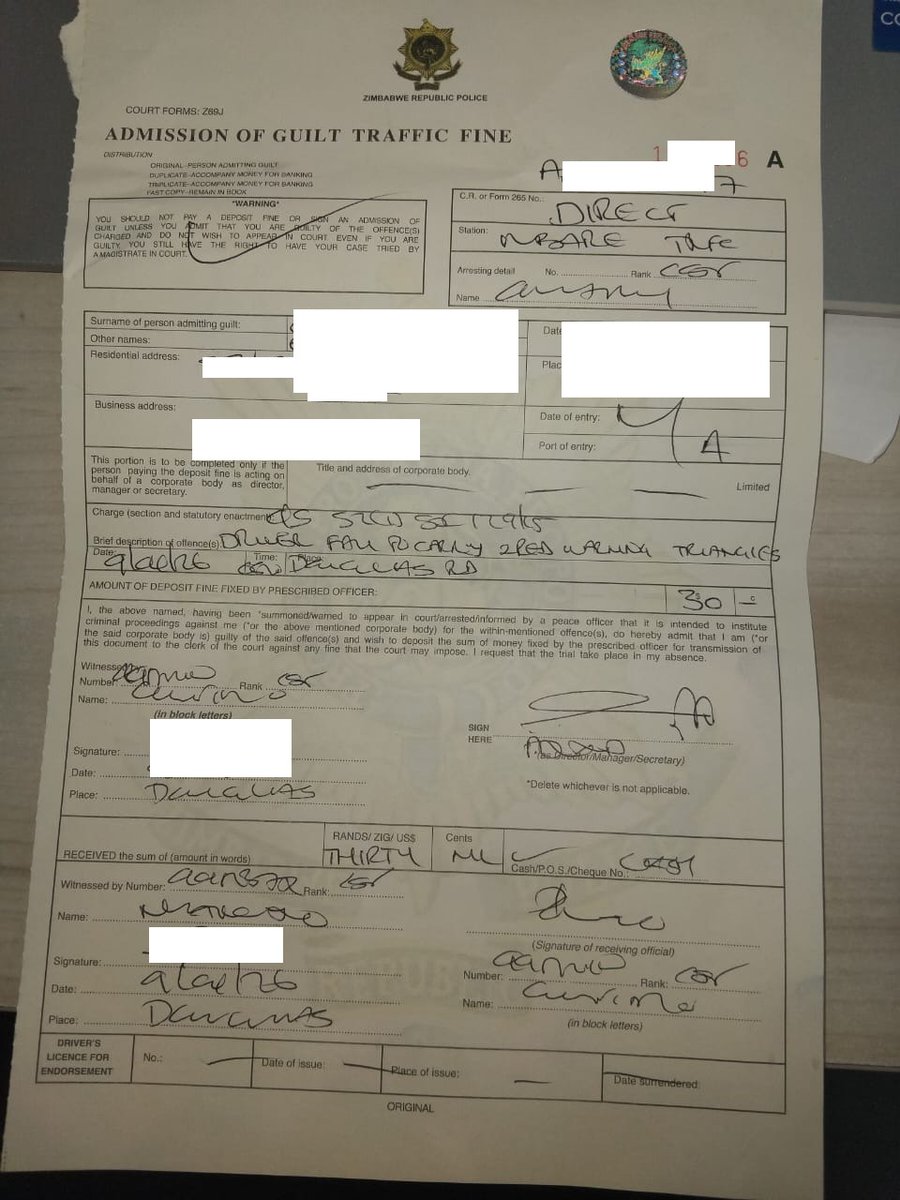
It's Sad! ZRP ethics have gone so rogue. This morning, at the Corner of Lytton Road and Douglas road in Rugare, ZRP officers were waving down vehicles driven by people on their way to work. They were issuing fines with a minimum charge per car which meant each driver was being forced to pay up US$60 cash and to make matters worse, no card payments were allowed. Ukada kutaurisa uri kunzi toenda newe. All the officers from Mbare Police station.
In my case, I managed to negotiate it to US$30 and I was being charged for not having set of warning triangles. I first went to the office because it was only 5 minutes away. I needed to report for work and borrow some cash from a colleague.
However, I noticed that every motorist was being charged for at least two violations, including faulty brake lights, missing warning triangles, and using a phone while driving (even when it was resting on their legs).
The officers I recall were Jangara (a male officer) and Gwatidzo (a female officer). The female officer was the one flagging down vehicles while holding a book, and she would then direct the male officer to attend to each vehicle. There were more than 15 cars at the scene. I wish I had taken a picture of that intersection.
@PoliceZimbabwe
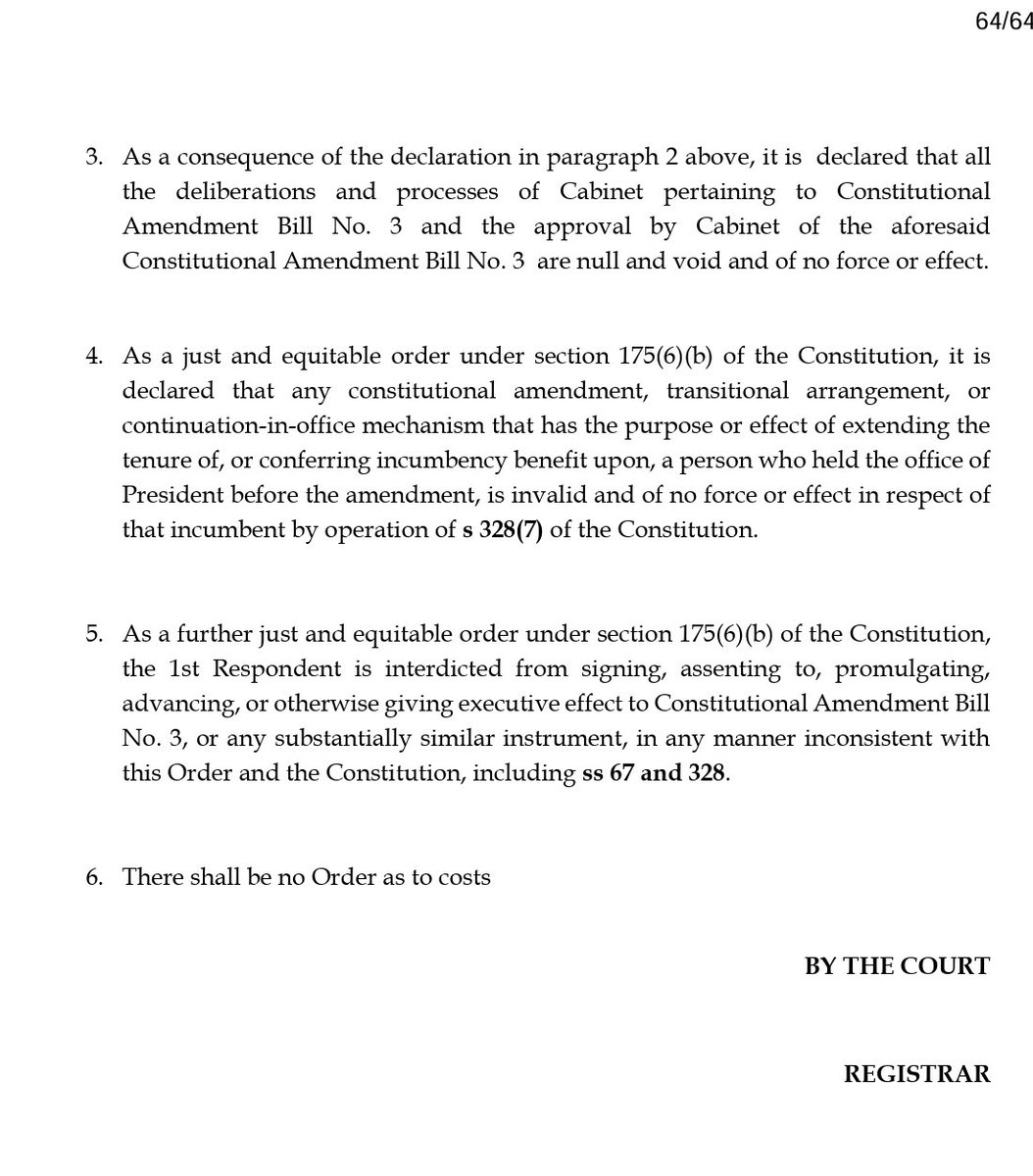
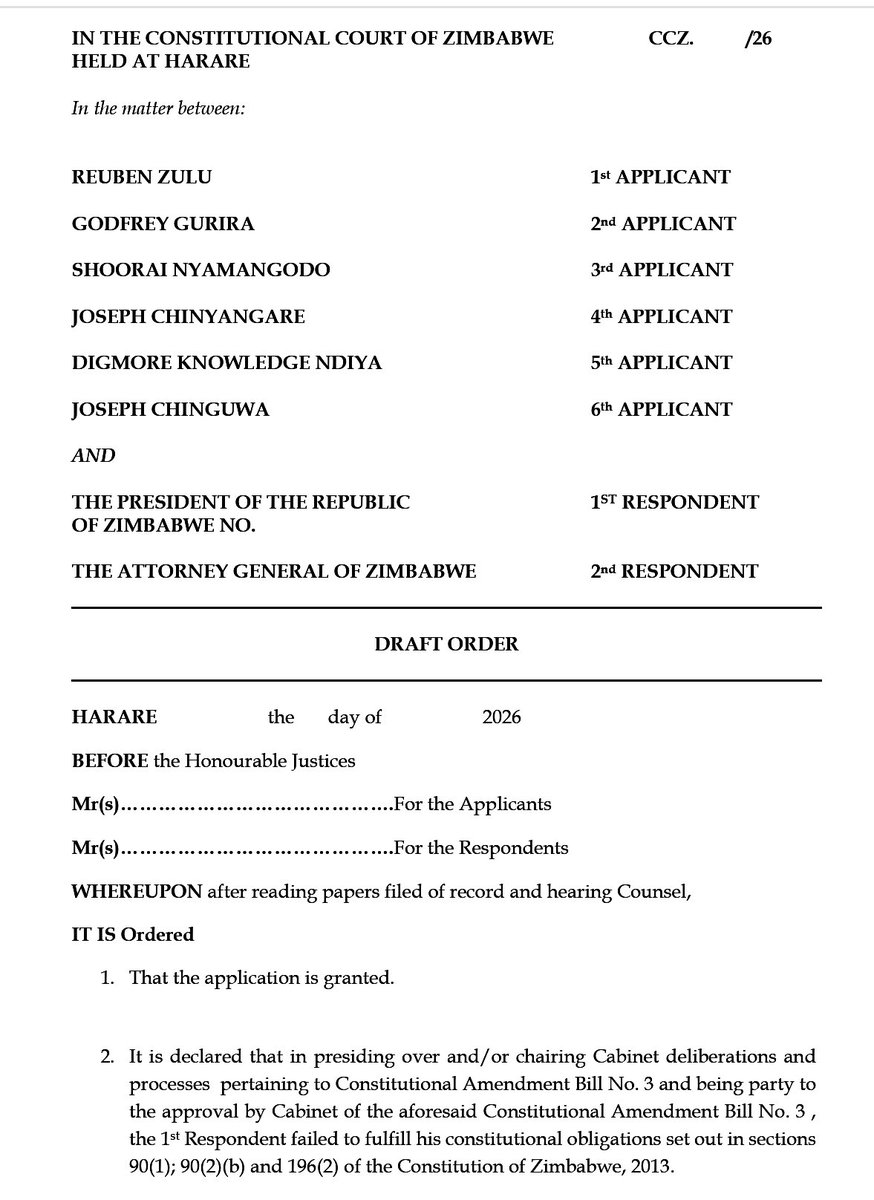
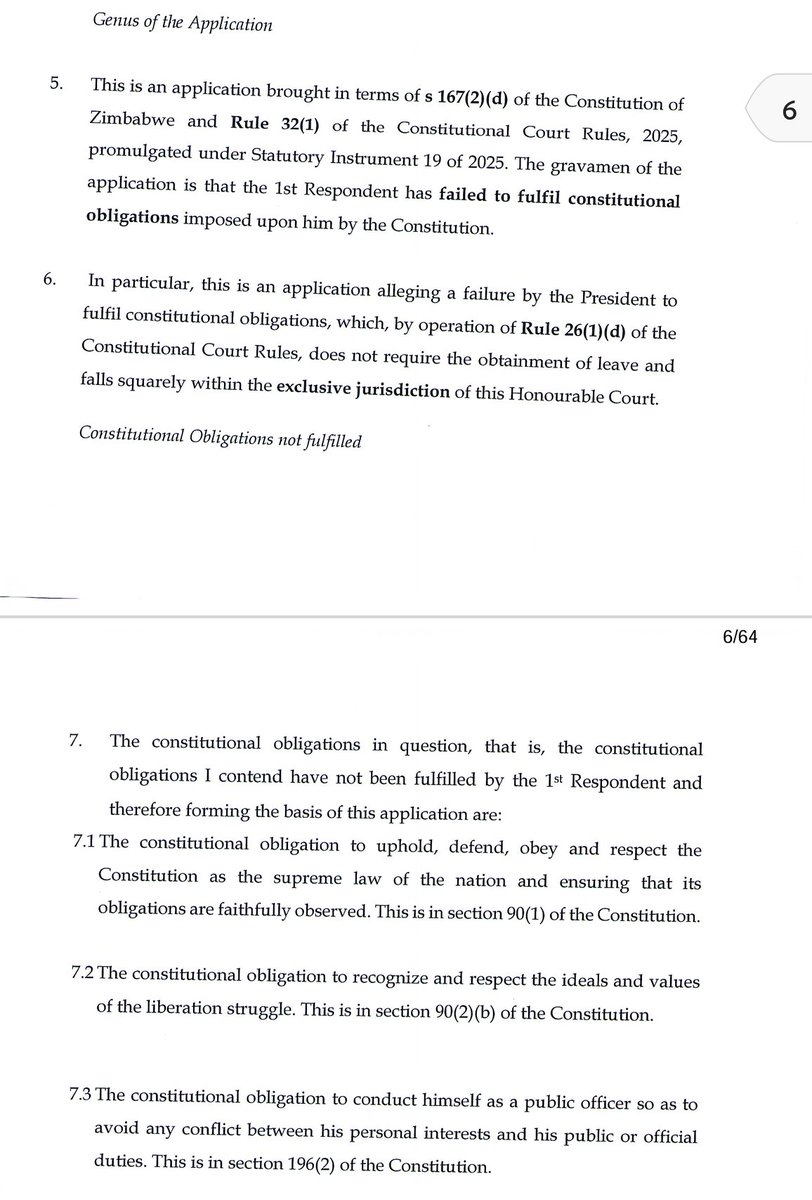
#BREAKING Prof Lovemore Madhuku files application at the Constitutional Court on behalf of 6 war veterans seeking an order declaring cabinet’s approval of Constitutional Amendment Bill (No.3) null and void and interdicting President Mnangagwa from assenting to draft law
@CyrilRamaphosa@edmnangagwa Did he tell you that he is in the process of amending the Constitution of Zimbabwe to extended his stay in power. If so what was your response? Did you support or advised him to step down??
In the speech he said, "As the Ministry of Industry and Commerce we are aware of the vital intersection between our economic activities and the environment'.
He added," We are witnessing first-hand how climate change disrupts our industries and commerce, jeopardising stability.
He also stopped by Sino Cement Pvt Limited Company Exhibition. Its currently producing 30000 tonnes per month. The Ministry is working around the clock to improve availability & affordability of cement in the market and soon these change will be seen.
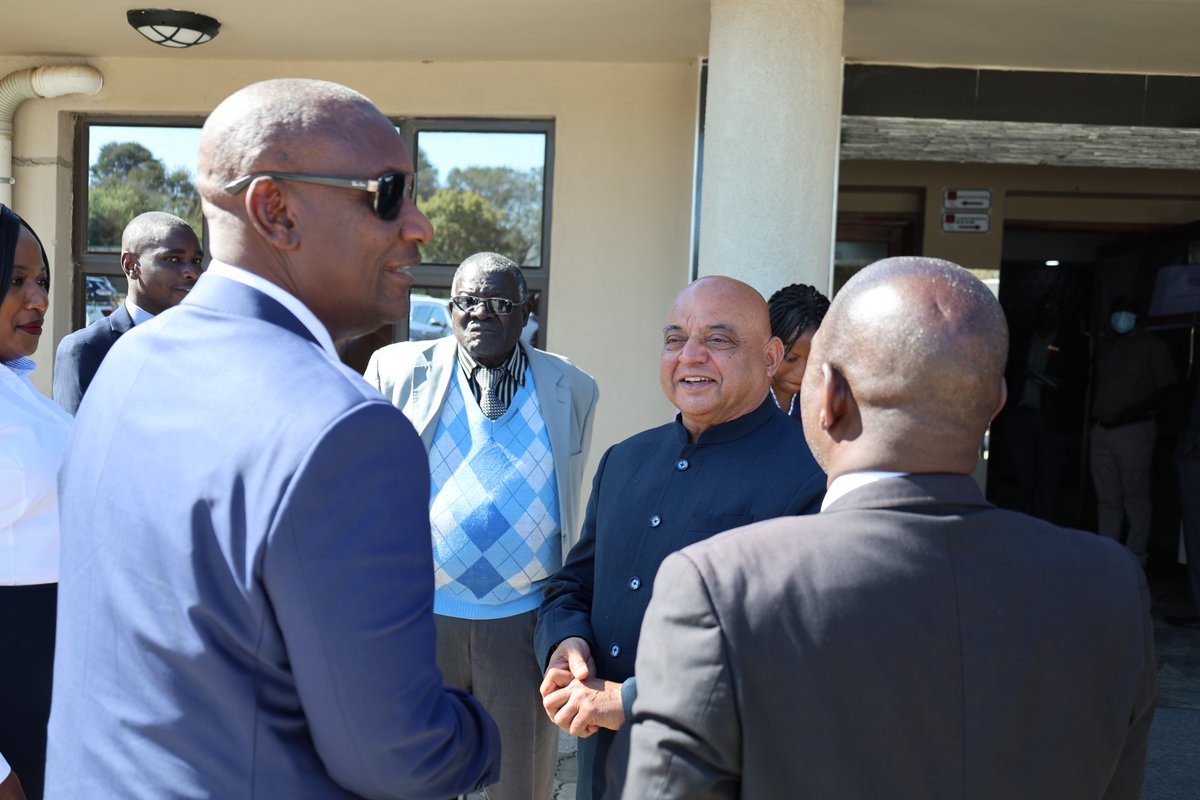
Deputy Minister for @Min_of_IC Hon. Raj Modi took time to tour the Midlands Agricultural Show and interacted with companies exhibiting. He also toured school stands to appreciate innovation by the young minds. He urged them to continue research & innovation to attain Vision 2030.
The Minister of Industry and Commerce is in Antananarivo, Madagascar 🇲🇬 for the SADC 45th Ordinary Summit of Heads of State and Government under the theme: "Advancing Industrialisation, Agricultural Transformation and Energy Transition for a Resilient SADC".
CLIMATE CHANGE IS AN ECONOMIC ISSUE.
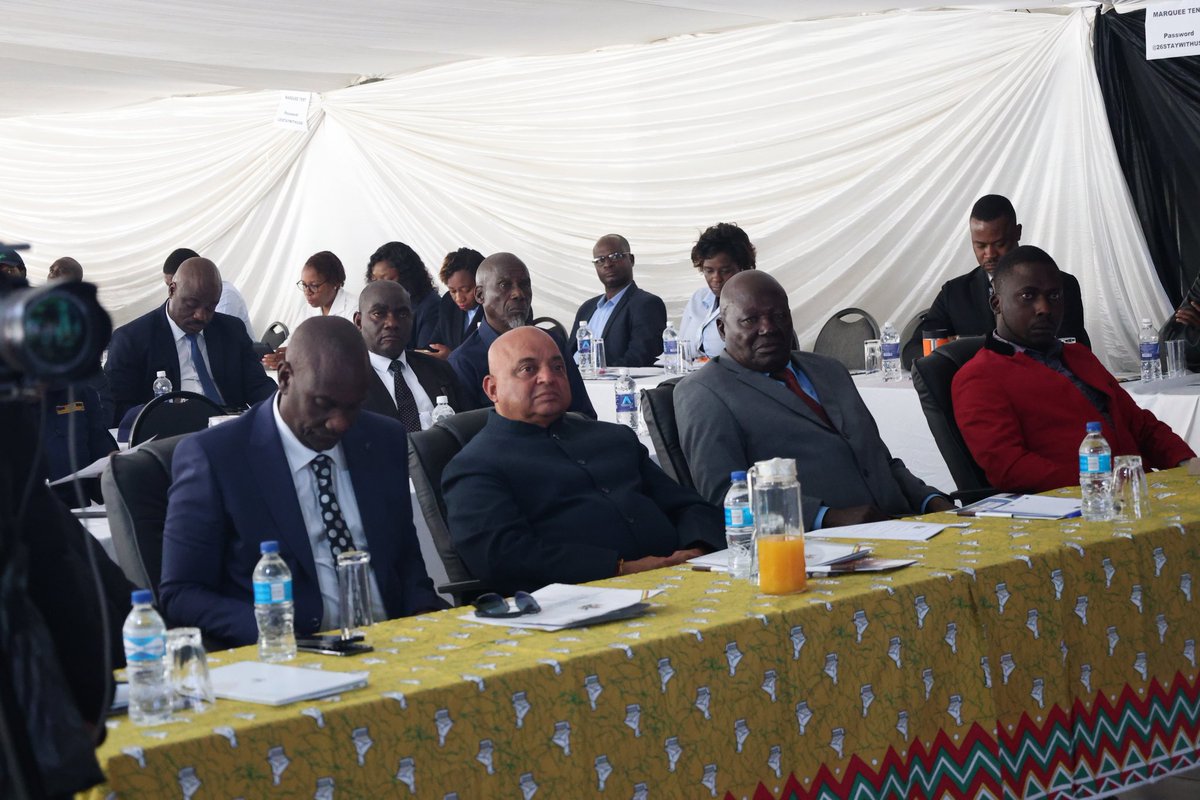
Deputy Minister Hon. R.I. Modi was the Guest of Honour (standing in for the Minister) at the 2025 Midlands Show Exhibitors Business Conference held at Village Lodge & under the theme 'Climate Change Resilience Smart and Sustainable Futures'.
@daddyhope But Israel tasted Iran's capabilities. I never knew Isreal can quickly and easily accept a ceasefire call from third parties. They won't easily come back again coz Iran is gonna polish it's war machinery. Isreal also used terroristic tactics of suicidal like saboteurs.
This is the majestic Victoria Falls, reduced to boulders and rocks, it is extremely painful to watch.
Here, Zambian members of parliament and officials from the country’s central bank inspect the economic effects of the mighty Zambezi River drying up.
Why is this important to you and me?
Both Zimbabwe and Zambia rely on the Zambezi River for hydroelectricity generated at Lake Kariba, which was built by the colonial Federation of the Rhodesia and Nyasaland government in 1959.
Africans must rethink where they want to go and how they will successfully get there, they desperately need good leadership to navigate their way to economic prosperity.
The combined population of Zimbabwe and Zambia was 6.7 million people in 1959, today, it is 37.9 million people.
Yet, both countries are still using infrastructure designed and built for just 6.7 million people, despite a population increase of 465.67%.
I give credit to the Zambians for not hiding this reality, but how did we get here?
There has been no substantial investment in power generation infrastructure since the two countries gained independence.
This has been caused by corruption, the looting of public funds, incompetence, and general mismanagement.
Countries that once had a lower GDP than Zimbabwe, like Singapore, are now light years ahead, despite having far fewer resources.
What they have in abundance are capable and patriotic leaders who have put their countries ahead of looting and plunder.
The Zambezi River is partly dry because of climate change, but this does not affect only Zambia and Zimbabwe, it affects the entire world, so it can't be an excuse, you evolve with new realities by developing new solutions for your country.
The difference is that the rest of the succeeding world has capable leaders who have taken advantage of avant-garde technology like solar which was not yet fully developed in 1959 when Kariba hydro was built.
To understand how Zimbabwe and Zambia now lag behind in power generation, which also reflects the state of their economies, Zimbabwe’s maximum power generation capacity is 2,000 megawatts, while Zambia’s is 3,200 megawatts, giving a combined total of 5,200 megawatts for both countries.
In comparison, South Africa’s Limpopo province alone generates 8,700 megawatts, surpassing the combined capacity of Zambia and Zimbabwe by 3,500 megawatts.
The solutions to this problem are not utopian, they are quite basic and are readily available to any serious patriotic leader or government.
It simply requires investment in power generation, such as solar energy and this is being done elsewhere.
Countries like Egypt and Morocco are doing this, which is why Egypt is projected to become the largest economy in Africa by 2027.
You cannot grow an economy without power, it is fundamental to understand that immutable fact.
Over the past decade, Egypt has invested in solar generation plants with a combined capacity of approximately 29,200 megawatts, Egypt's total installed electricity generation capacity is 59,443 megawatts.
The 29,200 megawatts solar power it installed in the last ten years includes the 1,800 megawatt Benban Solar Park, 8.2 megawatts from 109 solar system plants across 13 provinces, 19,200 megawatts from renewable energy projects in 2021, and 3,200 megawatts from government projects.
In 1980, Egypt’s GDP was US$20 billion, while Zimbabwe’s was US$7.5 billion.
Today, Egypt’s GDP has grown to US$348 billion, while Zimbabwe’s remains at just US$23 billion.
This shows the impact to an economy if a country doesn’t generate enough electricity, a country cannot grow without power, it is that simple.
Despite Zimbabwe’s vast mineral wealth, it is failing to grow because of corrupt and incompetent leadership.
We know Zimbabwe has a corrupt president and government, but what about Zambia?
Zambian President Hakainde Hichilema inherited a battered economy with a debt of US$18.5 billion.
This includes US$11.1 billion in external debt owed to international creditors and US$7.4 billion in domestic debt owed to local institutions.
However, Hichilema made a significant error, he failed to effectively communicate these economic challenges to ordinary Zambian citizens because he appointed a hopelessly incompetent information minister, prioritising loyalty over competence.
As a result, a discredited former president like Edgar Lungu has real prospects of returning to power, as Hichilema failed to explain that fixing Lungu’s mess would make things tougher before they improve.
He is still failing to explain in simple terms that Lungu’s massive debt needed to be restructured and paid before the economy could improve, and that Lungu’s debt was inflated by the looting of public funds, similar to how his ally, Zimbabwean tyrant Emmerson Mnangagwa, uses infrastructure projects like road refurbishment to siphon public resources.
If Hichilema loses the election due to the tougher economic environment, it will be his own fault for not effectively communicating with the people about the economic reality he got from Lungu.
There were so many opportunities that Hichilema could have seized, especially given the international goodwill he enjoys.
However, a combination of arrogance and surrounding himself with unimaginative and incompetent individuals has exacerbated his problems.
Both Zambia and Zimbabwe are experiencing 20-hour power cuts because of their failure to invest adequately in power generation over the years.
Until they realise that they are relying on a 65-year-old hydroelectric utility designed for only 6.7 million people, despite now having a combined population of 37.9 million, they will continue to suffer from severe power shortages and their economies will remain stagnant because investors need reliable uninterrupted electric power.
How can any serious investor go to a country with 20 hours of daily power cuts when they want to run factories that require power 24/7?
Their continued failures will give credence to racists like Ian Smith, who claimed that blacks were not yet ready to govern themselves.
Yet, we know there are African countries like Rwanda where blacks are governing themselves well.
Without power, Zimbabwe and Zambia will remain rag tag economies, and it is time they realise that they must look beyond Kariba and invest in massive power generation.
The time for complacency has passed for both Zimbabwe and Zambia.
The two countries must recognise that their over-reliance on outdated infrastructure built in 1959 is unsustainable, especially considering their populations have grown by over 465 per cent since that infrastructure was established by the colonial government.
To attract serious local and foreign investors and secure economic growth, they need to move towards innovative solutions like solar energy.
The world is advancing daily, and without a commitment to modern power generation, both countries risk remaining stagnant, constrained by their own political leadership failures authored through corruption and staggering incompetence.
The clarion call to action is very clear for both countries dubbed the siamese twins of Southern Africa.
They must invest in the future, embrace technological change, and ensure that the potential of their vast resources is realised for the benefit of their people, rather than for a few corrupt and politically connected individuals.
The Zambian president must also understand the importance of communication in this new world of social media and not rely on outdated methods.
If he fails to engage with Zambians, the dangerous prospect of a ZANUPF funded Edgar Lungu being elected will become increasingly likely with each passing day.
If you want to privately engage me on any issues in this article, email me at [email protected] as I might miss social media inboxes.
What is happening in the Democratic Republic of Congo is evil, and it is sad that African voices are quiet when their own people are dying like this, yet they make noise about conflicts away from the continent.
Is African life less important than any other, is the death of a black person insignificant?
Are you ashamed of speaking for your own people, only to suddenly find your voice when bad things happen elsewhere away from the continent?
History will never respect Africans for allowing this to happen on their watch, especially those with voices who would rather be seen writing about conflicts elsewhere!