One thing I didn’t expect after spending more time on @ston_fi is how much speed changes the way you behave while interacting onchain.
When actions take longer, you naturally hesitate more. You overthink simple decisions, second guess yourself, and sometimes even delay actions you were already planning to take.
But when interactions start feeling almost instant, your behavior changes without you even realizing it.
You become more comfortable checking different options, adjusting things in real time, and interacting more naturally instead of treating every action like a long process.
That shift sounds small, but I think it matters more than people realize.
Because smoother execution doesn’t just improve speed, it changes the overall feeling of interacting with the ecosystem itself.
The experience becomes less about waiting and more about actually engaging.
And once that starts happening consistently, onchain activity begins to feel much more natural.
https://t.co/UEzvox5zjZ
This is exactly the kind of session I’ve been looking forward to.
One thing I’m really curious about: when you review stonbassador content, what actually separates top performers from everyone else beyond engagement metrics?
Is it more about originality, depth, or consistency over time?
@ston_fi
One thing that stands out about Newton Protocol Mainnet Beta is its focus on authorization before execution.
Instead of only monitoring transactions after they happen, it evaluates programmable policies first and lets smart contracts enforce verifiable results. That’s an interesting step toward more trusted onchain infrastructure. @newton_xyz $NEWT #Newt
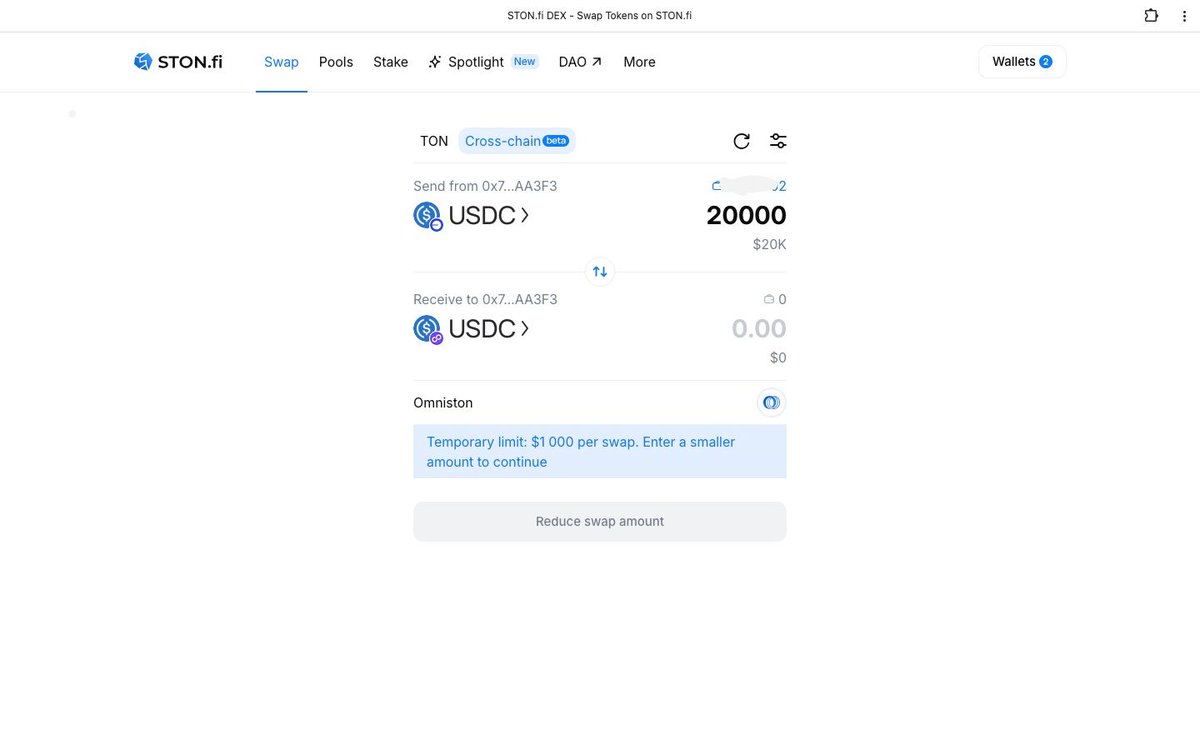
I spent some time exploring https://t.co/CZhbbe6Z8M's new cross-chain swaps today instead of just reading the announcement.
One small detail caught my attention.
After entering the amount, Omniston starts searching for routes behind the scenes. It seems like a simple loading step, but that's actually where the protocol is finding the best execution path across supported chains.
Another thing I liked is the execution model. If the quoted amount can't be delivered, the swap simply doesn't execute and the funds return instead of completing with an unexpected result.
It's still in Beta with a $1,000 transaction limit, but after exploring the interface, it already feels much simpler than the multi-step cross-chain workflows many users are used to.
Curious to see how this develops as more assets and higher limits are introduced.
@ston_fi
Paid Partnership Disclosure: This content is created in collaboration with Newton Protocol.
Newton Protocol Mainnet Beta introduces a pre-execution authorization layer for onchain transactions, where every action is checked against programmable compliance rules before it is approved. This helps bring structure to onchain activity by embedding identity checks, risk controls, and policy enforcement directly into execution flow instead of relying only on post-transaction monitoring.
By turning compliance into verifiable onchain logic, Newton enables more consistent enforcement across multiple chains while still preserving decentralization principles. This approach is especially relevant as stablecoins, RWAs, and AI-driven agents continue to expand onchain activity.
@newton_xyz $NEWT #Newt
1,666,667 $PULT up for grabs
Catapult Trade x @BinanceWallet are running a 7-day social airdrop campaign open to Binance Wallet users. 10,000 participants will be selected to share the full reward pool, with each winner receiving an equal cut.
To qualify, you need to complete social campaign tasks.
Selection is based on Binance Chain Hash Value, so the process is transparent and on-chain.
$PULT tokens will be distributed to winners by Binance shortly after token launch.
Campaign window: June 24th 2026 - July 1st 2026
Full details on participation: https://t.co/m92wgWg4lm
Behind every follow is someone who believes in the mission Midnight is working to achieve:
bringing programmable privacy to the real world.
We're grateful for every builder, creator, contributor, and supporter who continues to push the ecosystem forward.
Thank you for following along 🖤🤍
While comparing a few token pages on @ston_fi today, I noticed that some assets had very different levels of liquidity despite being discussed with similar enthusiasm across the community.
It was interesting because conversations on social media can sometimes make two projects feel equally active, but looking at the liquidity behind them often tells a more complete story.
I wasn't searching for anything specific at first, but it ended up being a useful reminder that activity and liquidity aren't always the same thing.
Sometimes taking a quick look under the surface can reveal details that aren't immediately obvious from the outside.
https://t.co/UEzvox5zjZ
@ston_fi
#TON #STONfi #DEFINITION
One thing I didn't pay much attention to when I first started using @ston_fi was the DAO section.
Like many users, I was mostly focused on swapping and exploring the ecosystem.
Recently, I spent some time looking through how governance is structured, and it reminded me that a protocol is more than just the interface we interact with every day.
Behind every feature, upgrade, or initiative, there are decisions being made about where the platform is headed next.
It's easy to overlook that side of DeFi when you're only using the product, but it's an interesting part of the ecosystem to explore once in a while.
https://t.co/UEzvox5zjZ
@ston_fi
#TON #STONfi #daoulimitlessfansign
One thing I didn't pay much attention to when I first started using @ston_fi was the DAO section.
Like many users, I was mostly focused on swapping and exploring the ecosystem.
Recently, I spent some time looking through how governance is structured, and it reminded me that a protocol is more than just the interface we interact with every day.
Behind every feature, upgrade, or initiative, there are decisions being made about where the platform is headed next.
It's easy to overlook that side of DeFi when you're only using the product, but it's an interesting part of the ecosystem to explore once in a while.
https://t.co/UEzvox5zjZ
@ston_fi
#TON #STONfi #daoulimitlessfansign
While looking through several liquidity pools on @ston_fi today, I became curious about how activity differs between pools that appear similar at first glance.
A few pairs had comparable liquidity levels, but the trading activity around them told a different story. Some attracted a steady flow of swaps, while others were noticeably quieter despite holding similar amounts of liquidity.
It was a good reminder that liquidity is only part of the picture. Understanding how people actually interact with a pool can reveal things that a single number won't.
Moments like these are why I enjoy digging a little deeper instead of stopping at the headline metrics.
https://t.co/UEzvox5zjZ
@ston_fi
#TON #DeFi #STONfi
While looking through several liquidity pools on @ston_fi today, I became curious about how activity differs between pools that appear similar at first glance.
A few pairs had comparable liquidity levels, but the trading activity around them told a different story. Some attracted a steady flow of swaps, while others were noticeably quieter despite holding similar amounts of liquidity.
It was a good reminder that liquidity is only part of the picture. Understanding how people actually interact with a pool can reveal things that a single number won't.
Moments like these are why I enjoy digging a little deeper instead of stopping at the headline metrics.
https://t.co/UEzvox5zjZ
@ston_fi
#TON #DeFi #STONfi
I was checking a few farming opportunities on @ston_fi and found myself paying less attention to the advertised returns than I used to.
Instead, I started comparing how different pools were structured and which assets were actually driving activity.
One thing I've noticed over time is that the highest number on the screen doesn't always tell the full story. Some opportunities attract attention quickly, while others seem to build participation more steadily.
It reminded me that evaluating a farm isn't just about the reward rate. Understanding what's happening underneath can often be just as important.
The more I explore TON DeFi, the more I appreciate looking beyond the headline metrics.
https://t.co/UEzvox5zjZ
@ston_fi
#TON #DeFi #STONfi
I was checking a few farming opportunities on @ston_fi and found myself paying less attention to the advertised returns than I used to.
Instead, I started comparing how different pools were structured and which assets were actually driving activity.
One thing I've noticed over time is that the highest number on the screen doesn't always tell the full story. Some opportunities attract attention quickly, while others seem to build participation more steadily.
It reminded me that evaluating a farm isn't just about the reward rate. Understanding what's happening underneath can often be just as important.
The more I explore TON DeFi, the more I appreciate looking beyond the headline metrics.
https://t.co/UEzvox5zjZ
@ston_fi
#TON #DeFi #STONfi
A screenshot can tell you a lot about an ecosystem.
Earlier today, I was looking at activity on @ston_fi and realized how different my attention is compared to when I first started using DEXs.
Back then, I would've focused on the asset itself.
Now I find myself looking at the surrounding details instead. Liquidity, routing, execution, and how everything comes together to produce the final result.
It's interesting how experience changes what you consider important.
The asset may get your attention first, but over time it's usually the infrastructure behind it that keeps you interested.
https://t.co/UEzvox5zjZ
@ston_fi
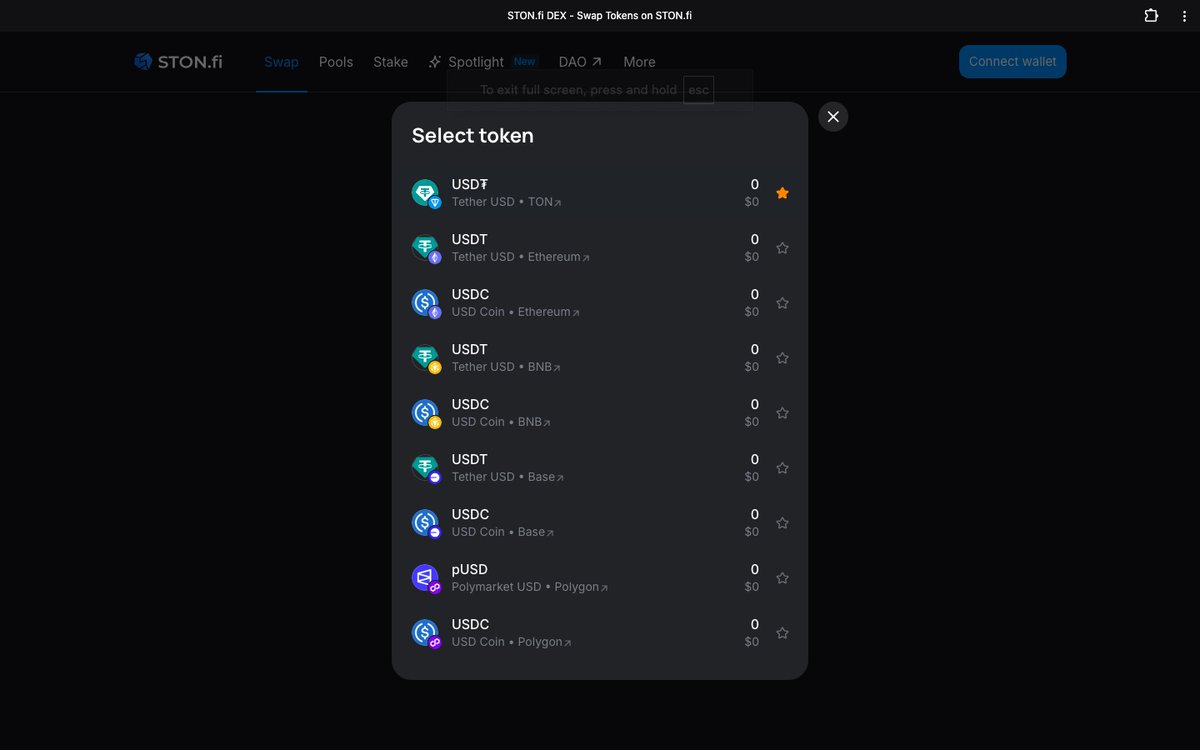
Spent some time looking through the token list on @ston_fi today and noticed something interesting.
The same assets were available across multiple networks, USDT and USDC on Ethereum, BNB Chain, Base, and Polygon, all visible from the same interface.
It got me thinking about how much of crypto's complexity comes from fragmentation.
Most users don't necessarily care which chain an asset originated from. They just want access to the asset itself without jumping through unnecessary steps.
Seeing these networks represented side by side made the idea of cross-chain feel a lot more practical than theoretical.
With @ston_fi now expanding cross-chain functionality, it'll be interesting to see how that experience evolves over time.
https://t.co/UEzvox5zjZ
@ston_fi
A screenshot can tell you a lot about an ecosystem.
Earlier today, I was looking at activity on @ston_fi and realized how different my attention is compared to when I first started using DEXs.
Back then, I would've focused on the asset itself.
Now I find myself looking at the surrounding details instead. Liquidity, routing, execution, and how everything comes together to produce the final result.
It's interesting how experience changes what you consider important.
The asset may get your attention first, but over time it's usually the infrastructure behind it that keeps you interested.
https://t.co/UEzvox5zjZ
@ston_fi
A screenshot can tell you a lot about an ecosystem.
Earlier today, I was looking at activity on @ston_fi and realized how different my attention is compared to when I first started using DEXs.
Back then, I would've focused on the asset itself.
Now I find myself looking at the surrounding details instead. Liquidity, routing, execution, and how everything comes together to produce the final result.
It's interesting how experience changes what you consider important.
The asset may get your attention first, but over time it's usually the infrastructure behind it that keeps you interested.
https://t.co/UEzvox5zjZ
@ston_fi
I used to think the most important part of a swap was simply getting from one asset to another.
The more time I spend on @ston_fi, the more I realize there's a lot happening before you ever hit the confirm button.
Today I found myself comparing the same swap with different amounts just to see how the expected output changed.
Nothing dramatic happened, but it was a good reminder that the numbers you see aren't static. They respond to liquidity, trade size, and market conditions.
That's probably why I enjoy spending time on DEXs. The longer you use them, the more you start understanding what sits behind the interface.
https://t.co/UEzvox5zjZ
@ston_fi
I used to think the most important part of a swap was simply getting from one asset to another.
The more time I spend on @ston_fi, the more I realize there's a lot happening before you ever hit the confirm button.
Today I found myself comparing the same swap with different amounts just to see how the expected output changed.
Nothing dramatic happened, but it was a good reminder that the numbers you see aren't static. They respond to liquidity, trade size, and market conditions.
That's probably why I enjoy spending time on DEXs. The longer you use them, the more you start understanding what sits behind the interface.
https://t.co/UEzvox5zjZ
@ston_fi
Price impact is one of those things most people ignore until they finally notice it.
I spent a few minutes on @ston_fi today comparing different swap amounts just to see how the expected output changed.
What stood out wasn't the difference itself, it was how easy it is to forget that larger trades can affect the result you're getting.
The more time I spend using DEXs, the more I appreciate checking the details before confirming a swap.
Small habit, but it probably saves more surprises than people realize.
https://t.co/UEzvox5zjZ
@ston_fi