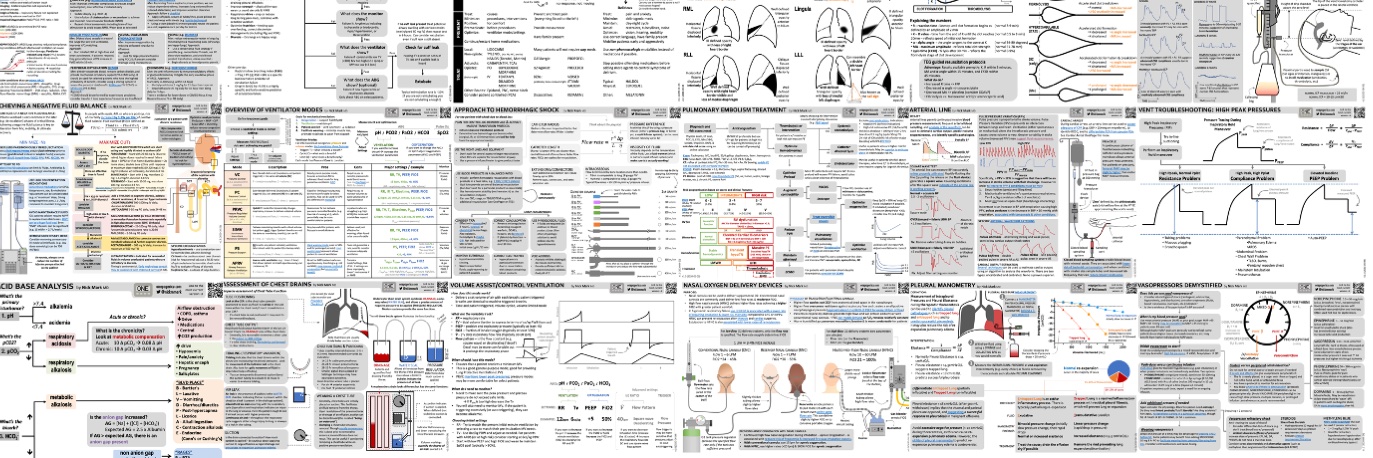
OnePager summaries of #CriticalCare topics 1️⃣📟 | critical care education one page at a time | free & open source | #FOAMed#FOAMcc | created by @nickmmark
This week will be sharing some of the most popular #ICUOnePagers https://t.co/FVN1KWWxBU
1️⃣ Overview of Ventilator Modes - covers all the common modes (VC, PC, PRVC, PS, APRV) & the pros/cons of each. Also covers the settings for each & how to adjust based on ABG/SpO2.
You can download the PNG, PDF, or PPT file here. As always it’s open source to use/reuse; just don’t sell it & acknowledge your source please 🙏
https://t.co/19JF0q68S1
2/
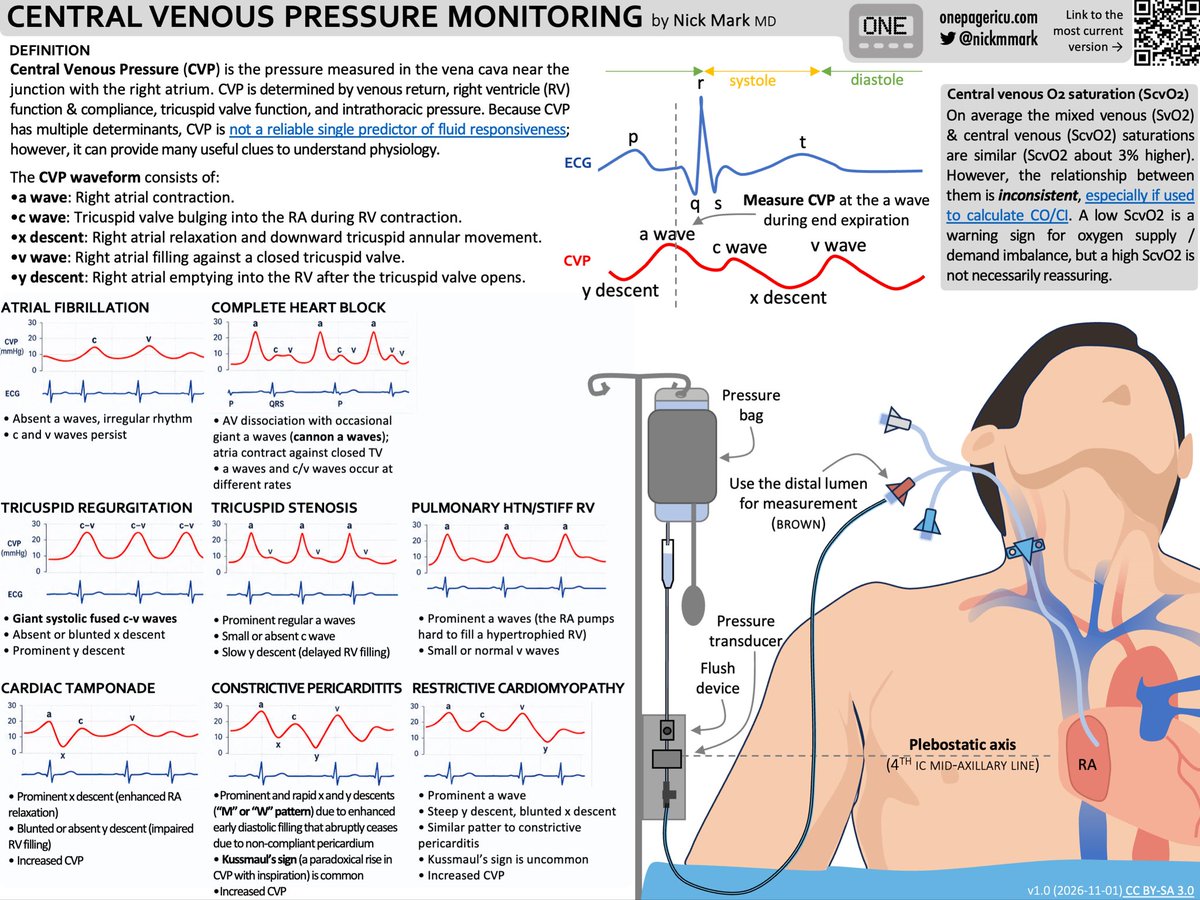
🆕 ICUOnePager on Central Venous Pressure (CVP) monitoring. CVP is not useful for fluid responsiveness but the trend and the waveform can provide many physiological insights! The central oxygen sat (ScvO2) can also provide clues.
1/
On October 8-10, Ukraine destroyed 3 data centers in Russia. Since then bot activity has plummeted and so have Google searches for many health misinformation topics.
An Unexpected Public Health Victory:
Will a drone strike in Russia save lives in the US?
https://t.co/oj4B9jRppa
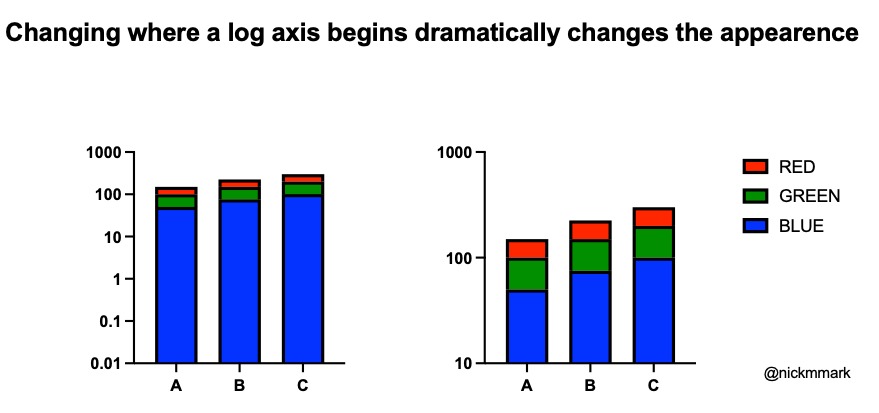
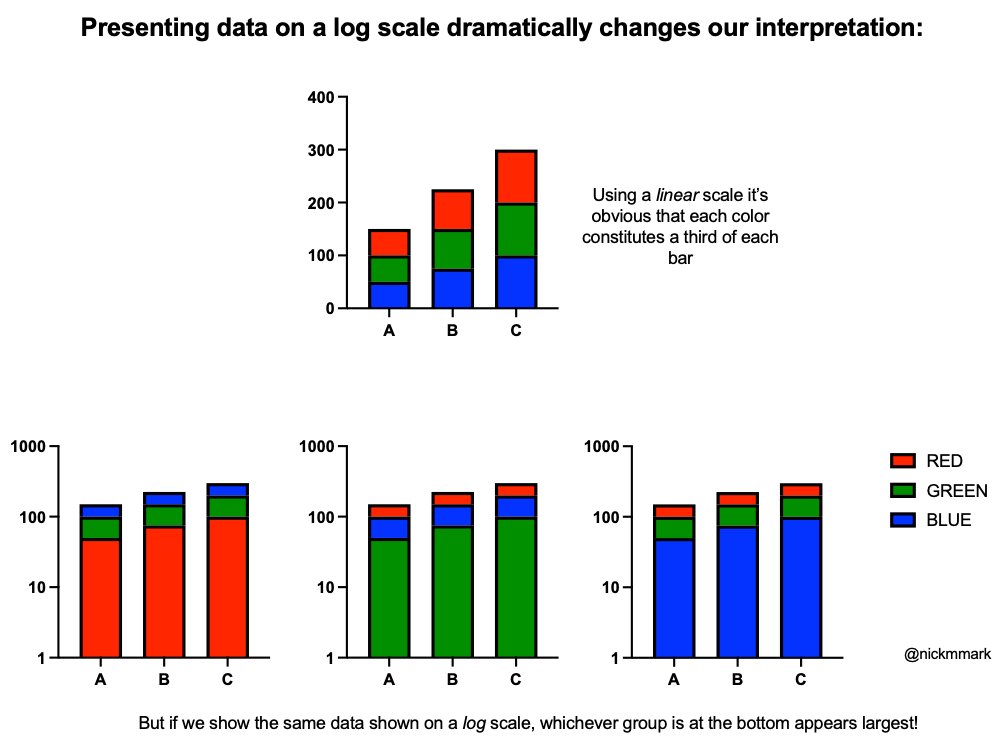
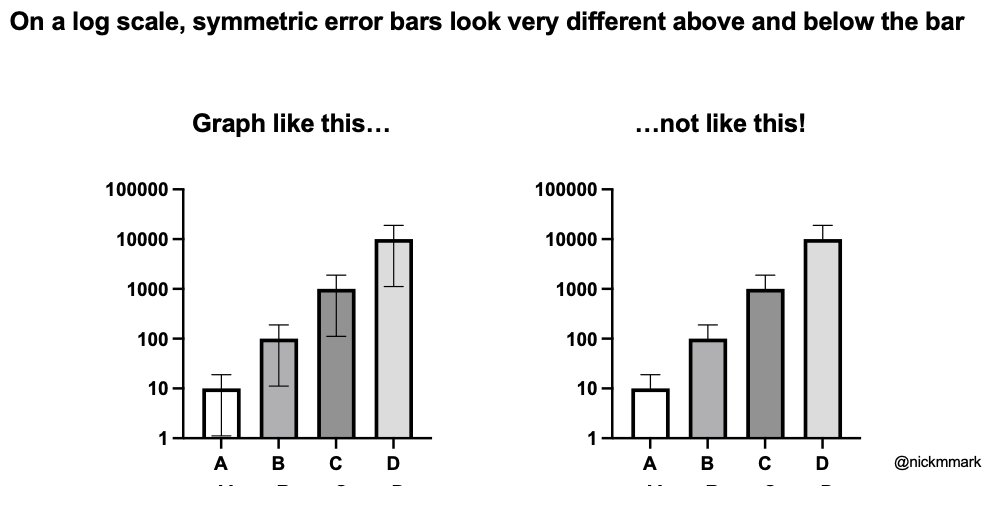
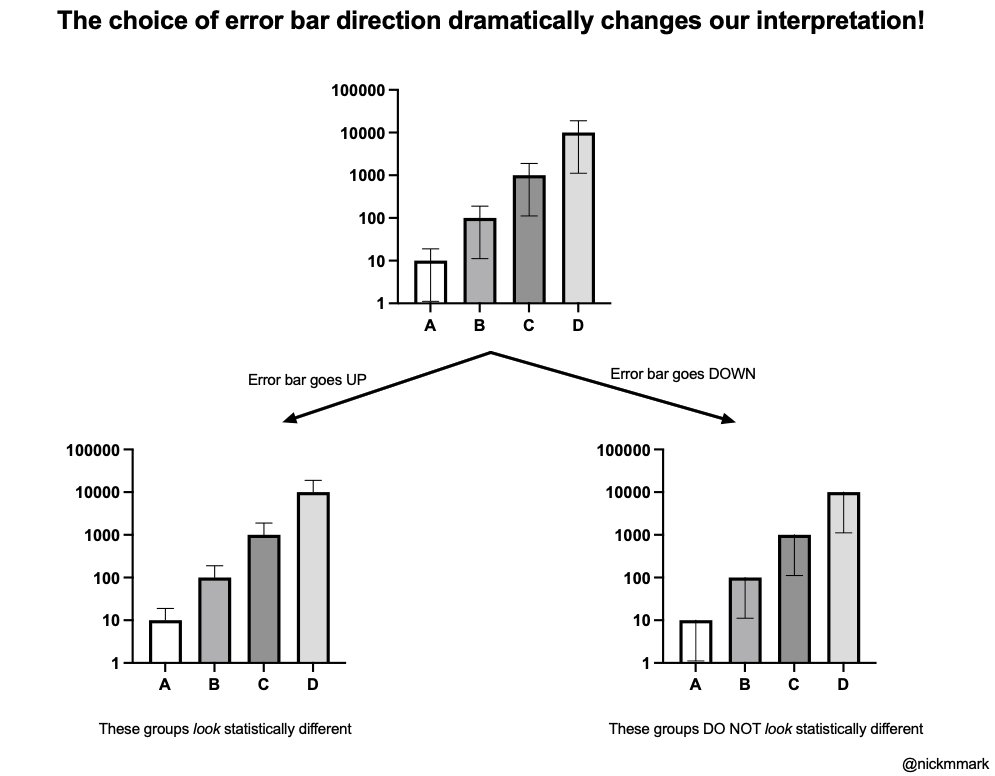
Mark Twain said "lies, damned lies, and statistics". Often the most insidious lies aren't numbers but the graph.
Bar graphs on a log scale are the worst! They can make error bars look tiny. Stacking log bars is bad, because the sequence changes our perception.
Don't be fooled!
Based on vibes only I’d say:
1. It’s completely unethical to embargo life saving science. Delaying release for months to have a big podium reveal is indefensible for interventions that are both available and easy to implement.
Imagine if the UK-RECOVERY trial had been embargoed for 6 months and thousands of preventable deaths had occurred. There would be a huge outcry! And yet somehow we normalize this practice under most circumstances…
Interestingly Pharma actually does a little better than academics here - they typically have a press release 2-4 weeks after database lock, though I don’t know of any doc who changes their practice based on a press release.
IMHO the answer is normalizing pre-prints. It should be shameful to not pre-print important lifesaving work.
2. Pedagogically. I’m not sure the bolus release of RCTs is a bad thing. I think people are more likely to learn about 10 trials in a day rather than one per month over a year. Personally I am more inclined to learn about a less exciting trial if it’s in a bolus more exciting ones.
I think it’s important for those with big SM platforms to disseminate important RCT results so that people can go read them and adapt!
3. I think conferences as a means of disseminating RCT results is outmoded. Reading a paper to a room full of people in suits made sense in 1950, but not today. If we are going to get together in the same room it should be for *discussion* not *lecture*. Instead of reading me table 1 I want to hear what the authors think. What are the challenges of implementation? What are edge cases? How can future research address current weaknesses? I also want to hear other experts comment on how they react to the trial results.
IMHO @CritCareReviews does this aspect really well. Other conferences ought to be more like it.
PJP Pneumonia
HIV Virus
ICU Unit
PICC Line
ELISA assay
PCR reaction
GERD disease, COPD disease, etc
PRN as needed
MRI imaging
UTI infection
LVAD Device
CABG graft
CRRT therapy
ACLS support
MRN number
I often see a false dichotomy between physical examination & POCUS.
Do you draw a distinction between the cardiac exam & auscultation because it involves a stethoscope? Between the neurological exam & reflexes because it uses a hammer?
In 2026, physical exam requires POCUS.
When someone really needs volume off, *THIS* is how you do it.
Aggressive diuresis potentially makes the difference between someone being intubated for a day and for a week.
We made a 2 min mini-episode of @CritCareTime demonstrating the steps for an emergency front of neck airway (eFONA).
Let us know what you think and if you want more of this content!
Thx to the @TheAirwaySite for letting us film at the difficult airway course!
Every summer the same warning makes the rounds: "don't get sick in July." That's when the newly minted doctors arrive, interns six weeks out of med school, senior residents in roles they've never held, entire teams reshuffled overnight.
In the US we call it the "July Effect." In Britain, more luridly, the "killing season."
New people make more errors, and more errors must mean more dead patients. Right? The "July Effect" feels true, but like many intuitive facts in medicine, it's a myth.
🧵
1/
Exciting news: @CritCareTime just crossed 1 million downloads!
If you’d told me 3 years ago that 1000 people a day *every* day would want to listen to me & @Askins_Razor teach about niche topics in critical care medicine I wouldn’t have believed you!
1M is admittedly an arbitrary number but I’m very excited that we have an audience who are eager to listen. I guess we’ll have keep going!
Hot Tub Hype Machine:
Midjourney wants to put 50,000 of these Ultrasound scanners in "med spas". The physics, the economics, and the evidence all say not so fast
https://t.co/kmPbViDgvM
Excited to share a 🆕 @CritCareTime: a Ventricular Tachycardia Masterclass with guest Dr Sara Crager @SaraCrager.
We cover recognizing VT (monomorphic vs polymorphic), identifying the cause, & treatment.
If you care for people with VT you NEED to listen to this episode!
1/