Figma charges $15/user/month.
Webflow charges $29/month.
Someone built an open source design tool where you visually edit your React app and the code writes itself. 23,900 stars. Free.
It's called Onlook. The Cursor for Designers.
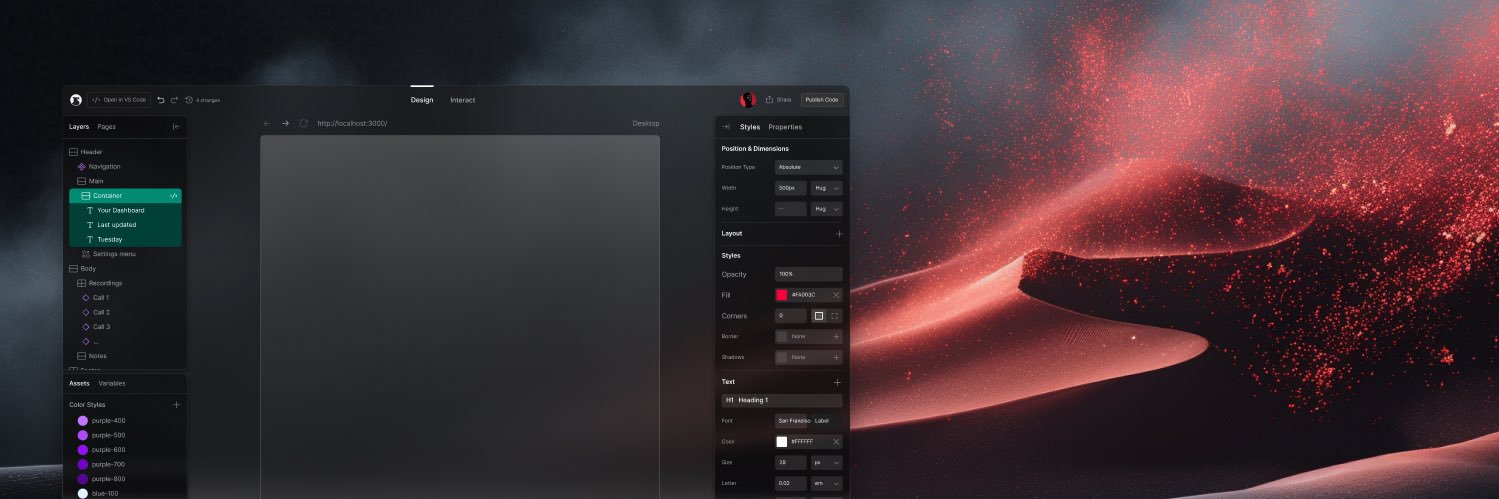
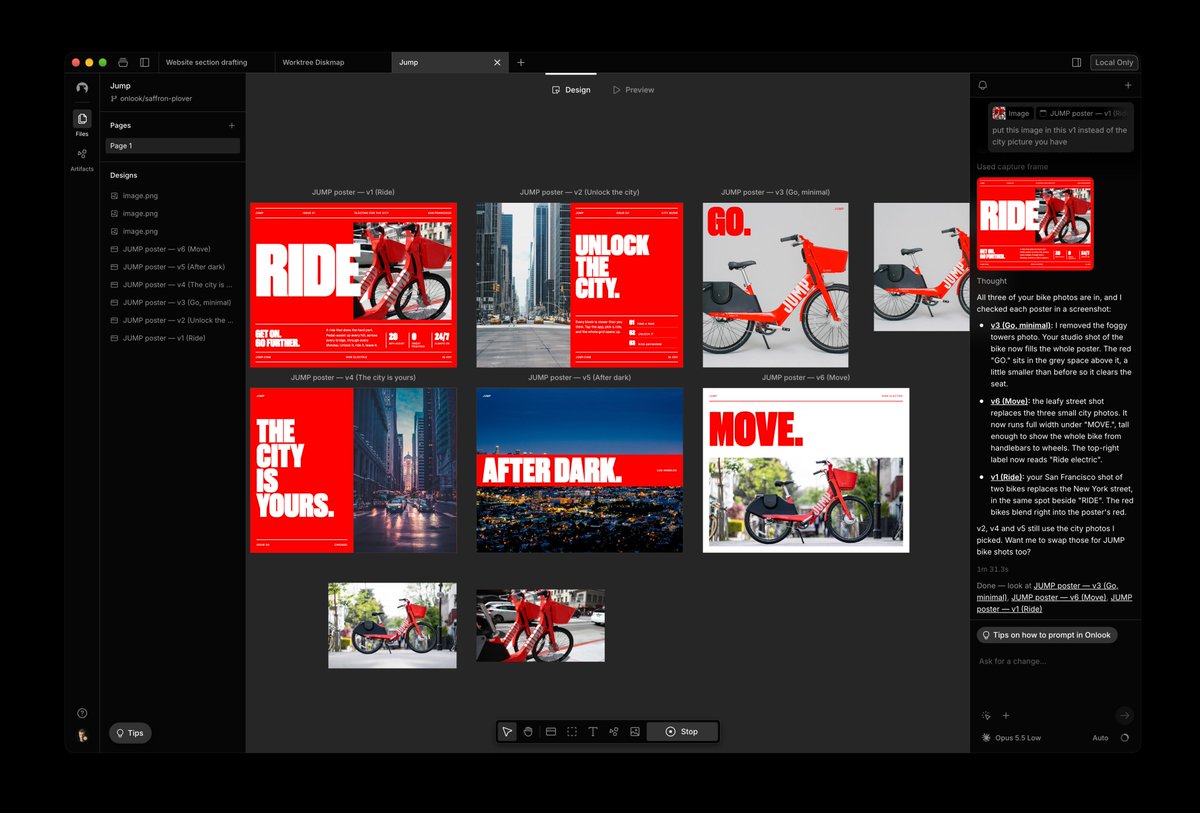
You see your live React app. You click on any element. You drag, resize, restyle. The code updates in real time. In your actual codebase. Not a mockup. Not a prototype. Your real app.
No exporting. No handoff. No "developer please rebuild this from my Figma file."
Here's what Onlook does:
→ Open your existing React project. See it visually.
→ Click any element. Edit styles, layout, spacing, colors. Visually.
→ AI generates new components, pages, and sections from prompts.
→ Every visual change writes clean code directly to your files.
→ No separate design file. Your design IS your code. Your code IS your design.
→ Works with your existing React and Next.js projects. No migration.
→ Desktop app for Mac, Windows, and Linux.
Here's the wildest part:
Designers and developers have been fighting over the same problem for 20 years. Designer makes a mockup. Developer rebuilds it from scratch. Designer says "that's not what I designed." Developer says "that's not how code works."
Onlook kills this loop. The designer edits the actual app. The code updates automatically. There's nothing to hand off. There's nothing to rebuild. There's nothing to argue about.
Figma: $15/user/month. Webflow: $29/month. Framer: $20/month. Design agencies charge $150/hour.
This is free. Open source. Apache 2.0 License.
23.9K GitHub stars. 1.8K forks. 1,634 commits.
100% Open Source.
@AdamBartas@nizzyabi one doesn't design to "tweak things"
one designs to get it right.
it's possible to get it right without needing to "tweak things manually"
🎯 Another milestone hit! Onlook @onlookdev now has 25,000 stars! Amazing work 🌟
Visual React editor with real-time code updates
https://t.co/2B98imfxob
the latest @onlookdev converges on a vision we've been working towards for so long – taking a real codebase, allowing you to edit it visually (and extremely quickly), and creating a real PR back to the codebase.
cannot wait to share what we've been working on with the world
It's a big part of why I'm personally so driven by what we're doing at @onlookdev -- I want designers to lead this convergence, not get swallowed by it.
Design and engineering are merging. The question is who's driving.
The companies that win aren't replacing designers with engineers who have Claude Code. They're giving designers superpowers.
A visual canvas + AI primitives + design principles captured as prompts. That's the stack. That's leverage engineers can't replicate.