The menace of sukha nasha in Bihar is a silent crisis. It stays under the radar until it spirals out of control, leaving us with knee-jerk reactions instead of timely intervention.
In my article dated 25 February 2026, I called for a three-pronged strategy: prevention through awareness, strict enforcement against the drug trade, and rehabilitation of those affected.
This is a silent war on our human resources. We must act before our greatest asset becomes our greatest liability.
Read this article by Anand Mishra, MLA Buxar: The Synthetic Siege: Confronting Bihar's Dry Drug Crisis with Policy and Precision https://t.co/hExD0VpPnY
बिहार में शराबबंदी के 10 साल बाद भी नशे का कारोबार थमने के बजाय नए रूप में फैल रहा है. गांजा, हेरोइन, नशीली गोलियां और 'कोटा' जैसे ड्रग्स अब चिंता का बड़ा कारण बन गए हैं.
नेपाल और पूर्वोत्तर से बिहार तक कैसे पहुंच रहा है नशे का नेटवर्क? कौन चला रहा है इसकी सप्लाई चेन?
इंडियन एक्सप्रेस की पड़ताल में देखिए बिहार के ड्रग्स कारोबार का पूरा सच.
#ExpressInvestigation | Bihar has been dry for nearly a decade, but its drug problem is growing.
An investigation by The Indian Express looks at the changing narcotics market, the rise in drug cases and what it means for a state already under pressure from addiction and limited treatment facilities.
Read: https://t.co/ybjKwOj7Yd
Written by: Himanshu Harsh
Politics & professors. Some California profs told Prez Reagan they had to do too many hours of teaching. Reagan asked, How many?
They said, 8.
Reagan: 8 isn’t too much.
What many observers didn’t realize is Reagan was talking about 8 hours a day, the profs about 8 hours a week.
A hilarious meeting of communist heads — Karl Marx, Joseph Stalin, Mao Tsetung (Mao Zedong), Fidel Castro and Che Guevara — over the question of who the greatest of them all is, until the surprise guest arrives in the end:
"Bihar was the best administered state in the country during Shri Krishna Babu's tenure"
✓बिहार के पहले प्रधानमंत्री बनने की कहानी
✓किसानों और सिंचाई के लिए पहल
✓जमींदारी उन्मूलन
✓औद्योगिक बिहार
✓ शिक्षा सुधार
✓सामाजिक समानता
✓and many more ...
Este artículo de Robert Hall (nuevo premio Nobel) y @ChadJonesEcon sigue hoy tan vigente como cuando se escribió en 1999.
“Why Do Some Countries Produce So Much More Output Per Worker Than Others?”
No hay otra pregunta +importante en economía q esa.
https://t.co/VNOSv1u5c7
Very valuable!
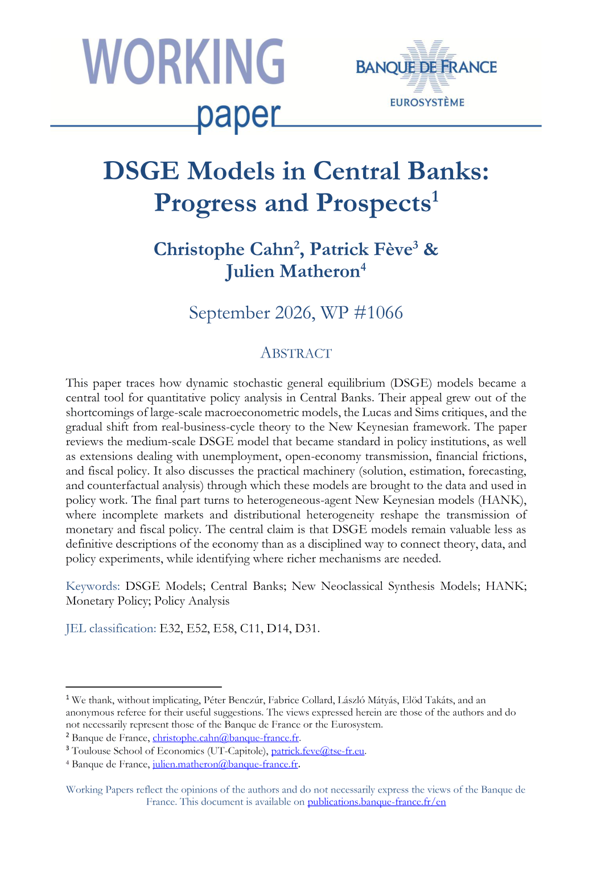
"DSGE Models in Central Banks: Progress and Prospects" by Christophe Cahn, Patrick Fève, and Julien Matheron.
"This paper traces how dynamic stochastic general equilibrium (DSGE) models became a central tool for quantitative policy analysis in Central Banks. Their appeal grew out of the shortcomings of large-scale macroeconometric models, the Lucas and Sims critiques, and the gradual shift from real-business-cycle theory to the New Keynesian framework. The paper reviews the medium-scale DSGE model that became standard in policy institutions, as well as extensions dealing with unemployment, open-economy transmission, financial frictions, and fiscal policy. It also discusses the practical machinery (solution, estimation, forecasting, and counterfactual analysis) through which these models are brought to the data and used in policy work. The final part turns to heterogeneous-agent New Keynesian models (HANK), where incomplete markets and distributional heterogeneity reshape the transmission of monetary and fiscal policy. The central claim is that DSGE models remain valuable less as definitive descriptions of the economy than as a disciplined way to connect theory, data, and policy experiments, while identifying where richer mechanisms are needed."
https://t.co/fA4tFibJZe
Six tax policy ideas from the work of Robert Hall, who just won the Nobel Prize in Economics:
1. Consumption is relatively stable and doesn’t respond much to temporary policy.
2. For investment, what matters is the "user cost of capital," making the argument for full expensing.
3. A properly designed flat tax is really a consumption tax.
4. Wages are sticky, so higher taxes on labor initially yield job losses.
5. Entrepreneurship requires unusually high risk tolerance (and high taxes on success can make entrepreneurial risk even less attractive).
6. Social infrastructure matters for productivity (and non-neutral tax codes encourage rent-seeking rather than productive activity).
More on each insight here: https://t.co/O886w5NqMg
The Nobel Prize given to Mike Woodford and Bob Hall will re-trigger discussions about the so-called New Keynesian model. Some will hail it as an unambiguous success, building macro from micro foundations. Others will dismiss it as an empirically irrelevant construction, leading to complex models without much relation to reality.
As often is the case, truth is in between. I expressed my views, as a participant in the enterprise, but not an unconditional believer, in an NBER Macro piece last year. Given that the link has expired, I use this opportunity to repost it. https://t.co/KxrsOrDEBz
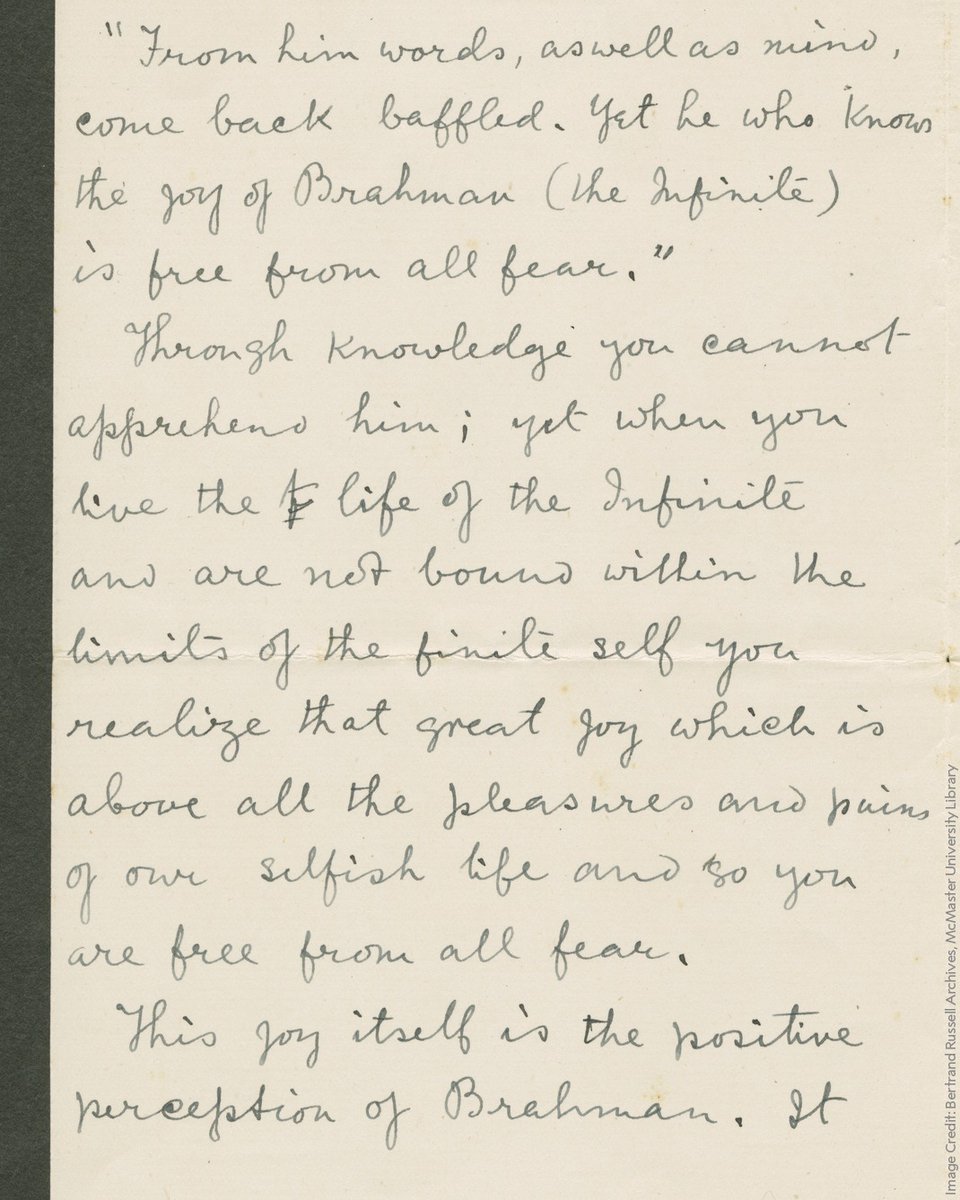
Take a look at this 114-year-old correspondence between literature laureates Bertrand Russell and Rabindranath Tagore.
Almost a year later, Tagore would receive the 1913 literature prize for his poetry. Russell would receive the literature prize 37 years later in 1950.
Images: Bertrand Russell Archives, @mcmasteru Library
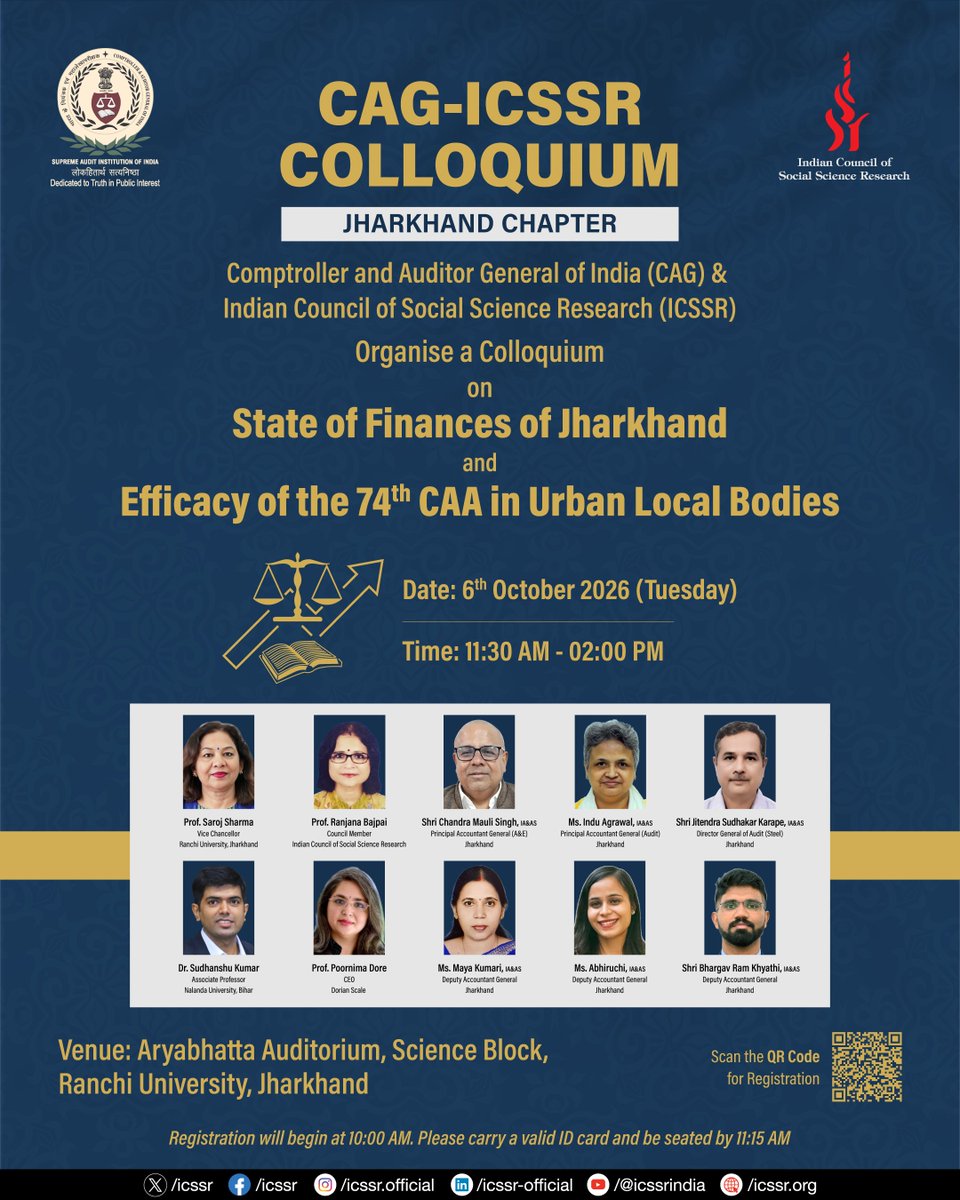
The CAG-ICSSR Colloquium reaches its 24th Chapter- Jharkhand— At the Heart of India’s Growth Trajectory.
Scheduled on:
📅 06th October 2026
⏰ 11:30 AM – 2:00 PM
📍 Aryabhatta Auditorium, Science Block, Ranchi University, Ranchi
The CAG–ICSSR Colloquium: Jharkhand Chapter will bring together eminent policymakers, academicians, researchers, practitioners and students for a thought-provoking dialogue on 💰 State of Finances of Jharkhand, and 🏥 Efficacy of the 74th CAA in urban Local Bodies.
The colloquium will engage distinguished academicians and experts led by Prof. Saroj Sharma, Vice Chancellor, Ranchi University, Prof. Ranjana Bajpai, Council Member, ICSSR, Shri Chandra Mauli Sing, IA&AS, Principal Accountant General, Ms. Indu Agrawal, IA&AS, Principal Accountant General, Shri Jitendra Sudhakar Karape, Director General of Audit, Dr. Sudhanshu Kumar, Nalanda University, Prof. Poornima Dore, CEO, Dorian Scale, Ms. Maya Kumari, Deputy Accountant General, Ms. Abhiruchi, Deputy Accountant General, Shri. Bhargav Ram Khyathi, Deputy Accountant General.
Jharkhand, endowed with abundant mineral resources and significant potential in mining, agriculture, industry and emerging sectors, occupies a pivotal position in India’s economic growth trajectory. With its strategic contribution to energy and industrial development, the State is central to India’s aspirations for sustained, inclusive and balanced growth. Harnessing its natural resources, strengthening infrastructure and investing in human development can further enable Jharkhand to contribute significantly to the vision of a Viksit Bharat@2047.
The colloquium seeks to create a vibrant platform for meaningful engagement between academia and public institutions, encouraging evidence-based research and informed policy dialogue on critical governance challenges. By fostering interdisciplinary perspectives and collaborative discussions, the initiative aims to contribute towards transparent, accountable and citizen-centric governance.
#CAGICSSR #Jharkhand #PublicFinance #GoodGovernance #InclusiveDevelopment #ViksitBharat2047
एक नाव और उस पर सवार 1,000 लोग।
तस्वीरें भागलपुर की हैं। विक्रमशिला ब्रिज 2 दिन से बंद है।
यही होता है जब प्लानिंग के नाम पर चादर तानकर सोते रहते हैं “पुराना ब्रिज टूटेगा तो देखा जाएगा।”
2015 में PM पैकेज के तहत समानांतर पुल की घोषणा हुई थी। काम शुरू हुआ 2023 में।
घोषणा के 8 साल बाद काम शुरू हुआ।
अगर समय पर काम शुरू होता, तो आज नया ब्रिज बनकर तैयार होता। लोगों को नाव पर जान जोखिम में डालकर सफर नहीं करना पड़ता।
घोषणा नहीं, जमीन पर काम चाहिए। पहले अपना इंफ्रास्ट्रक्चर बनाइए।
हलचल बड़ी है बाज़ार में
कोई पाँव पैदल, चढ़ा है कोई कार में।
लेकिन, सभी की यह टेक है,
अब किसी में भी नहीं बुद्धि या विवेक है।
सरकार से न यदि ऊबेगा,
डूबेगा, अवश्य यह सारा देश डूबेगा!
-रामधारी सिंह दिनकर(जयंती पर नमन)