"Capek gak sih tiap mau analisa dokumen harus ribet OCR dulu? Mana hasilnya sering berantakan lagi 🙄
Alibaba baru aja ngerilis Multimodal LLM yang bisa 'baca' PDF langsung kayak mata manusia.
No more text extraction, no more pre-processing. Langsung sat-set! 🚀
Ini intinya nih....
Zero OCR Workflow: Biasanya kan kita butuh step ekstraksi teks dulu sebelum masuk ke AI. Nah, model ini bypass itu semua.
Dia lihat dokumen sebagai visual input, jadi struktur tabel atau grafik yang ribet pun dia paham. Literally kayak lo lagi baca pake mata sendiri.
No Pre-processing Drama: Gak perlu capek-capek cleaning data atau benerin format teks yang kepotong. Langsung arahin aja ke PDF-nya, dia bakal langsung nangkep konteksnya secara holistic.
Context Aware: Karena dia multimodal, dia gak cuma baca teks, tapi juga ngerti placement gambar dan layouting. Jadi minim halusinasi gara-gara salah baca urutan paragraf.
Why It Matters?
Buat lo yang kerjaannya numpuk research paper, laporan keuangan, atau legal dokumen yang berlembar-lembar, ini life saver banget sih. Efficiency level: God mode! 📈
Gimana menurut lo? Bakal bikin tools OCR lama jadi obsolete gak nih? 🧐 Ciakakakak
Nih reponya: https://t.co/jW5SSrOt2T
@ScholarshipfPhd I posted on this a few days ago. He has had various Google Scholar accounts, which he deleted, but they keep popping up again. The one I posted about has over five million citations and an h-index of >1,700.
https://t.co/4lGLYNnRMo
as long as they can't disobey of the pre-programmed instruction or what their algo should be, we're not there yet.
human is agi, that is capable of being disobedience. and this is not algorithmic.
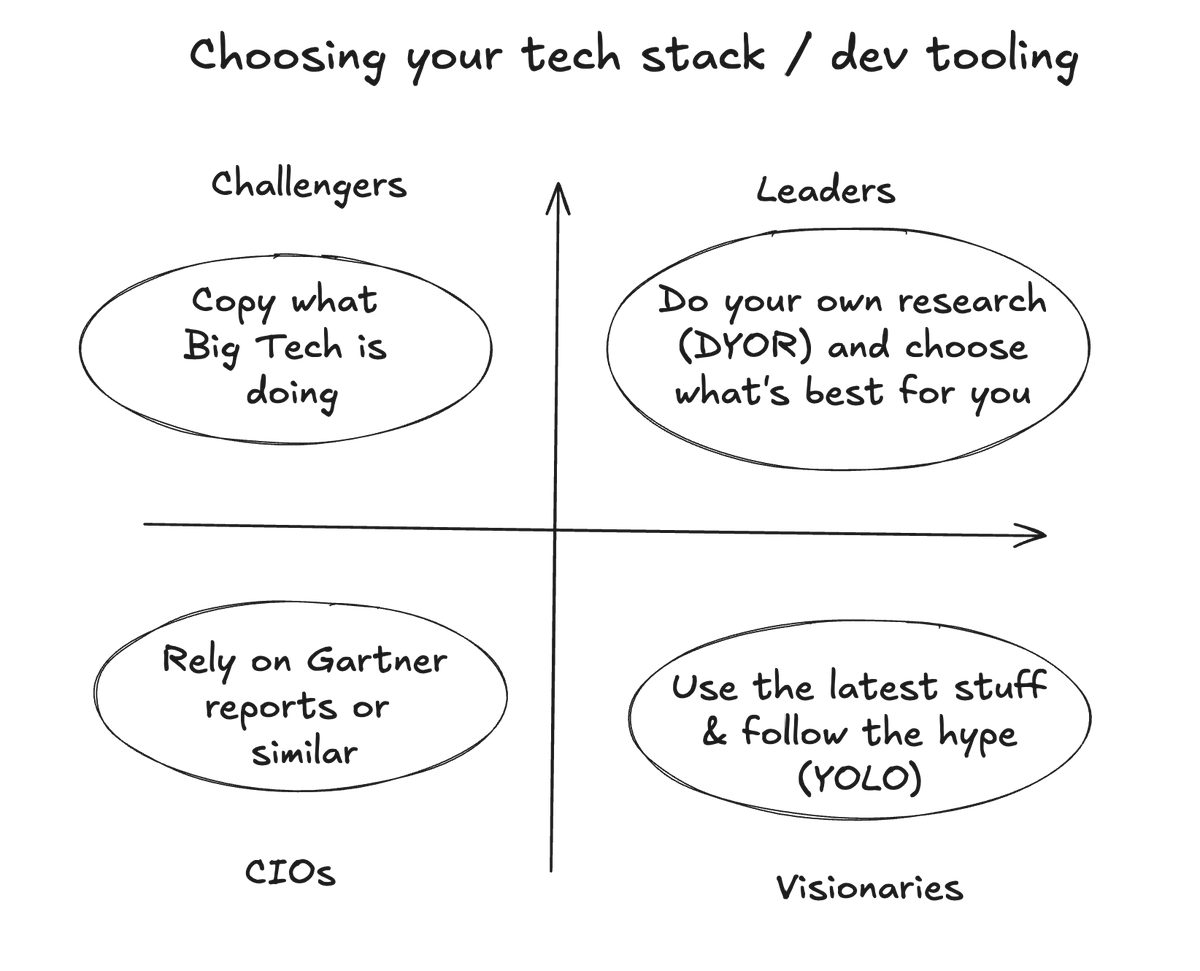
I made a magic quadrant about how to choose your tech stack
Seriously, DYOR: no one will do it for you. Try out stuff. See what works. Ignore reports from people who don't do the work and are pay-to-play anyway
𝗧𝗼𝗽 𝟮𝟬 𝗦𝗤𝗟 𝗾𝘂𝗲𝗿𝘆 𝗼𝗽𝘁𝗶𝗺𝗶𝘇𝗮𝘁𝗶𝗼𝗻 𝘁𝗲𝗰𝗵𝗻𝗶𝗾𝘂𝗲𝘀
Here is the list of the top 20 SQL query optimization techniques I found noteworthy:
1. Create an index on huge tables (>1.000.000) rows
2. Use EXIST() instead of COUNT() to find an element in the table
3. SELECT fields instead of using SELECT *
4. Avoid Subqueries in WHERE Clause
5. Avoid SELECT DISTINCT where possible
6. Use WHERE Clause instead of HAVING
7. Create joins with INNER JOIN (not WHERE)
8. Use LIMIT to sample query results
9. Use UNION ALL instead of UNION wherever possible
10. Use UNION where instead of WHERE ... or ... query.
11. Run your query during off-peak hours
12. Avoid using OR in join queries
14. Choose GROUP BY over window functions
15. Use derived and temporary tables
16. Drop the index before loading bulk data
16. Use materialized views instead of views
17. Avoid != or <> (not equal) operator
18. Minimize the number of subqueries
19. Use INNER join as little as possible when you can get the same output using LEFT/RIGHT join.
20. For retrieving the same dataset, frequently try to use temporary sources.
Do you know what is 𝗤𝘂𝗲𝗿𝘆 𝗢𝗽𝘁𝗶𝗺𝗶𝘇𝗲𝗿? Its primary function is to determine 𝘁𝗵𝗲 𝗺𝗼𝘀𝘁 𝗲𝗳𝗳𝗶𝗰𝗶𝗲𝗻𝘁 𝘄𝗮𝘆 to execute a given SQL query by finding the best execution plan. The query optimizer works by taking the SQL query as input and analyzing it to determine how best to execute it. The first step is to parse the SQL query and create a syntax tree. The optimizer then analyzes the syntax tree to determine how to run the query.
Next, the optimizer generates 𝗮𝗹𝘁𝗲𝗿𝗻𝗮𝘁𝗶𝘃𝗲 𝗲𝘅𝗲𝗰𝘂𝘁𝗶𝗼𝗻 𝗽𝗹𝗮𝗻𝘀, which are different ways of executing the same query. Each execution plan specifies the order in which the tables should be accessed, the join methods, and any filtering or sorting operations. The optimizer then assigns a 𝗰𝗼𝘀𝘁 to each execution plan based on the number of disk reads and the CPU time required to execute the query.
Finally, the optimizer 𝗰𝗵𝗼𝗼𝘀𝗲𝘀 𝘁𝗵𝗲 𝗲𝘅𝗲𝗰𝘂𝘁𝗶𝗼𝗻 𝗽𝗹𝗮𝗻 with the lowest cost as the optimal execution plan for the query. This plan is then used to execute the query.
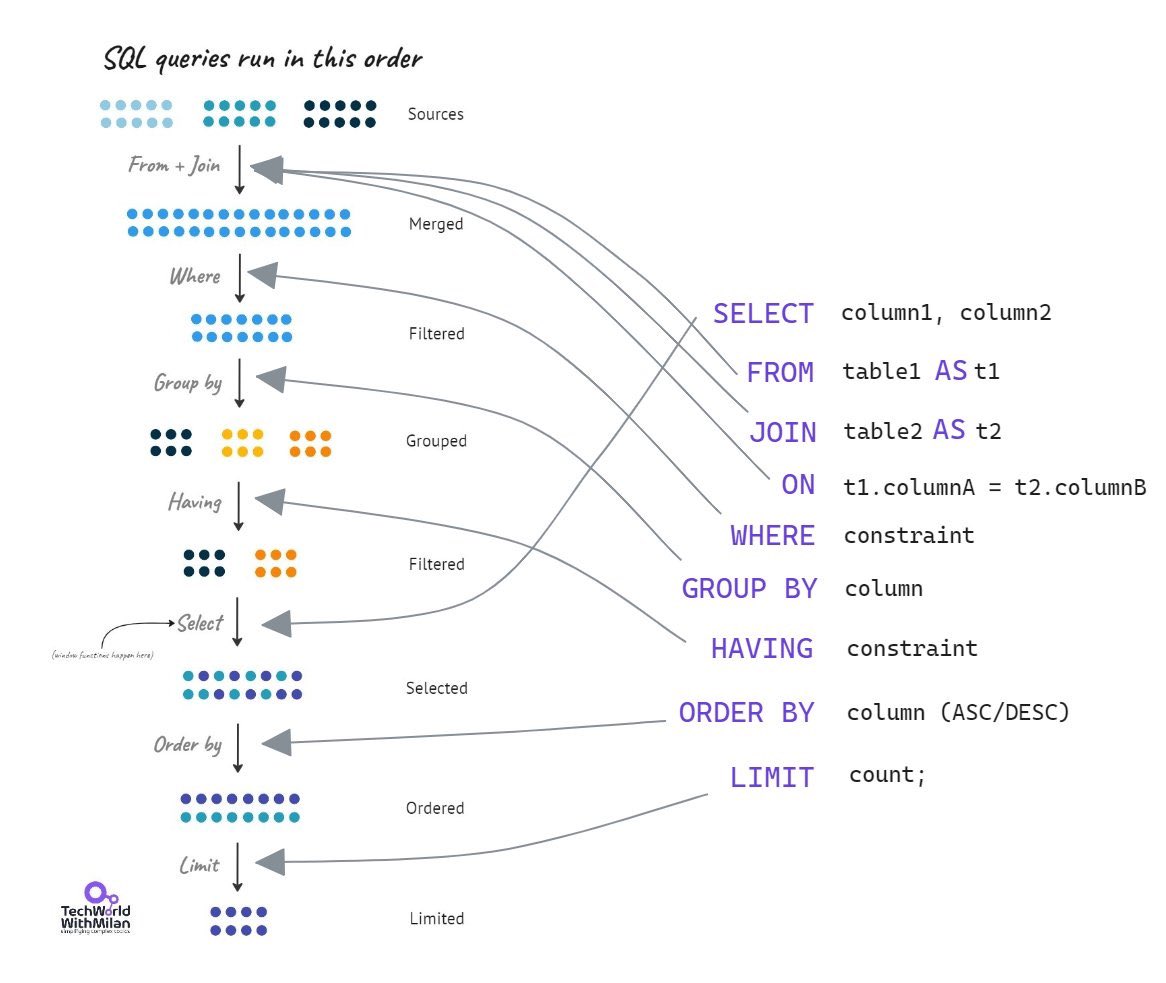
Check in the image the 𝗼𝗿𝗱𝗲𝗿 𝗶𝗻 𝘄𝗵𝗶𝗰𝗵 𝗦𝗤𝗟 𝗾𝘂𝗲𝗿𝗶𝗲𝘀 𝗿𝘂𝗻.
#technology #softwareengineering #programming #techworldwithmilan #sql