People hear “cross-chain” and picture a #bridge.
Euclid is closer to a shared order calculator.
The #calculator sees the balances locked on each connected chain, works out the swap, and only then tells the right #escrow to release.
The bridge step is the thing they tried to skip.
@EuclidProtocol
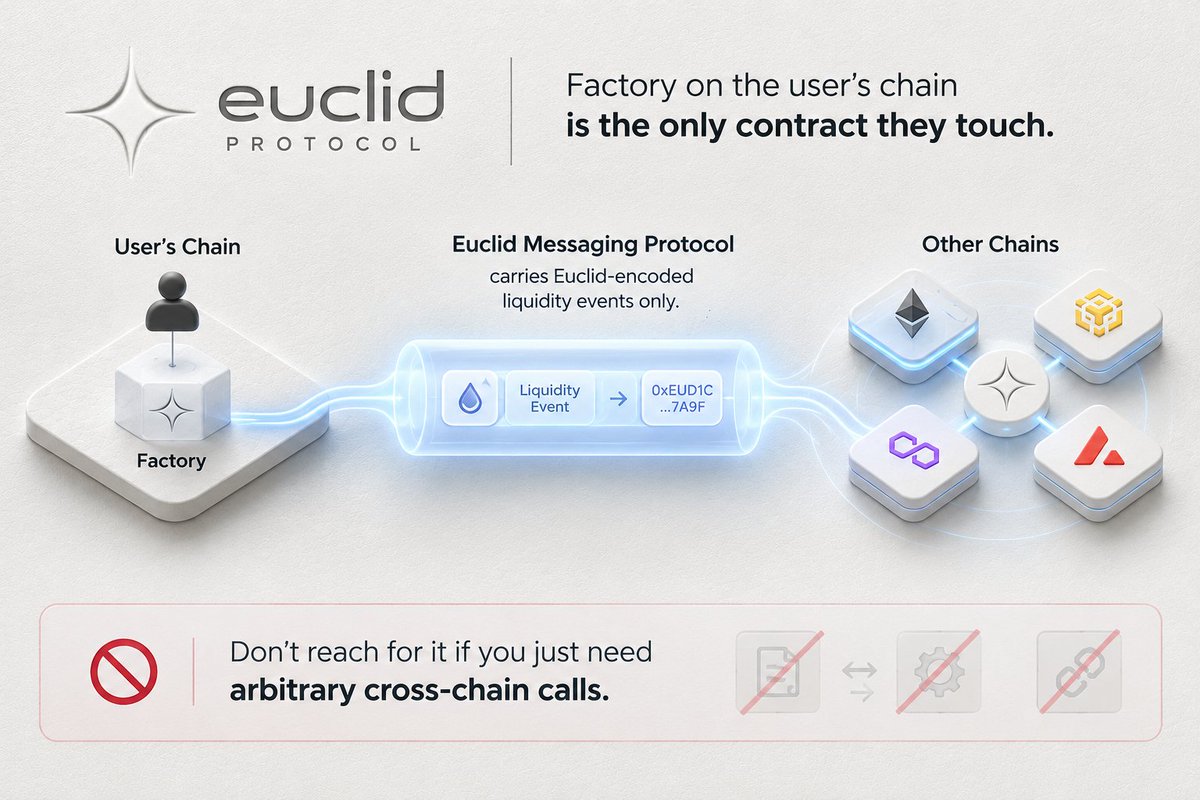
Factory on the user's chain is the only contract they touch.
Euclid Messaging Protocol carries Euclid-encoded liquidity events only.
Don't reach for it if you just need arbitrary cross-chain calls.
Thin #pools are the actual bug.
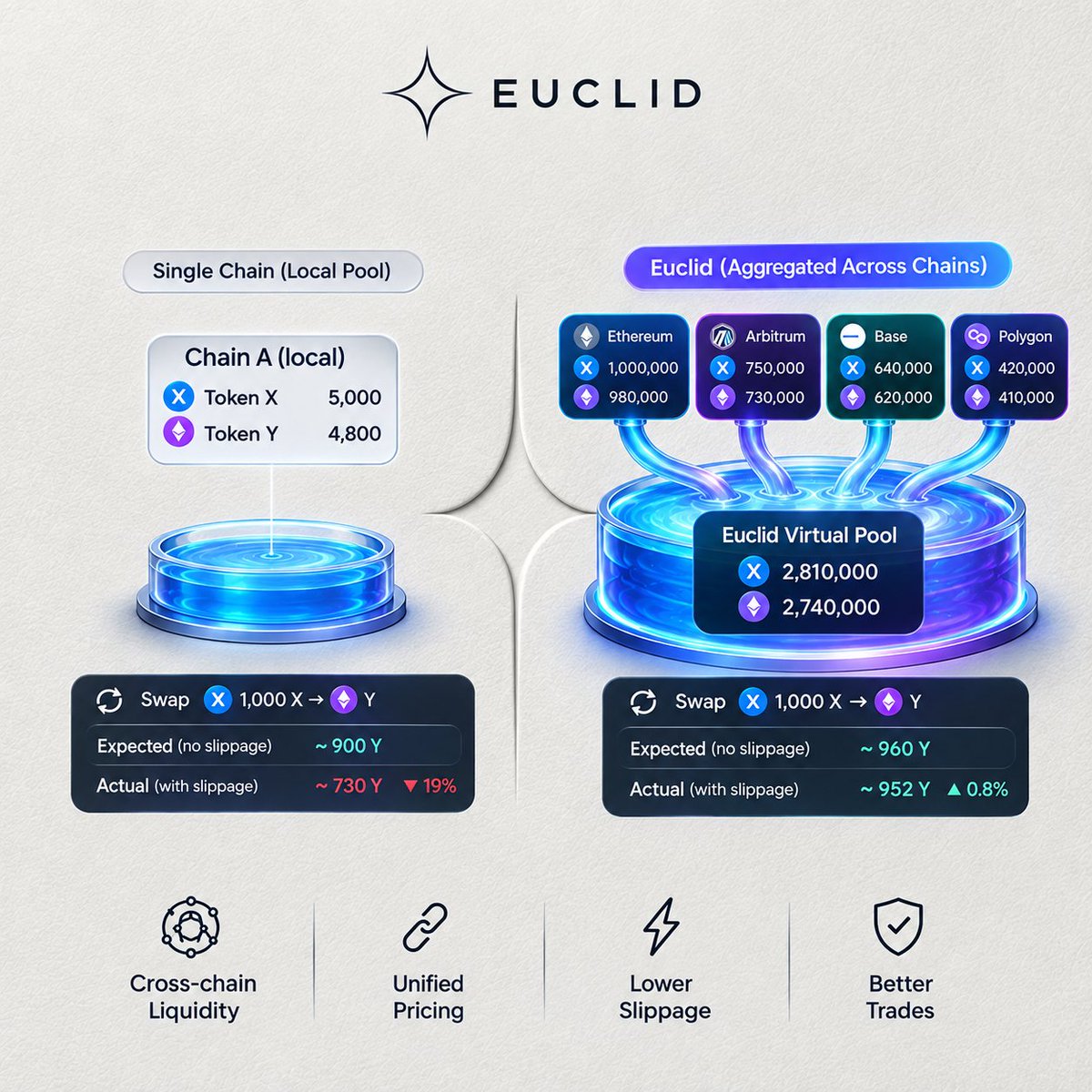
A pair can have millions sitting around and you still eat bad slippage if the local pool is tiny.
Euclid’s virtual pool sums reserves for that pair across connected #chains before it prices the swap.
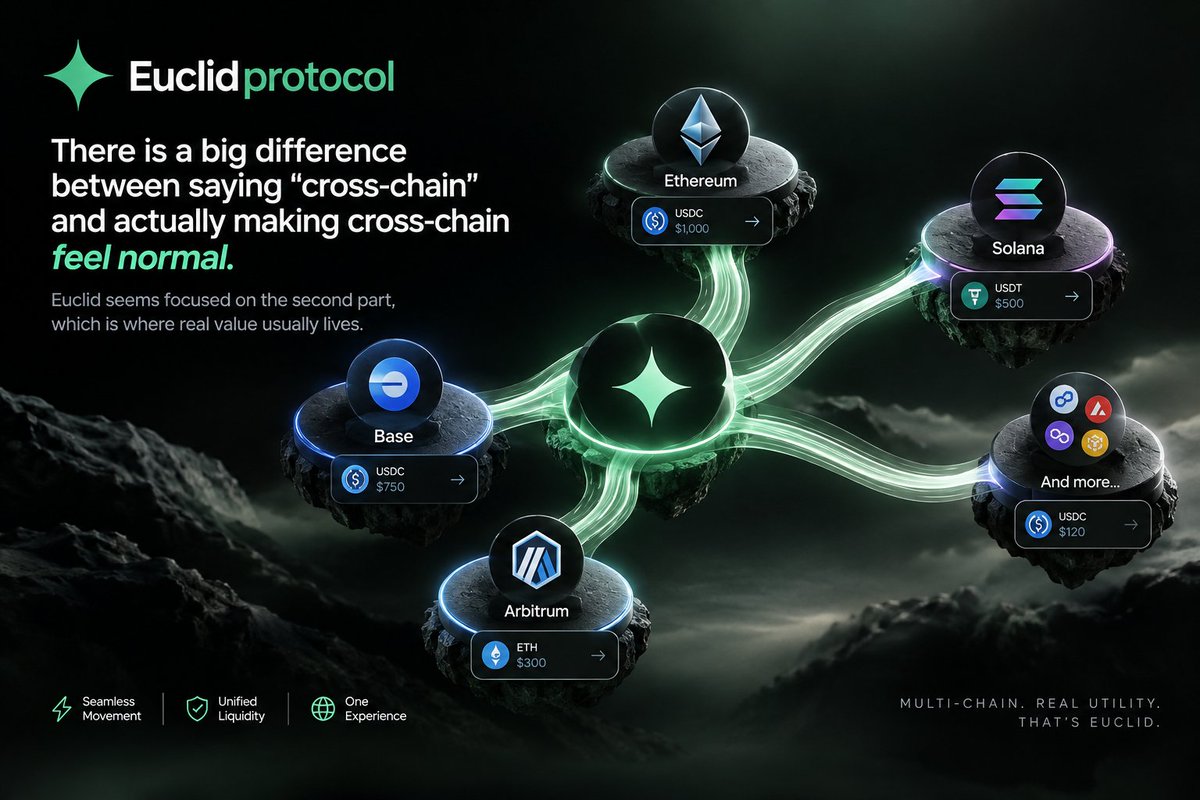
There is a big difference between saying “cross-chain” and actually making cross-chain feel normal.
Euclid seems focused on the second part,
which is where real value usually lives.
Euclid is not a bridge infrastructure.
Euclid doesn't wrap tokens.
Euclid doesn't move tokens.
The protocol swaps by updating a shared ledger and then unlocking already-escrowed inventory on the destination chain.
This is real DeFi evolution 🧬🧬
@CryptoMoM_z14@wyckoffweb Have you been able to claim?
How did you did you do it?
Because I have the same with yours, Starknet to Ethereum, but the official bridge is saying my wallet address is blocked.
Do you know how to do it using contract tab?
Every chain is like a shop that only accepts its own gift cards.
You can have money, just not in the form the next shop wants.
Euclid is trying to keep the gift cards where they are and still let you spend across shops.
That’s the whole idea behind @EuclidProtocol for DeFi.
Euclid Prime and the “I still hold the keys” trade.
I like CEX speed.
I do not like giving a CEX my money to hold.
#Prime is the order book product.
-You click,
-it fills fast,
-and there is no gas on each click.
It feels like a normal exchange.
The difference is you are not sending your coins into a company wallet and then waiting on a withdrawal.
Your assets stay in the protocol’s escrow.
That is not a custodian’s IOU. It is not “trust us, we owe you this.”
AMM then order book in one go
Most people treat pools and books as two different worlds.
You swap on a pool, then you go somewhere else to hit a limit.
Euclid’s settlement layer can hold both kinds of state at once.
So a route can be: USDC through a constant-product pool into ETH,
then ETH into BTC on the book, same transaction.
You don’t feel that.
You just get a number.
The interesting part is the middle, where two market types stop acting like separate products.
Empty books after dinner
Smaller chains go quiet at night. Spreads blow out.
You either wait till US hours or eat a bad fill.
If the system can look at depth on the busy networks while you stay on the quiet one, that late-night tax shrinks.
That’s a real problem $Euclid is aimed at.
Launching a token without seeding dead markets
launching a token used to mean picking one chain and praying,
or spraying tiny pools across ten networks and watching nine of them die.
With "Euclid Launch" you put the liquidity in once.
Traders on the connected chains hit that same pool.
You still have to find buyers. you just stop cloning the market twenty times.
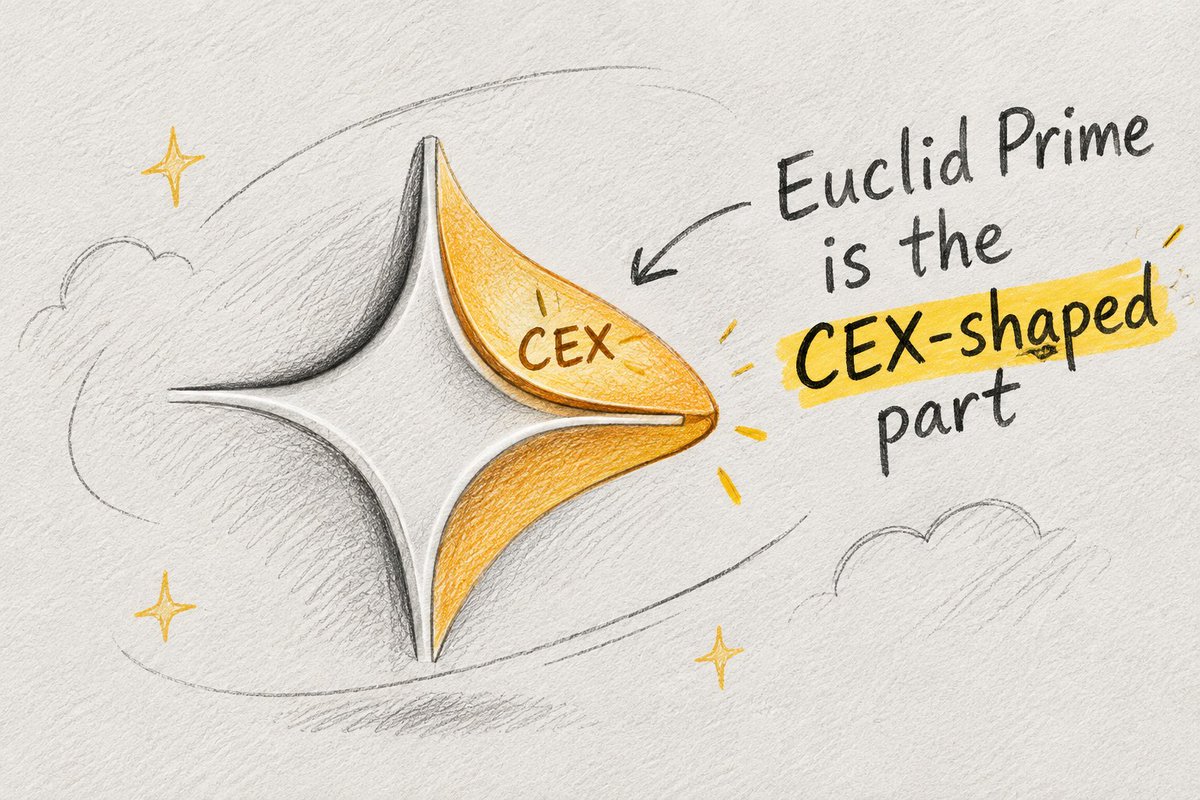
Euclid Prime is the CEX-shaped part
Euclid prime is the order book side.
No gas on trades, fills in under 200ms, and you still withdraw to the chain you want instead of leaving coins on an exchange.
It’s trying to feel like a cex without the “please trust our hot wallet” part.
Whether the latency holds when it’s crowded is the only question I care about.
The design isn’t pretending to be an AMM.
Not carrying gas on every chain just to trade
@EuclidProtocol
You still need gas on the chain you’re interacting from,
but you don’t need a little pile of native tokens sitting on ten different networks just so you can move value around.
The system handles the rest through the shared balances.
It’s a small daily annoyance that quietly disappears.
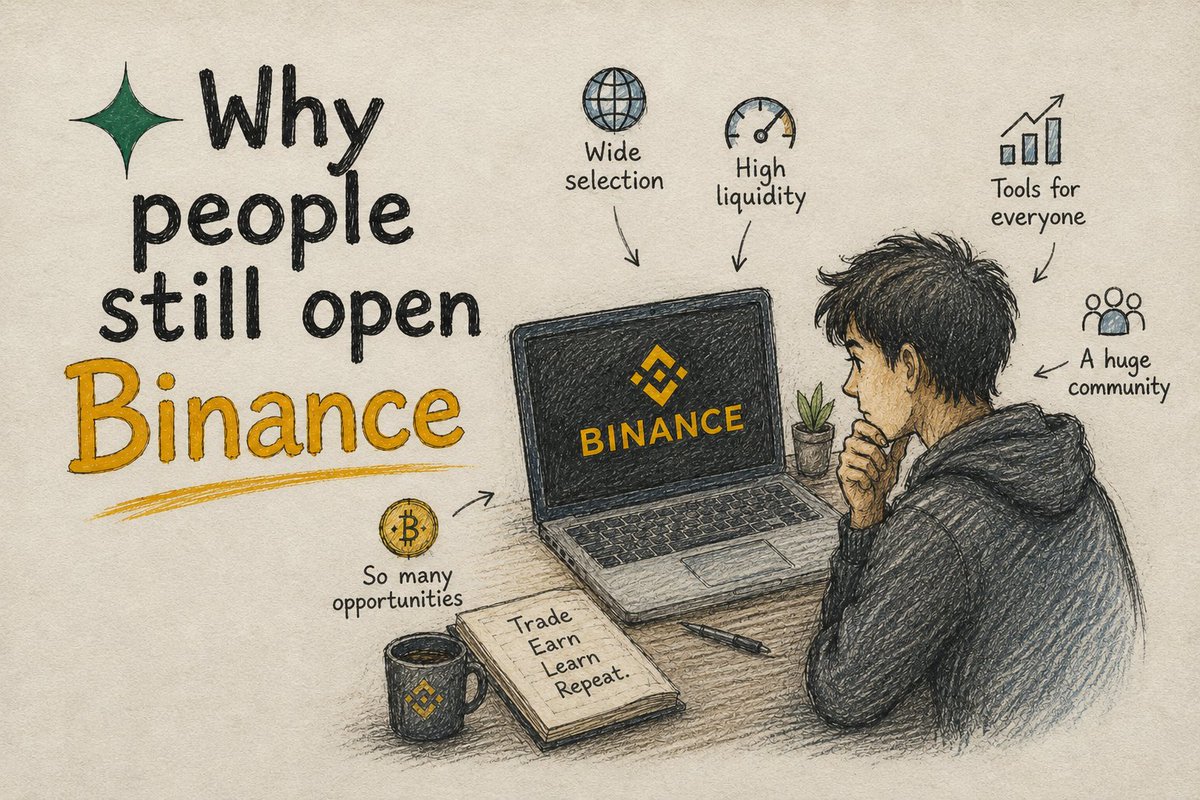
Why people still open #Binance
Nobody loves handing a CEX their keys.
They open it because there’s one book and the price is the price.
#DeFi keeps opening a new shop on every chain and acting surprised when the aisles are empty.
#Euclid is trying to copy the one-book part and leave the custody part.
That’s the only test that matters.
Built for builders
This is not just a user story.
Euclidprotocol also gives builders a shared liquidity framework they can plug into instead of starting from scratch.
(1/8). Most token launches still feel like a chore.
You write a contract, hunt for liquidity, hop chains, pay gas, and hope someone actually finds the token(s).
Euclid Launch skips most of that. You name it, set a supply, hit launch, and the token is live without the usual stress.
WHAT IS EUCLID LAUNCH?
Euclid Launch is built for one simple idea:
- make token launches easier to access,
- easier to trade,
- and easier to connect with liquidity from day one.
That matters because most launches struggle when liquidity is scattered across chains.
Why you should trade on Euclid Launch?
If you buy and sell crypto often, Euclid Launch is built to make that simpler.
• No extra fees per trade.
• No jumping between networks.
• Trading is simple.
• Take your money out where you want it.
Why you should create a token on Euclid Launch?
• Launch a token in under a minute......no code needed.
• One listing works across all Euclid networks, so you don’t have to set it up separately on each chain.
• Your token reaches traders already using Euclid on different networts.
• It’s made in a standard format (like ERC-20) so other apps can use it too, not only on Euclid.
• Good for real projects and memecoins.