#OTD The Petrograd Soviet votes for the transfer of power to the working class by an overwhelming majority. The Mensheviks and SRs demand a second vote, pressuring delegates to overturn the decision. It is ratified again: by 279 votes to 115 with 51 abstentions.
#OTD The Moscow Soviet unanimously condemns the state repression of the Bolsheviks. The Black Sea Fleet adopts the slogan, ‘power to the soviets’, as do 23 regiments of the 12th Army.
#OTD The Petrograd Soviet votes no-confidence in its Menshevik/SR executive, and in the coalition government, by 519 to 414 with 67 abstentions. The Soviet elects a new executive led by Bolsheviks, Left SRs and Internationalist-Mensheviks.
#OTD The Petrograd Soviet votes no-confidence in its Menshevik/SR executive, and in the coalition government, by 519 to 414 with 67 abstentions. The Soviet elects a new executive led by Bolsheviks, Left SRs and Internationalist-Mensheviks.
#OTD The Petrograd Soviet votes for the transfer of power to the working class by an overwhelming majority. The Mensheviks and SRs demand a second vote, pressuring delegates to overturn the decision. It is ratified again: by 279 votes to 115 with 51 abstentions.
#OTD Baltic Fleet sailors demand an immediate armistice, the transfer of land to peasant committees, and workers’ control of production. The Kiev Soviet of workers’ deputies votes 130 to 66 in favour of a soviet government. Similar resolutions pass in other industrial centres.
#OTD The Moscow Soviet passes a no-confidence vote in the Provisional Government by 335 to 254. The congress of Siberian soviets in Krasnoyarsk renews its support for the Bolsheviks.
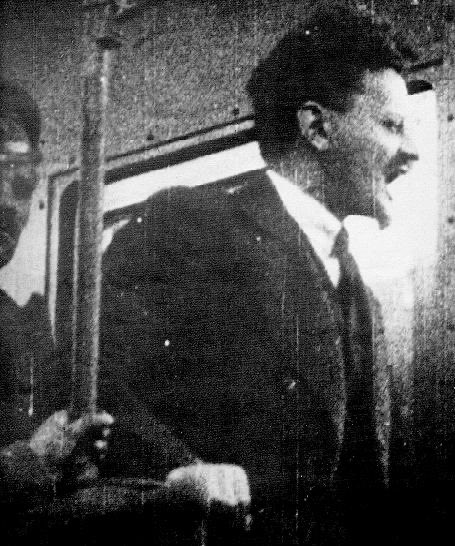
#OTD Trotsky left Petrograd’s Kresty prison on a 3,000-rouble bond. The Provisional Government did not drop the July indictment; it only allowed bail.
The Petrograd Soviet and the city’s trade unions posted the money, claiming “the honour of furnishing bail for the esteemed leader of the revolutionary proletariat.” He had been held in solitary confinement; the bond ended that confinement without restoring his legal innocence.
He went straight to Smolny, seat of the Soviet and of the Committee for the Struggle against Counter-Revolution. Kerensky ordered that committee to dissolve; it refused. The same day, some 700,000 railway workers went on strike.
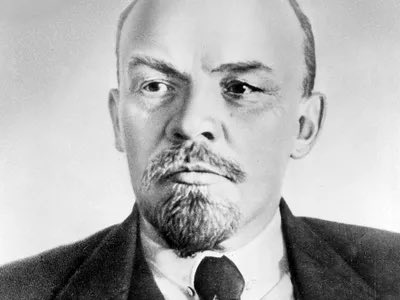
#OTD It is Monday in Russia, Lenin - still in hiding in Finland - finishes ‘On Compromises’. On Friday he had offered that the Bolsheviks would not claim power if the Mensheviks and Socialist-Revolutionaries formed a government democratically accountable to the soviets.
After Saturday’s and Sunday’s papers he adds a postscript: that opening is already too late.
A Bolshevik Central Committee plenum had been called for today. It does not discuss the political situation Lenin wanted on the agenda. His draft resolution for that meeting stays in the file.
#OTD the Russian soldiers’, sailors’, and workers’ soviets in Finland vote 700 to 13, with 36 abstentions, for a soviet government.
The voters were the garrison, Baltic Fleet, and Russian workers’ soviets at Helsingfors, meeting as the Regional Congress of the Army, Fleet and Workers of Finland. Bolsheviks carried the congress; Ivar Smilga took the chair of its executive. The motion demanded that power pass from the Provisional Government to the soviets.
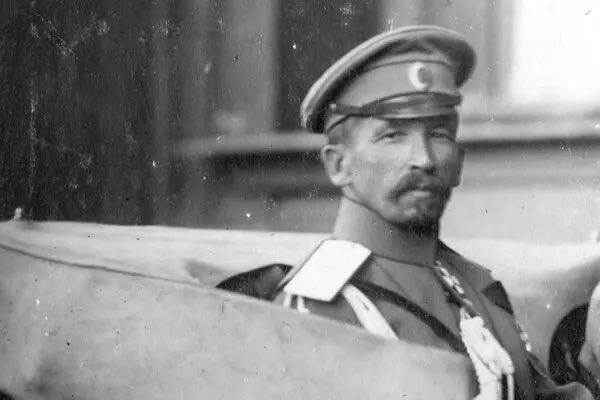
#OTD Kornilov’s counter-revolutionary march on Petrograd collapsed without a battle. Railway workers diverted his echelons, Red Guards armed in the factories, and agitators talked the Savage Division and Cossack units to a halt.
When the danger became open, the soviet tops formed a Committee of Struggle, but the real force came from below. Bolsheviks, still slandered and partly imprisoned after July, placed themselves at the front of the defence and maintained their own programme. Sailors of the ‘Aurora’, asked to guard the Winter Palace, put it in one line: use Kerensky as a gun-rest to shoot Kornilov; afterwards settle with Kerensky.
Lenin, writing to the Central Committee said: “We shall fight, we are fighting against Kornilov, just as Kerensky’s troops do, but we do not support Kerensky. On the contrary, we expose his weakness.” The masses, Trotsky said, “did not place a moment of trust in Kerensky. For them it was not a case of defending the government, but of defending the revolution.” That double-edged policy won the proletariat back after July and prepared soviet power in October.
#OTD The Petrograd Soviet votes for the transfer of power to the working class by an overwhelming majority. The Mensheviks and SRs demand a second vote, pressuring delegates to overturn the decision. It is ratified again: by 279 votes to 115 with 51 abstentions.
#OTD Under the guidance of the Bolsheviks – even though they are in a minority – the Military Revolutionary Committee in Petrograd organises the defence of factories and workers’ districts. By 11 September, 40,000 Red Guards have been recruited. Railway workers rip up track or reroute Kornilov’s troop trains. Post and telegraph workers intercept military communications. The chauffeurs’ union provides transport, and printers take control of the press. Garrisons mutiny at Vyborg and Kronstadt. Kornilov is routed.
#OTD Kornilov moves troops ever nearer to Petrograd, aided by British army personnel and vehicles. General Knox, head of Britain’s military mission in Russia, is clear: “This people needs the whip! A dictatorship, that is just what it needs.” British ambassador Sir George Buchanan offers the support of the Allies.
#OTD Kornilov moves troops ever nearer to Petrograd, aided by British army personnel and vehicles. General Knox, head of Britain’s military mission in Russia, is clear: “This people needs the whip! A dictatorship, that is just what it needs.” British ambassador Sir George Buchanan offers the support of the Allies.
#OTD at the Conference in the Bolshoi Theatre, Supreme Commander Lavr Kornilov turned a supposedly military address into a demand that revolutionary power in Petrograd be broken.
Some 2,500 delegates were present. Kerensky had wanted Kornilov confined to army matters; instead he called for the army to be restored “at all costs,” for the death penalty and field courts, for soldiers’ committees to be crushed, and for soviets and factory organisations to lose their hold on government and the rear.
From the stenogram he cited recent murders of officers by their own men and the flight of the 56th Siberian Rifle Regiment, and pressed measures already countersigned by Boris Savinkov and M. M. Filonenko. The right-wing benches shouted “Correct!” and “Have the guilty been hanged?” With Kaledin, Milyukov and Shulgin, the demand was put plainly: liquidate the soviets, restore discipline in army and factories, and fight the war to a finish.
#OTD A febrile atmosphere exists in Petrograd as fake news of a Bolshevik insurrection is whipped up by counter-revolutionary forces. Left-wing groups, trade unions, and shop and factory committees make it clear that no workers’ organisations or parties are calling any demonstrations.
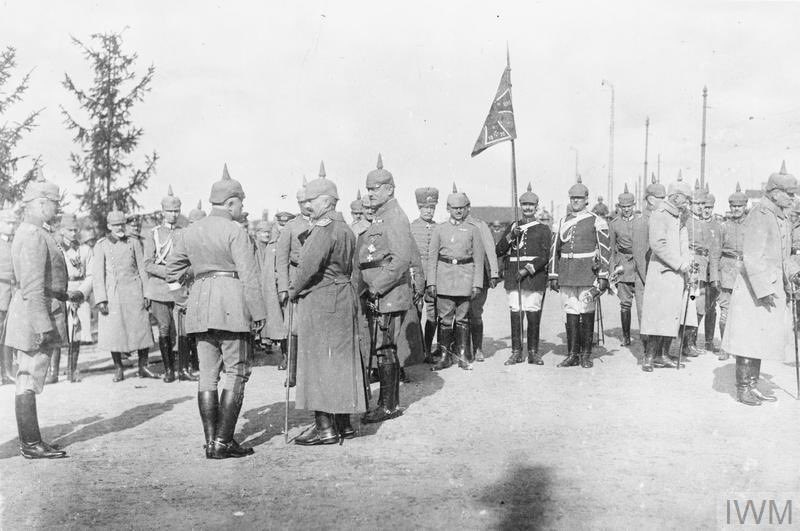
#OTD Hutier’s German Eighth Army, after a Bruchmüller bombardment of high explosive and gas, forced the Dvina at Ikšķile, about 30 km south-east of Riga, and broke the Russian Twelfth Army’s line against almost no resistance. That day’s breakthrough was immediately used in the propaganda around Kornilov’s coup preparations as proof that the Northern Front was collapsing and Petrograd itself was exposed.
#OTD The Bolsheviks, working under semi-clandestine conditions, make a breakthrough in elections to the Petrograd City Duma. The SRs receive a little over 200,000 votes (37%) and 75 seats. The Bolsheviks come second on 33%, with 65 seats. The Kadets have 42 seats, while the Mensheviks slump to eight (5%).
#OTD Hutier’s German Eighth Army, after a Bruchmüller bombardment of high explosive and gas, forced the Dvina at Ikšķile, about 30 km south-east of Riga, and broke the Russian Twelfth Army’s line against almost no resistance. That day’s breakthrough was immediately used in the propaganda around Kornilov’s coup preparations as proof that the Northern Front was collapsing and Petrograd itself was exposed.
#OTD at the Conference in the Bolshoi Theatre, Supreme Commander Lavr Kornilov turned a supposedly military address into a demand that revolutionary power in Petrograd be broken.
Some 2,500 delegates were present. Kerensky had wanted Kornilov confined to army matters; instead he called for the army to be restored “at all costs,” for the death penalty and field courts, for soldiers’ committees to be crushed, and for soviets and factory organisations to lose their hold on government and the rear.
From the stenogram he cited recent murders of officers by their own men and the flight of the 56th Siberian Rifle Regiment, and pressed measures already countersigned by Boris Savinkov and M. M. Filonenko. The right-wing benches shouted “Correct!” and “Have the guilty been hanged?” With Kaledin, Milyukov and Shulgin, the demand was put plainly: liquidate the soviets, restore discipline in army and factories, and fight the war to a finish.
#OTD The Provisional Government organises the State Conference in Moscow, an attempt to bolster right-wing forces and sideline the soviets. Out of 2,500 delegates, nearly 500 are from the tsarist-era State Duma (parliament); more than 100 are army officers, with only around 300 from the soviets. It rules that party groupings can only speak with the presidium’s permission. The Bolsheviks boycott it. Moscow trade unions call a one-day strike, a decision backed by most of the district soviets. Although the Moscow Soviet votes against – by 364 to 304 – rank-and-file Mensheviks and SRs have already voted for the strike in their workplaces.
The strike is solid, with 400,000 out in Moscow, and similar action throughout Russia. The call for a one-day strike is well judged: it avoids a repeat of the July Days, shows that Petrograd is not isolated, and that the Bolsheviks’ strength has been maintained.
#OTD The Provisional Government organises the State Conference in Moscow, an attempt to bolster right-wing forces and sideline the soviets. Out of 2,500 delegates, nearly 500 are from the tsarist-era State Duma (parliament); more than 100 are army officers, with only around 300 from the soviets. It rules that party groupings can only speak with the presidium’s permission. The Bolsheviks boycott it. Moscow trade unions call a one-day strike, a decision backed by most of the district soviets. Although the Moscow Soviet votes against – by 364 to 304 – rank-and-file Mensheviks and SRs have already voted for the strike in their workplaces.
#OTD Black Hundred (far-right, anti-Semitic) members are released from prison. Kornilov’s profile is built up in the press and at a Moscow conference of industrialists, bankers, generals, clergy and Kadet leaders. The Workers’ Section of the Petrograd Soviet demands the abolition of the death penalty, and sends greetings to Trotsky, Lunacharsky, Kollontai and others in Kresty prison. Putilov workers set aside a day’s wages for a workers’ press.