There is a way Catholics do this:
First, check whether it matches the Bible and the teaching of the Church. If it does not, it is not the Holy Spirit.
Next, notice whether it leads you to greater love of God and neighbor, more humility, and the fruits of the Spirit such as love, joy, peace, and patience. Or does it lead instead to pride, selfishness, bitterness, or confusion?
Also ask yourself whether it brings a lasting peace, even when the path is hard. Or does it bring only temporary excitement, anxiety, or a feeling of emptiness afterward?
The Holy Spirit works gently. He corrects you when needed but also encourages you and draws you closer to God. Your own thoughts come from your mind and experience, so you still need to test them. Your emotions are feelings that change and can be useful signals, but they are not reliable guides by themselves.
In practice, pray “Come, Holy Spirit,” read the Gospels, go to Mass and Confession, and talk with a priest. Do not make big decisions when you feel dark or restless.
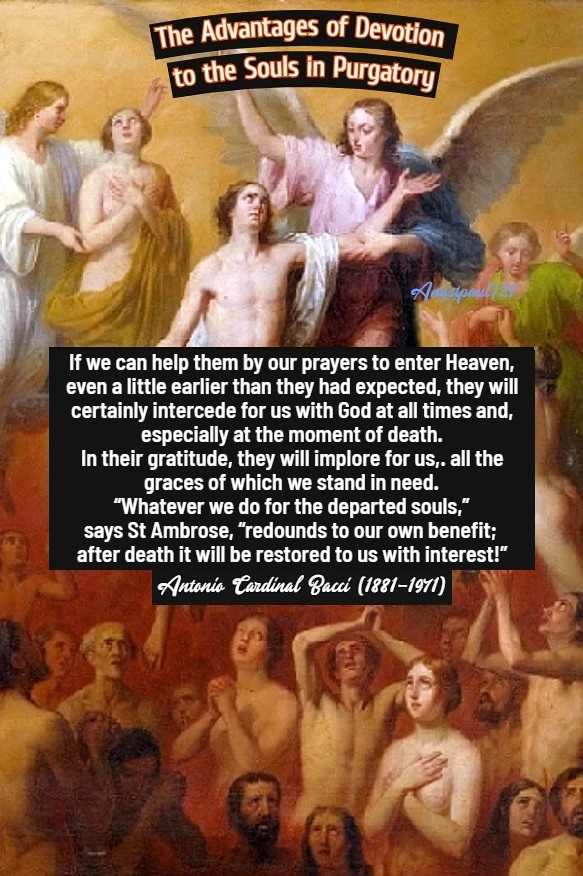
The Advantages of Devotion to the Souls in Purgatory
1. As Sacred Scripture says, it is a holy and wholesome thought to pray for the dead. (2 Mach. 12:46) Besides being profitable to them, however, it is profitable to ourselves. There are two reasons for this: (a) Devotion to the faithful departed reminds us that even venial sin, carelessness, and tepidity, will one day be punished with terrible severity. As a result, we are encouraged in our efforts to lead better lives. (b) In the second place, we know that the souls in Purgatory are holy and are already in the antechamber of Paradise, which they yearn to reach but from which they are kept far apart by the imperfections which they have still to purify. If we can help them by our prayers to enter Heaven even a little earlier than they had expected, they will certainly intercede for us with God at all times and especially at the moment of death. In their gratitude they will implore for us all the graces of which we stand in need. "Whatever we do for the departed souls," says St. Ambrose, "redounds to our own benefit; after death it will be restored to us with interest." While we are assisting our dear ones to ascend as soon as possible into the everlasting happiness of Heaven, it is comforting to know that one day their patronage will enable us to join them there.
2. The story is told of St. John of God that on one occasion when he was finding it difficult to provide for the crowds of sick people whom he had in his hospital, he went about the streets of Granada crying: "My dear brothers, give alms to yourselves." Many were astonished at these words, but the Saint explained that Jesus regards as done to Himself anything which we do for the poor and unfortunate, and that therefore He repays the generous giver handsomely. Since the souls in Purgatory are poor and needy, it is certain that whatever we do for them will redound to our own advantage.
St. Margaret of Cortona had a keen devotion to the faithful departed. It is related of her that when she was dying she saw a band of blessed spirits descending from above in order to escort her into Heaven. These were the countless souls whom her prayers had rescued from the pains of Purgatory. "If only everyone realised," the Cure d'Ars once said to a fellow-priest, "what great influence with God the holy souls in Purgatory possess, and the vast number of favours which we obtain through their intercession, they certainly would not be forgotten. Let us pray earnestly for them, and they will intercede strongly for us." "Whenever I wish to obtain some favour from our Heavenly Father," said St. Catherine of Bologne, "I have recourse to the souls in Purgatory. I beseech them to present my petition to the Divine Majesty in their name, and through their intercession my request is granted."
3. The example of the Saints should inspire us to practise great devotion to the souls in Purgatory. We should ask them to obtain for us everything which we need, but especially the graces necessary for our eternal salvation. (Antonio Cardinal Bacci)
WHY GO TO MASS ?
1. At the time of your death, your greatest comfort will be the Masses that during your life you attended with fervor and devotion.
2. Every Mass you attended will accompany you in divine court and advocate for you to attain forgiveness.
3. With each Mass you can lessen the temporary punishment you owe for your sins, in proportion to the fervor with which you hear it.
4. With devoted attendance for the Holy Mass, pay the highest homage to the Holy Humanity of Our Lord..
5. The well-heard Holy Mass replaces your many neglects and omissions.
6. By the well-heard Holy Mass you are forgiven all the venomous sins you are determined to avoid, and many others you don't even remember.
7. Because of her also the devil loses dominion over you.
8. You offer ultimate consolation to the blessed souls of Purgatory.
9. You get blessings in your business and temporary affairs.
10. A Mass heard while you live will benefit you much more than many can offer for you after death.
11. You spare yourself from many dangers and misfortunes which you might fall into if not for the Holy Mass.
12. Also remember that it shortens your Purgatory.
13. With every Mass you will increase your degrees of glory in Heaven. In it you receive the blessing of the priest, which God ratifies in heaven.
14. To the one who hears Mass every day, God will deliver him from a tragic death, and the guardian Angel will keep in mind the steps he takes to go to Mass, and God will reward them in his death.
15. During Mass you kneel in the midst of a crowd of angels invisibly attending the Holy Sacrifice with utmost reverence.
16. When we hear mass in honor of a particular Saint, giving thanks to God for the favors bestowed on that Saint, we cannot help but earn his protection and special love, for the honor, joy and happiness that our good work follows him.
17. Every day we hear Mass, it would be good if, besides the other intentions, we had the one to honor the Saint of the day.
18. The Mass is the greatest gift that can be offered to the Lord for souls, to take them out of purgatory, to set them free from their sorrows, and to bring them to enjoy glory. – Saint Bernard of the Seine.
19. Whoever hears Mass, prays, gives alms, or prays for the souls of the Purgatory, works for his own benefit. – Saint Augustine.
20. For every Mass celebrated or heard with devotion, many souls leave Purgatory, and those who remain there are lessened by the sorrows they suffer. – Saint Gregory the Great, Pope.
21. During the celebration of the Mass, the sorrows of the souls are suspended for those who pray and work the priest, and especially for those for whom the Mass is offered. –St. Gregory the Great.
22. You can also earn Plenary Indulgence every Monday of the year by offering the Holy Mass and Communion in suffrage of the blessed souls of Purgatory. For the believers who can't hear Mass on Monday it's worth listening to it on Sunday with that intention.
23. It is pleaded that they apply all the indulgences in suffering of the Souls of Purgatory, for God our Lord, and they will reward you this charity.
24. The Holy Mass is the renewal of the Sacrifice of Calvary, the greatest act of worship to the Holy Trinity. That's why it's obligatory to listen to it every Sunday and holidays to save.
If you're a Catholic, I want you to know that from now until November 8, you still have an opportunity to obtain a PLENARY INDULGENCE for the souls in Purgatory. Especially for your loved ones.
Listen carefully so that you don't miss anything.
All you have to do is devoutly visit a cemetery and pray for the dead, even if it is just a mental prayer.
But there are other conditions you must fulfil if you want to obtain a plenary indulgence. Let me explain.
First, you must be in a state of grace. You must also have the intention of gaining the indulgence and offering it for a deceased soul.
Second, you must visit a cemetery between November 1 and November 8 and pray for the departed. You don't necessarily have to visit the grave of the particular person you are praying for. Any cemetery will do.
Third, you must receive sacramental confession. The good thing is that one confession can suffice for several plenary indulgences. You don't have to go for confession every single day.
Fourth, you must receive Holy Communion. However, you need to receive Holy Communion each time you want to gain a plenary indulgence. So, if you want to gain five plenary indulgences over five days, you need to receive Holy Communion five times.
Fifth, you must pray for the intentions of the Holy Father. One Our Father and one Hail Mary are sufficient for this. You can, of course, say more prayers if you wish.
Sixth, and this is very important, you must be completely detached from every sin, including venial sin. This means that you must sincerely reject every attachment to sin. If you fulfil all the other conditions but lack this complete detachment, you may obtain only a partial indulgence.
Now, you should also know that there is an important distinction here.
You cannot apply a plenary indulgence to another living person, but you can apply it to somebody who has died by way of suffrage.
Pope St. Paul VI explained this in his writing, "Indulgentiarum Doctrina." He says:
"Partial as well as plenary indulgences can always be applied to the dead by way of suffrage."
Now, what do we mean by suffrage?
When we say suffrage, we mean that we cannot independently release a person from Purgatory by our own authority. Rather, we offer the indulgence to God on behalf of that soul, and God applies it according to His mercy.
So, you can offer a plenary indulgence for a particular deceased person, including a loved one.
Let me give you guys a few final clarifications.
You can gain only one plenary indulgence per day under the ordinary rules. One confession can cover several indulgences, but each indulgence requires its own Holy Communion and prayer for the Pope's intentions.
You do not have to fast, give alms, recite the Rosary or say any special prayer formula to obtain this particular cemetery indulgence.
Also, remember that the indulgence is specifically for the faithful departed. You are not obtaining another plenary indulgence for yourself on those same days.
So, between now and November 8, let us remember the souls in Purgatory. Visit a cemetery, pray for the departed and offer the indulgence for them.
Remember, the souls in Purgatory can no longer obtain indulgences for themselves. But we, the Church militant, can assist them through our prayers and the spiritual treasures of the Church.
Let us not forget the faithful departed. They need our prayers too.
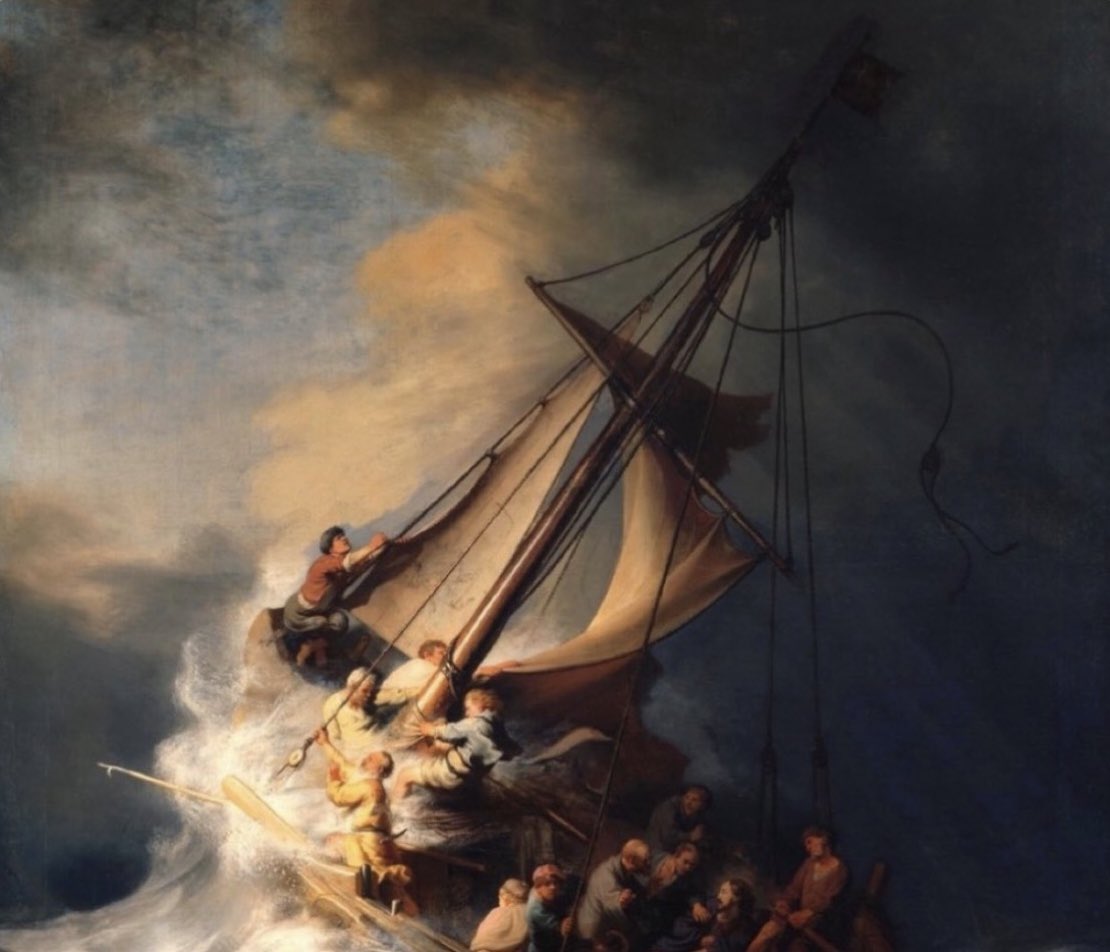
“God provides the wind, Man must raise the sail.”
- Saint Augustine of Hippo
This quote emphasizes the connection between divine guidance and personal responsibility. The wind symbolizes the blessings, opportunities, and grace provided by a higher power—forces that exist beyond our ability to control.
Raising the sail, however, represents the decisions, determination, and effort required to make the most of those opportunities. It reminds us that receiving guidance or favorable circumstances is only part of the journey; we must also take meaningful action to move forward.
Ultimately, the message is that faith and opportunity can open doors, but personal effort and responsibility are what allow us to walk through them.
The moment a human being draws a last breath, Catholic doctrine teaches that the soul steps immediately—without delay or reprieve—into the presence of Christ the Judge. This encounter, called the particular judgment, is the private, irrevocable verdict rendered on one individual life. As one of my seminary professors was in the habit of saying, “the person who we are at the moment of death, is the person we shall be for eternity.”
Unlike the general judgment at the end of time, when every soul will be publicly vindicated or condemned before the assembled universe, the particular judgment is intimate: only the soul, its conscience, and God.
At that instant the entire moral history of the person is laid bare. Every grace offered, every commandment kept or broken, every secret motive and public act passes before the divine light. The standard is not abstract perfection but fidelity to the light each person actually received: the natural law written on the heart, the revealed law of Scripture and Tradition, and the unique vocation inscribed by Providence.
Three outcomes alone are possible.
Souls who die in perfect love, detached from all sin, enter at once into the bliss of heaven—often, the Church adds, after a final cleansing in purgatory. Souls who die in friendship with God yet still bearing the temporal effects of forgiven sin are admitted to purgatory, a state of purifying joy that ends infallibly in heaven. Souls who die in unrepented mortal sin, having freely chosen final separation from God, enter hell: the eternal ratification of their own refusal of love.
Scripture states the principle plainly: “It is appointed for men to die once, and after that comes judgment” (Heb 9:27). The Catechism distills two millennia of teaching: “Death puts an end to human life as the time open to either accepting or rejecting the divine grace manifested in Christ… Each man receives his eternal retribution in his immortal soul at the very moment of his death” (CCC 1021–1022).
Thus the particular judgment is not a preliminary hearing but the definitive sentence. No reincarnation, no second probation, no mitigation after the soul leaves the body. The doctrine therefore invests every earthly choice with everlasting weight and every confession with urgent hope. In the unforgettable words of Saint John of the Cross, “At the evening of life, we shall be judged on love.” Catholic faith replies: the examination begins the very second the evening falls.
Holiness is not a privilege reserved for a few, but a universal vocation that speaks to each of us where we live. This is the hope-filled message of today’s feast: God sees the good that we do not see, knows stories that we do not know, and reaches hearts to which we have no access.
There is something I learnt from Tyrion Lannister in GOT it is called "Canary trap"
Tyrion deliberately fed different versions of his plan to three people on the small council and watched which version Cersei confronted him with.
He gave Maester Pycelle a sealed letter offering to betroth Mycella to Prince Martell of Dorne.
He told Lord Baelish he intended to marry Myrcella to Lord Robert Arryn of the Vale.
He told Varys that he planned to send Tommen to Dorne as a ward/foster.
When Cersei angrily confronted him specifically about shipping Myrcella off to Dorne, Tyrion knew immediately that Pycelle was the informant—because that detail had only been given to him.
It’s so sad that this issue wasn’t properly addressed…
Many women will continue to experience this, and do you know why? Millions of men are in love but are afraid to settle down. They have convinced themselves that they must first make enough money before they can get married.
As a result, many relationships end without any meaningful commitment.
A lady once called me in tears because her boyfriend had broken up with her. When I asked why, she said, “He told me he wants to focus on his life and make money.”
Just imagine!
This is why pastors and elders need to have more conversations with young men about marriage. Marriage is not the finish line; it’s the beginning of a journey. You don’t have to have everything figured out before getting married. What matters is finding a woman of value who understands partnership, growth, sacrifice, and building together.
The day young men begin to understand this, brothers, we’ll witness more intentional relationships and marriages! 😂..