The U.S. Food and Drug Administration is informing patients and health care providers of a potential increased risk of non-arteritic anterior ischemic optic neuropathy (#NAION) associated with use of glucagon-like peptide-1 receptor agonist (GLP-1 RA) medications. NAION is a rare condition that can result in acute, painless, decreased vision in one eye, including permanent vision loss.
Data from an analysis of 126 randomized, controlled clinical trials across multiple GLP-1 RAs showed an occurrence of 6.4 NAION cases per 100,000 person-years (PY) in patients treated with GLP-1 RAs compared to 3.8 NAION cases per 100,000 PY for patients treated with a placebo or a non-GLP-1 RA glucose-lowering medication. Based on published literature, the incidence of NAION in the general population is 2.3 to 10.2 cases per 100,000 persons per year in adults older than age 50. Patients with a history of NAION are at increased risk of recurrence.
Instruct patients to immediately report sudden onset of acute, painless, decreased vision; visual field deficits; or other visual disturbances in one eye. If NAION is suspected, promptly refer the patient to an ophthalmologist for evaluation. Consider discontinuing the GLP-1 RA in patients who develop NAION, unless the benefits of treatment clearly outweigh the risk.
https://t.co/y4L2pqS5pU
A new study, presented today at #AASLD2026, found that treatment with efinopegdutide resulted in a significantly greater proportion of participants with MASH resolution without worsening of fibrosis compared with placebo. https://t.co/BzyfSsYzAG @AASLDtweets#TLM2026
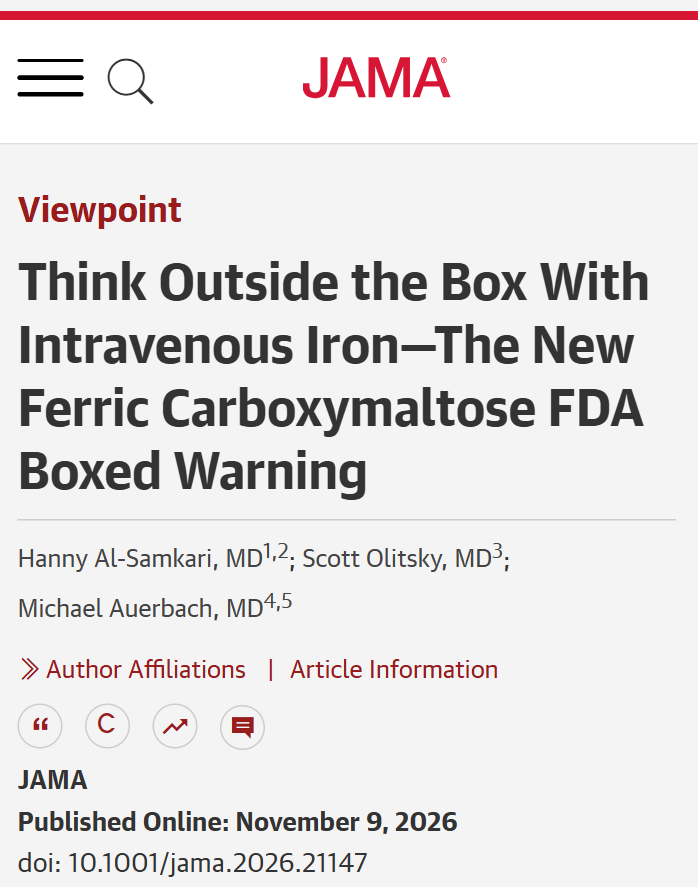
💬 Viewpoint by Hanny Al-Samkari, MD, Scott Olitsky, MD, and Michael Auerbach, MD: The new
FDA boxed warning for #FerricCarboxymaltose identifies a significant risk of #Hypophosphatemia and related complications, including osteomalacia, fractures, cardiac arrhythmias, and neuromuscular dysfunction.
The warning follows a successful FDA Citizen Petition and adds regulatory attention to adverse effects associated with intravenous iron treatment.
https://t.co/0kQsJnX4aU
New in #JACCCaseReports: Localized prolonged sodium nitroprusside delivery via a stable indwelling microcatheter is an effective bailout strategy to coronary no-reflow & salvages extensive hibernating myocardium beyond traditional reperfusion time window.
https://t.co/jR552gJL5N
💉💧 IV FLUIDS & THEIR USES
📌 What are IV fluids?
Intravenous (IV) fluids are sterile solutions given directly into the bloodstream to maintain or restore fluid & electrolyte balance.
🔹 1️⃣ CRYSTALLOIDS (Most
🔹 2️⃣ COLLOIDS
🔹 3️⃣ SPECIAL SITUATIONS
#IVFluids#fluidmanagement
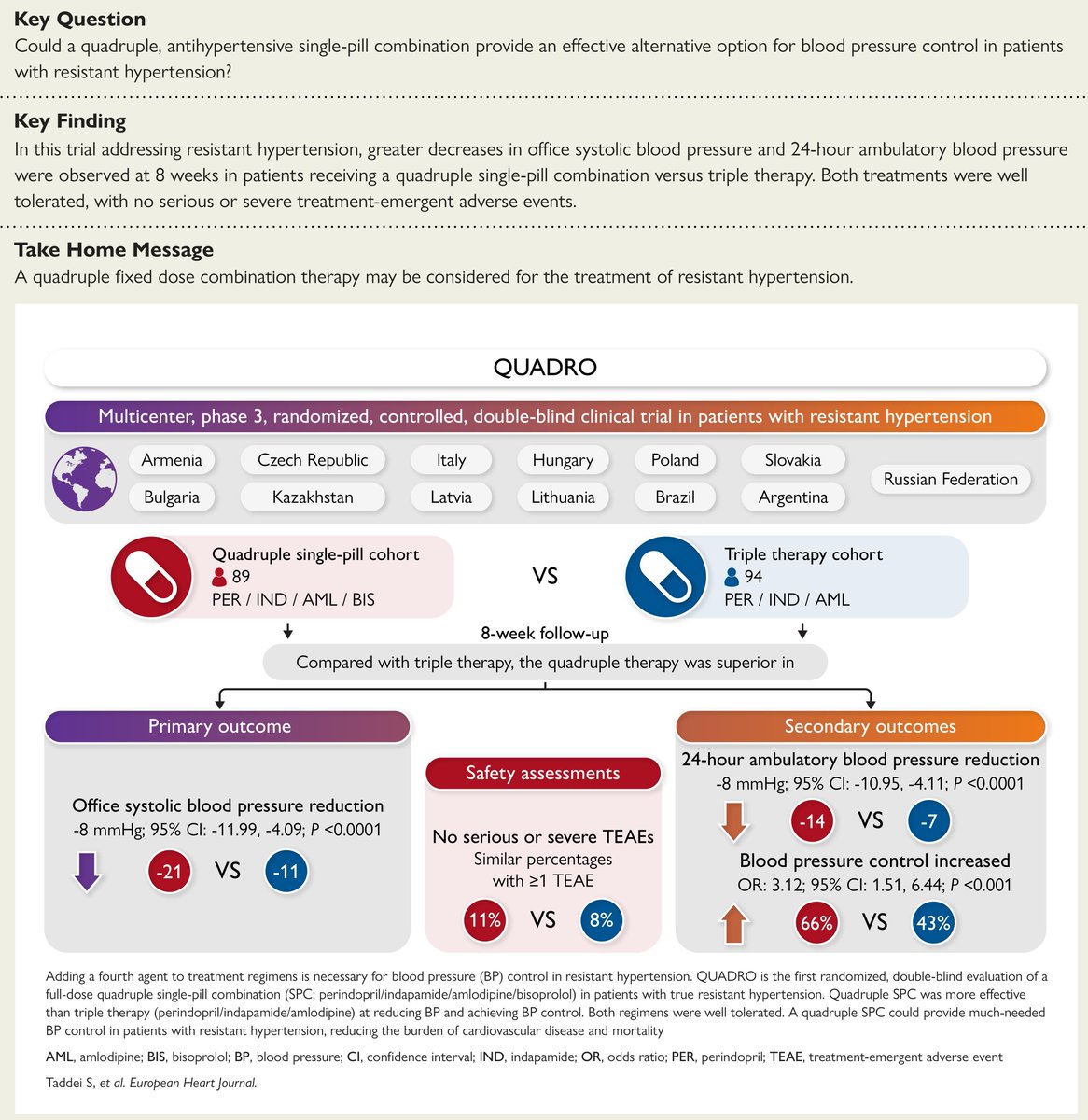
Quadruple antihypertensive single-pill combination therapy demonstrated superiority over triple therapy for resistant hypertension.
Read the results of the QUADRO trial in #EHJ 👉 https://t.co/FQi4HyZd6T
@escardio@ESC_Journals#CardioTwitter
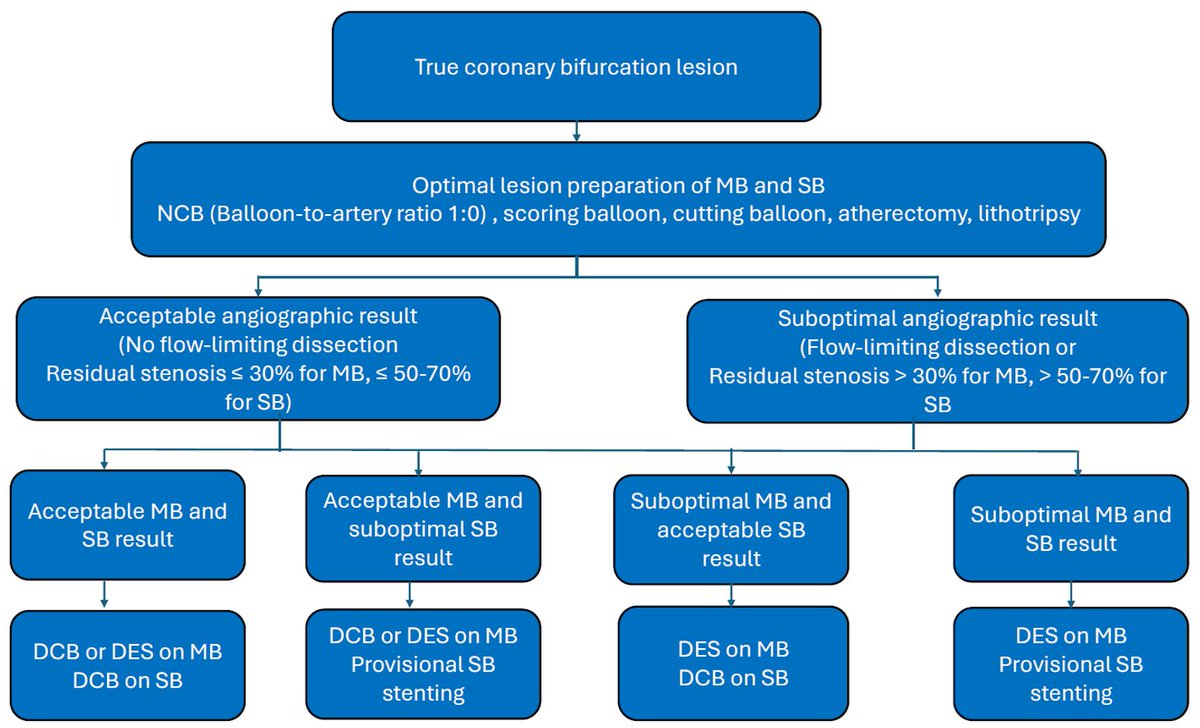
💡 Quick Take: Drug-coated balloons (DCB), either alone or as part of a hybrid strategy, offer a promising alternative to additional stenting in coronary bifurcation lesions.
Explore the expert analysis for more insights ➡️ https://t.co/asYJJrIS7T #CardioX
Pulmonary arterial hypertension: right ventricular phenotyping to improve risk assessment at follow-up. Discover more in #EHJ
👉 https://t.co/g8cPlHpig9
@RoccoMontone@ehj_ed
Algorithm for management of acute ischemic stroke eligible for EVT
DVO: distal vessel occlusion
EVT: endovascular thrombectomy
IDD: insufficient data to determine
LVO: large vessel occlusion
mRS: modified Rankin scale
MVO: medium vessel occlusion
Normal pancreas echotexture on EUS: “salt and pepper”
Embryological variation makes the echotexture of the pancreas different:
Ventral pancreas/Uncinate-Posterior head (hypoechoic)
Dorsal pancreas (hyperechoic).
2025 British Society for Rheumatology guideline for the treatment of axial spondyloarthritis with biologic and targeted synthetic DMARD
@RheumatologyUK#Spondyloarthritis
https://t.co/fc0f297XzF