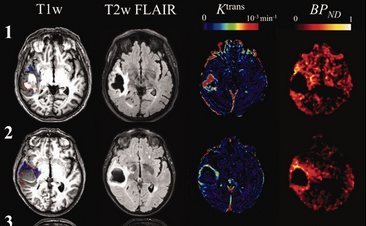
Out today! We report results from a PK11195 PET and DCE-MRI study investigating neuroinflammation and blood-brain barrier breakdown in acute, clinical intracerebral hemorrhage. @LauraMParkes@adrianpj1@GJBrainResearch https://t.co/FifjaNP7Wb
🟡 𝗥𝗲𝗰𝗿𝘂𝗶𝘁𝗶𝗻𝗴 𝗻𝗼𝘄 – 𝗦𝘁𝗿𝗼𝗸𝗲-𝗜𝗠𝗣𝗮𝗖𝗧
Healthy volunteers who have not previously had a stroke or brain injury to take part in a study investigating the links between the immune system and cognitive decline after stroke.
Message us or visit our website (link in bio)
https://t.co/7xQ3iwrsuJ
We're excited to announce several new PhD positions available in BIG and beyond, as part of the #VIDADTC funded by @alzheimerssoc. Focusing on vascular and immune contributors to #dementia, VIDA is recruiting PhD candidates for 2025 entry, to @OfficialUoM and 3 partner sites
From all our #HaemorrhagicStroke team, we'd like to also highlight the @NKMTrust, a charity which supports much of our work in ICH, and works to #PreventThePreventable by raising awareness of haemorrhage and funding research to find new treatments 🧠
Our researchers are also looking at ICH in patients. @ooliviajones and @adrianpj1 recently completed analysis of a multimodal imaging study exploring inflammation in the brain after acute haemorrhagic stroke. The results can be found here: https://t.co/ekbQlsyP7i
@marynewland_ is investigating drugs which block the cytokine Interleukin-1 after haemorrhagic stroke, aiming to see whether these drugs can reduce brain swelling linked to poor outcomes in patients.
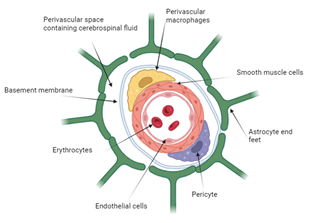
In other stroke models, Joe is investigating how changes to the blood vessels within the brain and immune cells surrounding them influence outcomes following ICH, with the aim of discovering new targets for treatments in the future.
@daisy_flatman is developing new zebrafish models for cerebral small vessel disease. She is using these zebrafish to understand the biological mechanisms leading to haemorrhagic stroke, and how we could use drugs to protect against them.
@EmzMcM is studying an immune response called the "NLRP3 inflammasome”, to understand its role in brain damage after haemorrhagic stroke and to identify new drugs that could protect the brain and improve recovery.
@nima_geemon is using zebrafish to understand how a specific protein is involved in haemorrhagic stroke, and if drugs can be made to target this protein to improve post-ICH outcome.
Paul's lab specialises in using #zebrafish, which the team have developed to create models of haemorrhagic stroke - check out their work here https://t.co/FZzZ3slx4m
On the discovery science side, @KasherLab is using #zebrafish to help better understand how haemorrhagic strokes happen, how brain cells respond to blood and to identify new potential drug targets for developing new treatments for patients.
Let’s start with our research into #haemorrhagicstroke, also known as ICH or #IntracerebralHaemorrhage 🩸🧠 This accounts for around 15% of all strokes, but is one of the most deadly forms, with a devastating one-third of ICH sufferers not surviving to 30 days post-stroke.
Each year 100,000 people in the UK will suffer a stroke. Strokes are either “haemorrhagic” – caused by a bleed in the brain, or “ischaemic” – caused by a blockage of blood vessels in the brain. Both can be devastating and need more treatment options.
1. This #WorldStrokeDay, the GJBRC team is proud to celebrate our amazing stroke researchers working across Greater Manchester in discovery science, experimental medicine, and clinical roles….
Out today! We report results from a PK11195 PET and DCE-MRI study investigating neuroinflammation and blood-brain barrier breakdown in acute, clinical intracerebral hemorrhage. @LauraMParkes@adrianpj1@GJBrainResearch https://t.co/FifjaNP7Wb
So excited that my paper “Depression, brain structure and socioeconomic status: A UK Biobank study” is out today 🎉
Thank you to @CLeaCarnall@AsriMaharani03 and Nick Shryane for working on this with me.
Read it here: https://t.co/SJ5ozPO3TE