Opportunities disguise like barriers.
Change your perspectives and look at that problem differently, you may just unlock a neural path in your brain that'll lead to the conception of transformational ideas.
FULL STATEMENT OF FACT
From official Fact Finding Mission sponsored by @renoomokri
Sleazy Omokri, a pathological liar, will go down in history as the Joseph Goebbels of the Nigerian Christian Genocide. His paid "reporters" are saying that I "debunked" claims of genocide. See the truth here.
Read the official report and sign the petition at https://t.co/1oEuUxTZKf
@PeterObi@firstladyship@ARISEtv@ruffydfire@isaelbuba@billmaher@SenTedCruz
@gtbank_help why is it so exasperating to get across to your customer service via phone.
I am trying to get an auth token and the guidance on the etoken app says to call some numbers, and calls to these numbers are never answered until dropped.
Of that blessing that you are,
Of the love we unfeigndly share,
Of the beauty within and without,
Of the candor that accompanies all you do,
Of the many lives you keep impacting,
Of these, and many more, I speak today.
Happy birthday, my JEWEL of inestimable value.
FUN!
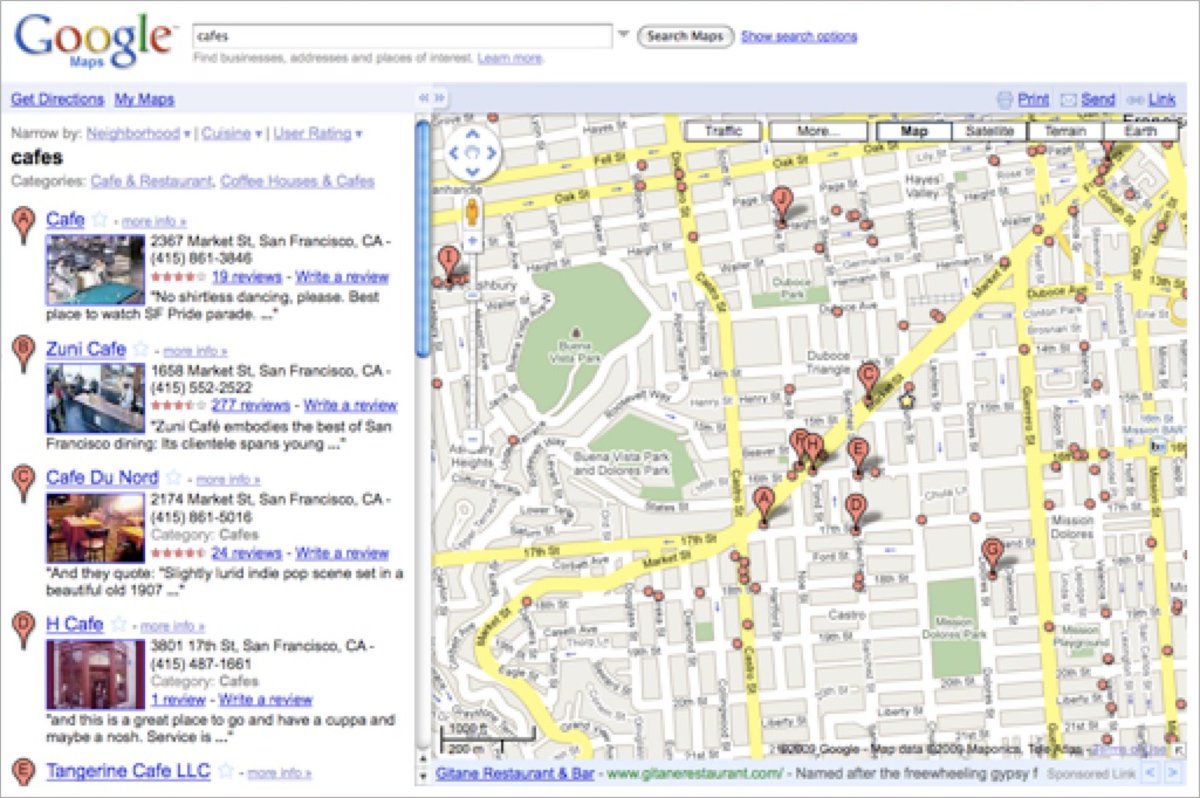
In 2007, I was 1 of 2 designers on Google Maps.
The app was growing like wildfire.
But it was becoming a cluttered mess — new features were being shoved into every pixel.
Here’s the 4-step process we used to redesign Google Maps into one of the most loved apps in the world: 🧵
–––
But first, it’s important to understand it is normal to build a product based on the underlying technical structure.
In 2005, Google Maps queried one of three databases for any search:
• Maps data
• Local business data
• Directions data
Not surprisingly, the first version of the website had three tabs, one for each of these databases: Maps, Local Search, Directions.
–––
By 2007, Google Maps still wasn’t the dominant mapping application.
But it had hit PMF, its user base was growing quickly, and we were rapidly adding new content and features like:
• Satellite and Terrain views
• Streetview, 3D buildings, Traffic
• Editable map data, Reviews, Photos
• Transit Data
We were wedging new features into any space we could find in the UI.
It became clear the user experience was suffering and the product was growing increasingly complicated.
At that time, our VP, Marissa Mayer likened Google Maps to a Christmas tree that we kept adding more and more ornaments to until it started to fall over…
We tried many different ways to rearrange the UI to accommodate new features.
Eventually we had to step back and rethink Google Maps based on what we knew was working, what brought people to the product, and what we believed the future might look like.
–––
These were the 4 key steps we took to simplify the design of Google Maps to be the intuitive, durable, much-loved product that 1B people still use today:
1. Deconstruct
We wrote down all of the product’s current and upcoming content, features, and functionality and loosely grouped them into categories:
• Core features — The most common tasks people came to do (search, get directions, find businesses)
• Aspirational use cases — Tasks we wanted people to start doing (adding their own content, correcting inaccurate information, using Maps to explore new places, etc.)
• Global actions — Actions that impacted the entire page (print, share, save, etc.)
• Use case specific actions — Actions that were relevant only within a specific use case (eg while getting directions, being able to drag a route or add a destination)
• Related features — Things that weren’t a part of Google Maps at the time, but existed and were closely related. (eg transit information, business searches on https://t.co/M0Af8Qy8uQ)
–––
2. Reframe
We leveraged a combination of user research, business goals, and our own intuition to make the product better, simpler, and scalable over time. We focused on understanding:
• What brought people to the product
• How they navigated through the product
• What was working well
• What flows were confusing
• What things were missing
• What information was valuable when
• What functionality was redundant
We emerged with several key points:
• “Searching” was the most pivotal task in Maps
• Searching addresses, businesses, parks, mountains, cities, etc could all be thought of as searching for “places”
• Getting directions was important, but rarely happened between two specific addresses. Directions searches usually had a known start or end point, like home or work. It was also more intuitive to be able to search for directions by a place name e.g., Carmel Library rather than having to look up the address first.
• It was strategically important for people to be able to contribute content to Google Maps and to be able to explore the world around them.
–––
3. Reconstruct
Based on what we learned, we then explored ways to reshape the product.
We held these general usability principles in mind:
• Entry points to core use cases should be prominent
• Flows within core use cases should be intuitive
• Common actions, interactions, and views should be consistent
• Contextual actions should be accessible when relevant
This is one exploration of clustering tasks and connecting relevant content:
Our explorations of how to reconstruct the site around people’s needs and flows led to several key design changes:
• There would be only one search box for everything
• Directions would live as a secondary feature
• Other features would appear in context (eg, transit became a mode within directions)
–––
4. Scale for the future
This was 2007. We knew the product would continue to evolve, the information set would grow exponentially, and the feature set would continue to expand.
But by focusing on key use cases and folding information in to the UI where it was relevant, we created a framework to support future growth.
16 years later, Google Maps has continued to evolve, yet is still a simple, intuitive, much-loved product that 1B people use around the globe.
For more on design, follow @elizlaraki
@gtbank You lost another one today. I was so frustrated that I had to get my @myaccessbank account in a good state in a hurry. I haven't used that account in over 6 years. I hope I don't get let down by them too.
@housecor This has always been a struggle since day 1. Let curiosity meet satisfaction in getting 'actual work' done. Then, get curious and satisfied again and again in an infinite loop.
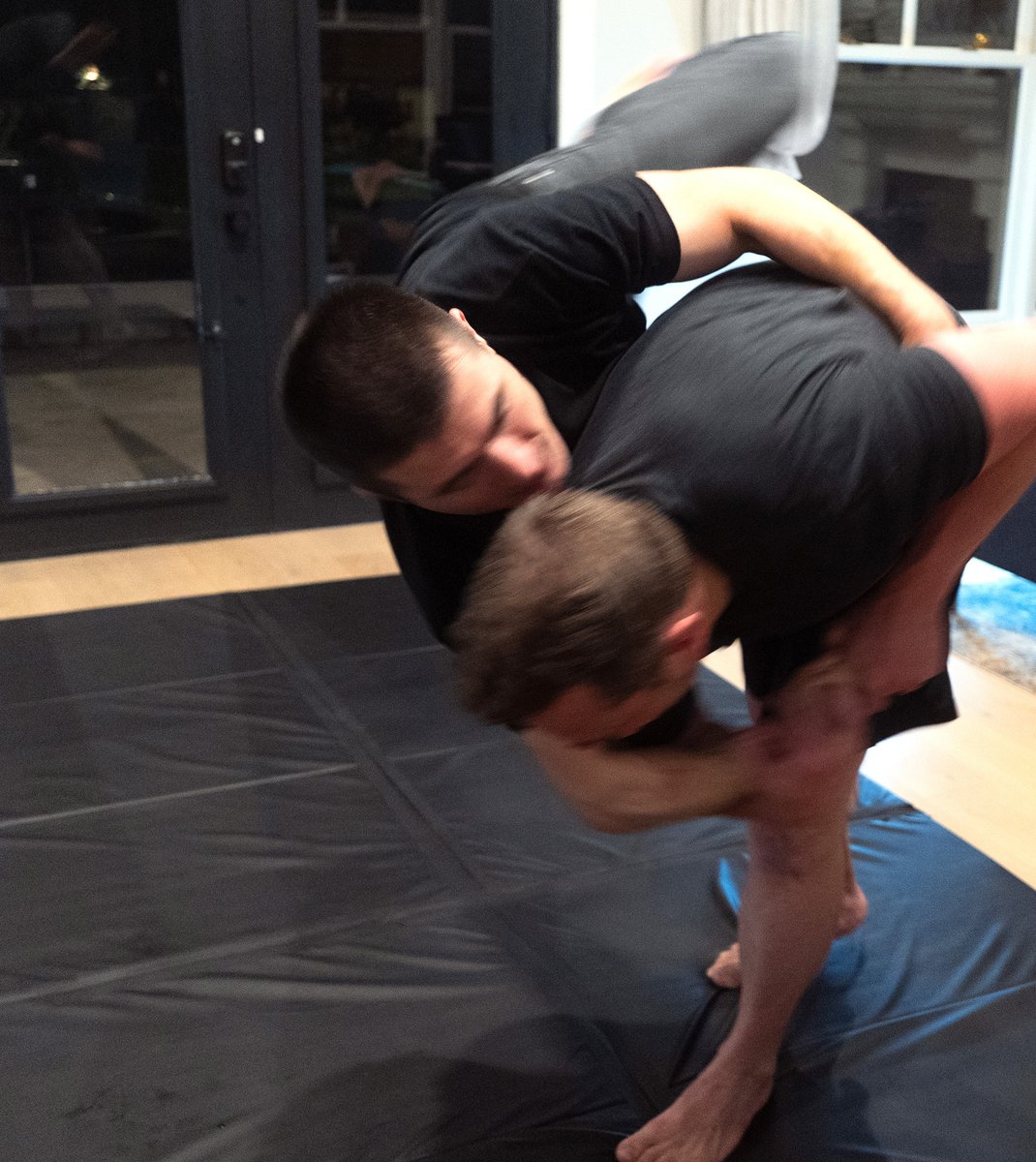
I did an impromptu training session with @elonmusk for a few hours yesterday. I'm extremely impressed with his strength, power, and skill, on the feet and on the ground. It was epic. It's really inspiring to see Elon and Mark doing martial arts, but I think the world is served far better if they train martial arts but not fight in the cage. That said, as Elon says, the most entertaining outcome is the most likely... I'm there for them, no matter what.
This is a letter Feynman wrote to a former student who wrote congratulating him for the Nobel. I’ve posted it before but I really find it worth it to read especially as a student or early stage research person.
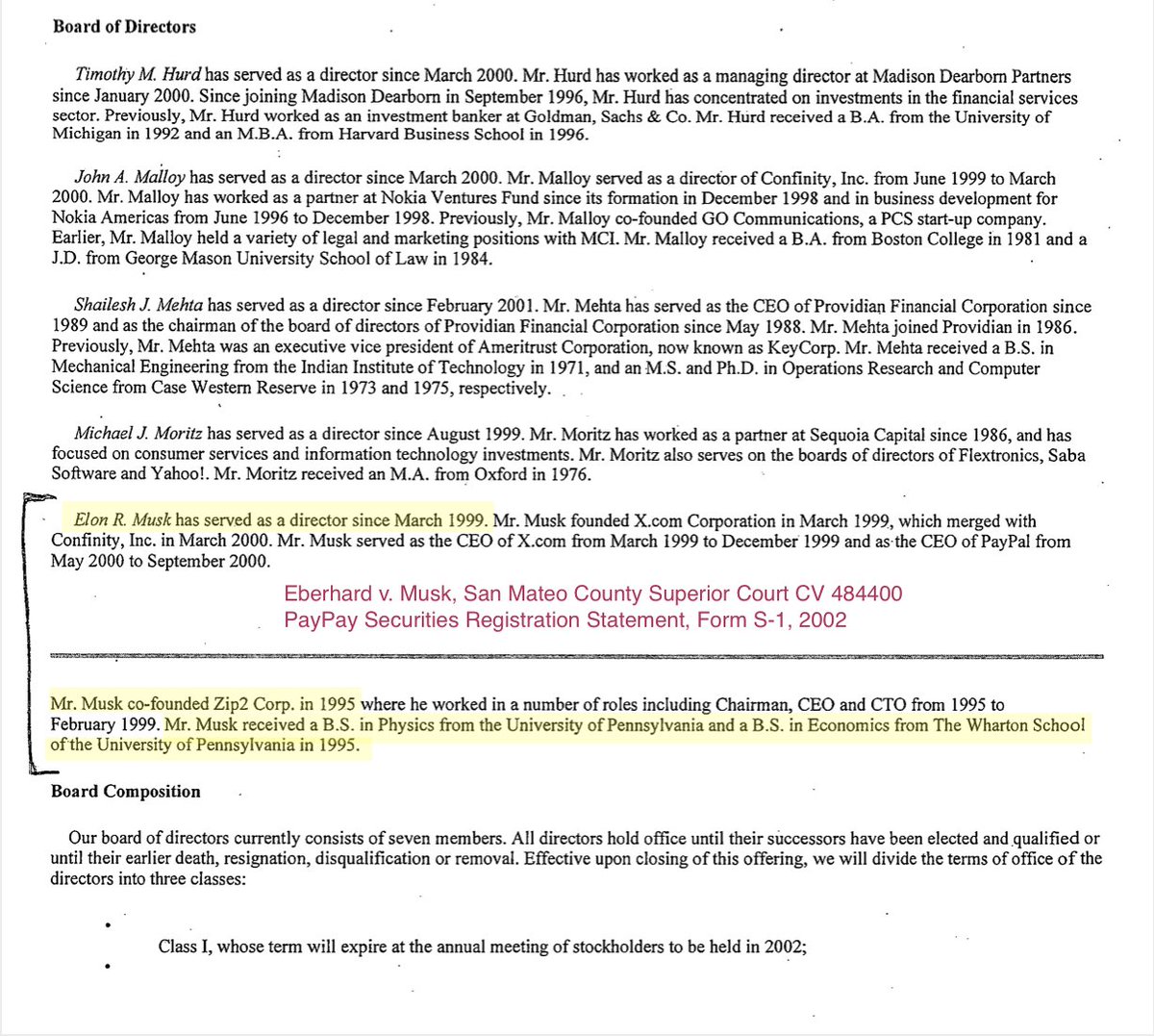
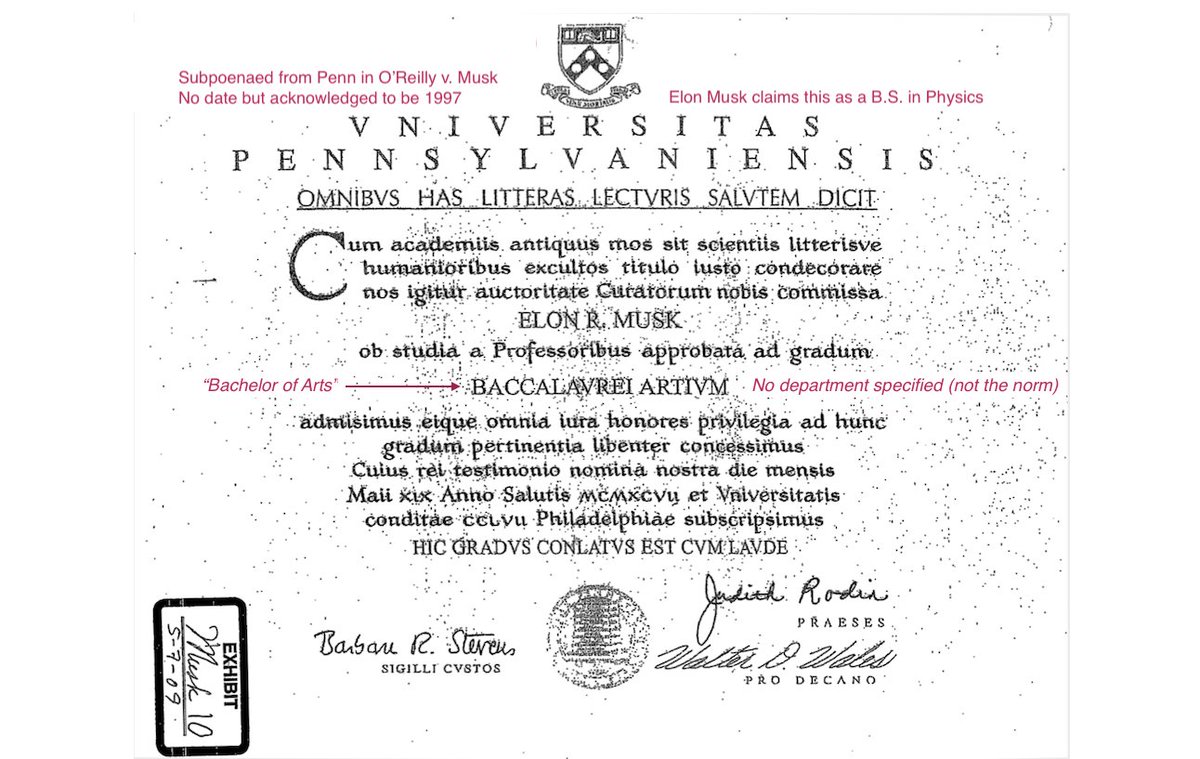
Someone has to say it: Elon Musk has lied for 27 years about his credentials. He does not have a BS in Physics, or any technical field. Did not get into a PhD program. Dropped out in 1995 & was illegal. Later, investors quietly arranged a diploma - but not in science. 🧵1/