Senior Lecturer in Nutritional Sciences, Loughborough University; Visiting Research Fellow, University of Reading; RNutr (#7267); Theme Lead @NutritionSoc
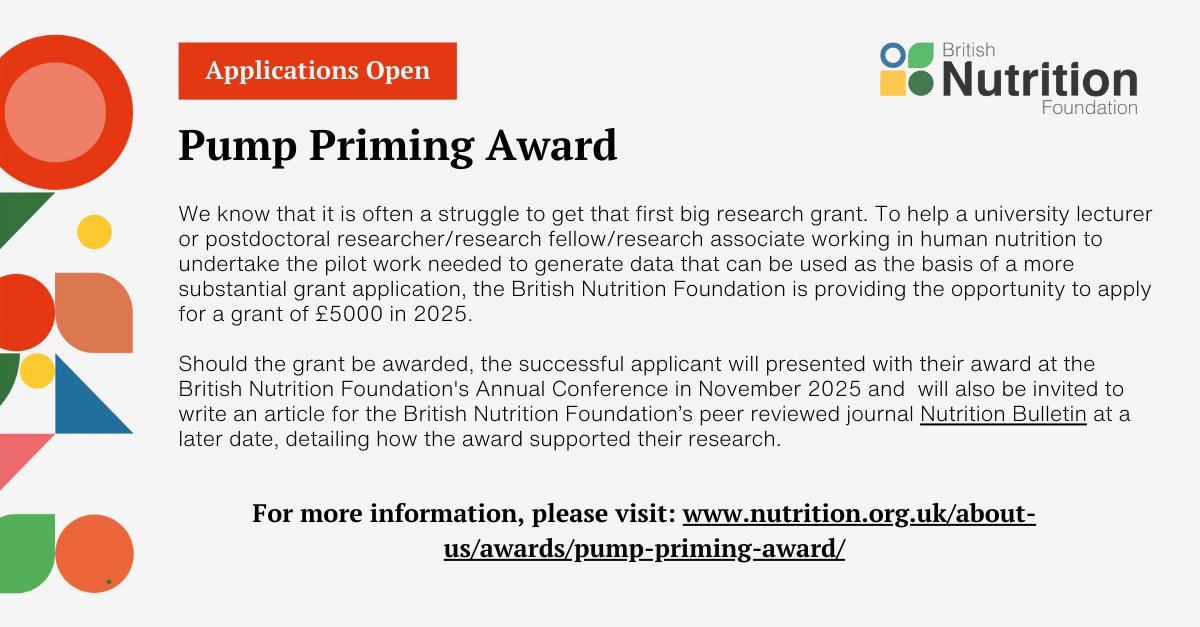
🚨 Applications Open
The British Nutrition Foundation pump priming award provides a £5,000 grant in 2025 to support a researcher working in human nutrition. The grant is to help fund the pilot work needed to generate data for a larger grant application.
https://t.co/rTJuC3SPHR
🧀 🧀 We are still looking for more cheese tasters in the Reading area to take part in our tasting study @UniofReading@UniRdg_FNS! 👇
Please spread the word 🙏 @methvenlisa1
🧀Cheese tasters needed in the Reading area! 🧀
We are looking for meat-eating participants (aged 18+ years old) who regularly consume Cheddar cheese to join us for a 60-minute tasting session at the University of Reading. Please share 🙏
🧀Cheese tasters needed in the Reading area! 🧀
We are looking for meat-eating participants (aged 18+ years old) who regularly consume Cheddar cheese to join us for a 60-minute tasting session at the University of Reading. Please share 🙏
⭐️Participants required for choline nutrition study ⭐️
🥂Wendy Zaragoza, 2nd yr BSc
@UoN_Nutrition student, has been awarded a prestigious
@NutritionSoc summer internship. We are seeking participants for her exciting study.
📢Applications for our Pump Priming Award 2024 are now open! The award is for a grant of £5000 to help a researcher do the pilot work that can be used for a more substantial grant application: https://t.co/eiP5ZdPbZg
Hear from one of our previous winners:
https://t.co/iT2vIzuKha
Beyond excited for this funded #PhD in my team for a #Nutritionist#RNutr or #Dietitian#RD 🧵
Dietary intake in inflammatory bowel disease and its association with gut microbiome, metabolome and treatment response
#IBD#Crohns#UC
https://t.co/xsdhcbInIt
Please #retweet
A great opportunity to carry out a #MIBTP CASE (industry) PhD studentship on milk protein and metabolic health with @c_hulston (University of Birmingham) and @ArlaIngredients
💰 Fully funded and open to international students.
⌛ Apply by 4th Jan.
Details below 👇
Happy to be part of this PhD opportunity led by @c_hulston via @MIBTP1 in @UBSportExR - Exploring the metabolic responses to consuming micellar casein isolate: implications for the management of obesity/type 2 diabetes - apply by Jan 4, 2024 - info ⬇️
https://t.co/DsX0oRNOWO
Are you attending the @NutritionSoc 's Winter Conference 2023 next week (December 5-6, 2023)?
Healthcare systems face a cost crisis as they try to provide an increasingly wide range of transformative but expensive treatments to the older, sicker populations. Better prevention, to complement new treatments, is essential to provide healthier lives and sustainable healthcare.
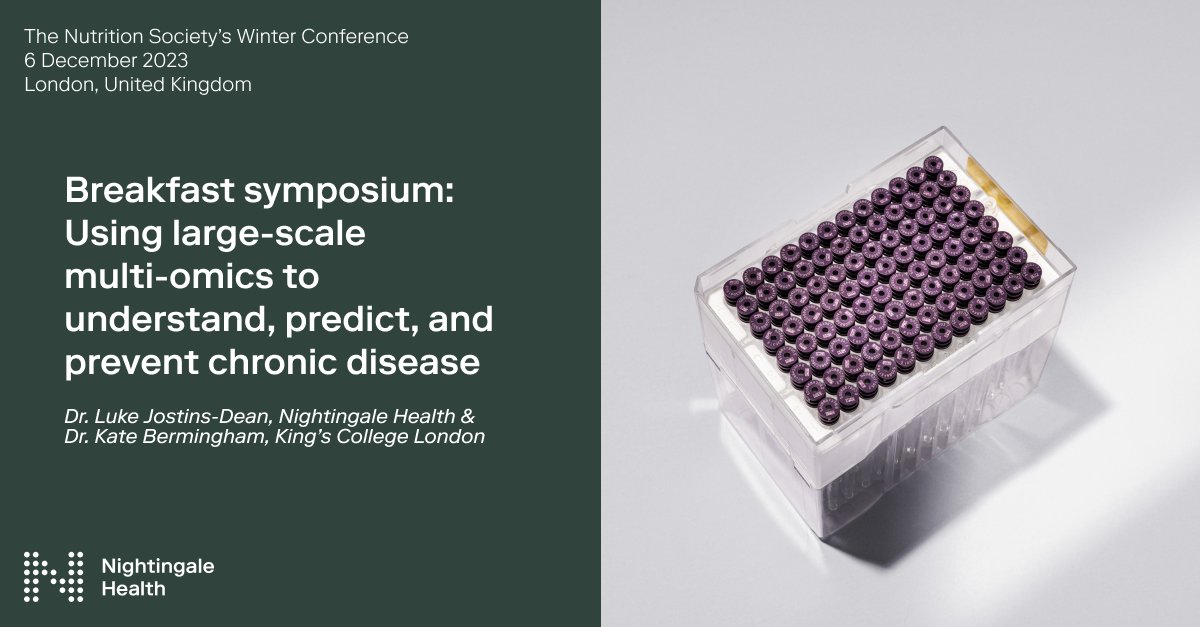
Breakfast symposium supported by Nightingale Health (details below) will feature two speakers describing how large-scale multi-omics can be used to understand who is at highest risk for future diseases, and how factors like diet, lifestyle, and response to stress can influence and reduce that risk:
Breakfast symposiums: Using large-scale multi-omics to understand, predict, and prevent chronic disease
Date and time: 6 December 2023 at 8:00 a.m.
Speakers:
Dr. Luke Jostins-Dean will present nuclear magnetic resonance metabolomics from half a million blood samples from three national biobanks. He will show how metabolomic risk scores can identify individuals at high risk of 12 diseases that cause the most morbidity, and compare to genetic risk scores for the same diseases. For seven diseases (heart attack, stroke, lung cancer, type 2 diabetes, COPD, alcoholic liver disease, and liver cirrhosis) this high risk group has > 3-fold increased risk of disease (ranging up to 10-fold for diabetes and liver disease), and there are existing medical and lifestyle interventions available to reduce future risk.
Dr. Kate Bermingham will present results from the PREDICT-1 study of 1000 individuals, exploring anthropometric measurements, diet and gut microbiome data, and fasting and postprandial cardiometabolic blood measurements among different population groups (e.g. post-menopausal women), and how they react in response to diet.
Read more: https://t.co/r2ILcTPPeO