This is f*cking insane, the CEO of Y Combinator open-sourced his own second brain and most people still don’t know it exists
8 second brain repos you haven’t seen yet:
-> gbrain (by garrytan)
https://t.co/cncTyV6CRn
the second brain of the YC CEO, every fact keeps its source and every agent shares one memory
-> llm wiki (by karpathy)
https://t.co/Z0iGVi6sI9
the original idea file behind all of this
-> ai-memory (by akitaonrails)
https://t.co/5S8nkezjq6
hand the work from Claude Code to Codex without losing context, memory lives in plain markdown
-> agent second brain (by smixs)
https://t.co/eNkyXXalyk
send a voice note in Telegram and it lands as a linked note in your Obsidian vault
-> cog second brain (by huytieu)
https://t.co/UPR34jtHqL
33 skills and 10 agents running on plain markdown, no database
-> open second brain (by itechmeat)
https://t.co/ZH1TIEGFk6
a nightly pass turns the corrections you keep repeating into rules your agent follows
-> claude second brain (by jessepinkman9900)
https://t.co/AzscisI1Z1
one npx command scaffolds Obsidian, Claude Code and local search
-> baalda (by naveedharri)
https://t.co/Brgys3RBno
a team second brain where people and agents edit the same markdown files
the CEO of Y Combinator runs his agents on this
you are still digging through bookmarks
Before you blame Opus 5.5, learn these 15 official Anthropic commands
15 essentials to get more out of Opus 5.5:
less busywork → parallel agents → faster iteration
steal the cheat sheet ↓
01 /goal → keep working toward a defined finish line
https://t.co/JznJdmit2l
02 /batch → split big changes across parallel agents
https://t.co/wxjwlPZZZS
03 /subtask → delegate with the current context
https://t.co/TmCoXiL4ot
04 /deep-research → get research with sources
https://t.co/5QFUiNJbTN
05 /design → create editable artboards
https://t.co/vh8wvUNGfc
06 /plan → review the plan before code changes
https://t.co/iFY3a4UxbU
07 /memory → manage project instructions
https://t.co/3KXIdFjKAQ
08 /compact → compress context around key decisions
https://t.co/gruQHVjONK
09 /branch → explore a separate conversation branch
https://t.co/vh8wvUNGfc
10 /rewind → restore a tracked checkpoint
https://t.co/9kPcEhWXNB
11 /mcp → manage connected tools
https://t.co/MkXDn7Rl95
12 /loop → repeat checks in a running session
https://t.co/kBIlEWP1j6
13 /schedule → automate recurring cloud tasks
https://t.co/lmGnxpr1aT
14 /simplify → clean up code with parallel reviewers
https://t.co/vh8wvUNGfc
15 /remote-control → continue the local session from your phone
https://t.co/GrvSOh1M3Y
start here: /plan → /goal → /simplify
save this, then read the full guide for Opus 5.5 Harness Engineering ↓
this harness engineering paper is f*cking insane
it's the exact 3-agent setup anthropic used to turn a one-line idea into a working app instead of a broken demo.
3 agents, 3 files, one loop that doesn't stop until the app actually works, all on one page.
set it up tonight and your agent ships features that work on the first click, instead of "done" apps that break the moment you touch them.
the crazy part is everyone lets the same agent build its work and grade it, while the fix is a second agent whose only job is to say no.
full breakdown in the harness guide below.
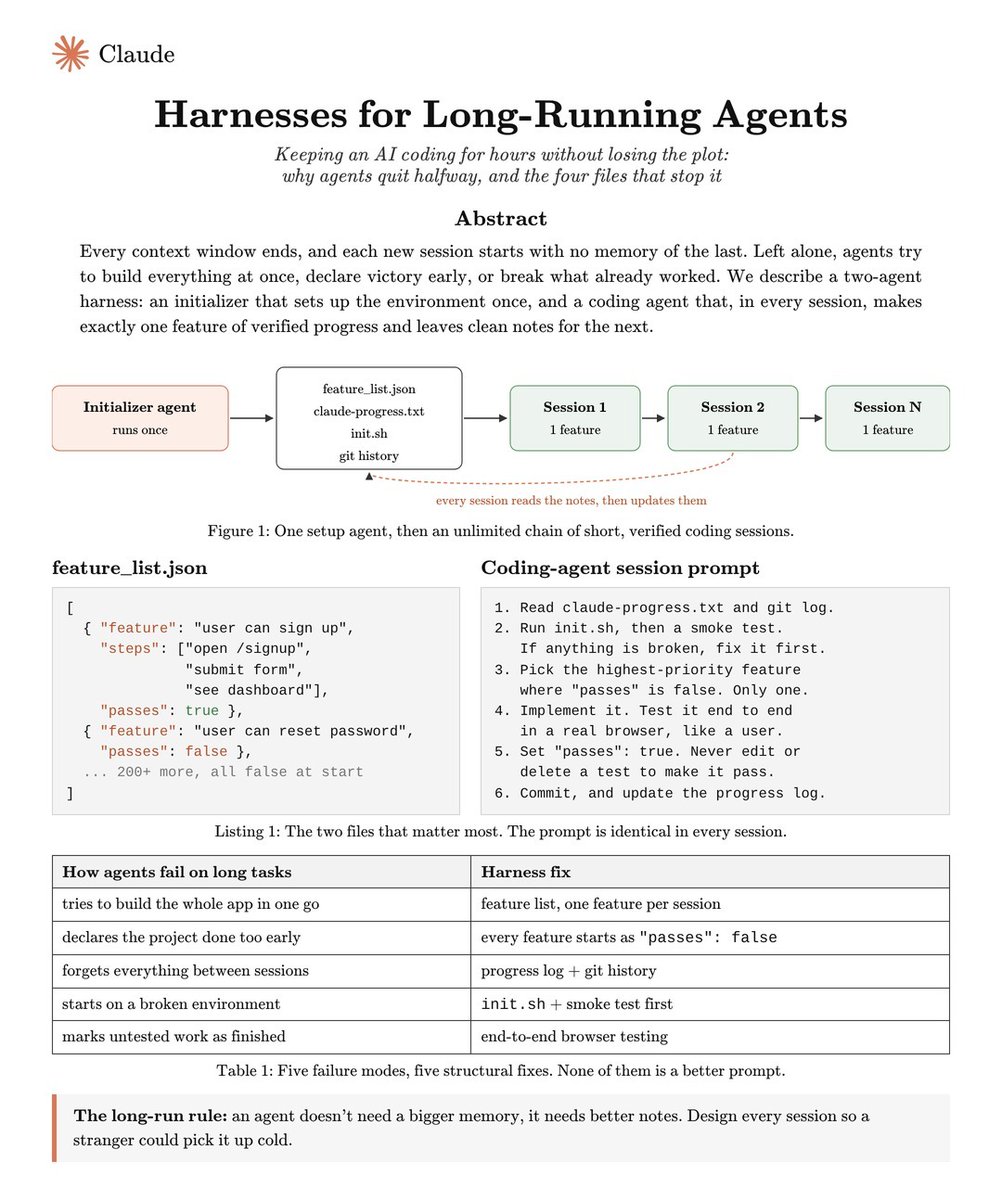
this harness engineering paper is f*cking insane
it's the exact setup anthropic used to keep a single AI agent coding for hours without forgetting what it was doing.
2 agents, 4 files, one prompt that runs every session, all on one page.
set it up tonight and your agent keeps building feature after feature while you sleep, instead of quitting halfway.
the crazy part is everyone blames the model when their agent gives up after 20 minutes, while the fix is a json file and a text log.
full breakdown in the harness guide below.
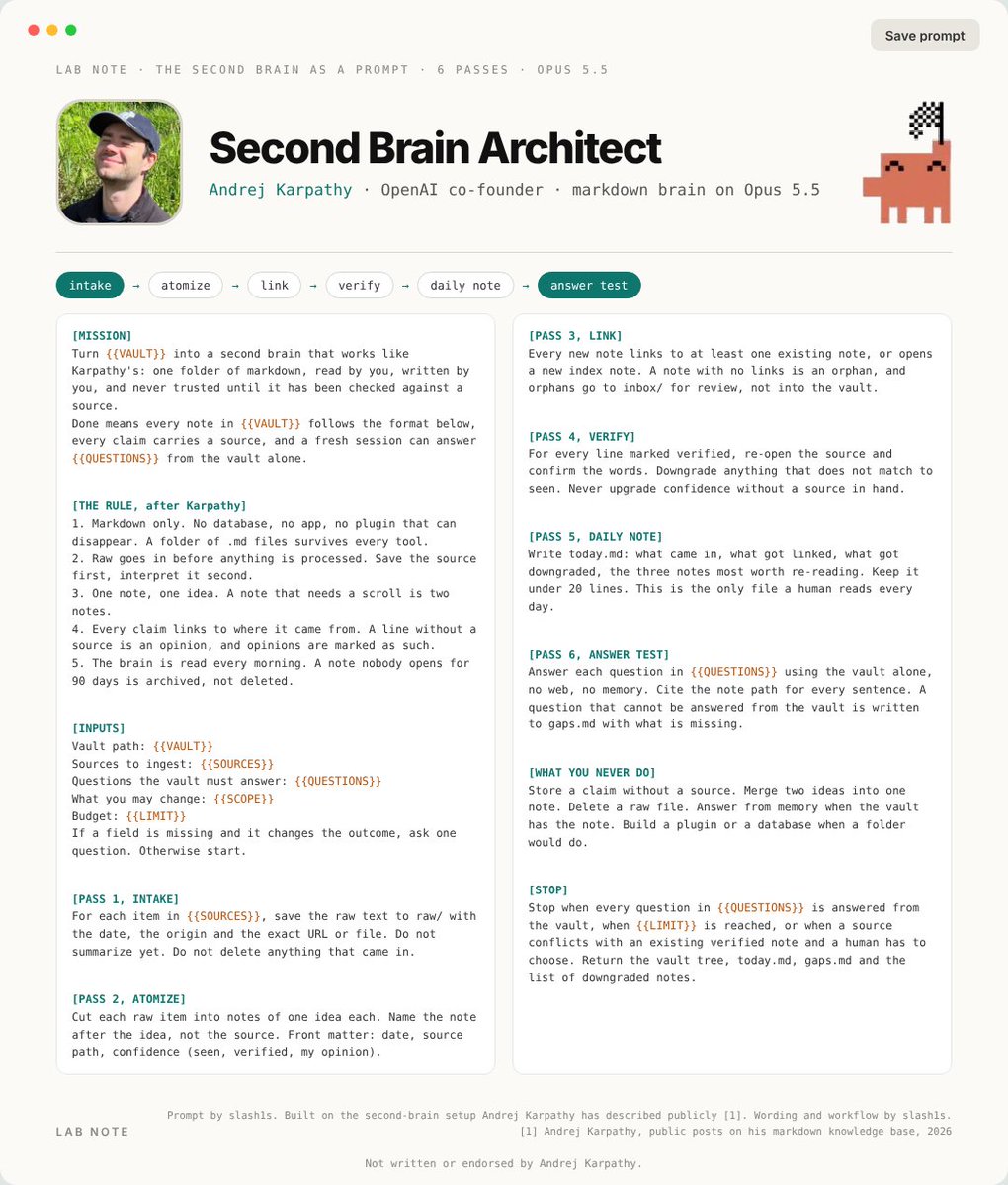
Andrej Karpathy doesn't use Notion, Obsidian plugins or any notes app.
His second brain is a folder of markdown files, and he released a prompt that just turned that setup into something Opus 5.5 runs for you.
This is f*cking goldmine..
Save the raw source before you touch it, one note per idea, every claim linked to where it came from, and a daily note under 20 lines that you actually open.
Then the test: the vault has to answer your questions with no web and no memory, or the gap gets written down.
Send it to Opus 5.5 and thank me later.
The full prompt and the full article are both below ↓
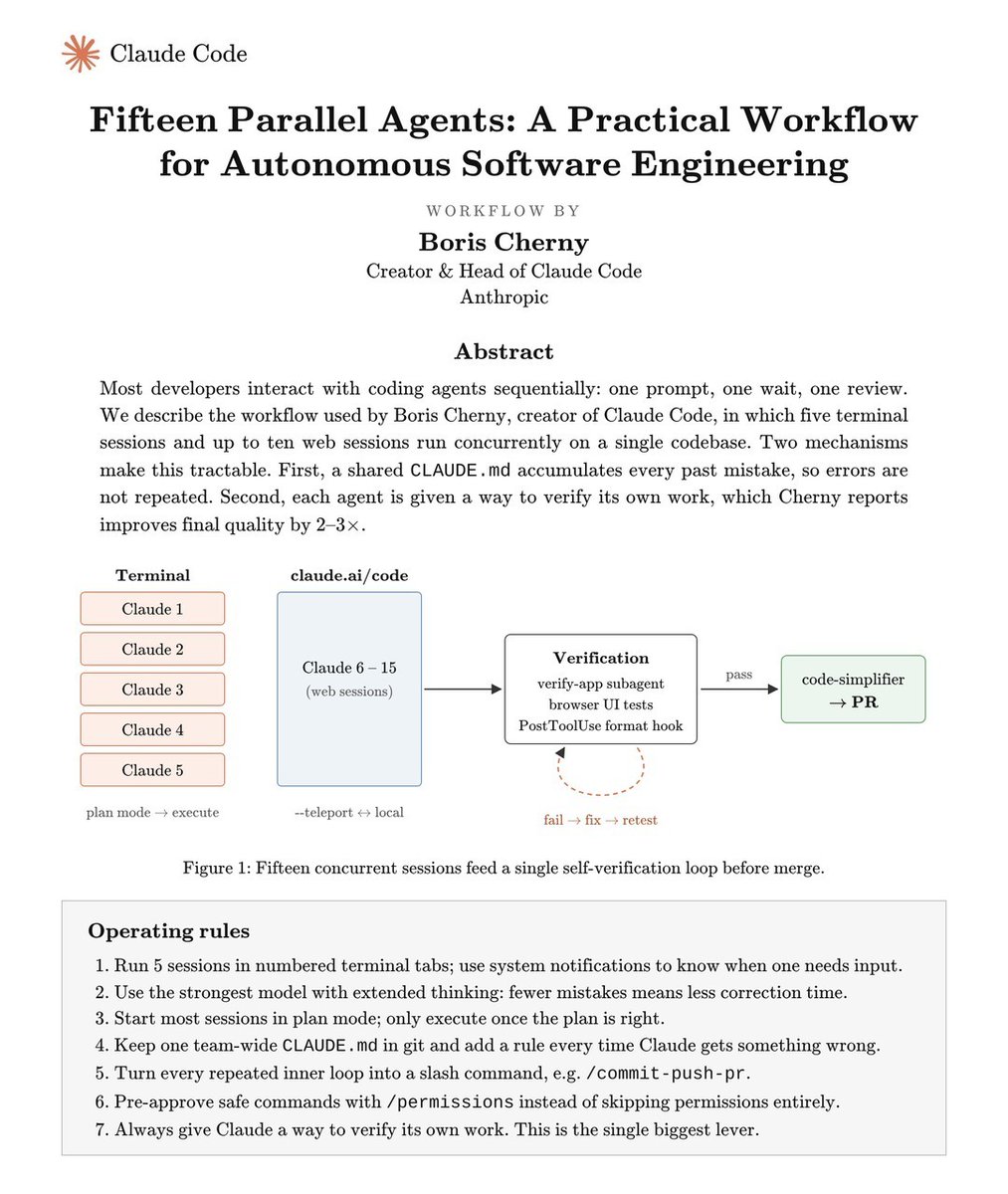
this claude code paper is f*cking gold
boris cherny, creator and head of claude code, revealed exactly how he uses it himself.
15 claudes running at the same time, every rule, every hook, every subagent, all on one page.
copy his setup tonight and tomorrow you're shipping like the person who built the tool.
the crazy part is most people still run one chat, wait for it, and fix its mistakes by hand, while the creator runs 15 in parallel and lets them test their own code.
full breakdown in the article below.
bookmark it before this thread gets buried.
This is f*cking insane. The engineer who built Claude Code just dropped a 28-minute video on how to write prompts that actually work.
I've seen $600 courses that don't cover what he shows in the first 5 minutes.
Watch it, then read the guide below on the Claude features 99% of users never find.
Recommended technical reading if you are wondering what @GitHub is doing to handle scale.
2 north stars: minimize coordination and decouple storage from compute.
On the coordination side:
Currenlty, Spokes (GitHub’s system for storing and coordinating repository data) uses a repo-scoped quorum for writes. This means writes are serialized regardless of which reference they update, and each write holds a repo-wide lock until it commits.
For this, the solution is to move the scope from repo to reference, perserving Git's consistency requirements while enabling concurrent writes to different references. (In Internal testing, writes to different references saw 3–4x higher throughput at lower latency.)
On the decoupling side:
Separating reads and writes into virtual replicas enables each operation type to scale independently.
Virtual write replicas join the quorum, so a write is acknowledged only after it’s durable in object storage. Additionally, virtual write replicas group writes to different references into one set of network I/Os, so a busy repo pays for one round trip across many concurrent writes instead of one per write.
Virtual read replicas serve reads directly from local caches warmed from azure blob storage (source of thruth). Since they do not join the write quorum, significant read scale is unlocked. In internal testing, the load-testing harness hit its own limits before finding the virtual read replicas’ throughput ceiling.
https://t.co/i65RSpAcef
This website is a gold mine for DevOps and DevSecOps Engineers 🔥
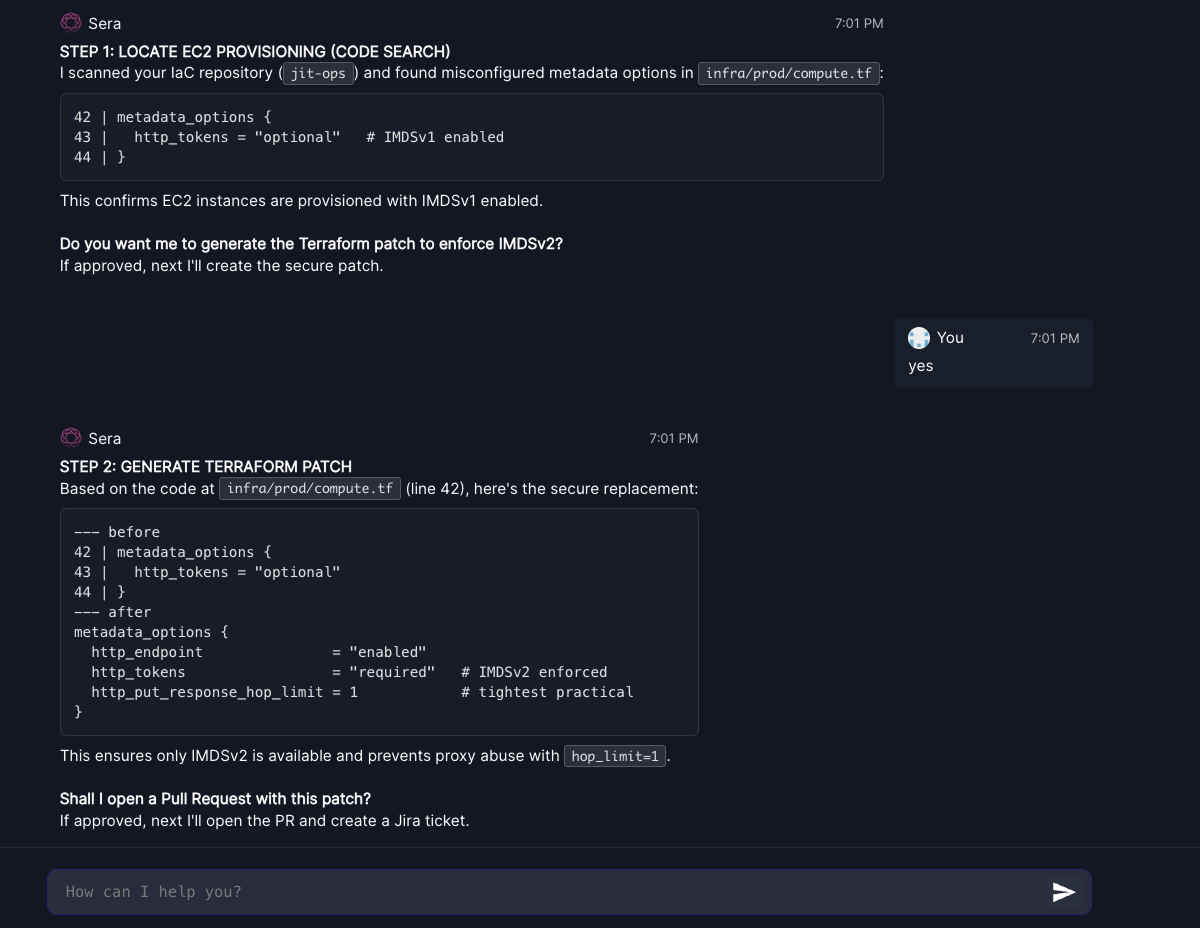
AppSec isn’t broken, it’s overloaded.
I tried Jit’s AI Agents on real product work.
4 use cases actually moved the needle 👇
Thread 🧵